

Do Handmade Tila Bead Bracelets Last Longer Than Cheap Elastic Ones?
Do Handmade Tila Bead Bracelets Actually Last Longer?
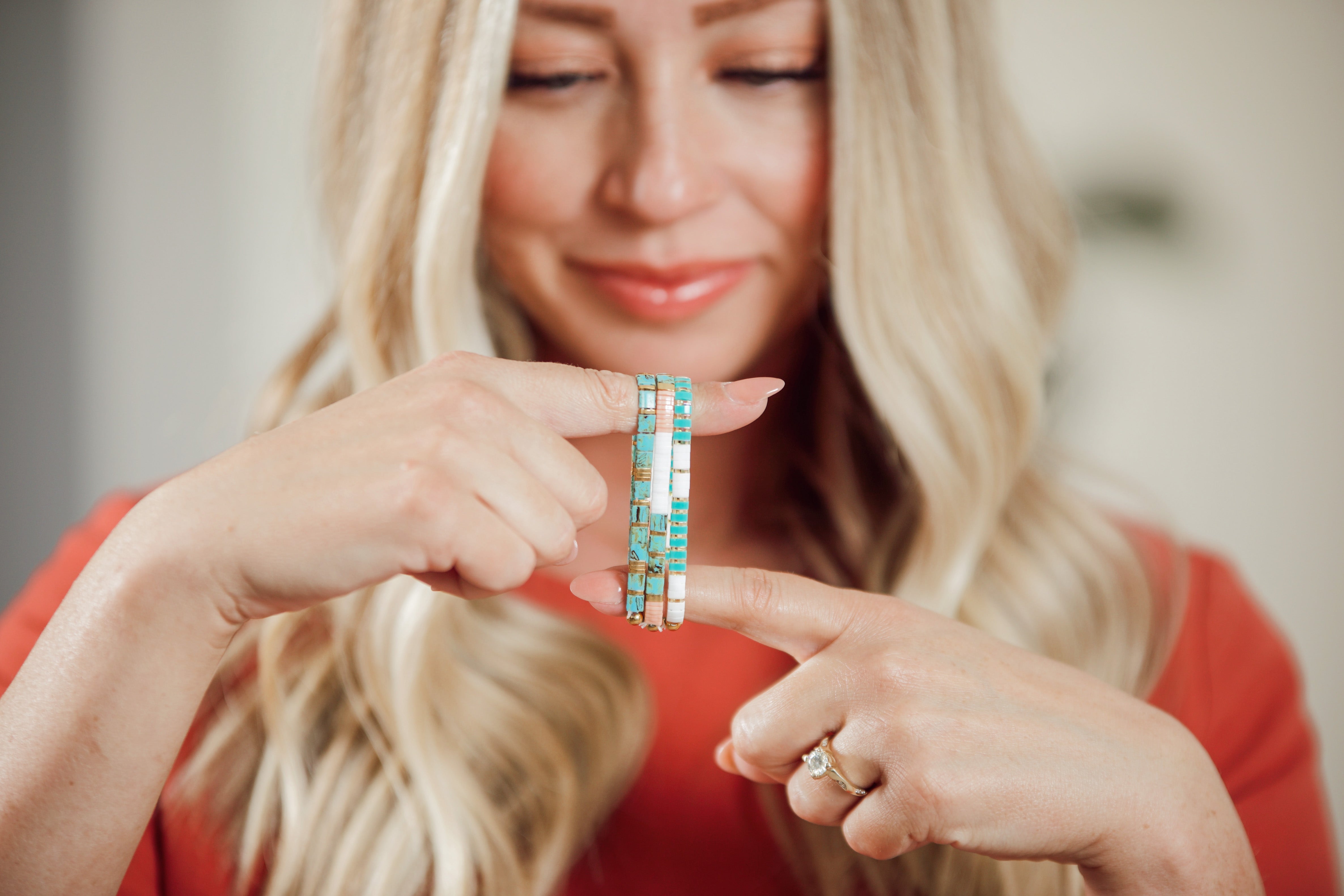
Yes, in most cases a well-made handmade Tila bead bracelet on quality crystal cord outlasts a cheap elastic one by a wide margin. The difference comes down to two things: the cord and the beads. Mass-market elastic bracelets use low-grade rubber cord that dries, cracks, and snaps within months. Quality crystal cord, paired with Miyuki Tila glass beads, holds its stretch and shape through years of daily wear.
Here's what's actually happening inside both types, and why it matters if you're tired of replacing the same bracelet every few months.
Why Do Cheap Elastic Bracelets Break So Fast?
Cheap elastic bracelets fail because the materials are chosen for cost, not longevity. Most mass-market stretch bracelets use a thin rubber or synthetic elastic that degrades quickly under two conditions: exposure to oils (lotion, sweat, sunscreen) and repeated stretching. Rubber loses its elasticity as it ages, and fine cracks form invisibly until one day the bracelet just snaps.
The beads on cheap bracelets can cause problems too. Plastic or low-grade acrylic beads have sharp interior edges that act like a slow-motion knife against the cord. Every time you put on or take off the bracelet, the cord rubs against those edges. Miyuki Tila beads are Japanese glass with smooth, consistent holes precisely sized to protect the stringing material inside.
According to The Spruce Crafts, cord quality is the top cause of beaded bracelet failure, ahead of clasp issues and bead breakage. The cord fails first, nearly every time.
What Makes Crystal Cord Different From Basic Elastic?
Crystal cord is a round, clear elastic specifically designed for beaded jewelry. It's stronger per millimeter than flat rubber elastic and resists the breakdown caused by body chemistry far better. Brands like Beadalon and Stretch Magic have been standard recommendations among jewelry makers for years because they maintain consistent elasticity without going brittle. Fire Mountain Gems' stretch cord guide walks through the differences between elastic types and how to choose the right diameter for your beads.
The other factor is diameter. Cheap bracelets often use a cord that's thinner than what the bead hole requires, which means the cord is under tension even when the bracelet is resting flat on your wrist. Quality construction matches the cord to the bead's interior hole size so the fit is snug without constant strain on the elastic.
Miyuki Tila beads have a standardized 0.8 mm hole diameter. That consistency matters: it lets a maker size the cord correctly every time, and the smooth glass interior won't fray the cord the way porous or poorly finished beads can.
How Long Does a Handmade Tila Bracelet Actually Last?
Worn daily, properly made. That's the real test, and it's where the gap between handmade and mass-market becomes obvious.
A Mack & Rex customer put it this way: "I have some that I never take off and they last and still look just like new." Another wears her bracelet daily and noted "the elastic has not stretched out and the tiles are as beautiful as the day I got it." That's what happens when a maker uses Miyuki glass on quality cord and finishes the knots correctly.
A typical cheap elastic bracelet from a big-box or discount store lasts anywhere from a few weeks to a few months before the cord visibly weakens or snaps. The cycle is familiar: you buy one, wear it for a bit, it breaks, you buy another. The cost adds up and none of them last.
Handmade Tila bracelets made on crystal cord can realistically last years. The main reasons they eventually need replacement are heavy, long-term cord fatigue or accidental physical stress, not the basic material degradation that takes out cheap elastics early.
Is the Price Difference Worth It?
Run the numbers. A finished Tila bead bracelet from Mack & Rex runs around $20-25. A cheap elastic one might be $3-6. But if the cheap one lasts three months and you replace it four times in a year, you've spent up to $24 on bracelets that are gone. The handmade piece that lasts a year or two ends up costing you the same or less.
Cheap bracelets also come in one size only. Mack & Rex bracelets come in XXS through 5XL, so the fit is right for your wrist, and a bracelet that fits correctly isn't being overstretched every time you put it on. That matters for cord longevity. The buy-3-get-1-free offer (no code needed) makes building a small stack even more practical.
What Should You Look for in a Durable Beaded Bracelet?
Four things matter most.
Cord type: Look for crystal cord or a named jewelry-grade elastic, not plain rubber. If the listing doesn't say what cord was used, that's a sign the maker didn't think it mattered.
Bead material: Japanese glass (Miyuki specifically) is the standard for consistent hole sizing and smooth interior finish. Czech glass is another solid option. Plastic and acrylic bead holes can vary and are more likely to cut cord over time.
Knot finishing: Well-made stretch bracelets have knots secured inside a bead so they can't slip. A knot left exposed at the join is a weak point.
Sizing: A bracelet that has to stretch hard every time you put it on is a bracelet under constant stress. Proper sizing, including options for larger or smaller wrists, keeps the cord working the way it's supposed to.
Miyuki Tila beads are Japanese glass with a standardized 0.8 mm hole diameter, smooth enough to protect cord rather than slowly cutting through it. That's the detail that separates them from generic flat beads, and it's why serious jewelry makers have used them for years.
Where Can You Find Handmade Tila Bead Bracelets Worth Buying?
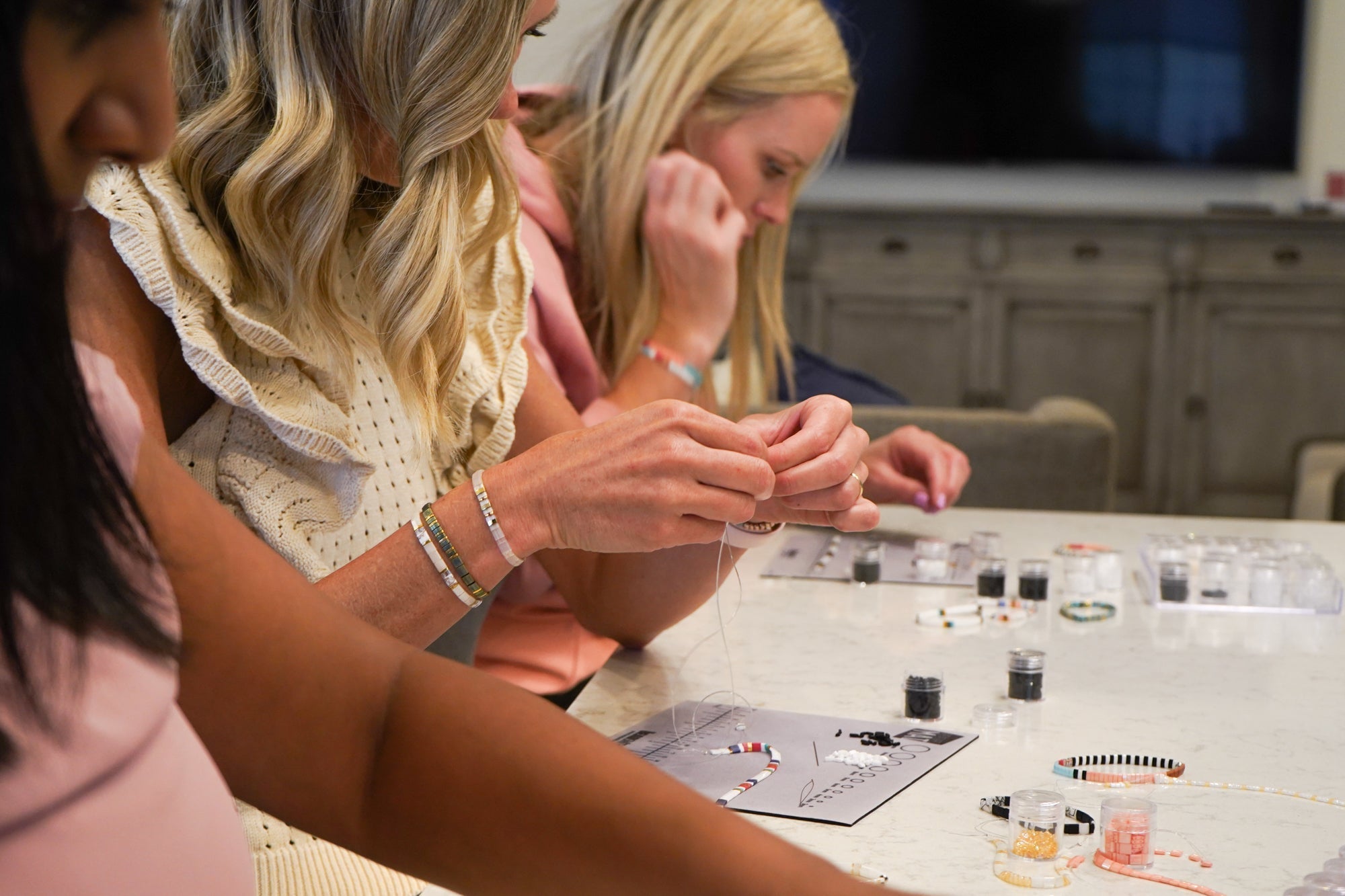
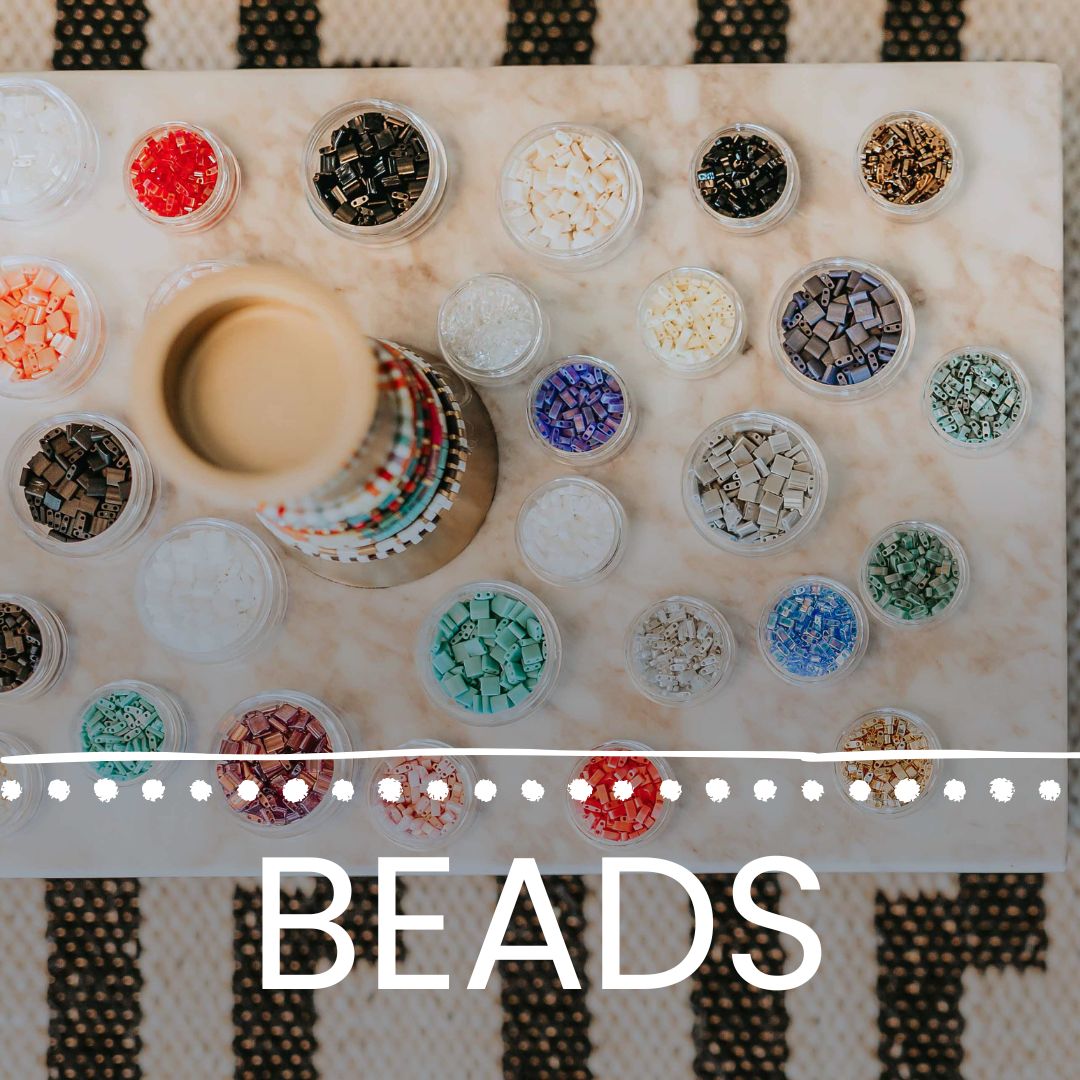
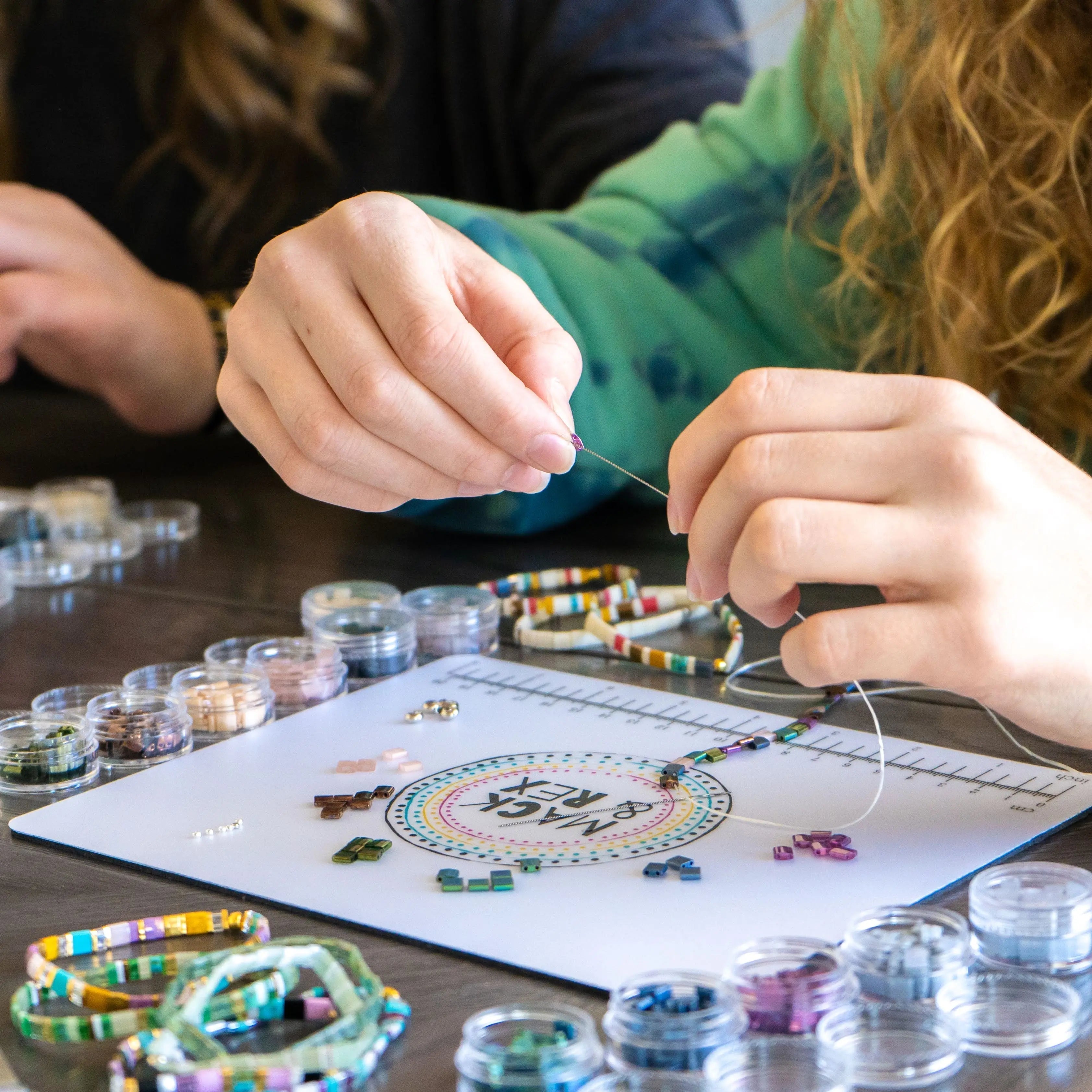
Mack & Rex makes ready-to-wear handmade Tila bead bracelets in sizes XXS through 5XL, built on crystal cord with Miyuki Tila glass. Every piece comes with a quality guarantee. If you want to make your own, you can also shop loose Tila beads and themed bead mixes to build your own stack in whatever colorway fits your style.
Browse the full range at Mack & Rex Tila beads and find the bracelet that stays on your wrist.
Frequently Asked Questions
Why do cheap elastic bracelets break so quickly?
Most cheap elastic bracelets use thin rubber or synthetic cord that degrades when exposed to body oils, lotion, and repeated stretching. The cord becomes brittle, develops micro-cracks, and eventually snaps. Low-grade or plastic beads with rough interior edges speed up the process by abrading the cord from the inside with every stretch.
What cord do quality handmade Tila bead bracelets use?
Quality handmade stretch bracelets are typically made on crystal cord, a clear round elastic that's stronger and more oil-resistant than flat rubber elastic. It maintains consistent stretch over time without the brittleness that makes cheap rubber cord snap. The cord diameter is also matched to the bead hole size to avoid constant strain on the elastic.
Are Miyuki Tila beads better for bracelet durability than plastic beads?
Yes. Miyuki Tila beads are Japanese glass with smooth, precisely sized 0.8 mm holes. That smooth interior protects the cord rather than abrading it. Plastic or acrylic beads often have inconsistent hole edges that can slowly cut into elastic cord over time, contributing to early bracelet failure.
How long does a handmade Tila bead bracelet last with daily wear?
A well-made handmade Tila bead bracelet on quality crystal cord can last years with daily wear. The most common reasons for eventual replacement are long-term cord fatigue or physical accident, not the early-stage degradation that takes out cheap elastic bracelets within weeks or months.
Does bracelet sizing affect how long it lasts?
It does. A bracelet that has to stretch a lot every time you put it on is under more stress per wear than one that fits correctly. Inclusive sizing (like XXS through 5XL at Mack & Rex) means you can order a bracelet that fits your actual wrist, which reduces unnecessary strain on the cord and extends its lifespan.