

How to Stack Tila Bead Bracelets: A Layering and Color Guide
How Do You Stack Tila Bead Bracelets So They Look Intentional?
A tila bead bracelet stack looks intentional when you control three things: how many bracelets you wear, the order you layer them in, and how the colors relate to each other. Nail those three and a stack reads as styled. Skip them and even great individual bracelets end up looking like they landed on your wrist by accident.
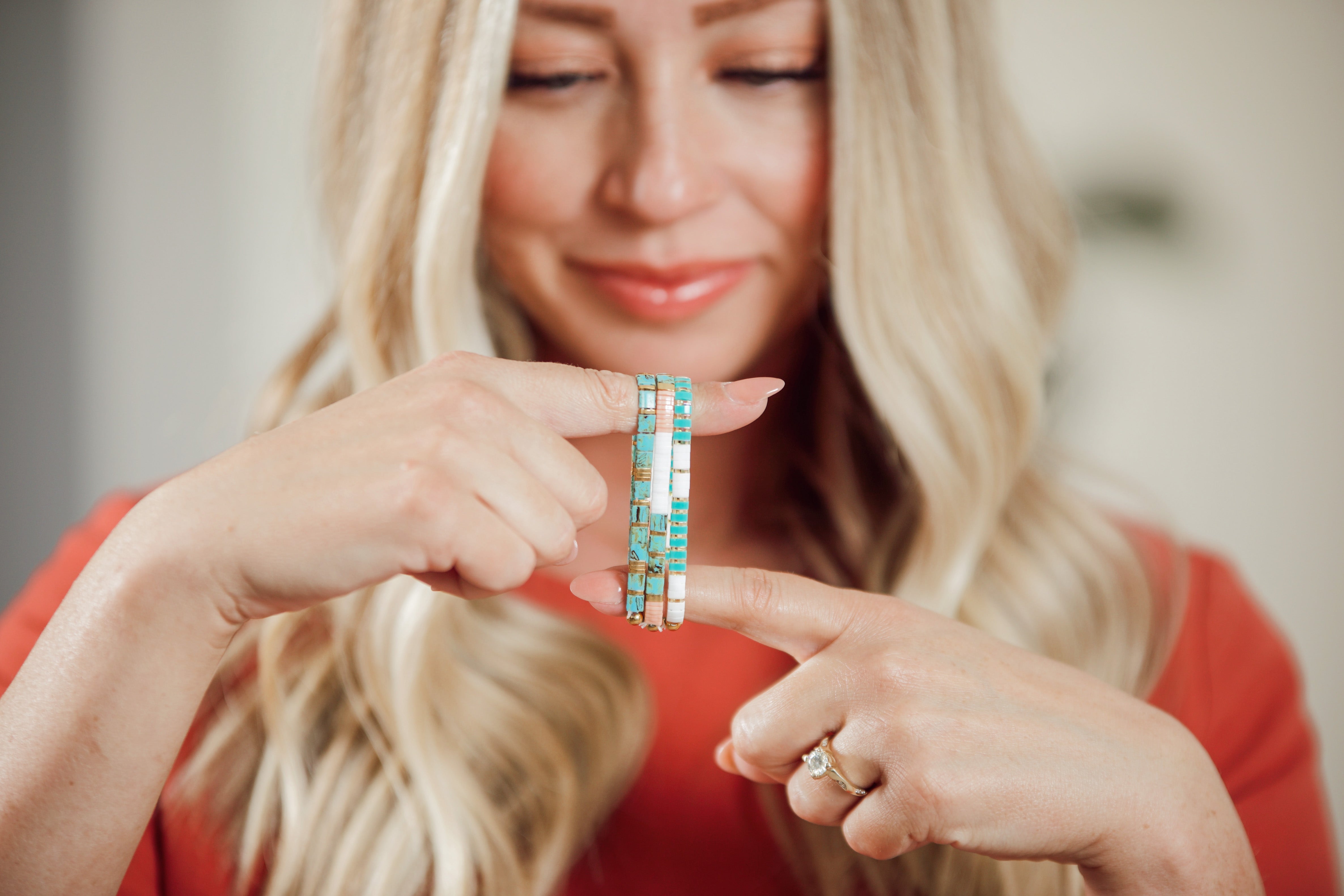
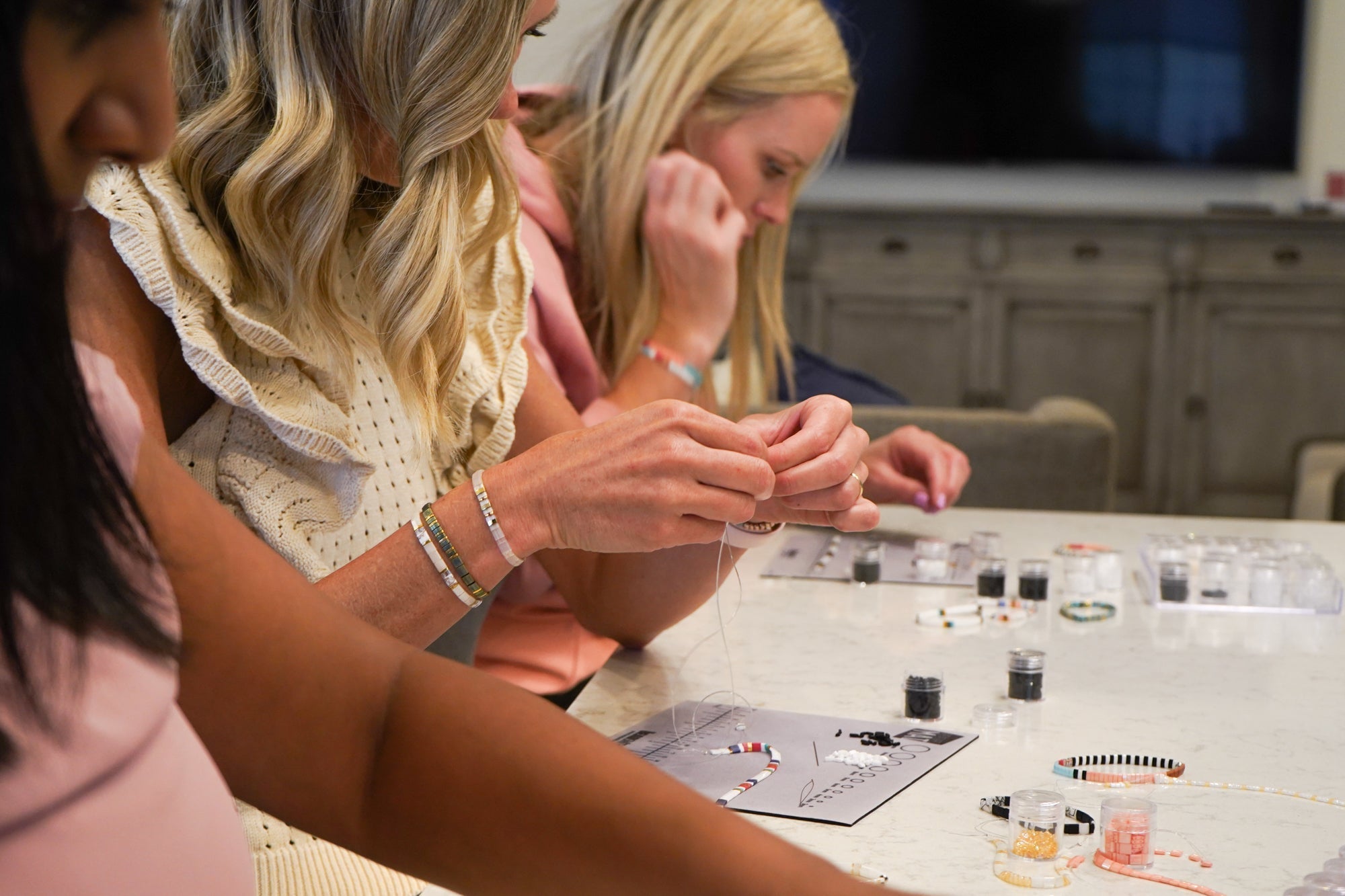
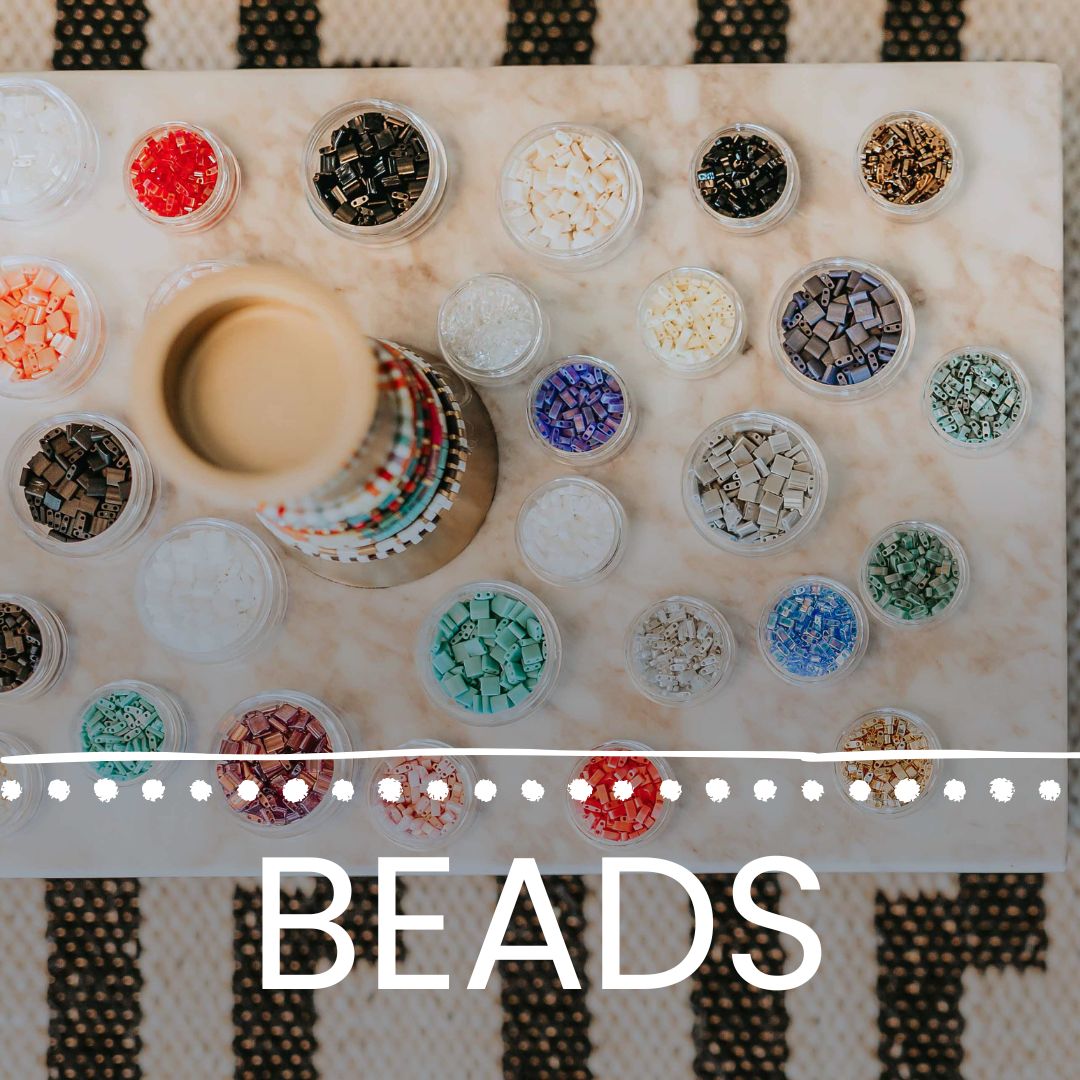
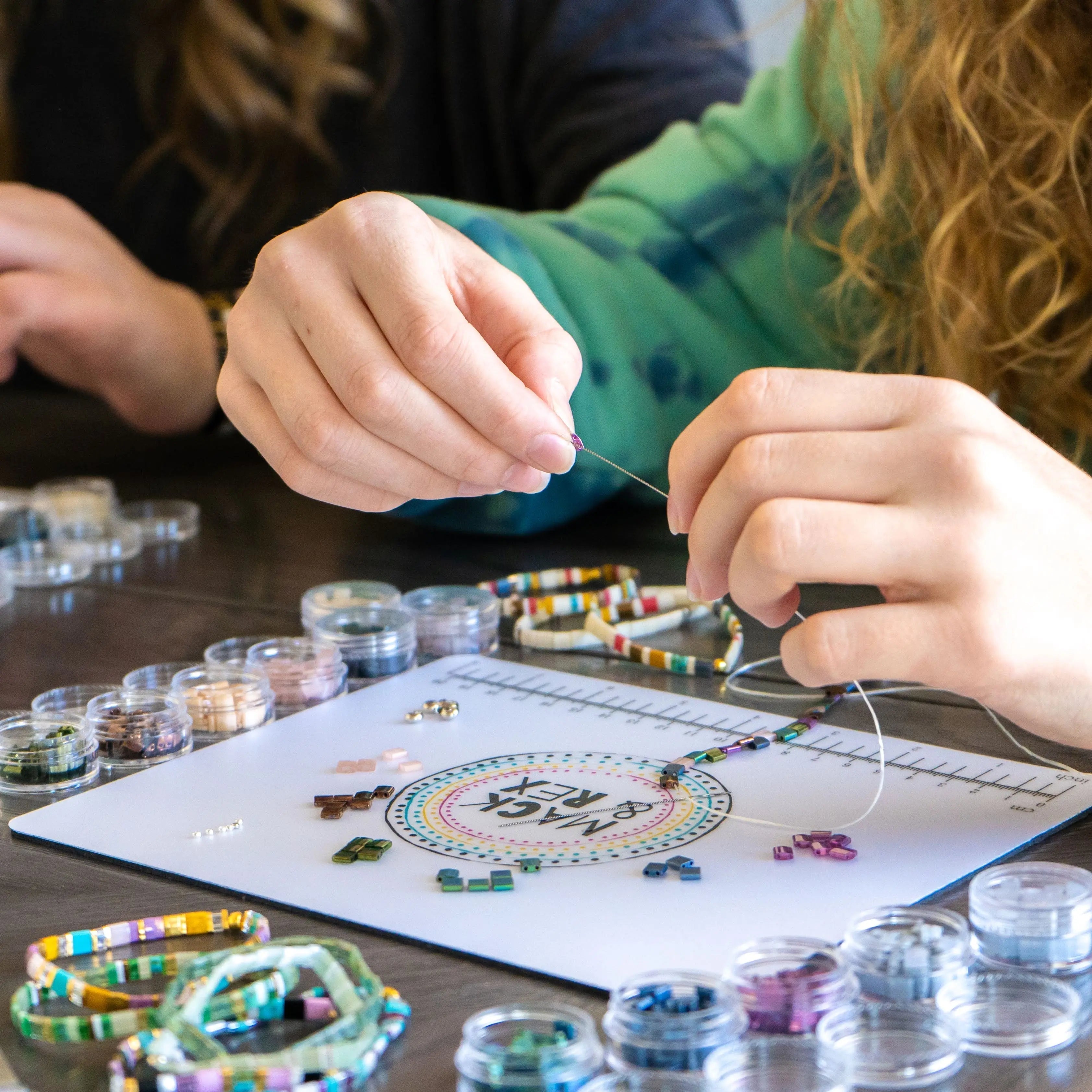
Tila beads are Miyuki's flat, two-hole glass squares, a Japanese-made material that Mack & Rex sources and builds into finished bracelets and bead mixes. That flat shape is exactly what makes stacking easy: the squares sit flush against your wrist instead of rolling, so several bracelets can layer close together without bulking up.
What's the Right Order to Layer a Tila Bead Bracelet Stack?
Layer from wide to narrow, working outward from your hand. Your widest or most colorful bracelet goes closest to your wrist bone, then each piece after it steps down slightly in width or intensity as you move up your arm.
This isn't a strict rule, more of a starting point. A stack that ignores it can still look fine, but this order gives your eye a clear path instead of landing on one crowded cluster. It's the same logic stylists use when layering necklaces: biggest statement piece closest to the body, smaller pieces building out from there.
How Many Bracelets Belong in One Stack?
Three bracelets is the floor for a stack to read as a stack rather than one bracelet plus a couple of add-ons. Five is where most everyday stacks land, enough presence without weighing down your wrist or catching on sleeves.
Past six or seven pieces, things get harder to manage. Bracelets start riding up over each other, and unless every single one is sized precisely, the stack shifts around instead of sitting flat. Start with three if you're building your first stack, then add a piece or two once you know how it wears.
How Do You Pair Colors When Stacking Tila Bracelets?
Pick one anchor color, then build out using either analogous colors (neighbors on the color wheel, like teal and seafoam) or a single complementary pop (a color from the opposite side, like rust against navy). Add one neutral, and the whole stack holds together without looking matched on purpose.
The color wheel isn't just a design-school concept. It's a reliable shortcut for anyone who isn't confident mixing colors from scratch. According to Wikipedia's overview of the color wheel, colors positioned near each other create harmony, while colors positioned opposite each other create contrast, and both relationships are used deliberately across art, design, and fashion. Bracelet stacking works the same way, just at wrist scale.
Analogous vs Complementary: Which Should You Choose?
Analogous stacks (three shades that sit near each other, like coral, blush, and warm gold) feel calm and easy to wear daily. Nothing in the stack competes for attention, so it pairs with almost anything already in your closet.
Complementary stacks bring more energy. A cobalt bracelet next to a burnt-orange one creates real contrast, the kind that gets noticed. Save that combination for a stack you want to be the focal point of an outfit rather than a quiet daily layer. Either way, one neutral bracelet (cream, black, warm taupe) keeps bold color pairings from feeling like too much.
Can You Mix Tila Beads With Heishi or Other Accent Beads?
Yes, and it's one of the easiest ways to add texture to a stack without breaking your color story. Tila squares and heishi discs are both flat, low-profile bead shapes, so a heishi bracelet layers into a tila stack at the same height instead of sitting higher or lower than the rest.
Heishi beads (flat discs, traditionally made from shell or clay, now also produced in polymer clay and stone) bring a slightly more organic, relaxed texture next to the crisp geometric look of tila squares. Heishi's roots go back to Native American Pueblo bead-making traditions, and the flat disc shape has stayed a staple of layered jewelry for that reason.
A workable mix: two or three tila bracelets in a shared color family, plus one heishi bracelet in a neutral tone. The heishi piece acts almost like the "neutral" bracelet in a color stack, breaking up the geometric repetition without pulling focus from the tila colors. One customer put it simply in a Mack & Rex review: "They are so pretty and delicate. I can wear just one or stack them." That flexibility is exactly what makes mixed-texture stacking work: every piece has to hold up on its own before it earns a spot in the layer.
How Do You Keep a Layered Tila Bracelet Stack From Sliding?
Size every bracelet in the stack the same way, snug enough to stay put but with about a half-inch of ease so it slides on comfortably. Mixed sizing is the single most common reason a stack that looked great on the counter feels messy on the wrist by lunchtime.
Stretch bracelets made on elastic cord depend on consistent tension across the whole stack. If one bracelet is sized loose and another is sized snug, they move at different speeds and end up twisted around each other within an hour. General guidance from craft-material resources like Fire Mountain Gems' bead education library points to correctly matched cord tension as one of the basics of stretch-bracelet construction, and that principle carries over directly to how a finished stack behaves on your wrist.
Mack & Rex bracelets run from XXS to 5XL, so instead of guessing at a "one size fits most" fit, you can size every bracelet in a stack to your actual wrist measurement. A stack built from five correctly sized bracelets sits and moves as one unit. A stack built from five different guesses does not.
What's the Easiest Way to Get a Stackable Tila Bead Bracelet Set?
Start with a collection that's already designed to layer, instead of buying five separate bracelets and hoping the colors line up. Mack & Rex builds its accent bracelet lines around this exact idea: named collections like STAINED, BEACHY, RETRO SUNSET, and EVERGREEN EDIT each hold a coordinated palette, so any three or four pieces from one collection already work as a stack.
Finished tila bead bracelets typically run about $20 to $25 each, and the current buy 3 finished bracelets, get 1 free offer (no code needed, finished bracelets only) makes building out a first stack an easy starting point. Orders over $100 ship free within the US.
Browse the current lineup at mackandrex.com/collections/accent-bracelets, pick one collection as your anchor palette, and build your stack from there. Every bracelet is available from XXS to 5XL, so the fit works whether you're stacking three pieces or five.
Frequently Asked Questions About Stacking Tila Bead Bracelets
How many tila bead bracelets should you stack together?
Three to five bracelets is the most wearable range for a tila bead stack. Three reads as a deliberate choice, five fills the wrist without crowding it. Past six or seven, pieces tend to slide over each other unless every bracelet is sized to your exact wrist.
What's the right order to layer a tila bead bracelet stack?
Put your widest or boldest bracelet closest to your hand, then step down in width and intensity as you move up your arm. That order keeps the eye moving outward instead of stopping at one crowded spot.
Can you mix tila beads with heishi beads in the same stack?
Yes. Flat tila squares and flat heishi discs share the same low profile, so they sit together without one bracelet sitting higher than the rest. One or two heishi pieces mixed into a tila stack add texture and a slightly more relaxed, boho feel.
Do stackable tila bead bracelets come in different sizes?
Mack & Rex bracelets are made on stretch cord and offered from XXS to 5XL, so every piece in a stack can be sized to your actual wrist instead of a generic medium. Matching sizes across the whole stack is what keeps a layered look from sliding around all day.
Where can you buy a stackable tila bead bracelet set already put together?
Mack & Rex sells finished, ready-to-wear tila bead bracelets in curated collections built for stacking, so the color and finish pairing is already done. Buy 3 finished bracelets and get 1 free, no code needed, and orders over $100 ship free within the US.
Ready to build your own stack? Head to the accent bracelet collection, pick a palette that matches your closet, and layer from there. Sizes run XXS to 5XL, buy 3 finished bracelets get 1 free with no code needed, and orders over $100 ship free within the US.