

Earth-Tone Tila Bead Bracelet Stacks for Fall
What is an earth-tone tila bead bracelet stack?
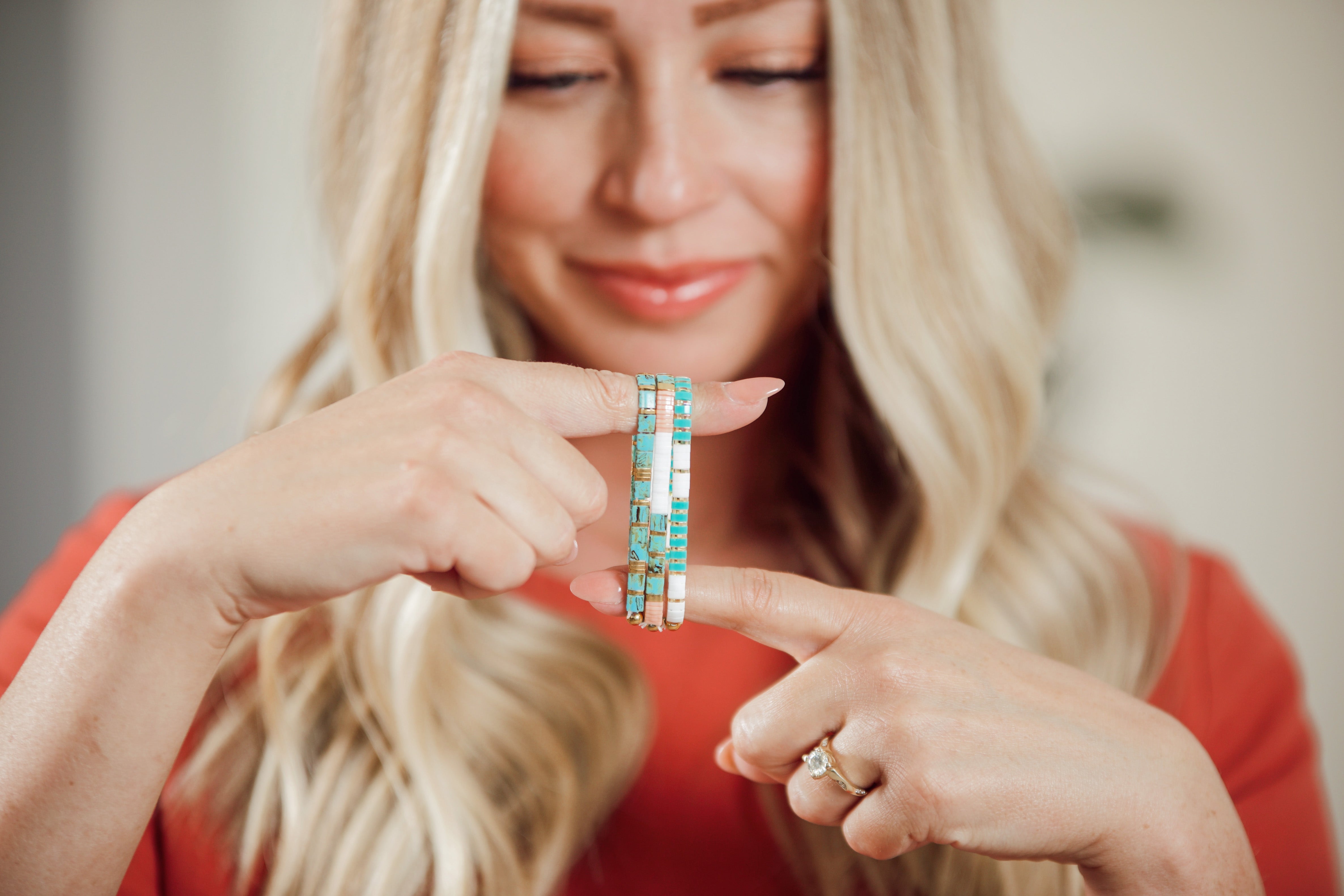
An earth-tone tila bead bracelet stack is a set of two to four flat, square Miyuki tila bead bracelets layered together in warm, muted colors pulled straight from a fall field: rust, olive, mustard, terracotta, and bronze. The tile shape catches light differently than round beads, so even an understated palette still has some shine to it. It's the stack that looks right with a chunky sweater and still works at the pumpkin patch.
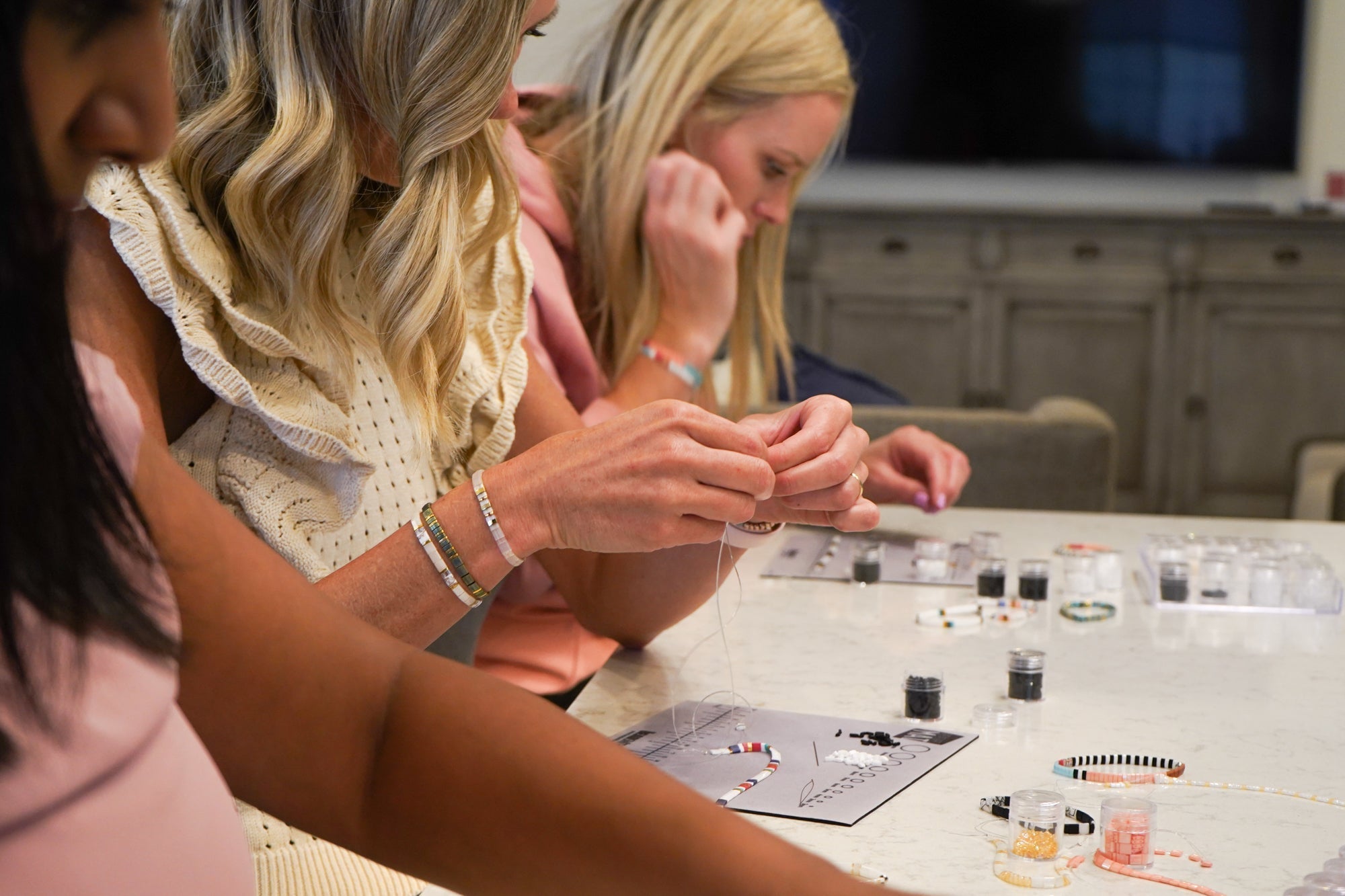
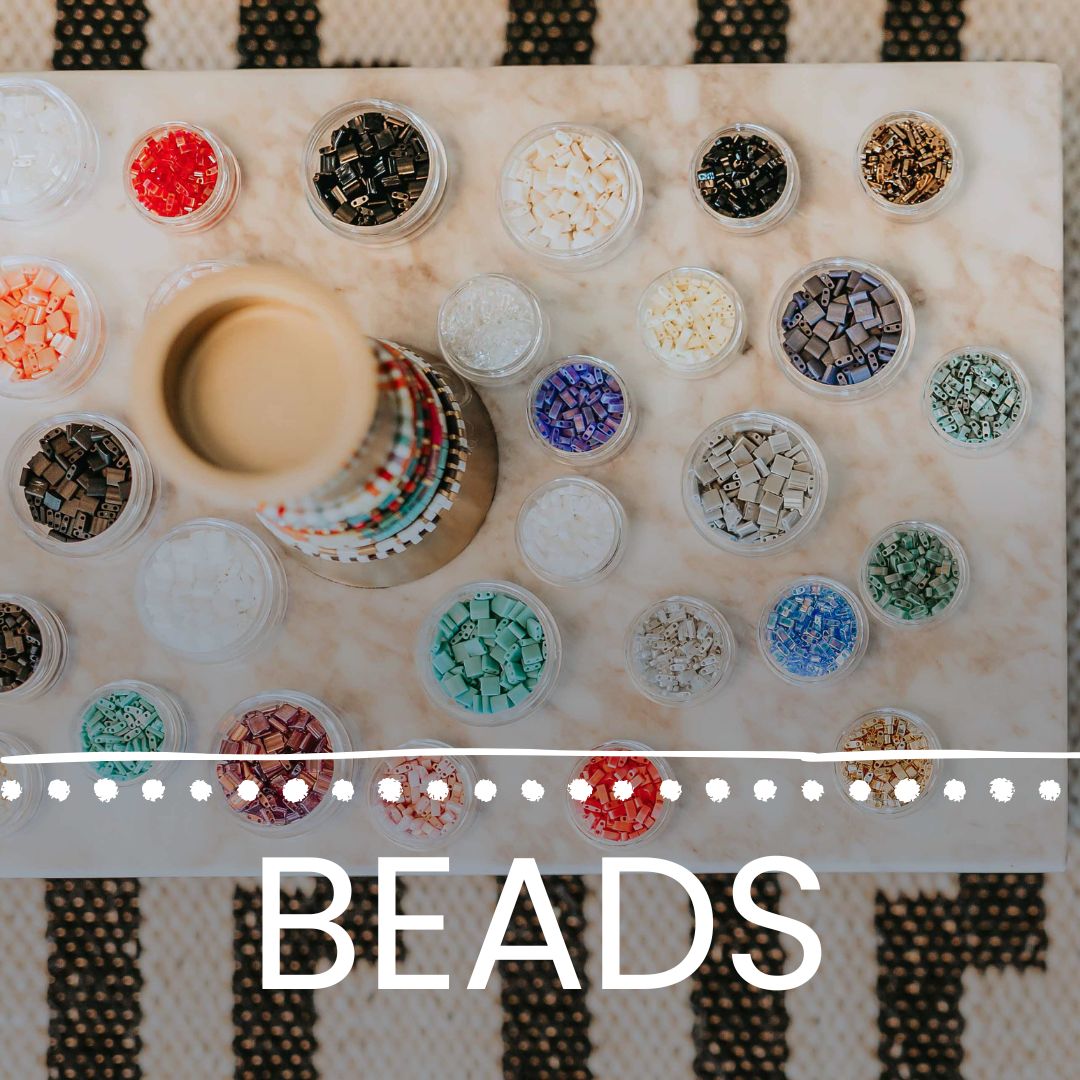
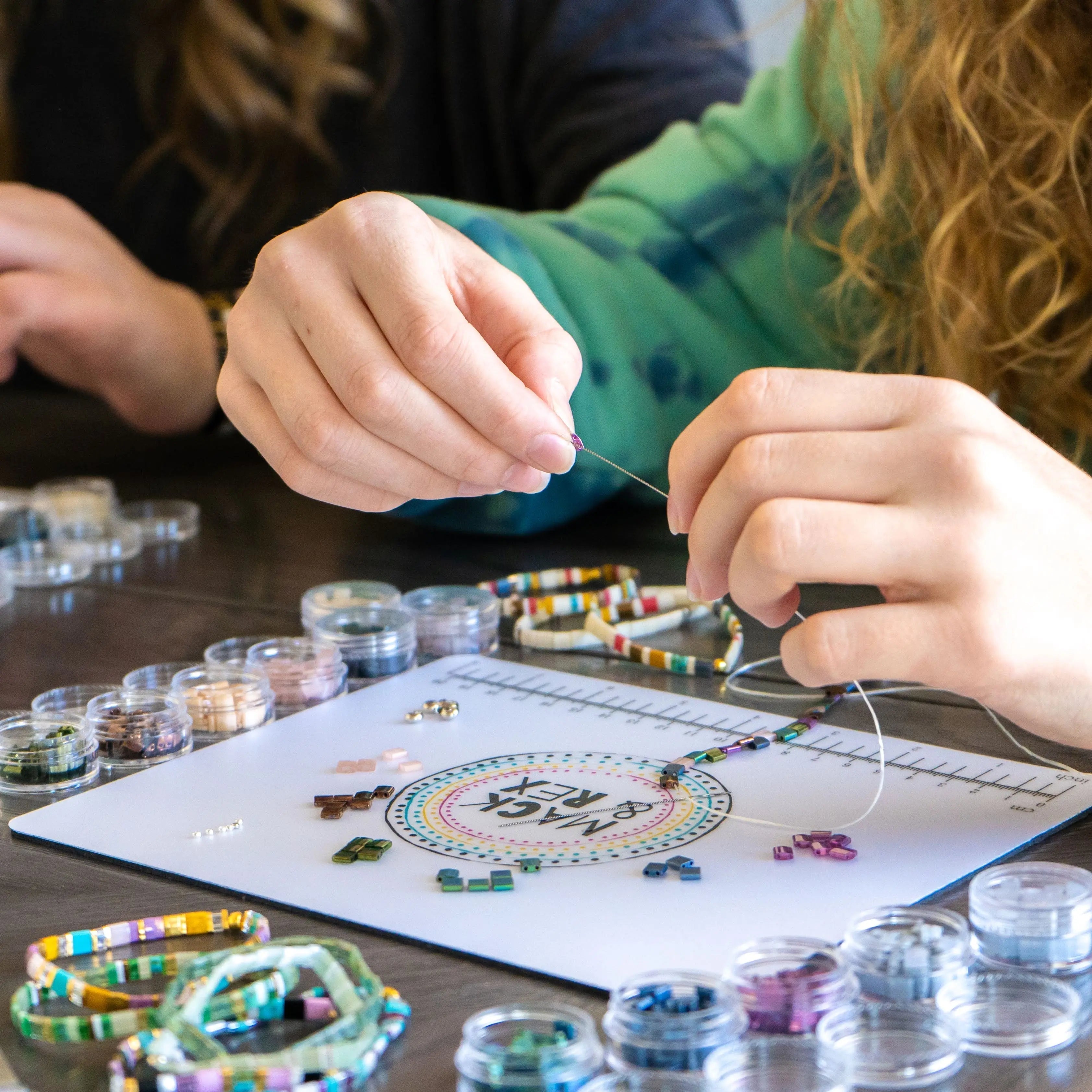
Tila beads are two-hole, flat glass tiles made by Miyuki, the Japanese bead manufacturer that's been producing seed and specialty beads since the 1930s. Mack & Rex sources genuine Miyuki tila beads and strings them on crystal-cord elastic for bracelets that stretch on and off without a clasp. We build the finished stacks in-house; we don't manufacture the beads themselves, and we're upfront about that. It's part of why the color is so consistent from batch to batch.
Why do earth tones work so well for a fall tila bead bracelet stack?
Earth tones read as fall because they mirror what's actually changing outside: green leaves shifting to rust and gold, wheat fields going mustard, bark going darker bronze. A tila bead stack in that range photographs well against denim, flannel, and knit sleeves, and it doesn't compete with the rest of a cool-weather outfit the way a neon summer stack would.
Color theory backs this up. Earth tones sit close together on the color wheel and share a similar level of saturation, which is why they blend instead of clash. Earth tones are generally defined as colors resembling soil, wood, and unbleached fabric, and they read as warm, grounded, and low-contrast compared to jewel tones or brights. That's exactly the effect you want when you're stacking three or four bracelets and don't want any single one to fight for attention.
What are the best earth-tone color combinations for a fall stack?
Start with a base bracelet in a matte olive or army green, add a rust or terracotta bracelet as the mid-tone, and finish with a mustard or warm bronze piece for contrast. Three colors is the sweet spot for beginners: enough variation to look intentional, not so much it looks busy.
A few combinations worth trying this fall:
- Harvest classic: rust + olive + mustard. This is the trio that shows up the most in our own fall drops, and it's the one we get the most repeat questions about.
- Warm neutral: terracotta + taupe + warm bronze metallic. One reviewer described a taupe tila bead as "a nice color" that "will make a great accent color," which is exactly the role it plays here, softening the two warmer tones without going flat.
- Bold harvest: deep rust + bronze metallic + a single mustard accent bracelet worn slightly looser than the rest.
- Olive and gold: two shades of olive plus one warm gold-bronze piece for a stack that leans more subtle, better for the office than for a football tailgate.
If you want the palette pre-built, no matching required, our EVERGREEN EDIT collection leans into the olive-and-bronze end of this range, and RETRO SUNSET pulls rust and mustard with a warmer, slightly retro cast. Both are made of finished, ready-to-wear bracelets in the tila bead bracelets collection, so you can grab a stack that's already color-matched rather than guessing at combinations.
How do you build and layer an earth-tone tila bead bracelet stack?
Layer thickest to thinnest. Put your widest or darkest bracelet closest to your palm, wrist to hand, then work outward with lighter or narrower pieces so the stack has a visual gradient rather than a pile.
A few build rules that hold up no matter the season:
- Cap most stacks at three to four bracelets. Past that, individual colors start to blur together and the earth-tone effect gets muddy, not layered.
- Mix finishes. A matte olive bracelet next to a glossy rust one adds texture without adding a new color.
- Add one metallic. A single bronze or warm gold tila bracelet acts like jewelry hardware, it pulls the whole stack together the way a belt buckle finishes an outfit.
- Keep one bracelet as the "anchor" you never swap out, then rotate the other two or three depending on what you're wearing.
Interweave's guide to using a color wheel for beading projects notes that pairing colors close together on the wheel, called analogous colors, creates a calmer, more cohesive look than complementary pairs do. Rust, olive, and mustard sit close together on the wheel, which is a big part of why an earth-tone tila bead bracelet stack looks put-together even when you didn't plan every piece down to the shade.
What should you wear an earth-tone tila bead bracelet stack with?
Earth-tone stacks pair naturally with the fabrics fall already leans on: denim, corduroy, flannel, chunky knits, and leather. They read as intentional against a cream sweater, hold their own against a plaid flannel, and don't disappear the way pale summer pastels can under long sleeves.
For everyday wear, push the stack up to mid-forearm under a rolled sleeve so it shows when you reach for a coffee cup or your kid's backpack strap. For a dressier fall outfit, keep it lower on the wrist near a watch or a simple gold chain bracelet. Because the bracelets stretch on and off, you're not stuck with one placement all day; slide them where they photograph best and move them again for practical stuff like loading the dishwasher.
How do you get the sizing and fit right so a fall stack stays put?
Fit matters more here. A loose bracelet in a multi-piece stack slides around and drags the ones next to it, throwing off your color order within an hour. Mack & Rex bracelets come in inclusive sizing from XXS to 5XL, and the crystal-cord elastic is built to stay snug through normal daily movement, including school pickup, yard work, and the occasional impromptu dance party in the kitchen.
To size a stack correctly: measure your wrist where you'll actually wear the bracelets, not lower on the arm, and size each bracelet in the stack the same way rather than mixing a snug one with a loose one. A too-loose bracelet at the bottom of a stack will spin the whole layer and throw off your careful color order by lunchtime. Not what you want after twenty minutes of matching rust to olive to mustard. Every finished bracelet carries Mack & Rex's quality guarantee, so if the elastic doesn't hold up under normal wear, that's on us to fix.
Frequently Asked Questions
How many bracelets should be in a fall earth-tone stack?
Three to four bracelets is the standard range. Fewer than three and the color story doesn't fully read; more than four and individual colors start to blend together rather than layering cleanly.
Are Miyuki tila beads real Japanese glass?
Yes. Miyuki is a Japanese bead manufacturer, and tila beads are one of their specialty two-hole flat glass shapes. Mack & Rex sources genuine Miyuki product for every finished bracelet; we don't manufacture the beads ourselves.
Do earth-tone tila bracelets work for gifting in the fall?
They do. A pre-matched stack like EVERGREEN EDIT or RETRO SUNSET takes the color-matching guesswork out of gift shopping, and buy 3 finished bracelets, get 1 free (no code needed) makes it easy to gift a full stack rather than a single piece.
Can you mix earth tones with brighter colors left over from summer?
You can, in small doses. Add one brighter bracelet, like a single turquoise or coral piece, to an otherwise earth-tone stack as an accent rather than splitting the stack evenly between two palettes.
Does Mack & Rex ship earth-tone bracelet stacks outside the US?
Yes, Mack & Rex ships internationally, with shipping and any customs or duties calculated at checkout. Free shipping applies to US orders over $100.
Ready to build your own stack? Shop finished, ready-to-wear tila bead bracelets in the tila bead bracelets collection, including EVERGREEN EDIT and RETRO SUNSET, and remember: buy 3 finished bracelets, get 1 free, no code needed.