


Friendship Bracelet Kits for Back-to-School Trading and Locker Swaps
How Many Friendship Bracelets Should You Pre-Make for Back-to-School Trading?
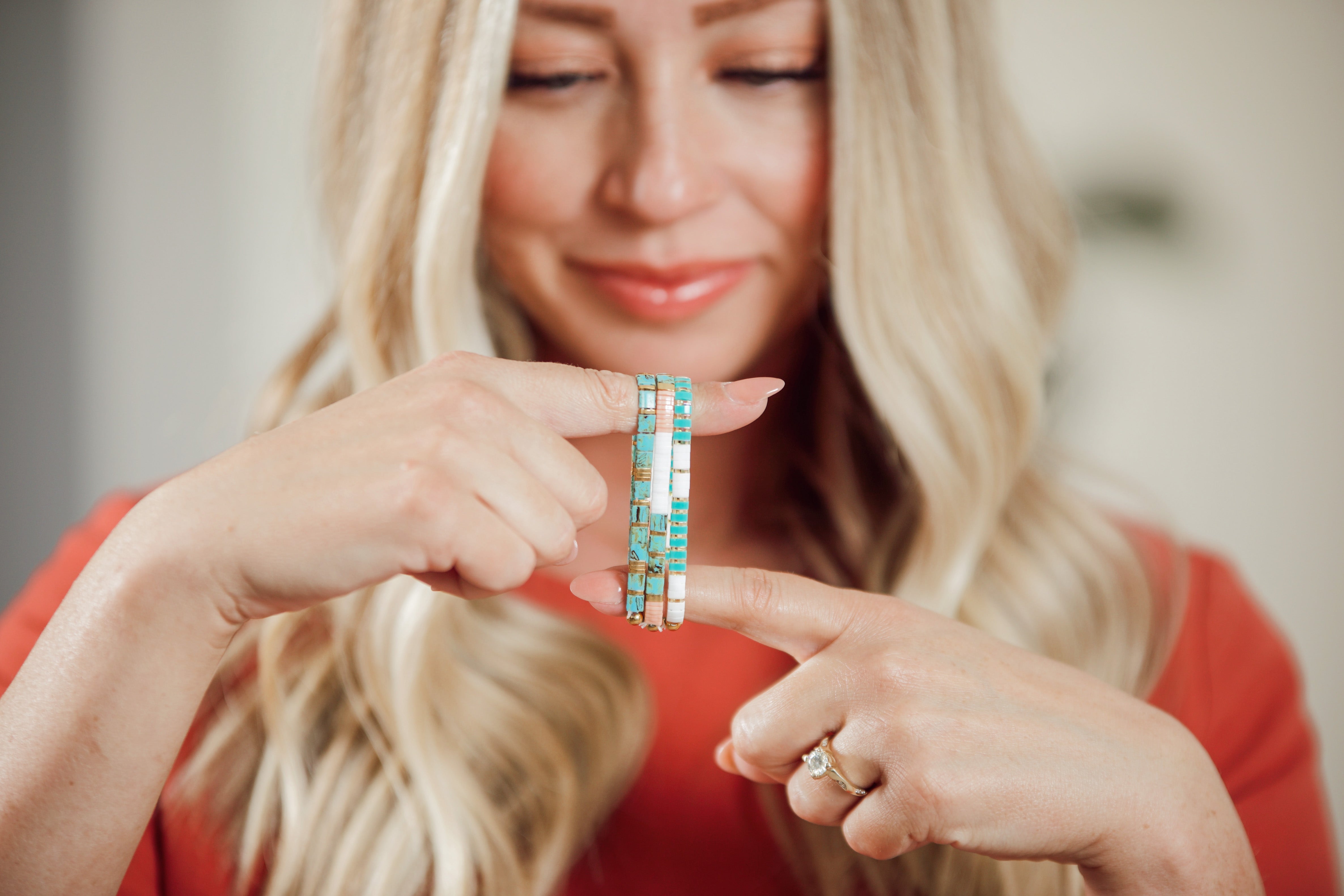
Plan for 15 to 25 bracelets for a typical friend group, or 40-plus for a bigger circle like a sports team or a whole homeroom. Pre-making a stash before the first bell means your kid shows up with enough to trade without scrambling to restock mid-week.
A quick safety note before anything else: Tila beads, crimp beads, and the other small findings in these kits are a choking hazard, so this is a project for school-age kids and teens with an adult supervising, not toddlers or preschoolers who still put small objects in their mouths. Keep loose beads and unfinished kits away from younger siblings while you work.
Back-to-school is a few weeks out for most districts right now, which is the right window to start. Locker swaps and cafeteria trades pick up fast once school is in session, and a kid who runs out of bracelets by October is stuck watching from the sidelines.
Why Do Kids Trade Friendship Bracelets at School?
Friendship bracelet trading has been a school tradition for decades, tied to the idea that a bracelet is a small, wearable token of a friendship. According to Wikipedia's overview of friendship bracelets, the custom traces back to Central American string bracelets and has been adapted many times over, including into bead-based versions kids trade today.
The Taylor Swift Eras Tour trend brought beaded trading bracelets back into the spotlight in a big way, and that habit carried straight into hallways and lunch tables. Trading isn't limited to concerts anymore. It's a normal part of how kids connect at recess, on the bus, and between classes.
What Kit Size Actually Makes Enough Bracelets to Trade All Semester?
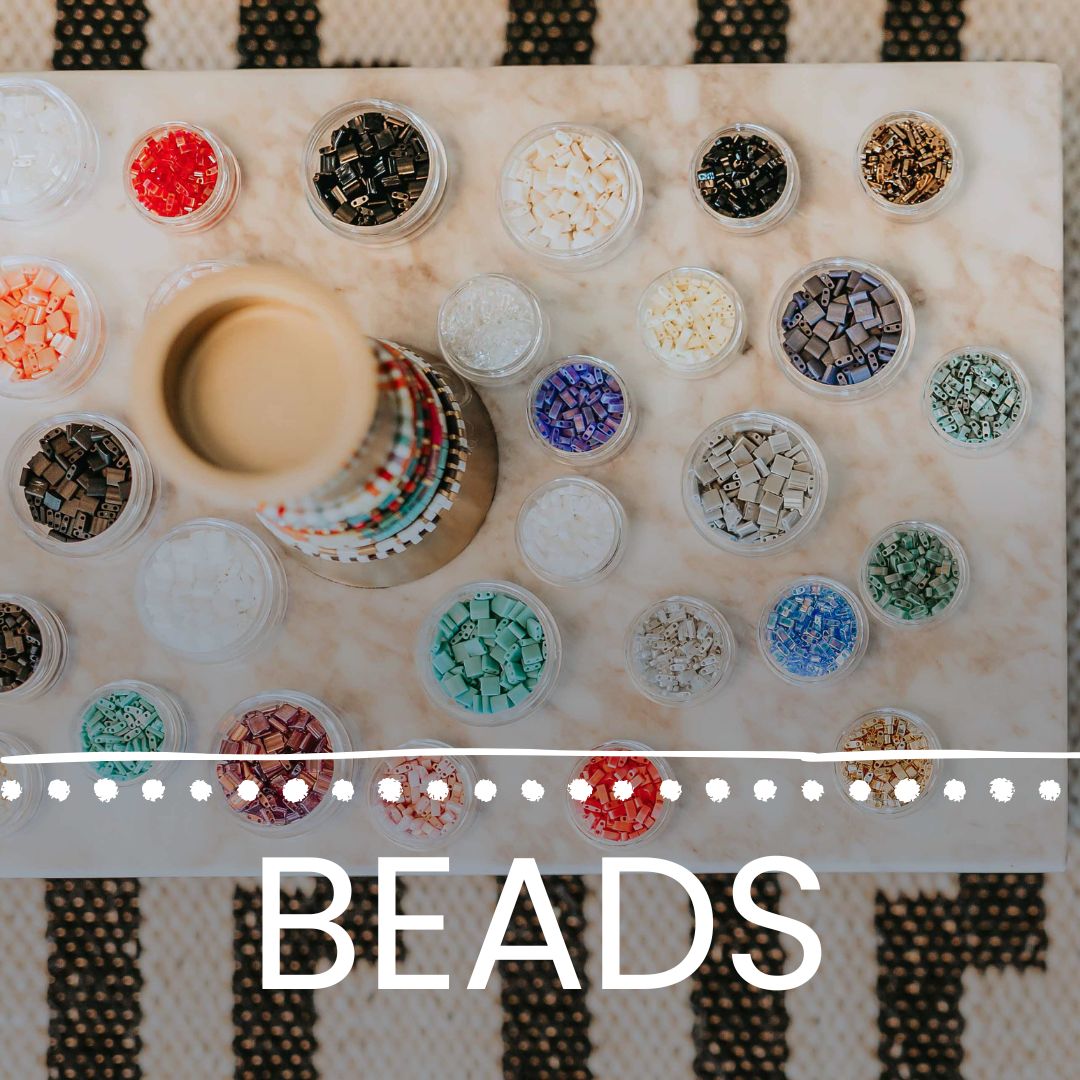
Match the kit to your kid's actual trading circle instead of guessing. The Tila Bead Starter Kit is $189.99 and makes 20 bracelets from one of four color packs (Beachy, Envy, Neutrals, or Fierce), which is plenty for most friend groups. For a bigger circle, the Ultimate Tila Bracelet Kit runs $399.99 and makes 80 bracelets across 32 colors, better suited to an entire grade, a club, or a team.
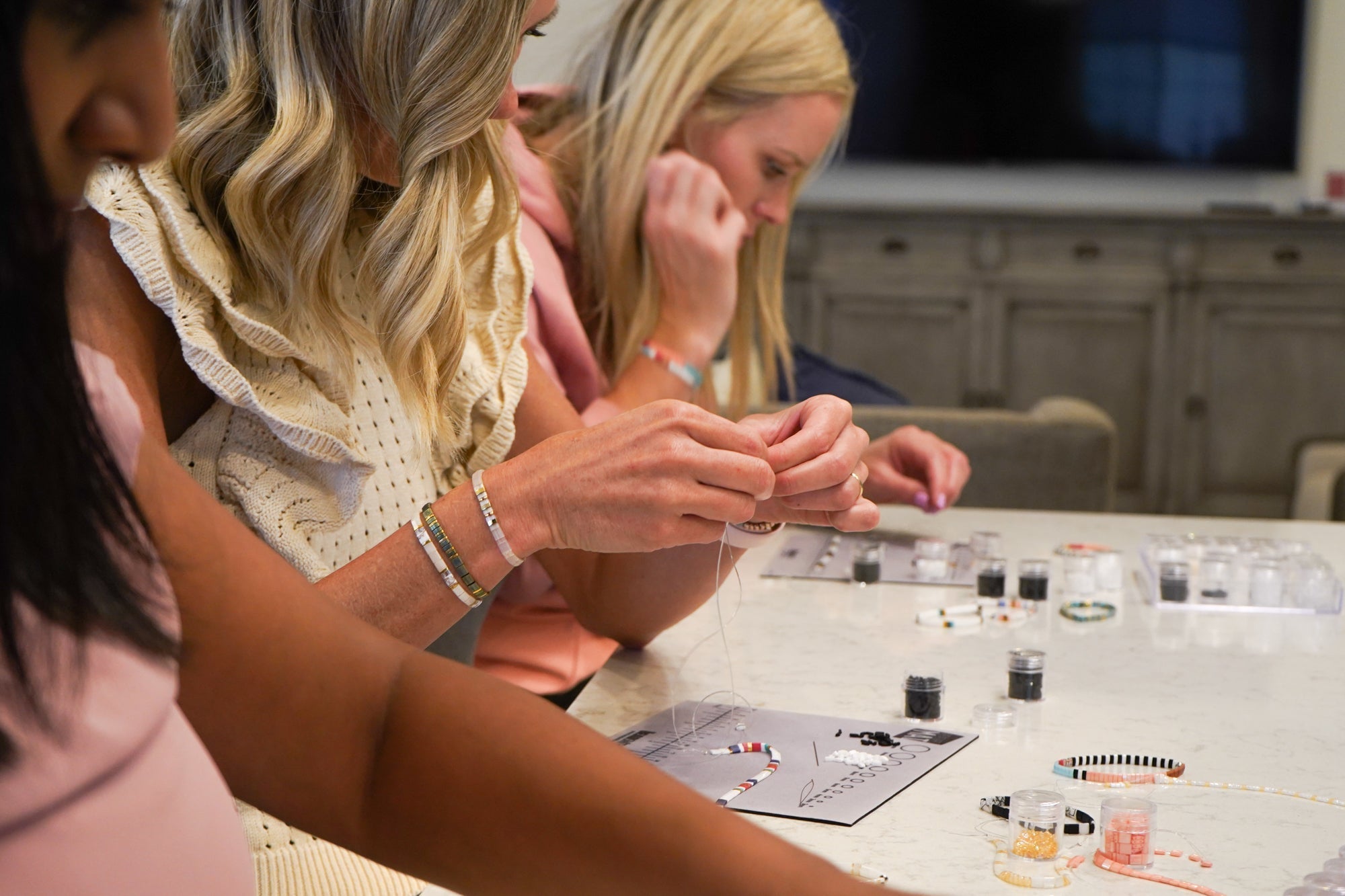
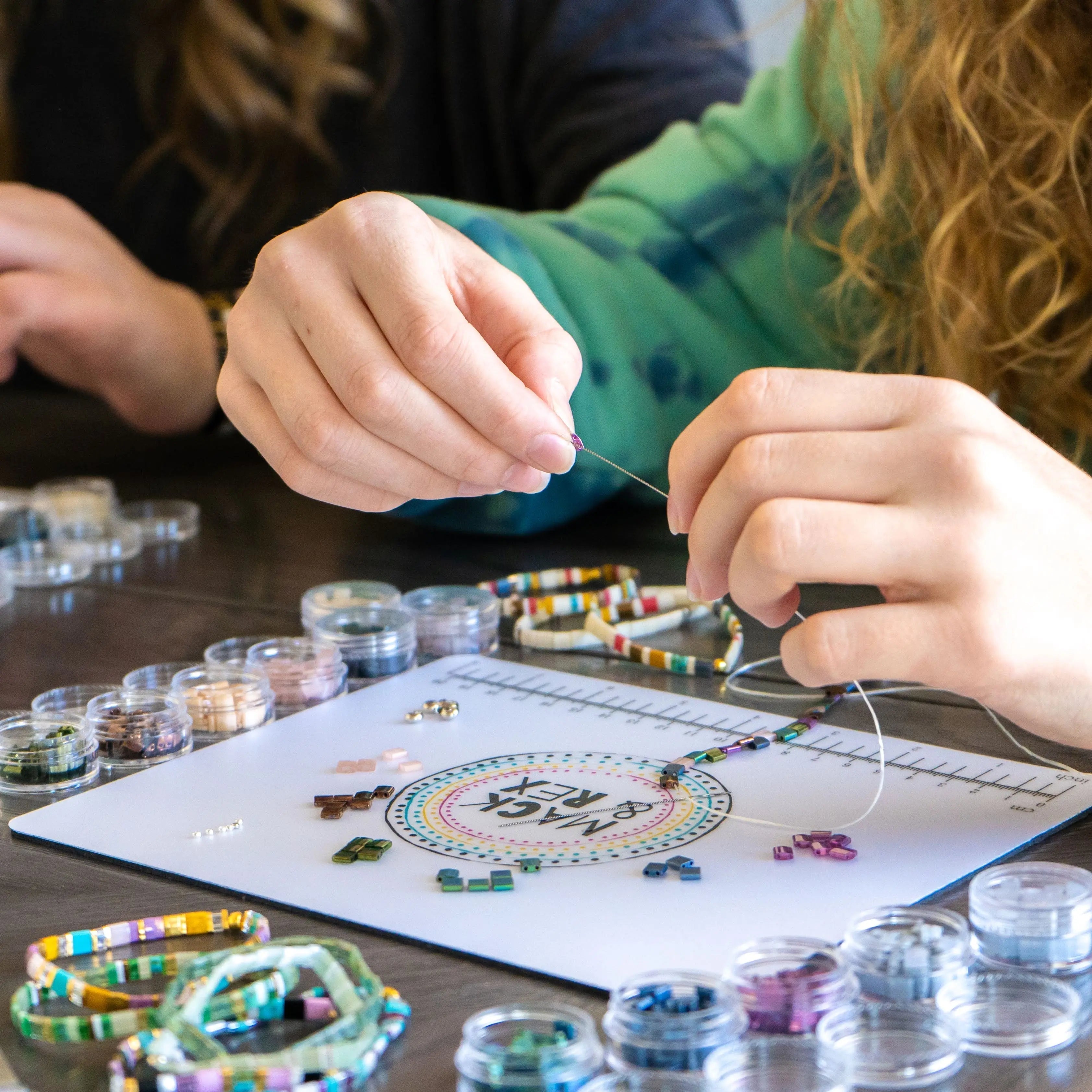
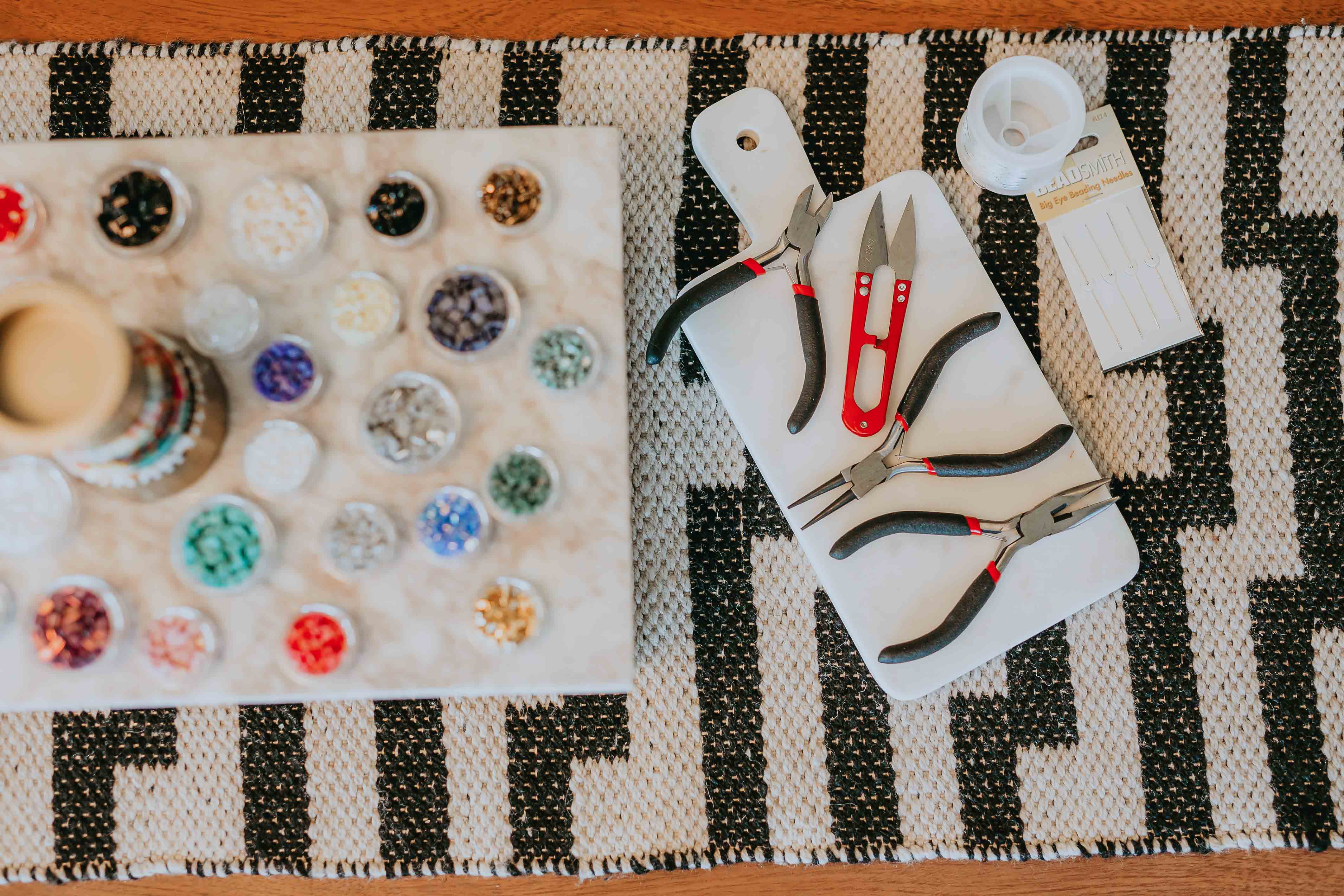
Every kit includes the tools, crystal-cord elastic, crimp beads, knot covers, and a bead mat, so there's nothing else to buy before you start. The beads themselves are genuine Miyuki tila beads, the Japanese glass beads known for a flat, glossy finish. Mack & Rex sources and kits them; Miyuki makes them.
Both kits qualify for free shipping, which kicks in automatically on any order over $100 (US shipping only). A single $44.99 trio kit won't clear that threshold on its own, so if a trio kit is all you need, budget for shipping separately.
How Do You Color-Code a Stash So Swaps Don't Get Confusing?
Give each friend group its own color lane. One approach: assign warm tones to close friends, cool tones to teammates, and a neutral pack for new trades. Another: let each color pack double as a "set," so a friend who gets one bracelet from the Beachy pack knows there are more in that family to collect.
Short version, this works because kids remember colors faster than patterns. A simple system beats an elaborate one every time a nine-year-old is sorting through a backpack pocket at recess.
How Do You Pre-Make a Full Trading Stash Before the First Day of School?
- Count the trading circle. Get a rough headcount of who your kid actually swaps with, then add a few extras for new friends.
- Pick a kit sized to that number. 20 bracelets for a small group, 80 for a bigger one.
- Set up color coding. Assign a color family or pattern to each friend group before you start stringing.
- Pre-make and bag individually. With an adult supervising the beads, work through the stash in one or two sittings and bag each finished bracelet.
- Store it somewhere supervised. Keep the finished stash and any leftover beads in a labeled container, out of reach of younger kids.
Working in short sessions beats one long marathon. Most kids lose focus after 30 to 45 minutes, and an adult present the whole time keeps small beads and crimp findings off the floor and away from little hands.
Why Cord Quality Matters When Bracelets Leave the House
A bracelet that lives in a backpack, gets pulled on and off a dozen times a day, and survives gym class needs real crystal-cord elastic, not thin thread. Mack & Rex kits use .5mm crystal elastic with locking beading needles and crimp beads, the same cord used in the ready-to-wear bracelets, so a traded bracelet doesn't snap before the semester's out. For general tips on picking and tying off elastic beading cord, Craftsy's craft blog has solid technique breakdowns.
One Mack & Rex customer put it this way in a product review: "The elastic has not stretched out and the tiles are as beautiful as the day I got it." That's the bar for a bracelet that's going to get handed off, worn, and shown around a classroom for months.
What Should Adults Know Before Handing a Kit to a Kid?
Read the room before you hand over the kit. If a younger sibling is around, keep the loose beads and unfinished bracelets on a high shelf between sessions. The American Academy of Pediatrics' choking-prevention guidance notes that small round or cylindrical objects are a common choking risk for kids under 4, which is exactly the profile of a loose bead or crimp finding. These kits are built for school-age kids and teens working with an adult nearby, and that supervision doesn't stop once the bracelets are finished. Loose beads left in a backpack pocket or on a nightstand are still a hazard for a younger sibling who finds them later.
Frequently Asked Questions
How many friendship bracelets should a kid bring to school to trade?
Most families aim for 15 to 25 bracelets for a typical friend group, which lines up with a 20-bracelet starter kit. Bigger friend circles, sports teams, or homeroom-wide swaps usually call for 40 or more, which is where an 80-bracelet kit makes sense.
Are friendship bracelet kits safe for young kids?
Tila beads, crimp beads, and other small findings in these kits are a choking hazard, so they are made for school-age kids and teens working with an adult nearby, not toddlers or preschoolers who still mouth small objects.
When should you start making bracelets for back-to-school trading?
Start 3 to 4 weeks before the first day. That gives you time to finish a full stash across a few short sessions instead of one long marathon, and it leaves buffer if a color pack needs reordering.
Do stretch-cord friendship bracelets hold up to a full school year?
Quality crystal-cord elastic, tied off with a proper knot and crimp beads, holds up through backpacks, lockers, and repeated on-off wear far better than thread-strung bracelets, which fray and snap sooner under the same daily use.
What is the difference between a starter kit and the ultimate kit for a trading stash?
The Tila Bead Starter Kit ($189.99) makes 20 bracelets from one of four color packs. The Ultimate Tila Bracelet Kit ($399.99) makes 80 bracelets across 32 colors, which suits a bigger trading circle, a whole grade, or a group project.
Ready to build the stash before the first bell? Browse the full lineup of bracelet-making kits and pick the size that matches your kid's trading circle. Every kit ships with the tools, elastic, and beads needed to get started, and orders over $100 ship free.