Heishi Bead Bracelet Ideas You Can Make From One Kit
What can you make from one heishi bead kit?
Quite a lot more than one bracelet. A single kit of heishi beads can become a minimalist stack, a color-block cuff, a word bracelet, a matching anklet, and a layered set, as long as you plan the colors before you start. This post walks through six ideas, with notes on how to stretch one purchase across all of them.
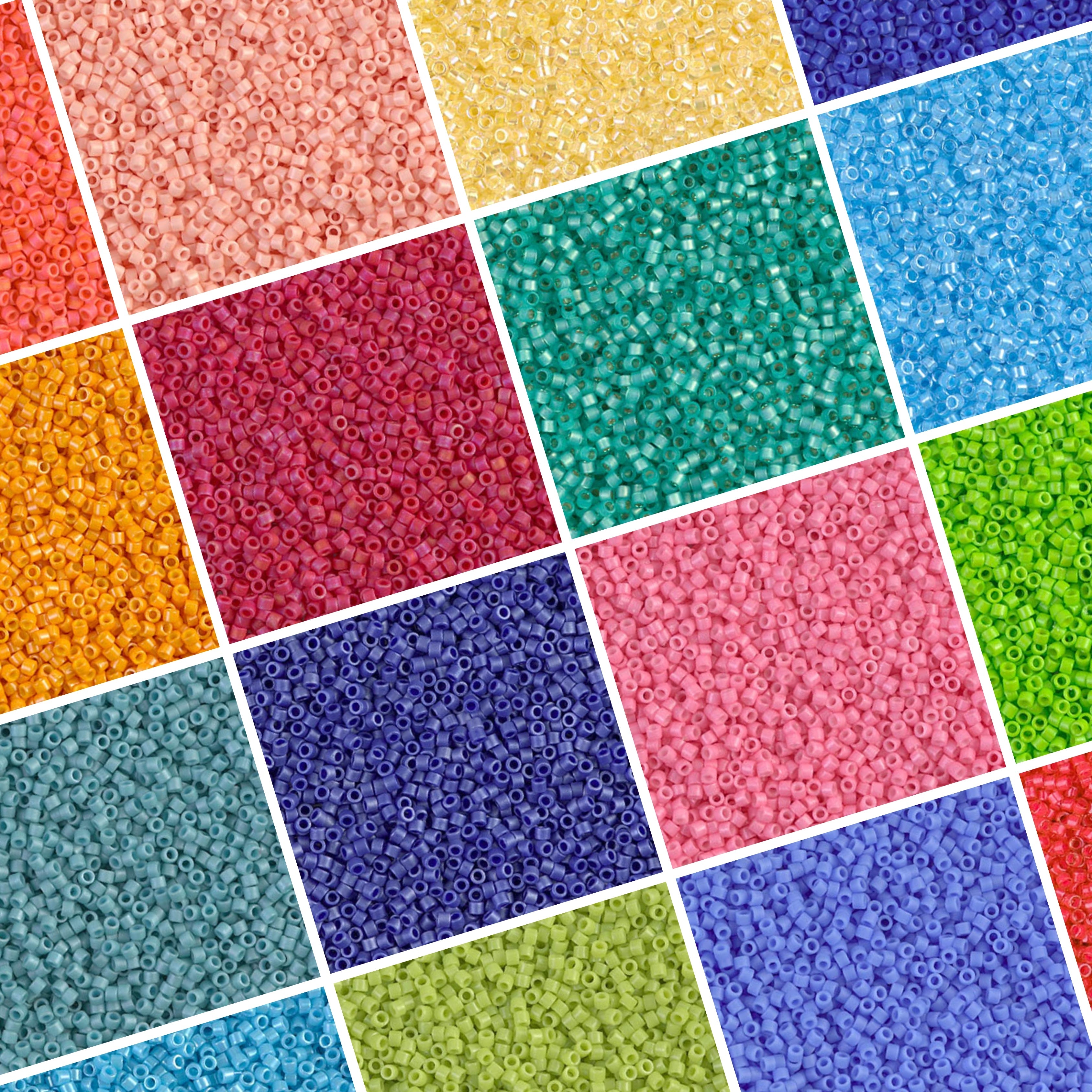
Heishi beads are thin, flat discs, and that shape is what makes them so flexible. They sit snug against each other, so a handful of colors can read as a dozen different looks depending on how you arrange them. If you're new to the style, the Wikipedia entry on heishi covers the history. The beads started as hand-cut shell and stone in the Southwest, and today you'll also find them in polymer clay, which is lighter and comes in far more colors.
At Mack & Rex, the heishi bead collection runs from about $2.44 to $13.56 per color for the 6mm beads. That's a small spend for the number of combinations you can pull out of it.
Why plan several bracelets before you open the kit?
Because beads run out in odd places. If you string the first bracelet with half your favorite color, the last bracelet ends up short on it. A quick plan, even a sketch on the back of an envelope, keeps every project looking intentional.
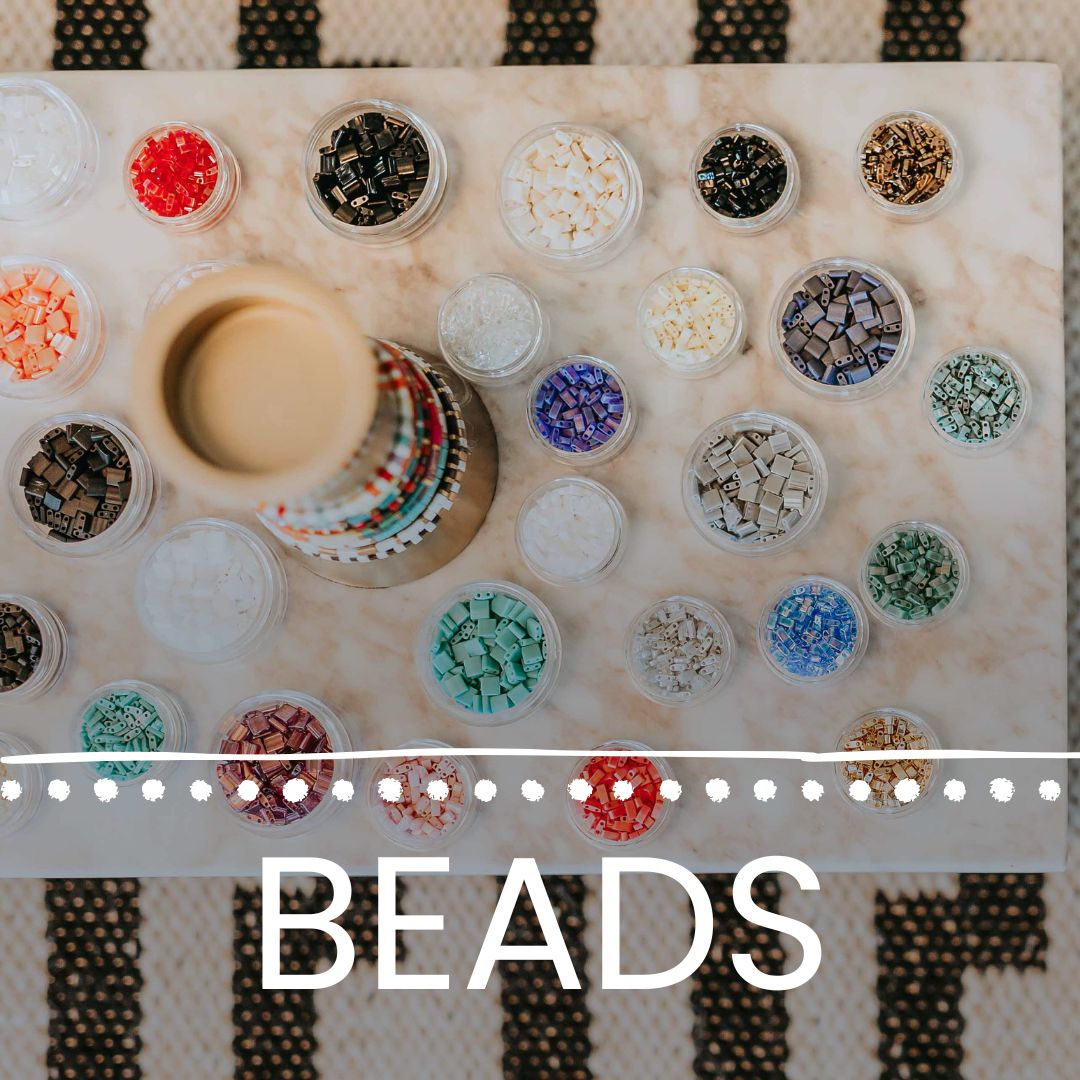
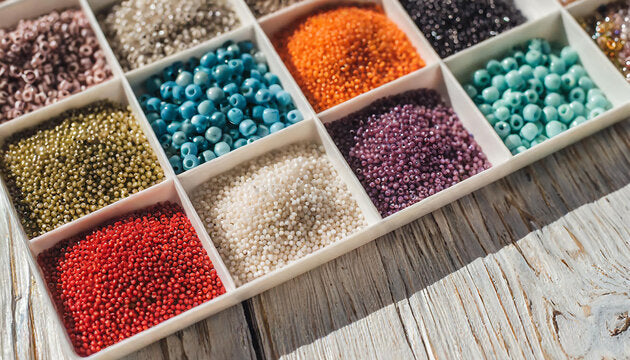
The habit that works: lay all your beads out by color. Count roughly how many of each you have. Then decide which colors are the stars (the ones you want in two or three projects) and which are supporting players. Most heishi bracelets take a lot of beads, since each disc is thin, so a color you only have a small pile of should go in just one design.
Sound fussy? It takes five minutes. Skipping it costs you a redo.
What does a single-color minimalist stack look like?
It's three thin bracelets in one color family, worn together. Think three shades of sage, or sand, cream, and tan. The look is quiet, goes with everything, and uses the fewest beads per bracelet of any idea here.
Make the three at slightly different lengths or different widths so they don't stack into one blur. A skinny one, a medium one, and one with a tiny spacer or two. Because the colors are close, small differences in bead size and finish give the set its depth.
This is also the best starting project if you're making bracelets with someone who's new to the craft. There are no color decisions to argue over, and the result looks polished even when the stringing isn't perfect.
How do you make a color-block bracelet?
Group your beads into two or three bold sections, each in a single color, and string them in solid runs. A bracelet that's one-third coral, one-third cream, and one-third teal is a color-block. It's graphic and easy to read from across the room.
Run lengths matter. Equal sections look tidy and modern. Uneven sections (a long block of one color, then two short ones) look more playful. Try laying the pattern out flat on a towel before you commit, since the towel keeps the beads from rolling away.
Color-block is where a kit with several colors earns its keep. One block of each color goes into this bracelet, and the leftovers feed your other projects.
Can you spell a word or name with heishi beads?
Yes, with letter beads. String a name, a nickname, or a short word like "LOVE" or "MOM" in letter beads, and use plain heishi discs on both sides as the band. Letter beads are usually larger than the discs, so the word becomes the center of the bracelet.
A few practical tips. Check that your letters face the right way before you tie off, because it's easy to string a word backward. Keep the word short if you want it to sit comfortably on the wrist. And choose a heishi color that contrasts with the letters so the word is easy to read.
This is a great one for gifts. A grandmother's initials, a child's name, a team number. One small project, and it feels personal.
How do you make a matching anklet?
Use the same pattern as your bracelet, with more beads for the longer length. A matching anklet repeats your favorite bracelet design at roughly ankle size, and the pair reads as a set.
Plan for the extra length when you count beads. An anklet needs noticeably more beads than a wrist bracelet, so the anklet is the project most likely to eat into your supply. If you're working from a small kit, make the anklet from your most plentiful color or keep the pattern simple, like a solid run with a single accent.
Measure before you string. Wrap a piece of cord around the ankle, mark it, and add a little room so it isn't tight. Our polymer clay discs are lightweight, so even a longer piece wears comfortably.
What's a layered three-bracelet set?
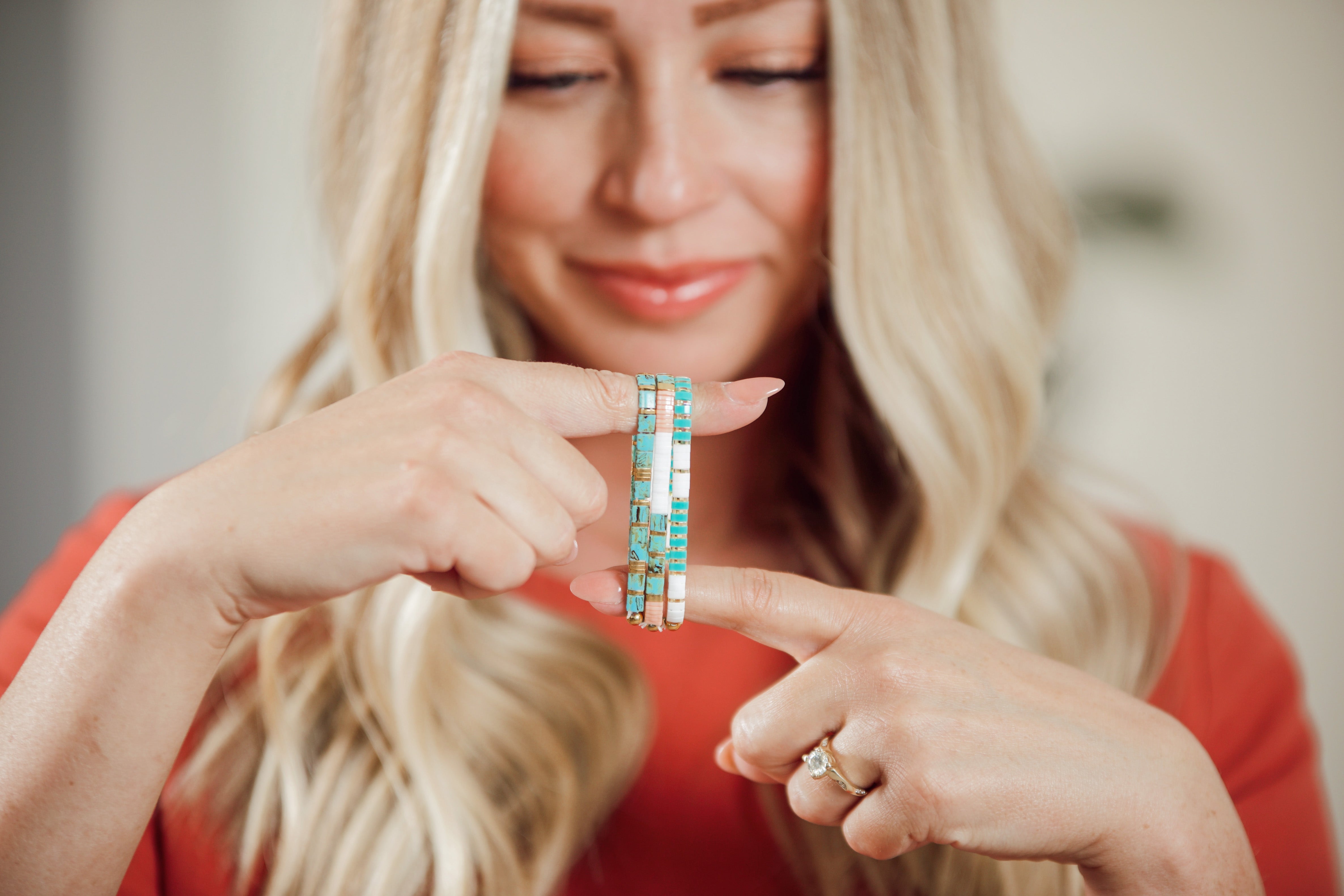
It's three bracelets built to be worn together, each with a different personality. One is a solid color, one is color-block, and one has a small accent. Worn on the same wrist, they look collected over time rather than bought as a set.
A formula that works: pick one base color, one contrasting color, and one neutral. Bracelet one is all base. Bracelet two alternates base and contrast. Bracelet three is neutral with a few contrast beads. Every bracelet shares at least one color with another, which ties the stack together.
This idea shows off the value of working from one stash. Three finished bracelets, one set of beads, no new purchase.
How do you mix accent beads into heishi bracelets?
Drop in one to three accent beads per bracelet. A gold spacer, a small glass bead, or a single charm bead breaks up a long run of flat discs and gives the eye somewhere to land. Don't overdo it; a few accents look deliberate and ten look cluttered.
Accent beads are also how you make heishi match other pieces you own. Hunting for a specific glass bead to pair with a favorite outfit? Mack & Rex also resells Miyuki Japanese glass beads, including Tila, which are a separate third-party product with a very different feel from soft heishi discs. Retailers like Beadaholique carry a wide range of spacers and findings if you want to browse for accent pieces. For general background on bead types and materials, the Wikipedia page on beads is a handy reference.
Why is making bracelets together a good family project?
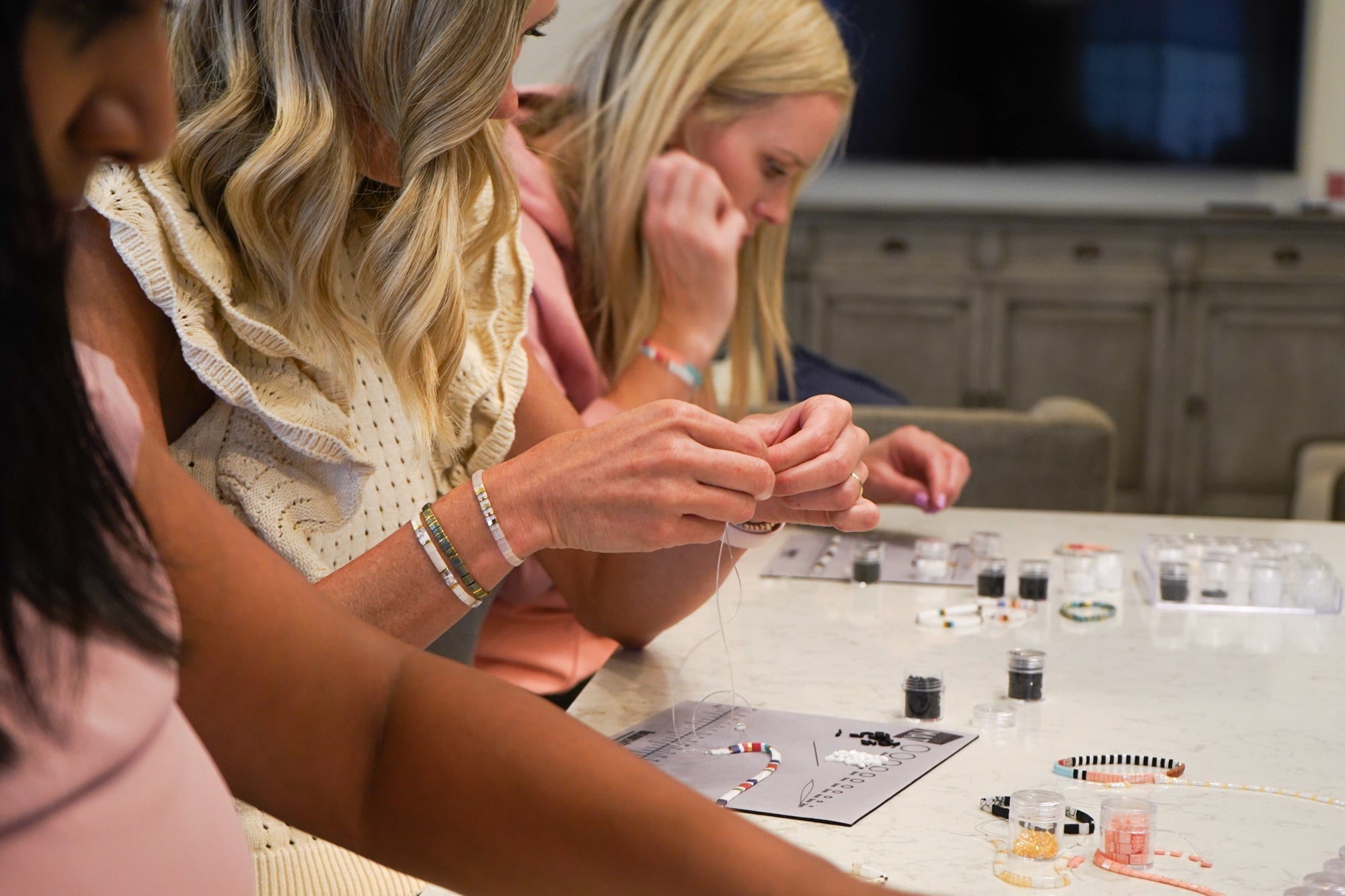
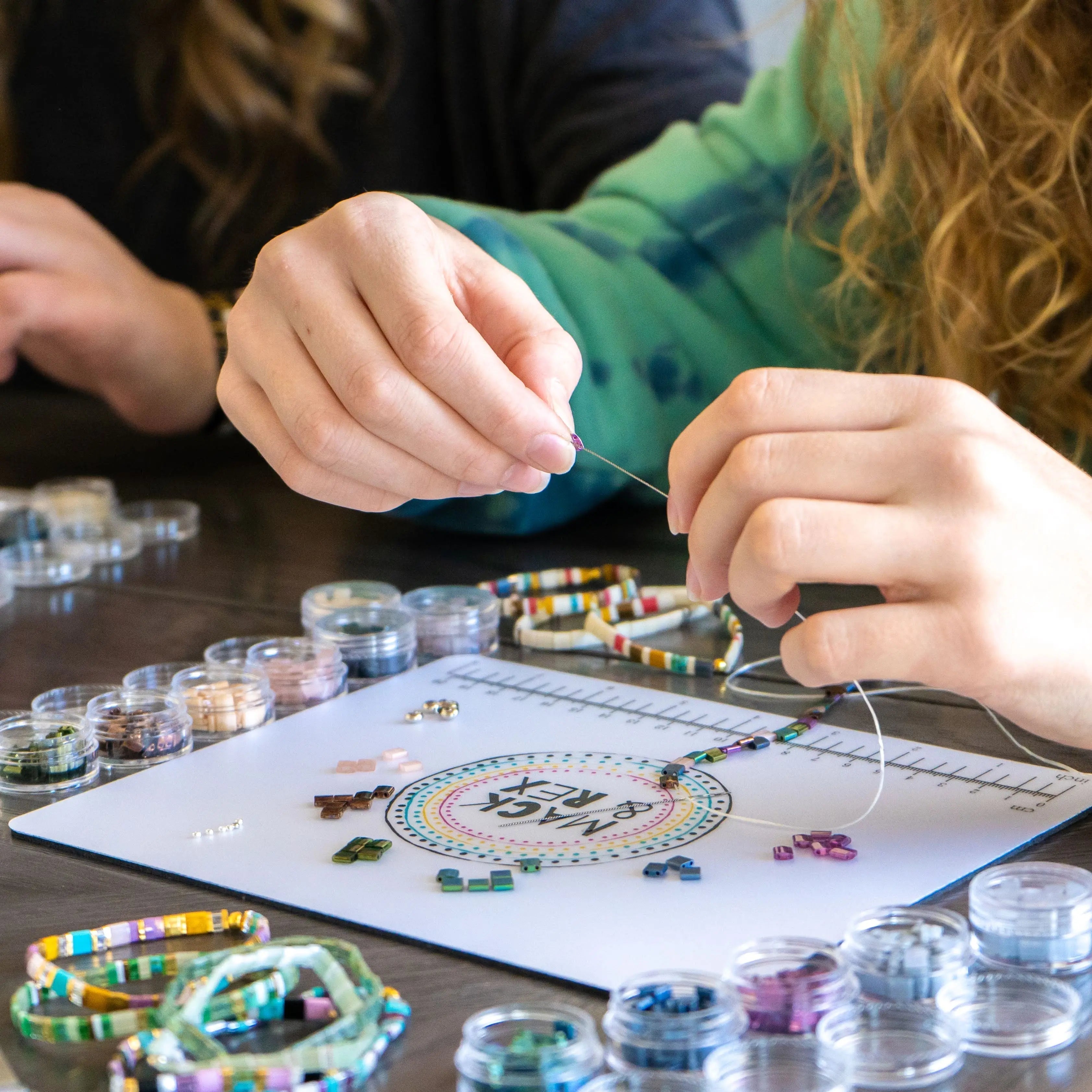
It's an easy activity where everyone finishes with something wearable. One kit can serve a whole afternoon: one person makes the minimalist stack, another does color-block, a third spells out a name. Nobody needs the same pattern, and everyone shares the same pile of beads.
That shared pile is where the fun happens. Trading colors across the table is half the activity. A mom and her two daughters started Mack & Rex around exactly this idea, and the same approach works for a grandparent and grandkids, a friend group, or a quiet weekend by yourself.
A safety note: beads are a small-parts choking hazard. If kids are crafting, an adult should be nearby, loose beads should stay away from very young children, and every stray bead should be picked up when you're done.
How do you stretch one kit across all six ideas?
Pick a palette of four or five colors, assign each color a job, and make the small projects first. The minimalist stack and the word bracelet use the fewest beads. The anklet and the layered set use the most, so save those for last, when you know exactly what's left.
If you'd rather not count beads at all, a multi-bracelet kit takes the guesswork out. Mack & Rex's Trio kits make three bracelets and run $44.99, and the all-in-one supplies kits run $39.99 to $43.99 if you also need cord, tools, and findings. For a big group or a repeat crafter, the Starter Kit is $189.99 and the Ultimate kit is $399.99. Prices move with product drops, so check the product page for current numbers.
Prefer to skip the stringing? Finished bracelets are in the shop too, and buy 3 bracelets, get 1 free applies to finished bracelets only (not kits or loose beads).
Where can you shop heishi beads?
Start with the Mack & Rex heishi beads collection. Pick your palette, plan your six projects, and start with the minimalist stack. Mack & Rex ships internationally, with shipping and any duties calculated at checkout, and US orders over $100 ship free.
Frequently asked questions
How many bracelets can you make from one heishi bead kit?
It depends on the kit and the style. A single-color stack of three thin bracelets, a color-block bracelet, and a matching anklet can all come from one kit if you plan your colors first. Check the bead count on the product page and sketch your designs before you start stringing.
What are heishi beads made of?
Heishi beads are thin, flat disc beads. Traditional ones are cut from shell or stone, and many modern versions are made from polymer clay. Mack & Rex sells polymer-clay and stone heishi beads in a range of colors.
Are heishi beads the same as Miyuki Tila beads?
No. Heishi are soft, flat disc beads in polymer clay or stone. Tila beads are square Japanese glass beads made by Miyuki, a third-party brand that Mack & Rex resells. They look different and wear differently, so many crafters keep both on hand.
Is it safe for kids to make heishi bead bracelets?
Beads are a choking hazard. Older kids can craft with an adult nearby, but keep loose beads away from very young children and clean up every stray bead when you finish.
Does Mack & Rex ship heishi beads internationally?
Yes. Mack & Rex ships internationally, with shipping and any customs or duties calculated at checkout. Free shipping applies to US orders over $100.