

How to Choose High-Quality Tila Beads for Bracelet Making
What Makes a Tila Bead High Quality?
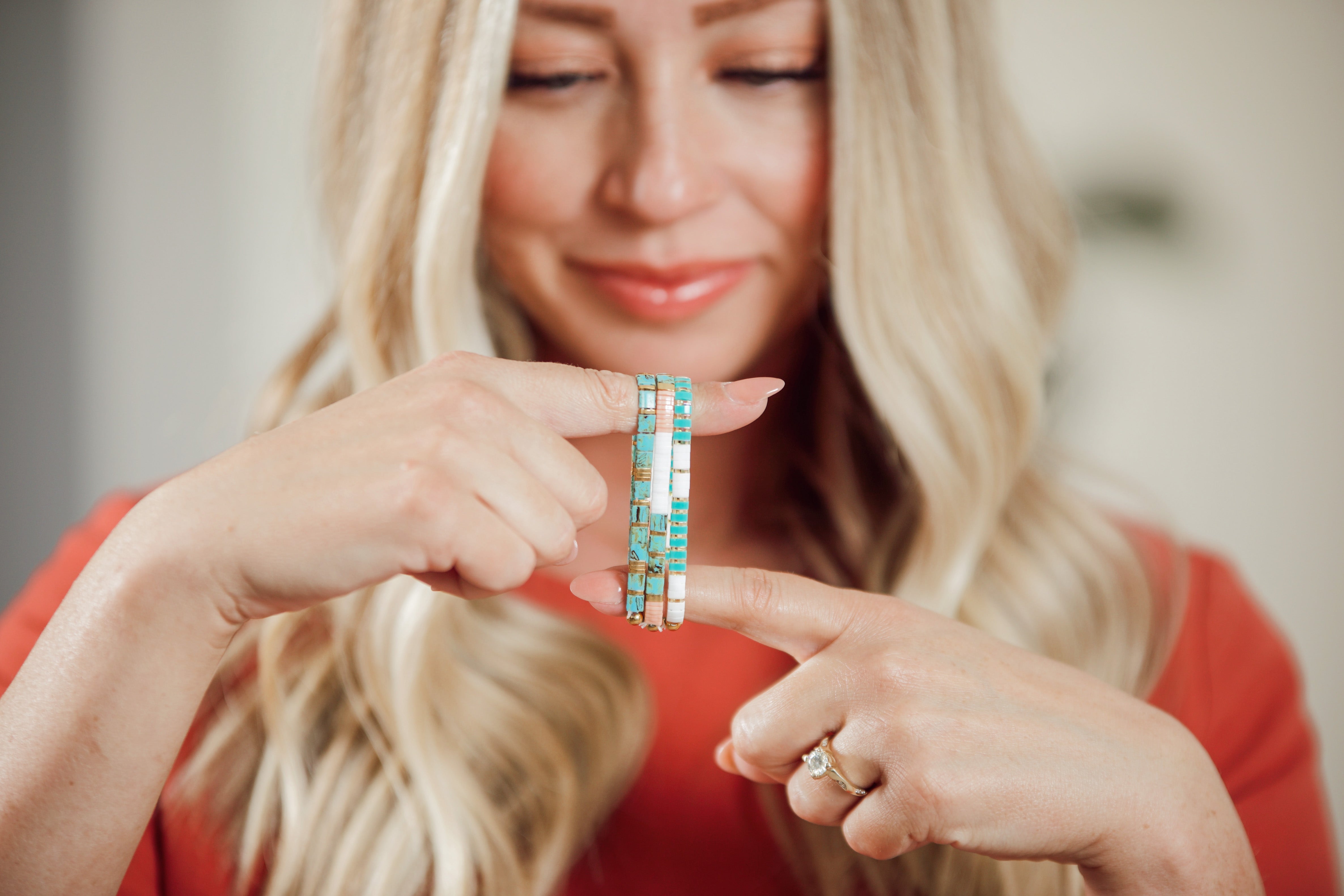
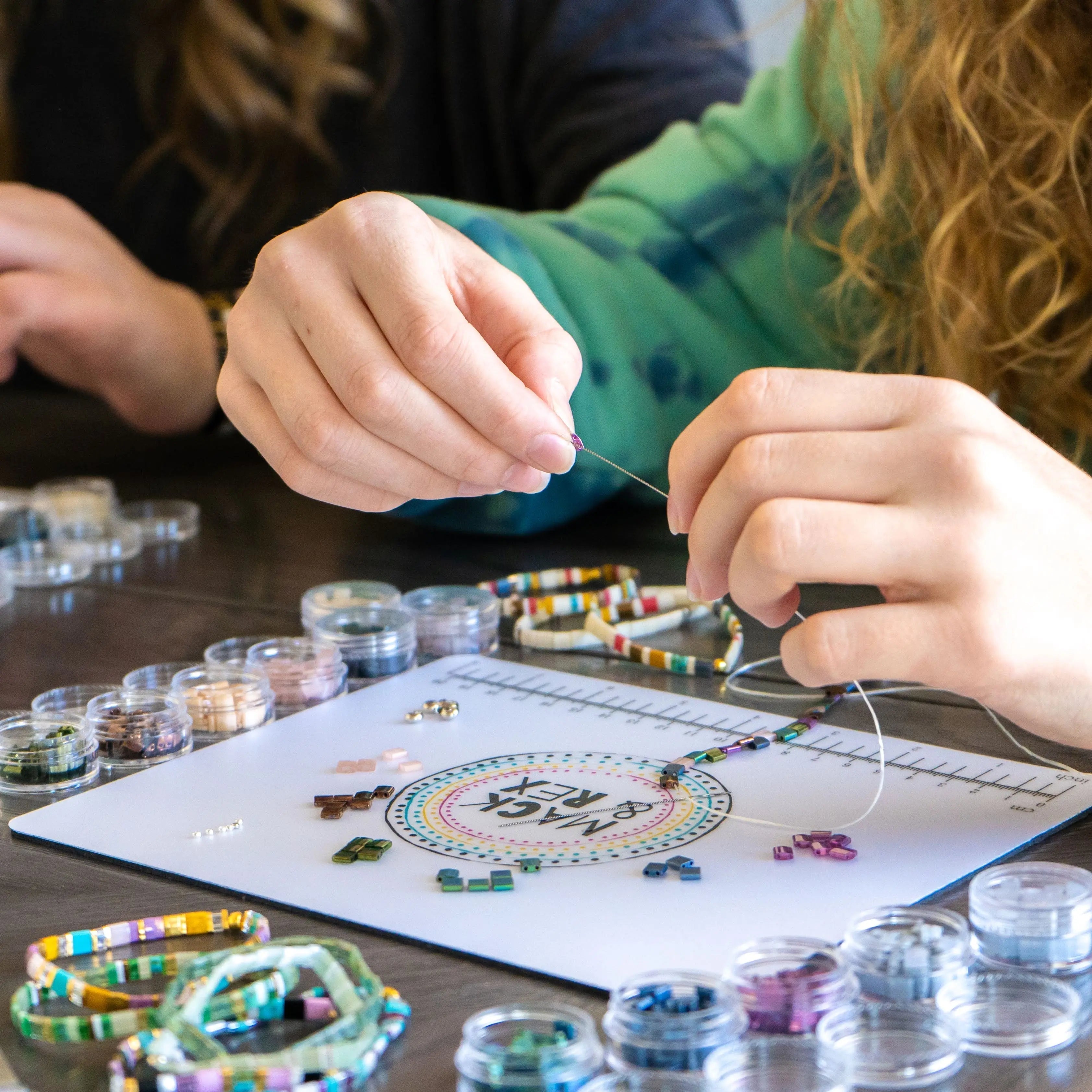
High-quality Miyuki Tila beads are precisely manufactured Japanese glass beads: flat 5mm squares, two parallel holes set at a consistent position, smooth hole edges that won't fray cord, and even color or finish across an entire batch. That precision is what lets a finished bracelet lie flat, thread easily, and hold up to daily wear without the cord breaking prematurely.
It's a short list of criteria. Any one of them being off makes the whole bracelet worse. Here's how to evaluate each one before you buy.
Why Does Uniform Size Matter So Much?
Every bead in your bracelet sits side by side. If the beads are different sizes, even slightly, the bracelet won't lie flat. You'll get gaps, lumps, and a finished piece that looks handmade in the wrong way.
Miyuki manufactures Tila beads to a consistent 5mm x 5mm x 1.9mm size. That's a manufacturing standard, not a marketing number. Because each bead in a batch has the same thickness and width, they tile against each other cleanly on the wrist. A flat square bead is already more forgiving than a round seed bead for stacking, though that advantage only holds if the sizing is actually consistent.1
Generic two-hole beads often come out of lower-precision molds. You'll end up sorting out undersized and oversized beads before you can string them, or you won't notice until the bracelet is done and nothing sits right.
What Should the Holes Look Like on Quality Tila Beads?
Smooth. Full stop.
Run a cord through a handful of beads before committing to a project. On authentic Miyuki Tilas, the cord moves through cleanly with no catching or dragging. That matters a lot for stretch bracelets because the cord flexes every time you put the bracelet on and take it off. Rough or slightly sharp hole edges work like a saw blade on the elastic: slow damage that's invisible until the bracelet snaps.
Low-quality beads sometimes show small glass burrs or sharp edges inside the hole. That comes from how the hole is formed during manufacturing. Good glass beadwork requires holes that are finished properly, formed rather than simply punched through. The Jewelry Maker's Library at Fire Mountain Gems covers evaluating bead quality for jewelry projects in more depth if you want a full primer.2
How Do You Spot Low-Quality Generic Tila Beads?
Three signals to look for:
Vague sourcing language. Listings that say "Japanese-style," "tile beads," or "two-hole glass beads" without a Miyuki product code (format: TL followed by four digits, or HTL for half-Tilas) are usually not Miyuki. Real Miyuki beads are sold with those codes because retailers are buying from a specific manufacturer and can point to it.
Unusually low price per gram. Miyuki Tila bead mixes from reputable sellers typically run $5 to $9 for a usable quantity. Seeing multi-ounce packs for $2 or $3 tells you something about the manufacturing standard. Quality glass from a precision manufacturer costs more to produce.
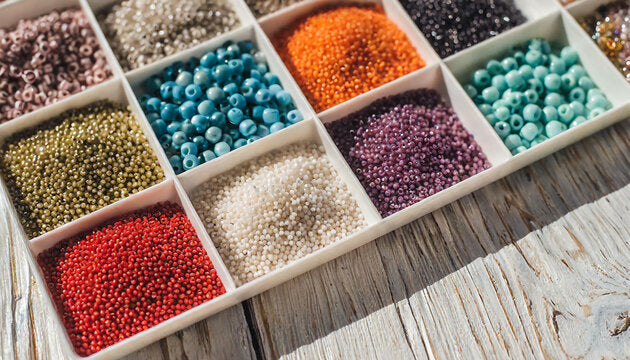
No color consistency within the pack. Open the bag and look at the beads. In a genuine Miyuki batch, the color is even across all of them. In a generic pack, you'll often see variation: some beads run a shade lighter, some have coating inconsistencies, some look slightly different from others sold under the same name. That's a direct result of less controlled production.
Does the Type of Glass Actually Matter?
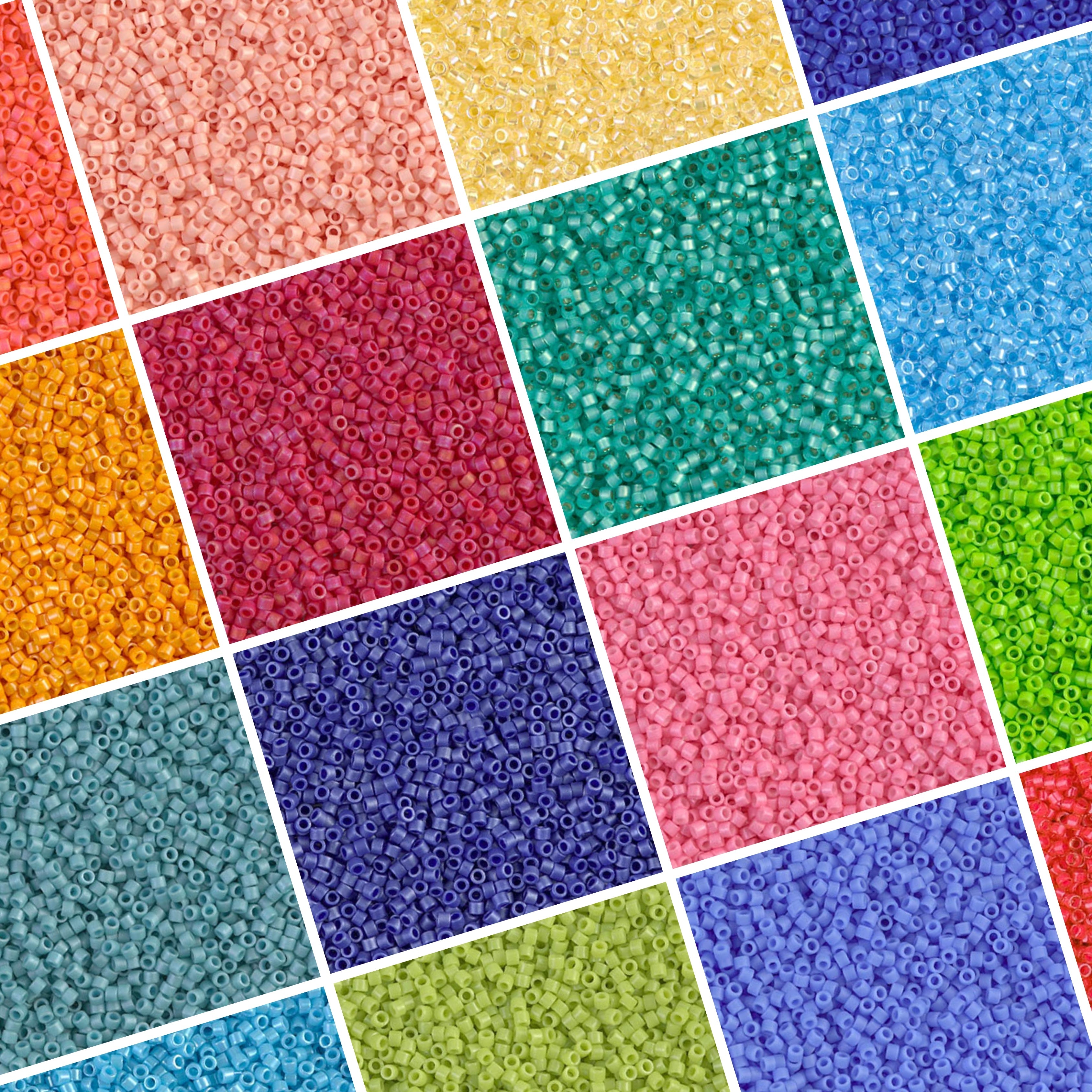
Yes, in a practical way. Miyuki uses high-quality soda-lime glass for their seed beads, processed to be consistent in opacity and finish. Colors are predictable and even. A matte finish looks uniformly matte across the whole bead; an AB (aurora borealis) finish catches light the same way on every bead in the batch.
Cheap beads are often made from lower-grade glass with less controlled manufacturing. You end up with beads where the finish is uneven, or where a metallic coating starts to wear or flake with regular use. For a bracelet you plan to wear daily, that matters. A bracelet that looks beautiful on day one and starts looking patchy by month three hasn't done its job.
One customer who buys Tila beads from Mack & Rex put it plainly: "Excellent quality -- will be perfect for my jewelry making needs." That's the baseline expectation with Miyuki. A reliable outcome, not a hope.
What About the Finish: Matte, Glossy, Metallic, AB?
Finish is mostly a style choice, with one practical note: some finish types are more durable than others.
Plain opaque and transparent finishes are the most durable because they're part of the glass rather than a coating on top of it. Metallic, galvanized, and some AB finishes are applied coatings. On quality beads like Miyuki's, those coatings are applied well and hold up. On cheap beads, the same finish types can start to rub or flake within a few months of regular wear.
If you're making a bracelet meant to last, something worn daily rather than reserved for photos, stick with opaque or transparent finishes. Or buy metallic finishes only from a reputable source where you can trust the coating quality. Matte finishes are durable and popular right now; many crafters pair matte Tilas with glossy ones in the same bracelet to add texture without relying on a complicated finish.
Should You Buy Individual Colors or Curated Mixes?
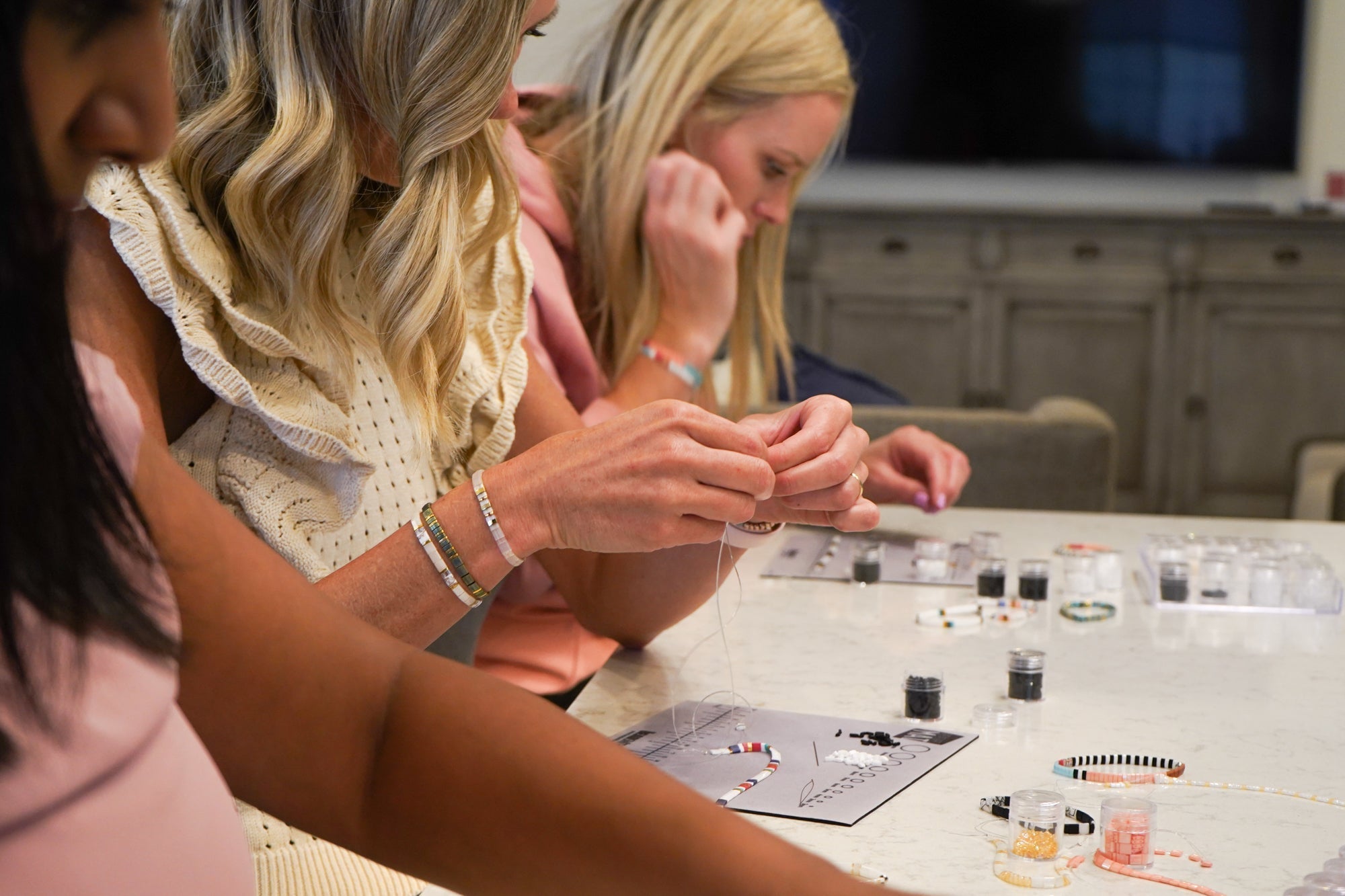
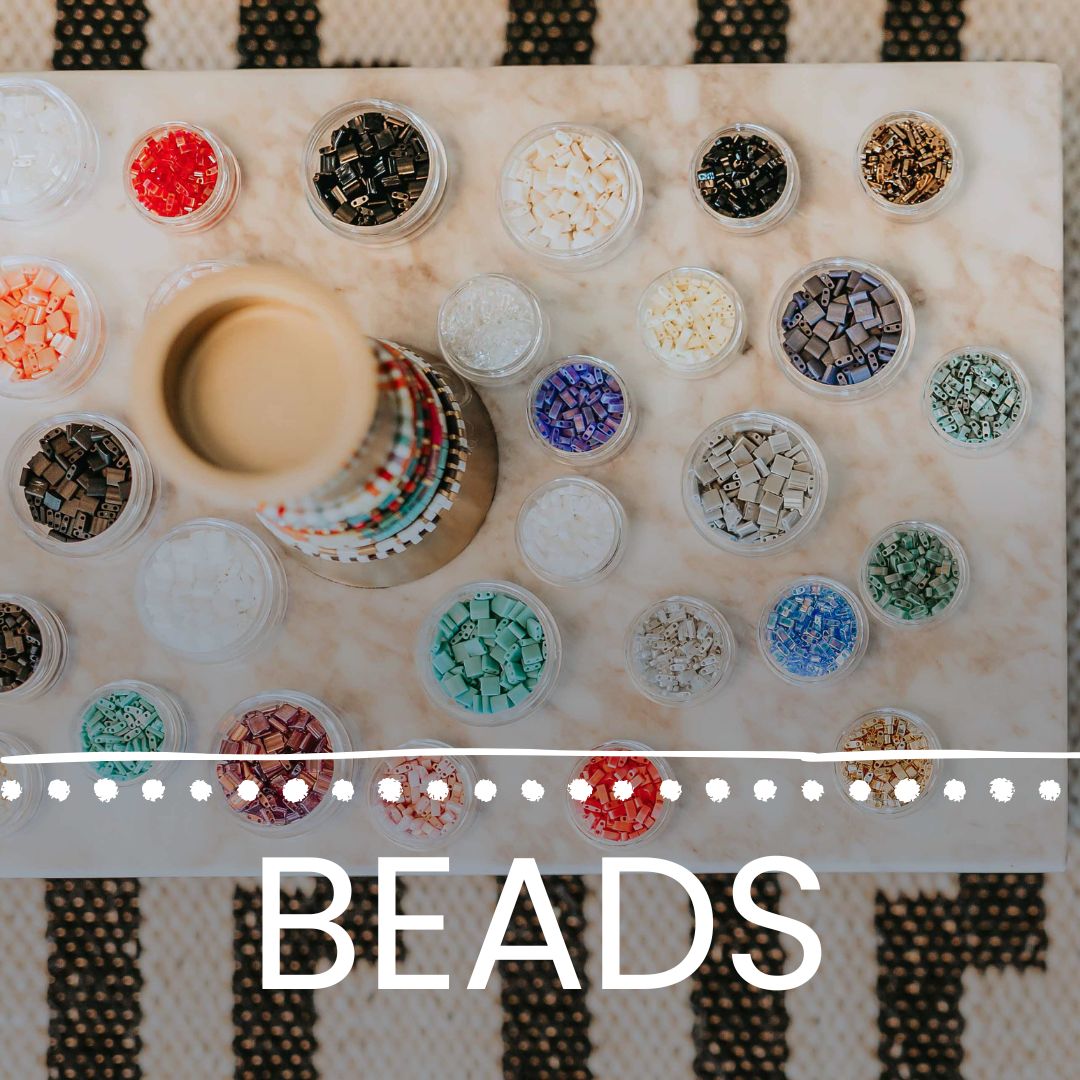
Depends on where you are in the process. Starting out with Tila beads, a curated mix removes the hardest part of the project: the color decisions. A well-designed mix groups colors that already work together, so you can focus on learning the threading mechanics without also managing a palette from scratch.
Mack & Rex sells curated Miyuki Tila bead mixes in the $5-9 range, and each mix yields multiple bracelets. They're selected for how the colors stack on the wrist, not how they look on a shelf. Once you've made a few bracelets and you understand which color combinations you like, buying individual colors and building your own palette makes sense. For most people starting out, though, the mix is the right call.
Browse the Mack & Rex Tila bead collection to see what's currently available. Mack & Rex curates and sells genuine Miyuki Tila beads (they source from Miyuki rather than manufacturing the beads themselves), selects for quality, and has a strong track record with repeat customers. Orders over $100 ship free within the US.
Beadaholique is another solid reference point if you want to compare options across retailers before deciding.3
How Do You Know If Your Beads Will Hold Up to Daily Wear?
Three things protect a stretch bracelet long-term: bead hole smoothness, cord quality, and how the bracelet is finished.
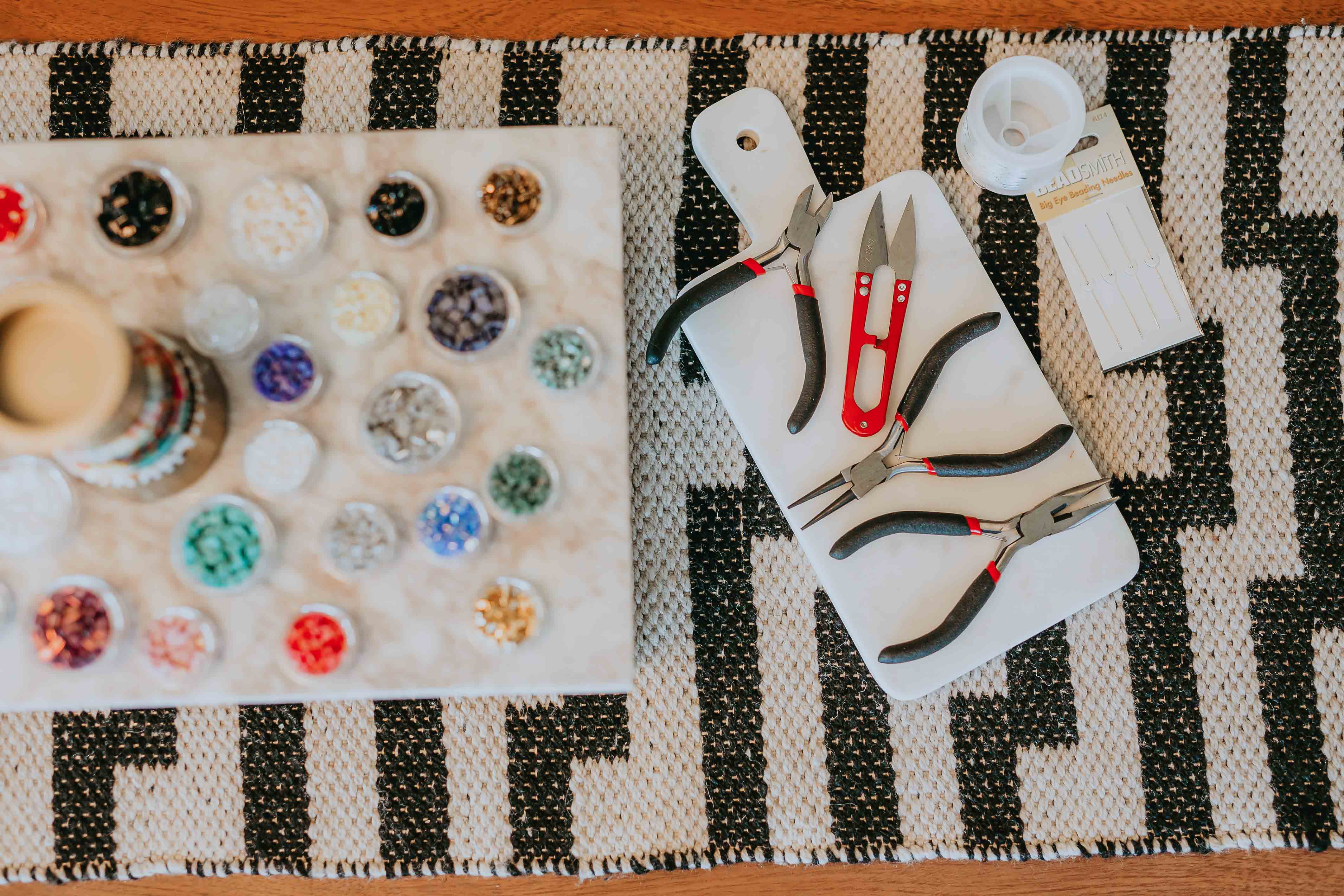
On the cord side: crystal elastic cord holds up better than basic clear elastic. It's slightly stiffer, ties more securely, and doesn't degrade as quickly with repeated stretching. Mack & Rex bracelet kits use crystal-cord elastic for exactly this reason.
On the finishing side: how you close the bracelet matters. A double surgeon's knot seated inside a bead hole holds far better than a simple overhand knot. If you're making bracelets to wear every day, take the extra 30 seconds to finish the knot properly. Even the best beads won't save a bracelet with a bad knot.
On the bead side: you've already done the work by choosing Miyuki. Smooth holes, consistent sizing, quality glass. Those are the reasons Miyuki Tila beads are the go-to choice for serious bracelet makers, a practical standard, not a brand preference.
Frequently Asked Questions
What makes Miyuki Tila beads better than generic two-hole beads?
Miyuki Tila beads are manufactured in Japan to tight tolerances. Each bead is a flat 5mm square with two parallel holes at consistent positions. The hole edges are smooth rather than sharp, and the bead thickness is uniform across a batch. Generic two-hole beads skip that precision, which means uneven spacing, frayed cord, and a finished bracelet that won't lie flat.
How can I tell if Tila beads are real Miyuki or a generic copy?
Check the seller's sourcing. Miyuki beads come in labeled packaging with a specific product code (such as TL0001 for opaque black). If the listing uses vague terms like "Japanese-style" or "tile beads" without a Miyuki part number, they're likely generic. You can also feel the hole edges: authentic Miyuki holes are smooth, while cheap copies often feel rough or slightly jagged.
Do the holes on cheap Tila beads really fray the cord?
Yes, and it's one of the main failure points in stretch bracelets. Low-quality beads often have rough or slightly sharp hole edges from inconsistent manufacturing. Over time, especially with the repeated stretching of a bracelet you put on and take off daily, those edges wear into the elastic cord and eventually cause it to break.
Where can I buy high-quality Miyuki Tila beads for bracelet making?
Mack & Rex sells curated Miyuki Tila beads and bead mixes, ranging from around $5 to $9 per mix. The selection includes both single-color packs and themed mixes designed for stacking bracelets. Orders over $100 ship free within the US.
Does bead finish (matte vs. glossy) affect durability?
The finish affects the look, not the structural durability. What matters for longevity is the glass quality and hole smoothness. Metallic or AB finishes on cheap beads can wear or flake, which is another reason to stick with a known manufacturer like Miyuki.
Ready to Shop for Quality Tila Beads?
If you want Miyuki Tila beads you can trust for bracelet making, the Mack & Rex seed bead collection is a solid place to start. Curated mixes run $5-9, individual colors are available, and everything is genuine Miyuki glass. US orders over $100 ship free. Buy 3 bracelets and get 1 free, no code needed.