


Is a Tila Bead Bracelet Kit Good for Beginners?
Is a tila bead bracelet kit actually good for beginners?
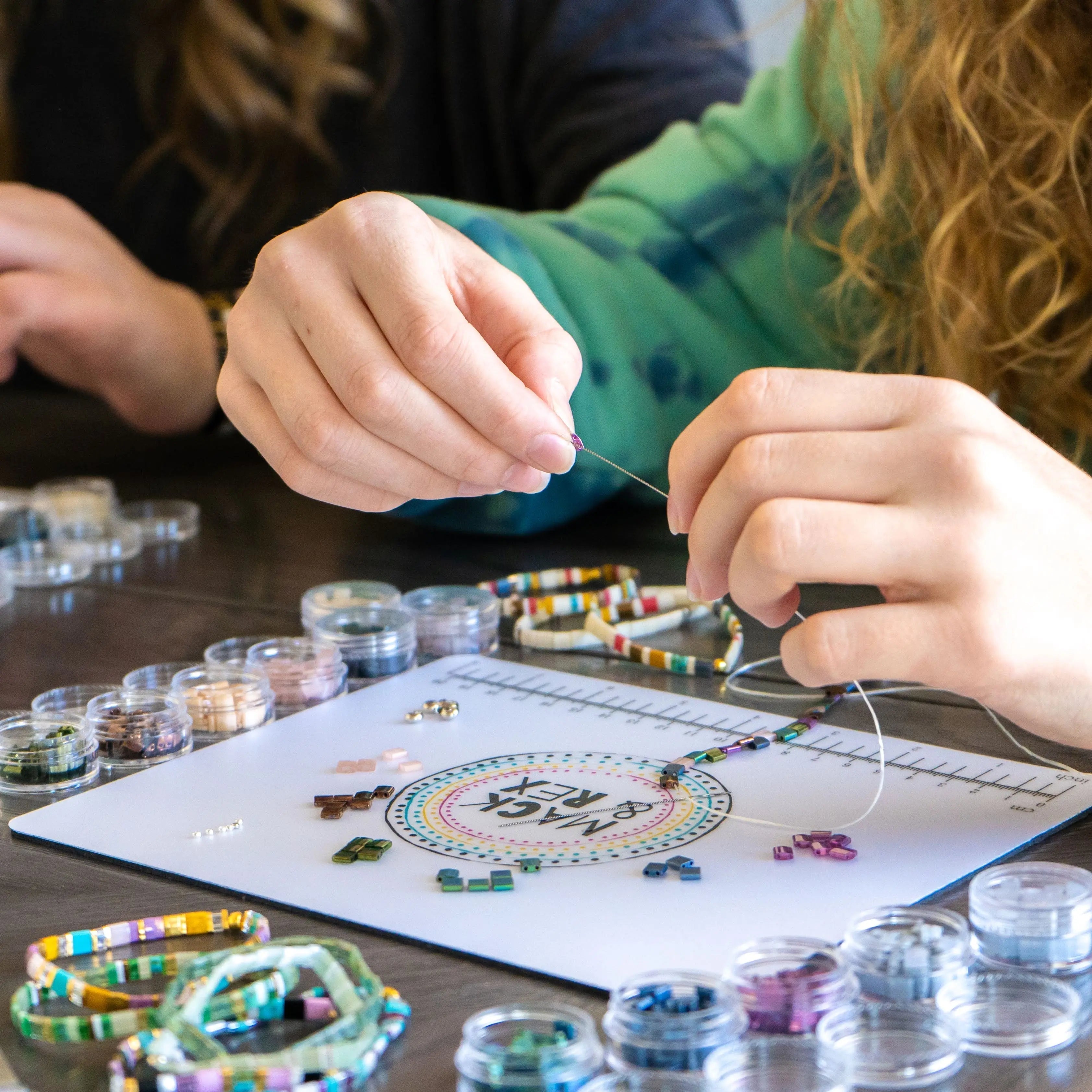
Yes, genuinely. A tila bead kit strips beading down to two motions: string a bead, tie a knot. There's no clasp to attach, no wire to wrap, and no tool beyond a pair of scissors. If you've been eyeing a beginner-friendly bracelet making kit with tila beads and wondering whether you'll actually finish it, the honest answer is that most first-timers do, in one sitting.
That said, "beginner-friendly" isn't the same as "zero learning curve." There's one part of the process that trips people up, and it's worth knowing about before you start.
What makes the tila bead itself easy to work with?
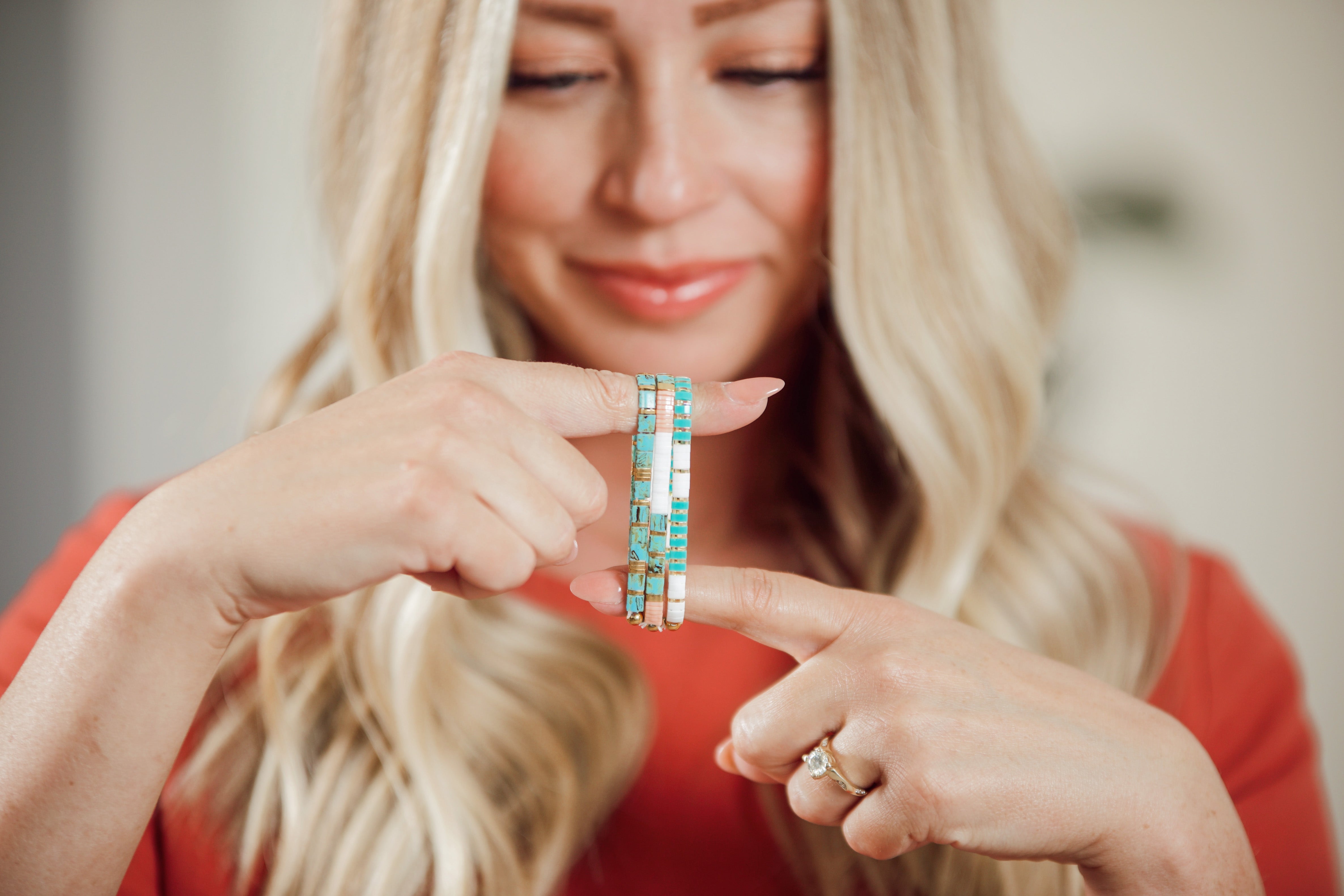
The bead shape does most of the work. A Miyuki tila bead is flat, square, and drilled with two parallel holes running through it side by side. Pick one hole and thread every bead through that same hole, and the whole row lays flat and face-up automatically. There's no orientation to get wrong, no bead that sits crooked because you strung it backwards.
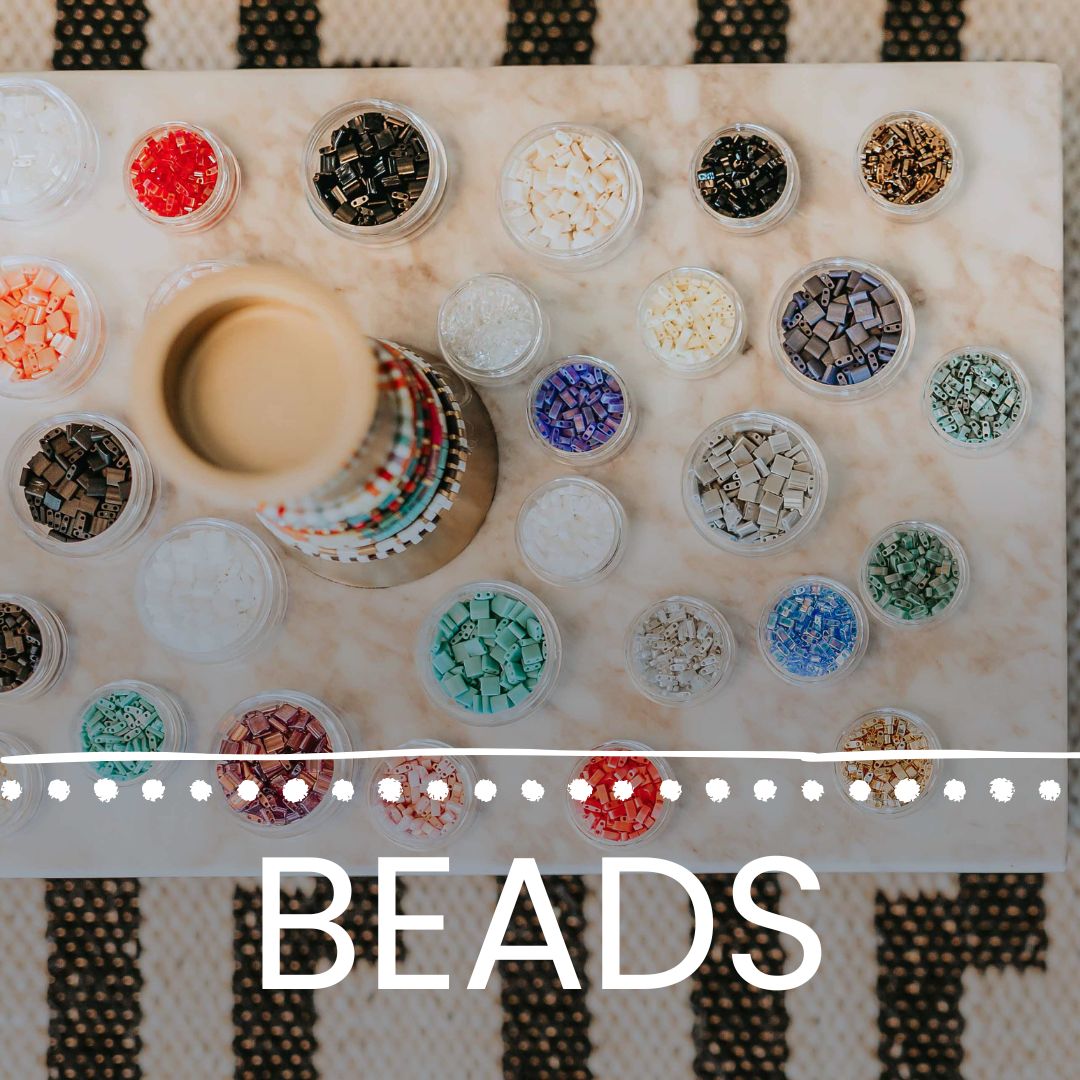
Compare that to round seed beads, where a slightly uneven tension or bead size can leave the strand looking lumpy. Flat, two-hole glass bead shapes have been used in beadwork for exactly this reason: they self-align on a strand in a way round beads don't, a detail worth knowing if you're comparing bead styles before you buy. Miyuki's own catalog of glass bead shapes, including the tila line, shows the range this bead style comes from if you want to see where the format originated. A kit built around this bead shape, cord, and instructions gives a first-timer very little room to go wrong on the stringing itself.
What does a beginner get inside the kit, at a high level?
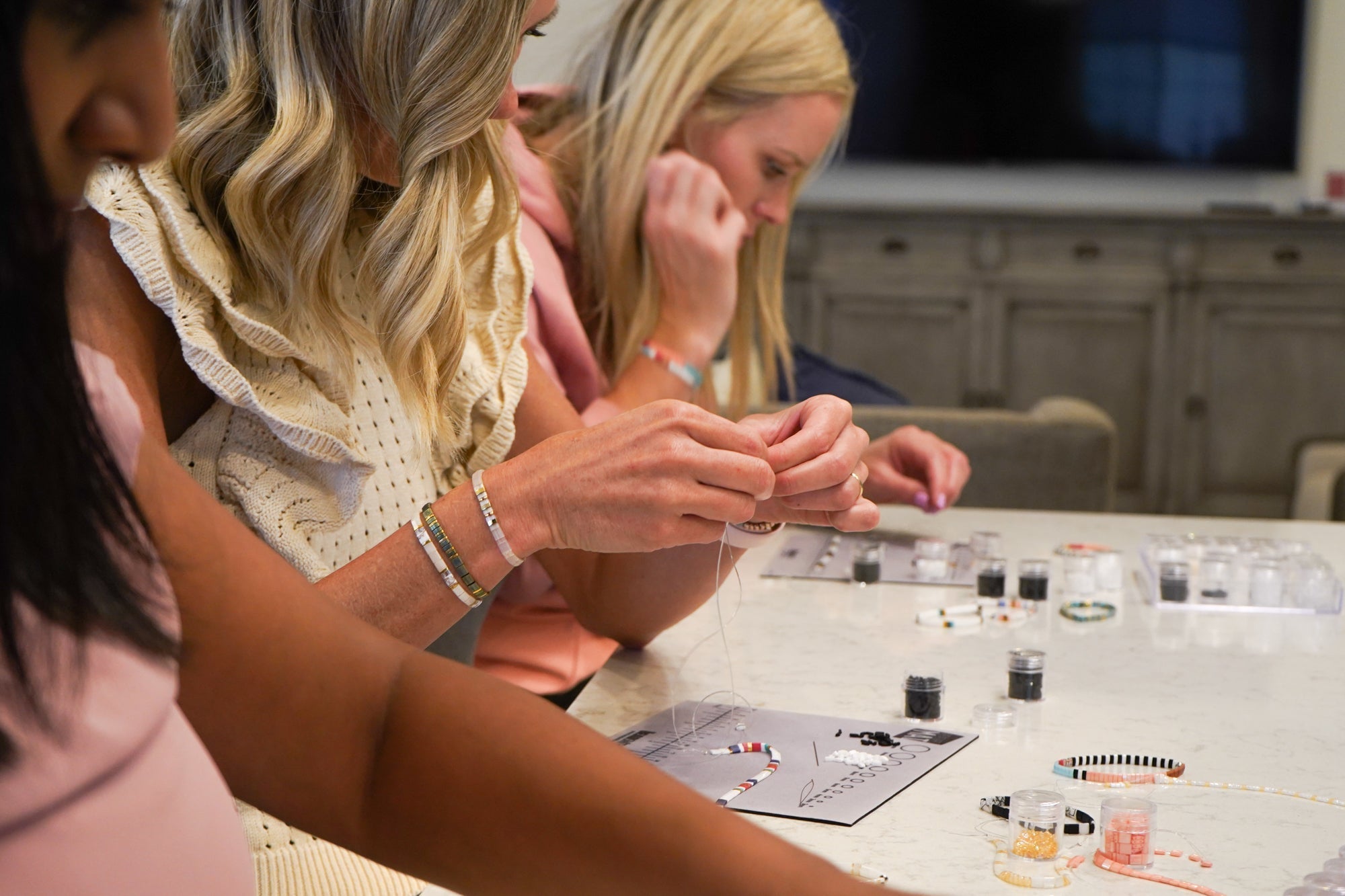
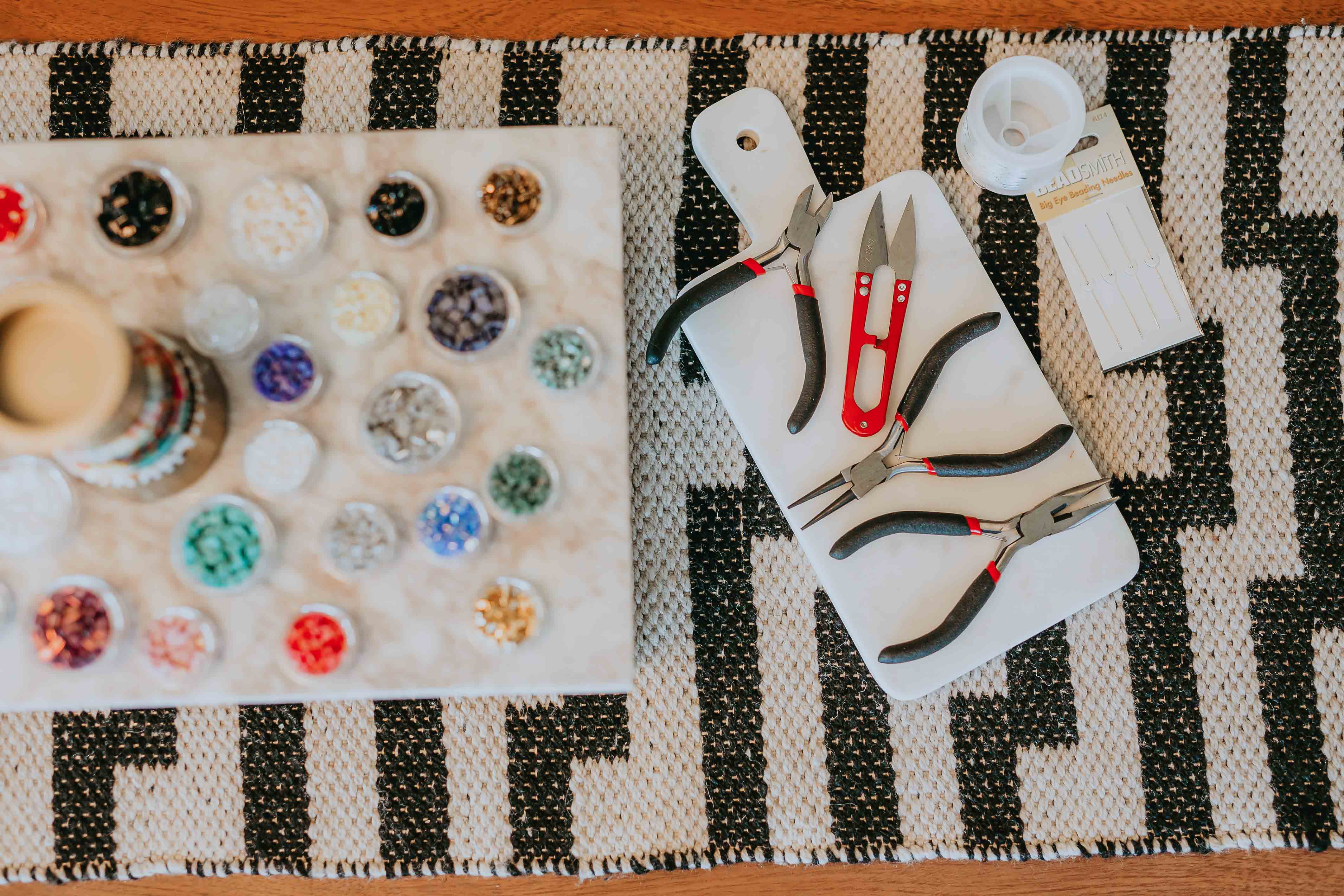
Three things, in every real kit: the Miyuki tila beads themselves, a length of crystal-cord elastic, and instructions that walk you through sizing and tying off. Some kits add a needle for people who find the cord tricky to push through by hand. None of it requires prior jewelry experience, and none of it requires buying anything extra before you start.
Mack & Rex kits use authentic Miyuki glass tila beads. Miyuki is a Japanese bead manufacturer that Mack & Rex sources from and resells; the brand curates colorways and pairs them with cord and instructions, it doesn't make the beads itself. That's worth knowing if you're comparing a real kit against a generic "tile bead" pack with an unnamed origin.
What's actually the hardest part for a first-timer?
The knot, not the beads. Stringing is close to foolproof once you commit to one hole. Tying off is where beginners lose bracelets. A single overhand knot looks secure right after you tie it, then works loose within a day or two of normal wrist movement.
The fix is a surgeon's knot: two overhand knots stacked on top of each other, pulled tight before you trim the tail. It takes ten extra seconds and it's the difference between a bracelet that lasts and one that falls apart in your bag. Good kit instructions call this out specifically, since it's the one step where skipping a beginner's natural instinct (tie once, move on) actually matters. Beadaholique's Miyuki bead resources cover the same finishing basics if you want a second reference point beyond your kit's instruction sheet.
How long does a first bracelet realistically take?
Twenty to forty minutes, start to finish, for most people. That includes sorting beads by color, measuring your wrist, stringing, and tying off. Nobody needs to set aside an afternoon. A second bracelet usually takes half that time once your hands know the motion.
That short time investment is part of why tila kits work so well as a genuine first project rather than something that gets abandoned halfway through. You see a finished, wearable result fast enough to want to make a second one right away.
What snags actually trip beginners up, and how does a good kit prevent them?
Three mistakes show up more than any others. Switching which hole you thread through partway down the row, which leaves a visible kink in an otherwise flat line of beads. Cutting the elastic cord too short, which makes tying a secure knot nearly impossible without stretching the whole bracelet too tight. And relying on one overhand knot rather than a surgeon's knot, which is the top reason a first bracelet doesn't survive its first week.
A well-built kit heads off all three. Clear instructions call out the single-hole rule up front. Cord comes pre-cut with enough slack to tie off comfortably. And decent instructions specifically walk through the surgeon's knot rather than assuming you already know it. None of this is complicated, it just needs to be spelled out, which is exactly where a cheap unlabeled bead pack falls short compared to a kit built for someone doing this the first time.
Who should skip a tila bead kit and buy a finished bracelet instead?
If the appeal is wearing a tila bracelet, not making one, skip the kit. Mack & Rex sells ready-to-wear finished bracelets for exactly that. But if you want the experience of building something with your hands, even a first attempt, a tila kit is about as low-risk an entry point as beading gets. You're not out much time or money if it turns out beading isn't your thing, and you'll have a wearable bracelet either way.
Where to start if you're a genuine first-timer
Mack & Rex's tila bead bracelet lineup includes kits built specifically for first-timers: authentic Miyuki tila beads, crystal-cord elastic, and instructions that cover sizing and the knot step in plain language. Sizing runs XXS through 5XL, so wrist size isn't a barrier before you even start. US orders over $100 ship free, and if kids are crafting alongside you, keep an adult in the room since loose beads are a small-parts choking risk for young children.
Pick a colorway, set aside half an hour, and see for yourself. Browse the full Mack & Rex bracelet making kits to find a beginner kit that matches your style.
Frequently asked questions
Is a tila bead bracelet kit good for a complete beginner?
Yes. Tila bead kits use elastic cord in place of a clasp, so there are no jump rings, crimps, or pliers involved. The only real skill is stringing beads through one hole consistently and tying a secure knot, which most first-timers pick up within a few minutes.
What's the hardest part of a tila bead bracelet kit for beginners?
Tying a knot that holds. Stringing the beads is close to foolproof once you pick one hole and stick with it, but a single overhand knot will work loose under the stretch of daily wear. A surgeon's knot, two overhand knots pulled tight, is what actually holds.
How long does a first tila bead bracelet take to make?
Most beginners finish a first tila bead bracelet in 20 to 40 minutes, including sorting beads and tying off. A second bracelet usually goes faster since the motions become familiar.
What mistakes do beginners make with tila bead kits?
The most common snags are switching bead holes partway through a row, cutting the elastic cord too short to tie off comfortably, and using a weak single knot rather than a surgeon's knot. A good kit reduces these by including pre-cut cord and clear instructions.
Is a tila bead bracelet kit safe for kids to use as beginners?
Tila beads are small parts and a choking hazard for young children, so any child using a kit needs direct adult supervision. The kit itself is beginner-friendly for older kids, teens, and adults; it's not designed for unsupervised use by young children.