

Miyuki Tila Bead Colors: A Guide to Finishes and Shades
What colors and finishes do Miyuki Tila beads actually come in?
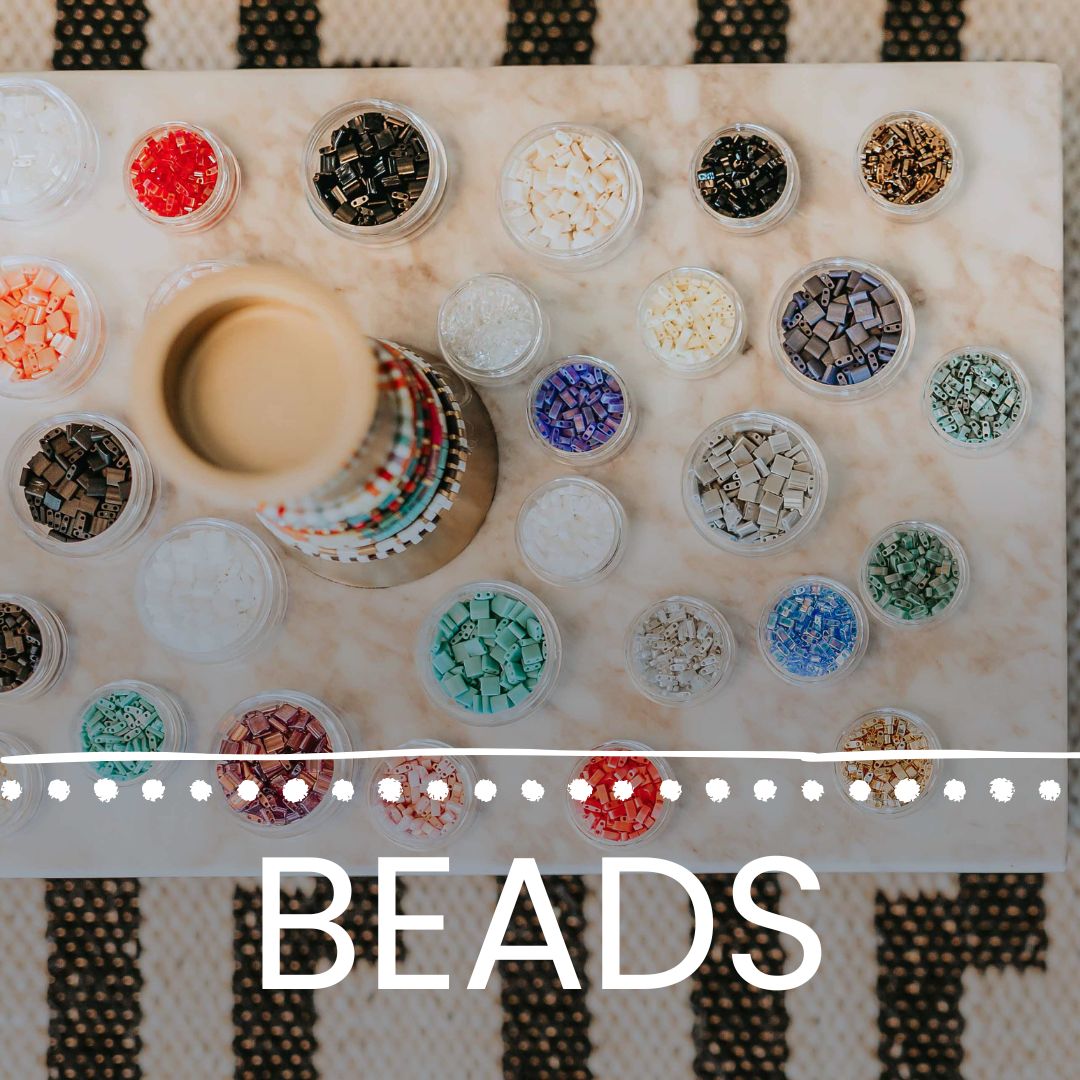
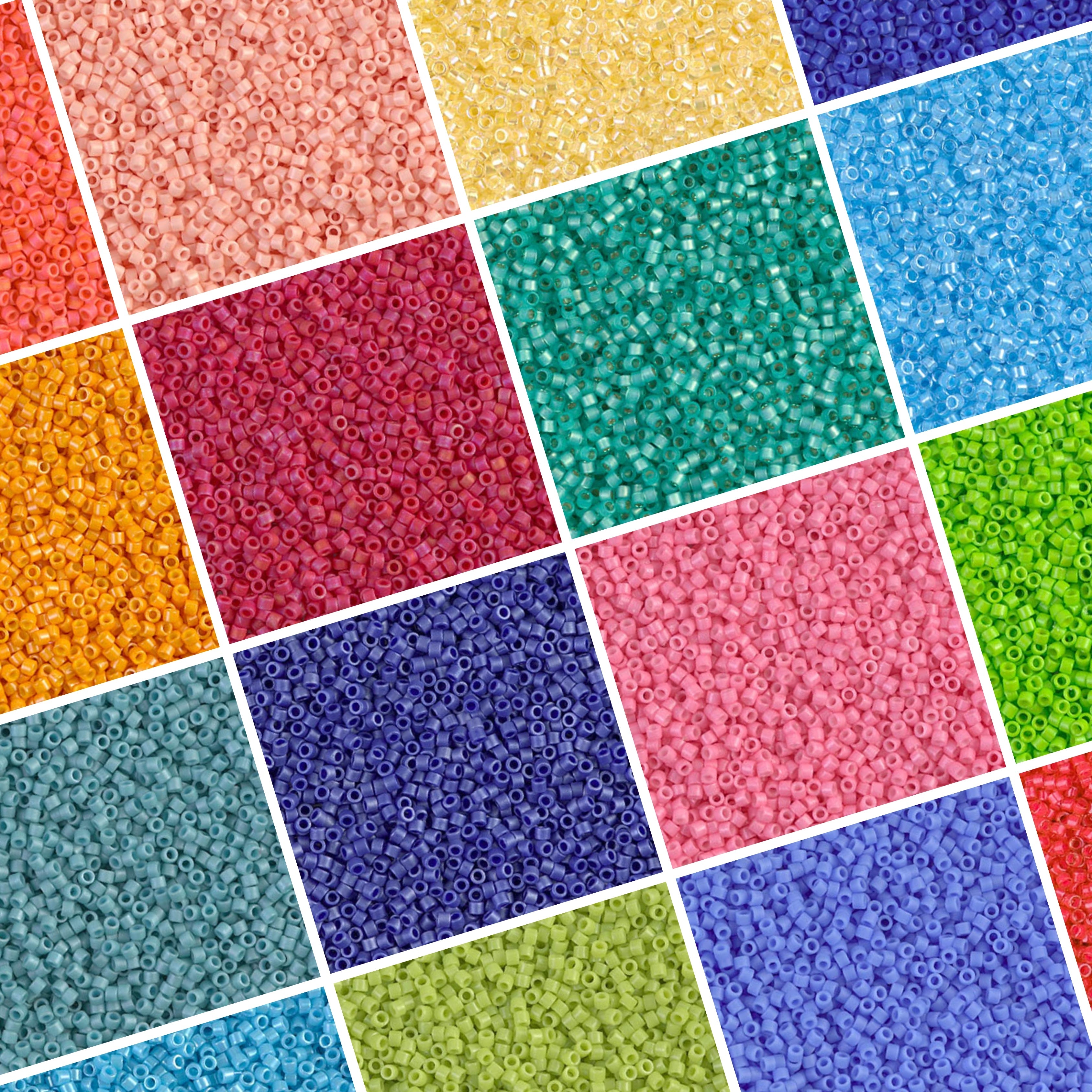
Miyuki Tila beads come in six main finish families: opaque, matte, metallic, luster, silver-lined, and Picasso, and most of those can also carry an AB (aurora borealis) rainbow coating on top. Same flat, square, two-hole glass bead every time. What changes is the surface treatment, and that treatment is what decides whether a color reads bold, soft, shiny, or textured on the wrist.
That's a lot of finish names for what looks, at first glance, like a small square of glass. But once you know what each one does to light and color, picking a Tila palette stops feeling like guesswork. Miyuki, the Japanese glass bead manufacturer that makes every genuine tila bead, produces dozens of colorways across each finish, which is part of why a wall of loose tila bead tubes can be so overwhelming to shop.1 Mack & Rex sources and sells Miyuki's beads, both loose and pre-strung into finished bracelets; we don't manufacture the glass or the finishes ourselves.
What's the difference between opaque, matte, and metallic tila finishes?
These three cover most of what you'll see in a tila bead mix, and they behave in three completely different ways under light.
Opaque is the baseline. A smooth, glossy surface with a solid, even color all the way through, no transparency and no shine variation from bead to bead. If you want a clean block of color in a bracelet, opaque is what delivers it.
Matte starts as the same glass but gets a frosted, non-reflective treatment on top. The color goes softer and quieter. A matte cream reads warmer and more casual than a glossy opaque cream, even though the underlying dye is close to identical. Matte finishes tend to hide small scuffs better too, which matters on a bracelet you wear daily.
Metallic goes the other direction entirely: a reflective coating that catches light and throws it back. Metallic tila beads look dressier and more polished, and they're the finish most people reach for when they want a stack that reads a little more "going out" than "everyday errands."
None of these is objectively better. They're tools. A stack built entirely from one finish looks tidy and matched. A stack that mixes opaque, matte, and one metallic accent has more visual depth.
What does luster and silver-lined actually mean on a tila bead?
Luster and silver-lined both add glow, but they get there from opposite directions, one from outside the bead and one from inside.
Luster beads have a semi-transparent, pearly coating over the glass. It's subtler than metallic, more of a soft sheen than a hard shine, closer to the finish on a freshwater pearl than a mirror. Luster tila beads photograph beautifully because they catch light without glaring.
Silver-lined works differently. Rather than a coating on the outside, the reflective metallic layer sits inside the two bead holes. Light passes through the colored glass, bounces off that inner lining, and comes back out looking brighter and more saturated than the same color would in a plain transparent bead. It's a classic technique in Japanese seed bead manufacturing, and it's part of why silver-lined colors tend to look almost lit from within.2 A silver-lined ruby red tila bead, for example, glows in a way a solid opaque red never will.
What is a Picasso finish, and where does AB fit in?
Picasso is the one finish that doesn't try to look clean. It's a mottled, speckled surface treatment that lands a little differently on every single bead, so no two are exactly alike. The effect reads earthy and a bit weathered, more like something you'd find in a rock formation than on a factory line. It pairs best with neutrals, browns, and muted greens, and it clashes with anything neon.
AB, short for aurora borealis, is a separate iridescent coating that can be layered over opaque, metallic, or matte beads. It throws off small flashes of rainbow color as it catches light from different angles.3 An AB finish on top of an opaque black bead, for instance, keeps the base color dominant but adds shimmer at the edges when your wrist moves. It's a finishing touch more than a standalone finish.
How do you pick a Tila color palette that actually works together?
Start with one finish family, then break the rule once. Pick a lead finish, matte or opaque usually reads easiest, and build three or four colors around it that share the same undertone: all warm (cream, terracotta, gold) or all cool (sage, slate, silver). Then add one accent piece in a different finish, a metallic or a luster, to keep the eye moving.
Color count matters more than people expect. Two colors can look plain. Five or six start to compete with each other unless they're all in the same tight neutral range. Three or four tends to be the number that lands as "put together" rather than "random."
One Mack & Rex customer, Tammy H., left a review that sums up why this gets tricky when you're sourcing loose beads on your own: "Glad there is a website which carries the hard to find bead colors I'm looking for!" Finding the right shade is one problem. Finding a shade that also plays well with the three other colors already on your wrist is a second, harder problem.
What's the shortcut if you don't want to source and match loose beads yourself?
Buy the palette already solved. That's the whole idea behind Mack & Rex's ready-to-wear stacks.
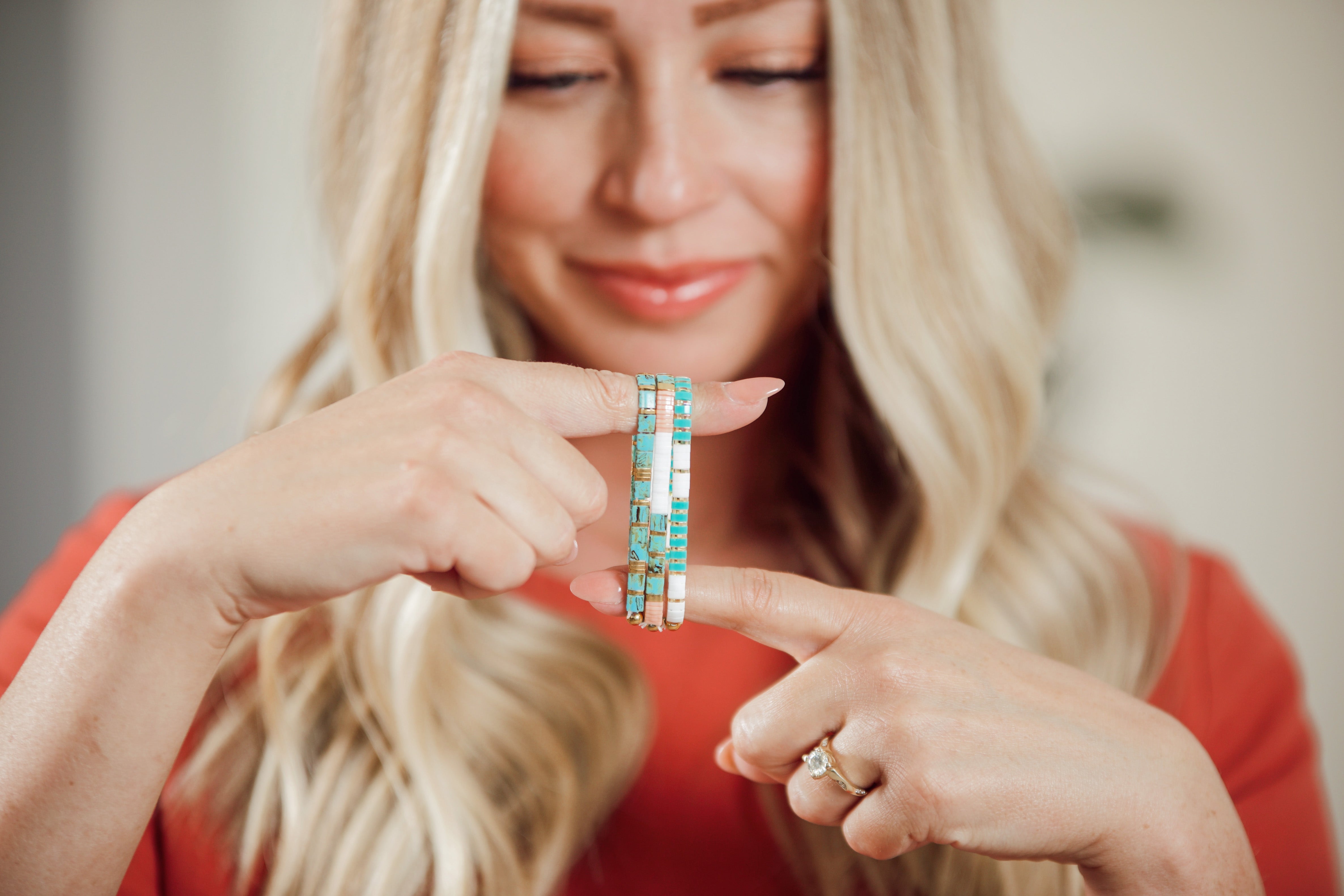
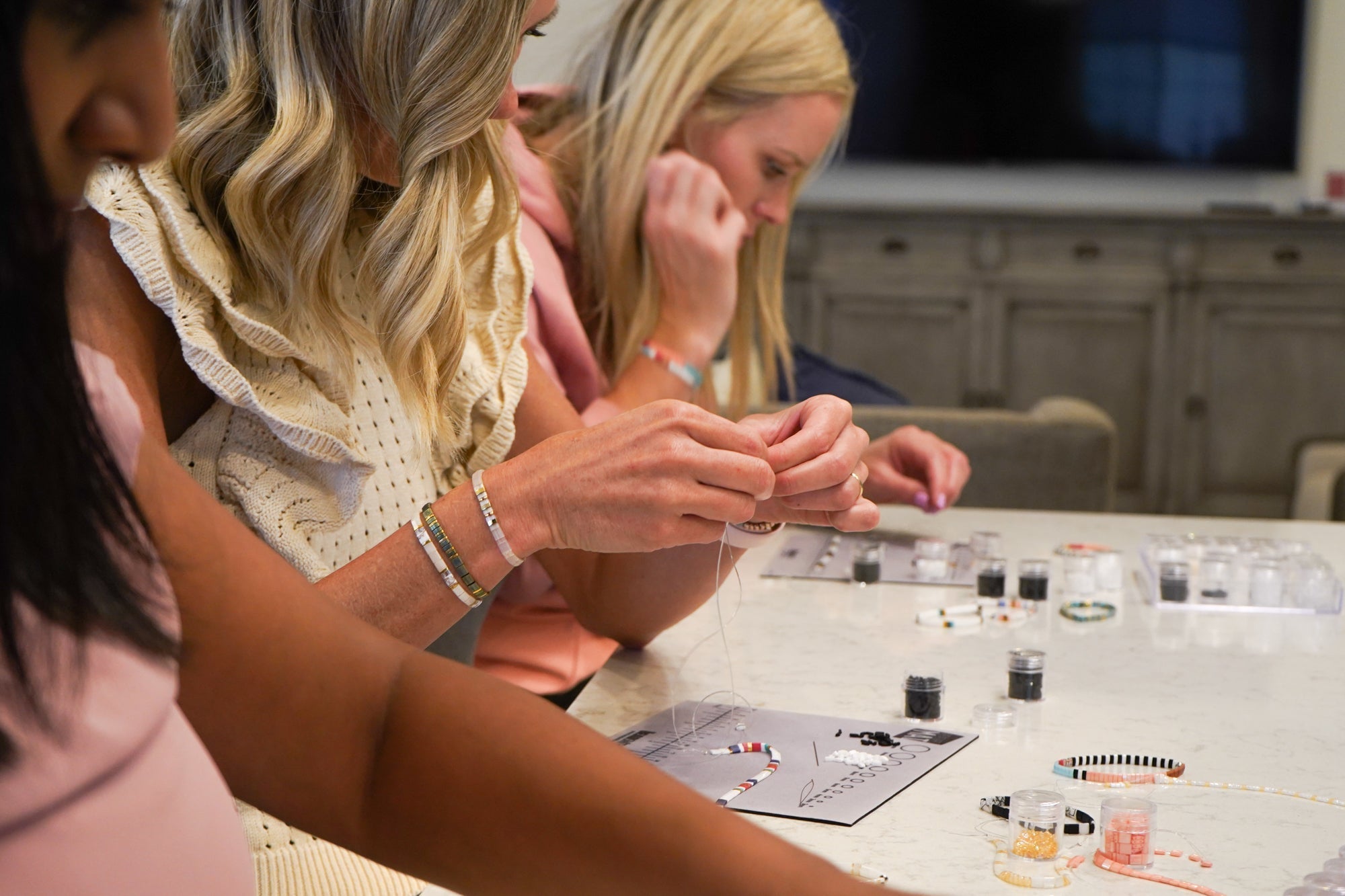
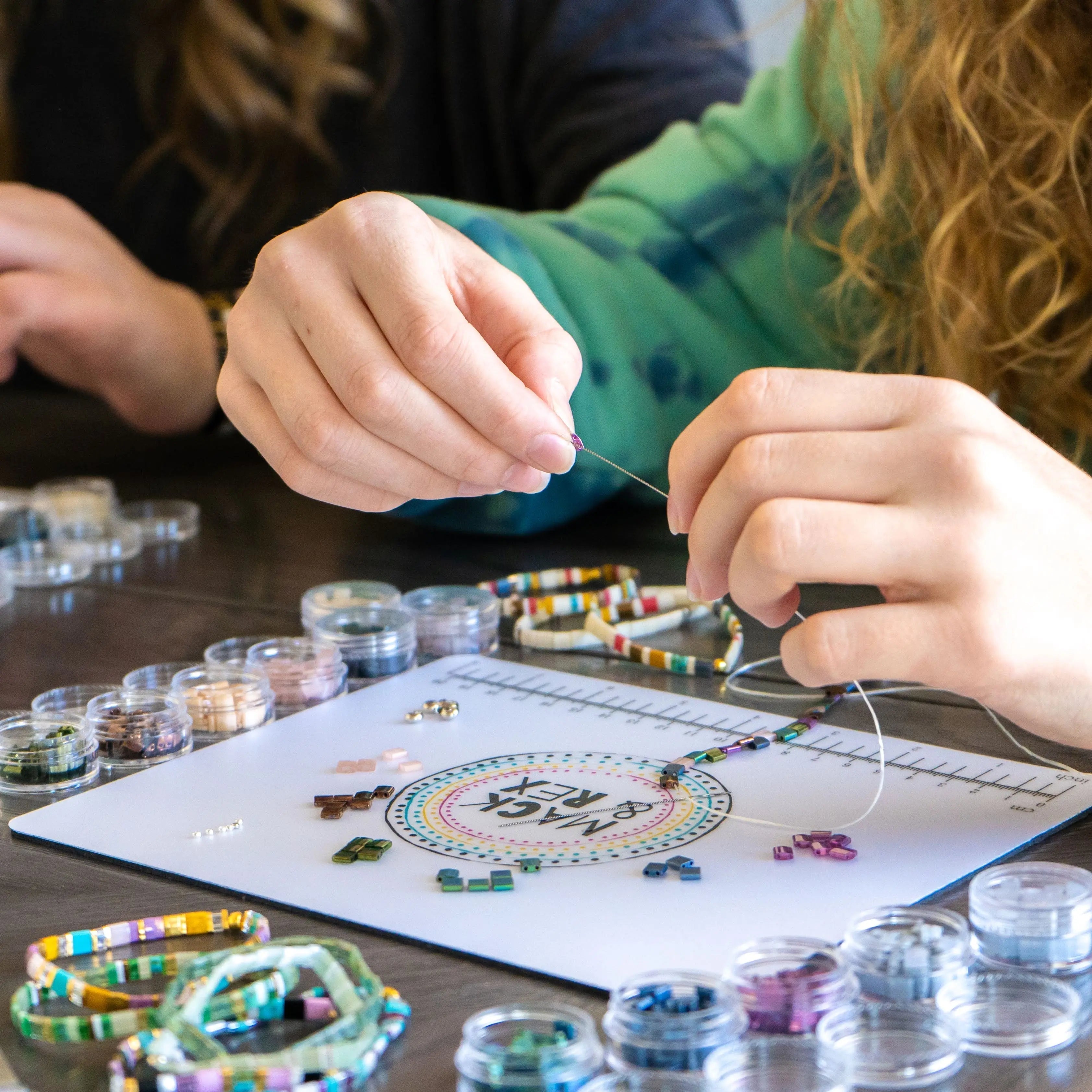
Sourcing loose tila beads by finish name, testing color combinations, restringing when a pairing doesn't work, that's a real hobby, and a fun one for people who like the process. But most people just want a bracelet stack that looks intentional without the trial and error. Mack & Rex's Tila bead bracelets are pre-built with finishes and shades already chosen to work together, matte paired with a metallic accent, an opaque neutral grounding a Picasso piece, so the color theory part is already done. Finished bracelets run roughly $20-25 each.
If you'd rather build your own palette from loose beads, tila bead mixes run about $5-9 and let you experiment finish by finish. Either way, US orders over $100 ship free, and right now it's buy 3 bracelets, get 1 free on finished bracelets, no code needed.
A quick safety note: loose beads are small parts and a choking hazard. Keep them away from young children, and supervise any bracelet-making with kids.
Frequently Asked Questions
What finishes do Miyuki tila beads come in?
Miyuki tila beads come in opaque, matte, metallic, luster, silver-lined, and Picasso finishes, plus AB (aurora borealis) coatings that can be layered on top of most of those. Each finish changes how light hits the flat, square glass surface, from a flat solid color to a speckled, iridescent, or mirror-like effect.
What is the difference between matte and opaque tila beads?
Opaque tila beads have a smooth, glossy surface with a solid, consistent color and no shine variation. Matte tila beads are the same base glass with a frosted, non-reflective surface treatment, so the color looks softer and more muted. Opaque reads cleaner and brighter; matte reads calmer and more textured.
What does silver-lined mean on a tila bead?
Silver-lined tila beads have a reflective metallic coating inside the two bead holes rather than on the outer surface. Light bounces through the colored glass and off the silver lining, which makes the color look brighter and gives the bead a glowing, jewel-like quality that plain transparent glass doesn't have.
How do I pick tila bead colors that go together?
Pick one finish family to anchor the stack (matte, metallic, or opaque) and one or two accent colors in a different finish for contrast. Sticking to three or four colors total, with matching undertones (all warm or all cool), keeps a Tila bracelet stack looking pulled together rather than random.
Where can I buy Miyuki tila beads or ready-made bracelets in these finishes?
Mack & Rex sells Miyuki Japanese glass tila beads as loose mixes and as finished, ready-to-wear bracelets at mackandrex.com/collections/tila-bead-bracelets. The bracelets are pre-stacked in coordinated color and finish combinations, so there's no color-matching guesswork. US orders over $100 ship free, and loose beads are a choking hazard for young children.