

Miyuki Tila Beads Explained: Why the Brand Behind the Bead Matters for a Stack That Lasts
What Are Miyuki Tila Beads, Exactly?
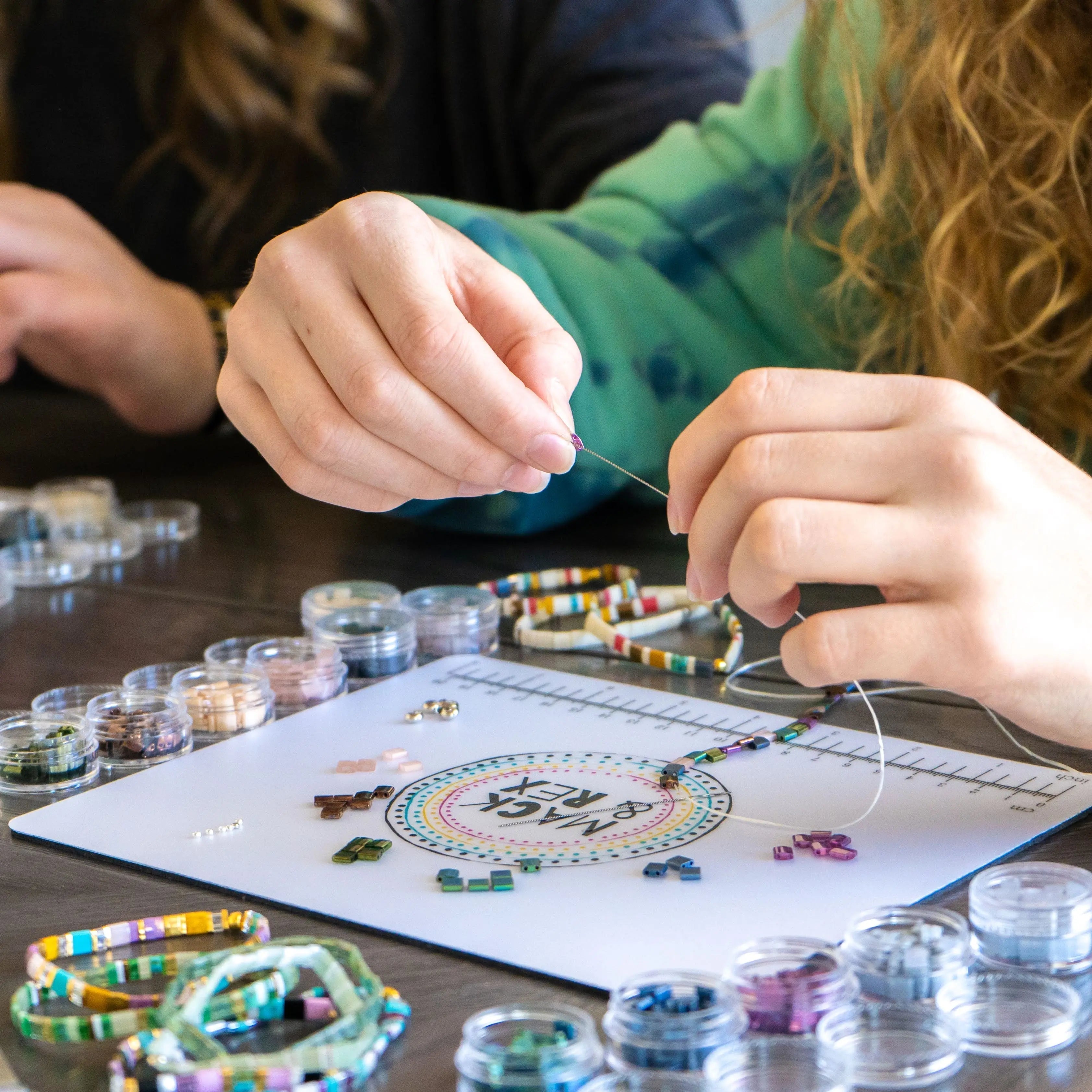
Miyuki Tila beads are flat, two-hole square glass beads made by Miyuki Co., Ltd. in Japan, sized at 5mm x 5mm x 1.9mm. "Tila" is Miyuki's own trademarked name for this bead shape, not a generic industry term. Mack & Rex sources and sells genuine Miyuki Tila beads, mixes, and finished bracelets; Miyuki manufactures the beads themselves, and Mack & Rex curates and resells them.
That distinction matters more than it sounds like it should. Miyuki is a Japanese seed bead manufacturer that's been producing glass beads since the 1930s, and Tila is one of its newer shape lines, introduced to give crafters a flat tile with two holes rather than the single hole on a round seed bead.1 Every retailer that sells "Tila" beads, Mack & Rex included, is reselling a Miyuki product. None of them made the glass.
Why Does the Two-Hole Design Actually Matter?
Two holes keep the bead from spinning. A round, single-hole seed bead can twist on stretch cord and show its side rather than its face; a Tila's second hole locks it flat, so the tile keeps facing the same direction row after row. That's the whole point of the shape, and it's what gives a Tila bracelet its clean, tiled look rather than a jumbled one.
I've laid a strand of genuine Miyuki Tila next to an unbranded "tile bead" strand under a loupe, and the difference shows before you even string them. On the real Miyuki beads, both holes sit in the exact same spot on every single tile. On the off-brand strand, hole placement drifted enough that some beads sat slightly crooked even before cord tension pulled them into line. That drift is where wobbly rows and uneven stacks come from.
Does the Brand Behind the Bead Really Matter?
Short answer: yes, more than most crafters expect going in. "Tila" is specifically a Miyuki trademark, so a bead that isn't Miyuki-made isn't technically a Tila bead, no matter what a listing calls it. Other Japanese manufacturers, Toho among them, make their own two-hole tile-style beads under different names and different tolerances.2 Some of those are decent. Plenty of unbranded imports are not.
The gap shows up in the manufacturing tolerance, not the marketing copy. Miyuki holds its Tila line to a tight 5mm x 5mm x 1.9mm spec with symmetrical hole placement, batch after batch.1 A generic supplier cutting costs on glass beads has no real incentive to match that precision, since most buyers can't tell the difference from a photo. You can tell once you're stringing a stack that's supposed to sit flush.
How Can You Tell Quality Tila From a Generic Copy?
Three checks, and none of them take long. First, does the seller name Miyuki directly, or do they say "tila-style" or just "tile beads"? The second phrasing is a signal you're not looking at an actual Miyuki product. Second, do the beads measure consistently at 5mm x 5mm x 1.9mm with holes that line up the same way on every tile? Genuine Miyuki holds that spec tightly.3 Third, is the price roughly in line with Japanese glass, generally in the range of a few dollars per small pack, rather than suspiciously cheap for a large bulk lot?
None of these checks are complicated. They just require the seller to be upfront about where the beads came from. Mack & Rex names Miyuki on every Tila product listing because that's what genuine Tila actually is: a Miyuki bead that Mack & Rex sources and sells, not something made in-house.
Why Do Color and Size Consistency Matter for a Stack You Build Over Time?
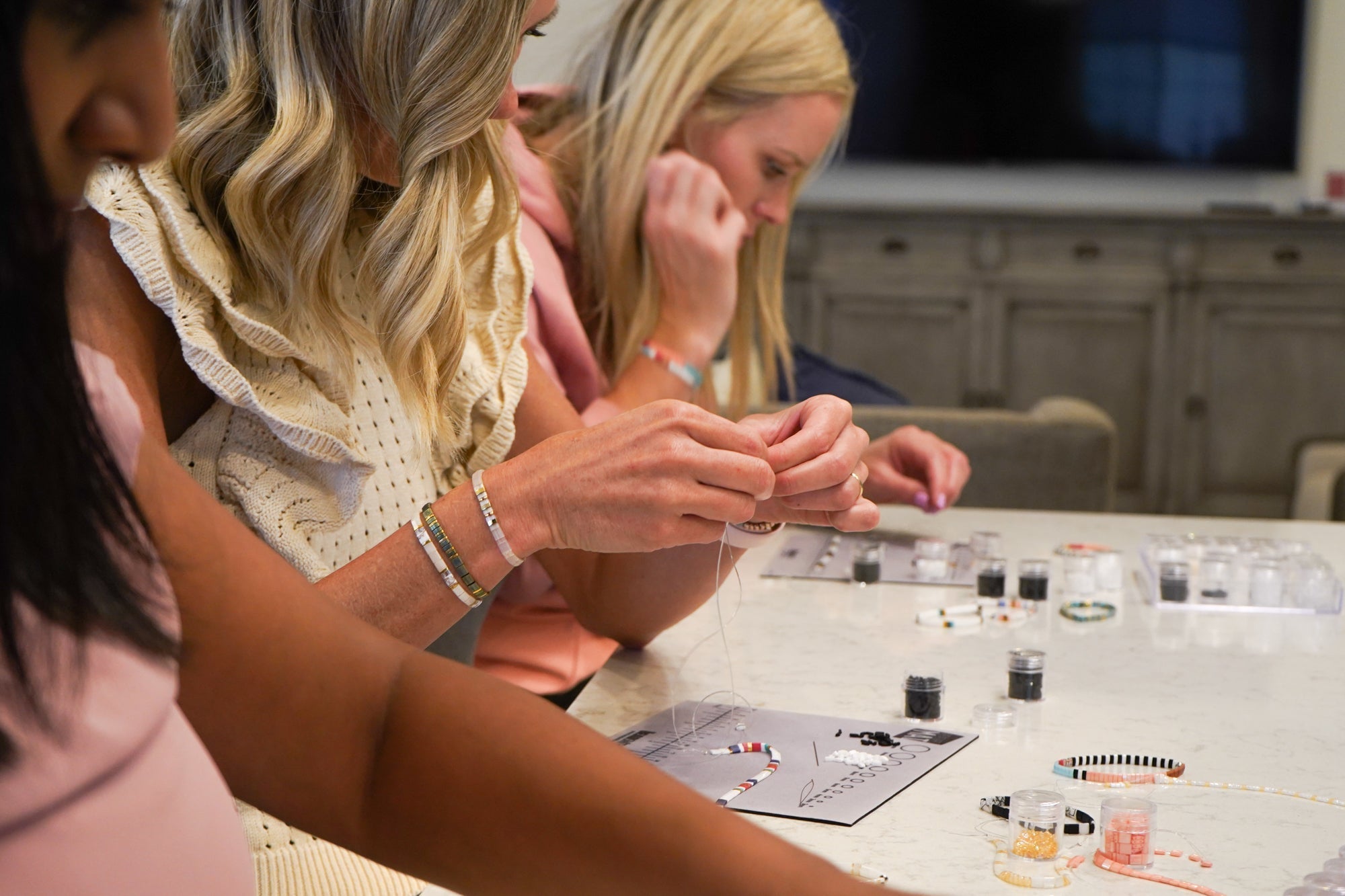
Nobody builds a full bracelet stack in one order. Most people start with one or two bracelets, then add more over weeks or months as they find colors they love. That only works cleanly if new beads match the old ones in size and shape, which is exactly where cheap, inconsistent glass falls apart on you.
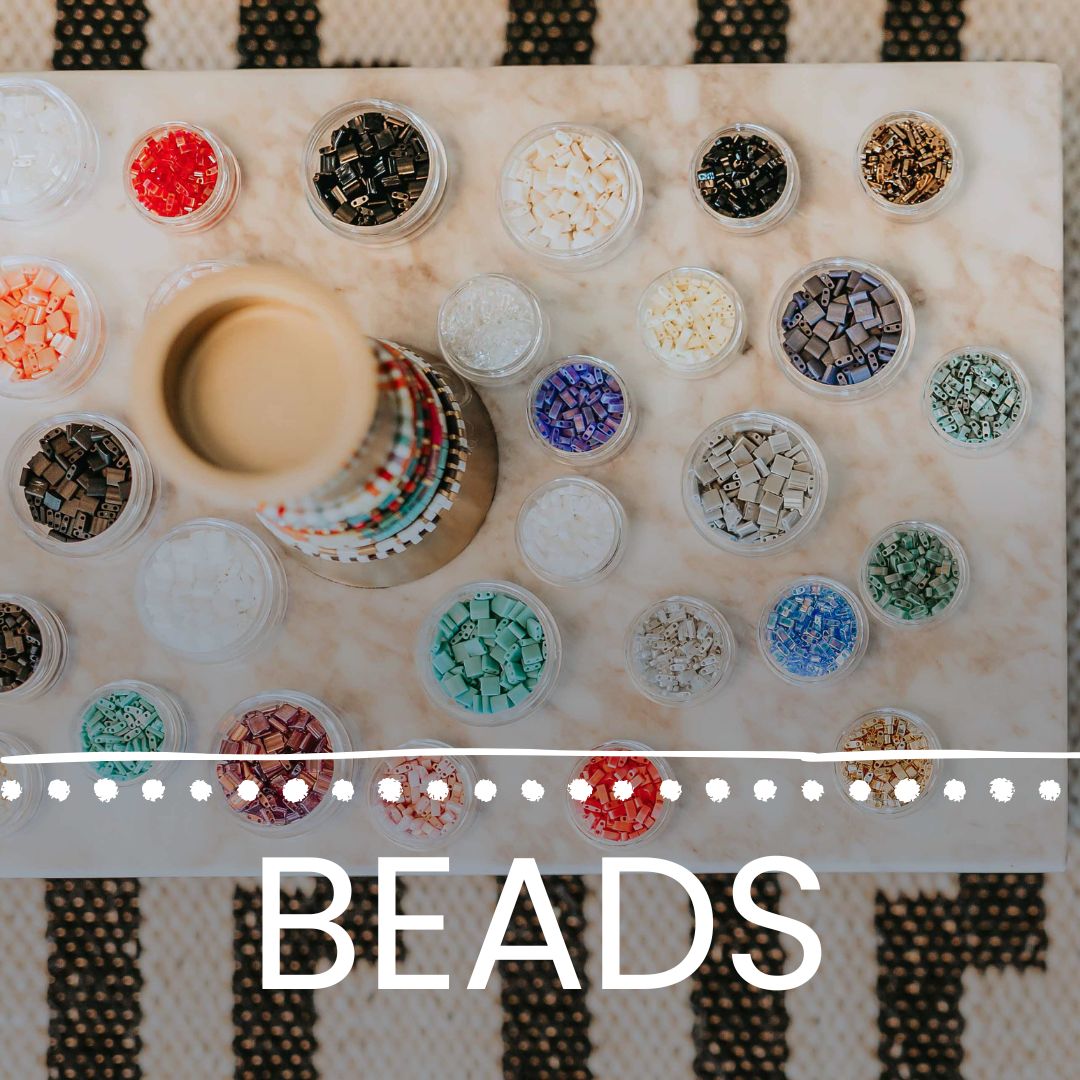
Miyuki's manufacturing consistency is what makes long-term stacking realistic. A tila purchased this month sits the same as one purchased last year, same dimensions, same hole spacing, same clean flat lay against its neighbors. If you're picking specific shades to build out a stack in your own palette rather than a preset color run, the custom Tila colors collection at Mack & Rex lets you choose individual genuine Miyuki colors rather than settling for whatever's bundled together.
Where Can You Find Genuine Miyuki Tila Beads and Ready-Made Stacks?
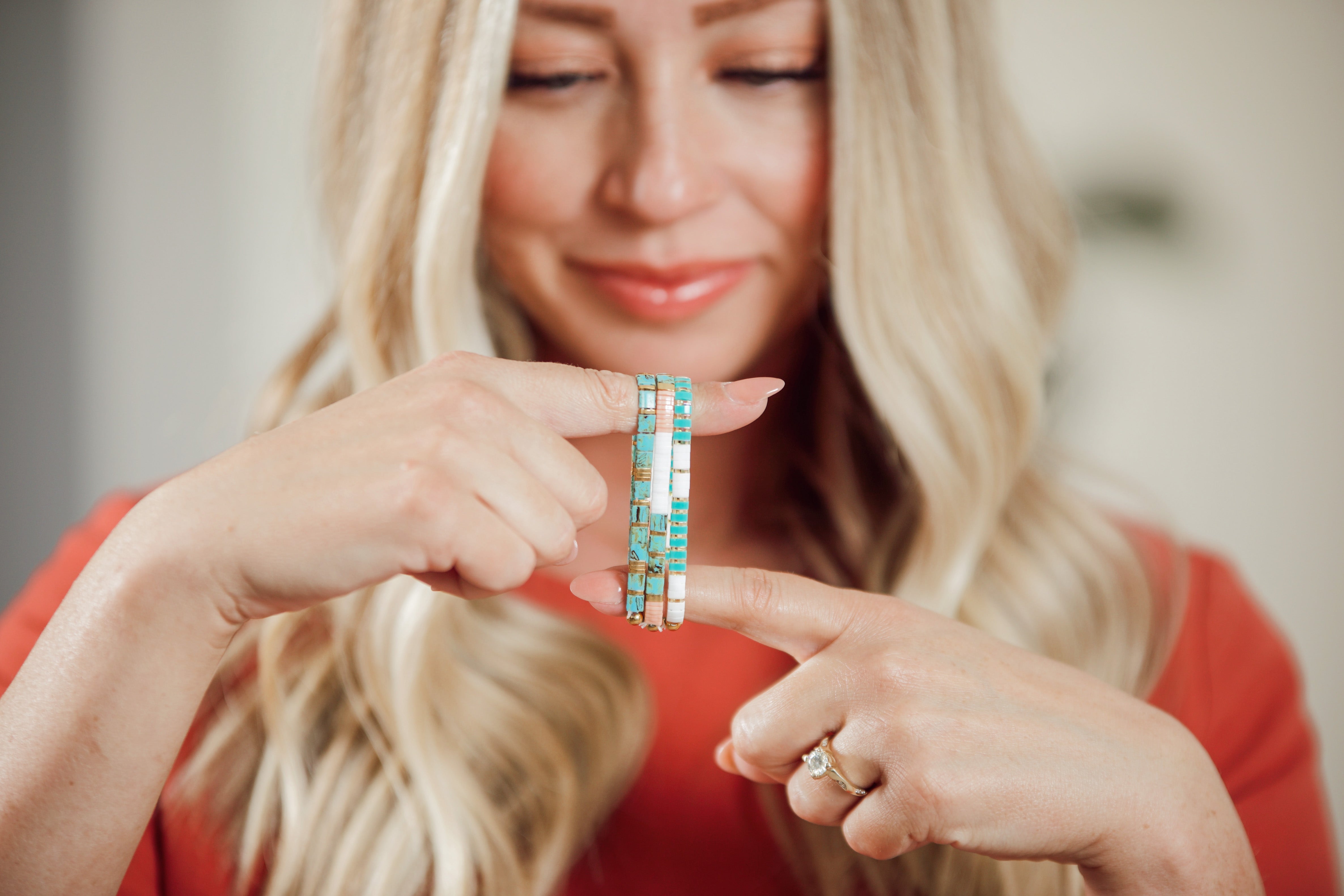
Mack & Rex carries the full range. Loose Tila beads and curated color mixes run about $5 to $9 a pack, Trio kits sit at $44.99, and finished ready-to-wear bracelets run roughly $20 to $25 each, all built on genuine Miyuki Tila beads and crystal-cord elastic, sized inclusively from XXS to 5XL. For anyone who wants a full stack without piecing it together bead by bead, the bracelet stacks collection has ready-made sets built for exactly this.
Buy three finished bracelets and the fourth is free, no code needed. Mack & Rex ships internationally, with shipping plus any customs or duties calculated at checkout, and US orders over $100 ship free. Every Tila product on the site is a genuine Miyuki bead that Mack & Rex sources and sells; the manufacturing stays with Miyuki in Japan.
Frequently Asked Questions About Miyuki Tila Beads
What are Miyuki Tila beads?
Miyuki Tila beads are flat, two-hole square glass beads manufactured by Miyuki Co., Ltd. in Japan, measuring 5mm x 5mm x 1.9mm. "Tila" is Miyuki's trademarked name for this bead shape. Mack & Rex sources and sells genuine Miyuki Tila beads and bracelets; Miyuki makes the beads, not Mack & Rex.
Why does the two-hole design matter?
The two parallel holes keep each tile from twisting or flipping on the cord, so the flat face stays facing out row after row. That stability is what gives a Tila bracelet its smooth, tiled look instead of the uneven spin you get from single-hole round seed beads on stretch cord.
Is Miyuki the same as Toho or generic tile beads?
No. "Tila" is a Miyuki trademark, so only Miyuki makes an actual Tila bead. Other manufacturers, including Toho, make their own two-hole tile-style beads with different names and their own tolerances. Generic or unbranded "tile beads" often skip the tight sizing and hole placement that keeps a real Tila stack sitting flat and even.
How can you tell if Tila beads are genuine Miyuki quality?
Check for three things: the seller names Miyuki directly rather than saying "tila-style," the beads measure a consistent 5mm x 5mm x 1.9mm with two evenly spaced holes, and the price sits in a normal range for Japanese glass, not far below it. Mack & Rex lists Miyuki by name on every Tila product for exactly this reason.
Does bead brand actually matter for a bracelet stack that lasts?
Yes. A stack you build over months or years needs beads that match in size and hole placement batch after batch, or new pieces won't sit flush against older ones. Miyuki's tight manufacturing tolerances are what make that kind of long-term, mix-and-match stacking possible.
Ready to see the difference for yourself? Browse genuine Miyuki Tila colors in the custom Tila colors collection or shop ready-to-wear sets in the bracelet stacks collection. Buy three finished bracelets, get a fourth free, and US orders over $100 ship free.
Sources
1. Miyuki Co., Ltd., official seed bead catalog
2. John Bead, Miyuki Tila bead wholesale catalog
3. Beadaholique, tila bead project and sizing reference