

Miyuki Tila vs. Delica Beads: Which One Belongs in Your Bracelet
Tila or Delica: which bead actually belongs in a bracelet?
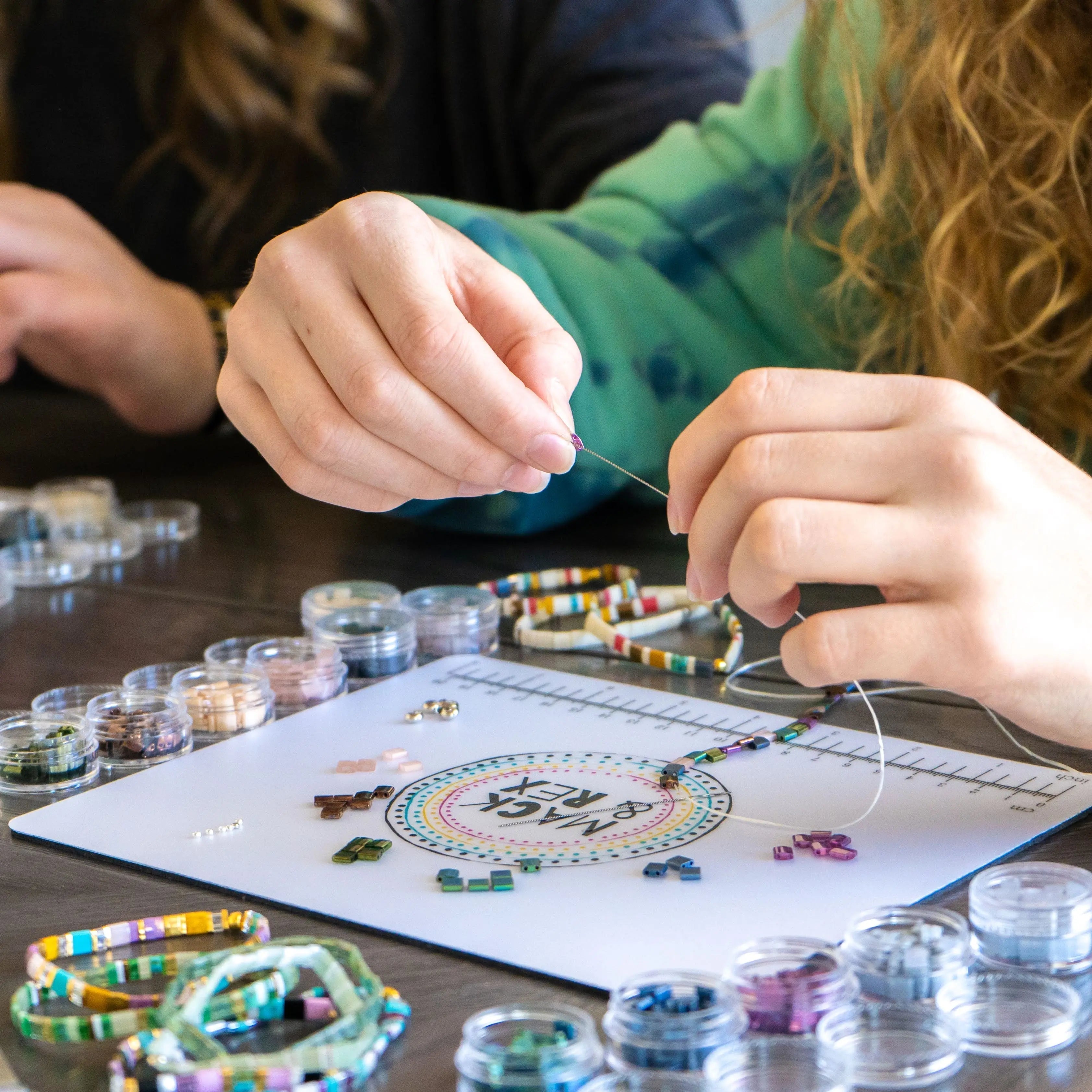
Tila beads. If you're stringing a bracelet on elastic cord, Tila is the bead built for the job: a flat 5mm x 5mm square with two 0.8mm holes that tiles cleanly against its neighbors. Delica beads are tiny 1.6mm cylinders made for needle-and-thread weaving, not stringing, so they're the wrong tool for a stretch bracelet even though they're gorgeous for other projects.
Both are Miyuki beads, made by the same Japanese manufacturer, sold in overlapping color families. That's usually where the confusion starts. Once you line them up side by side, though, they're solving two different problems.
What makes Tila beads different from Delica beads?
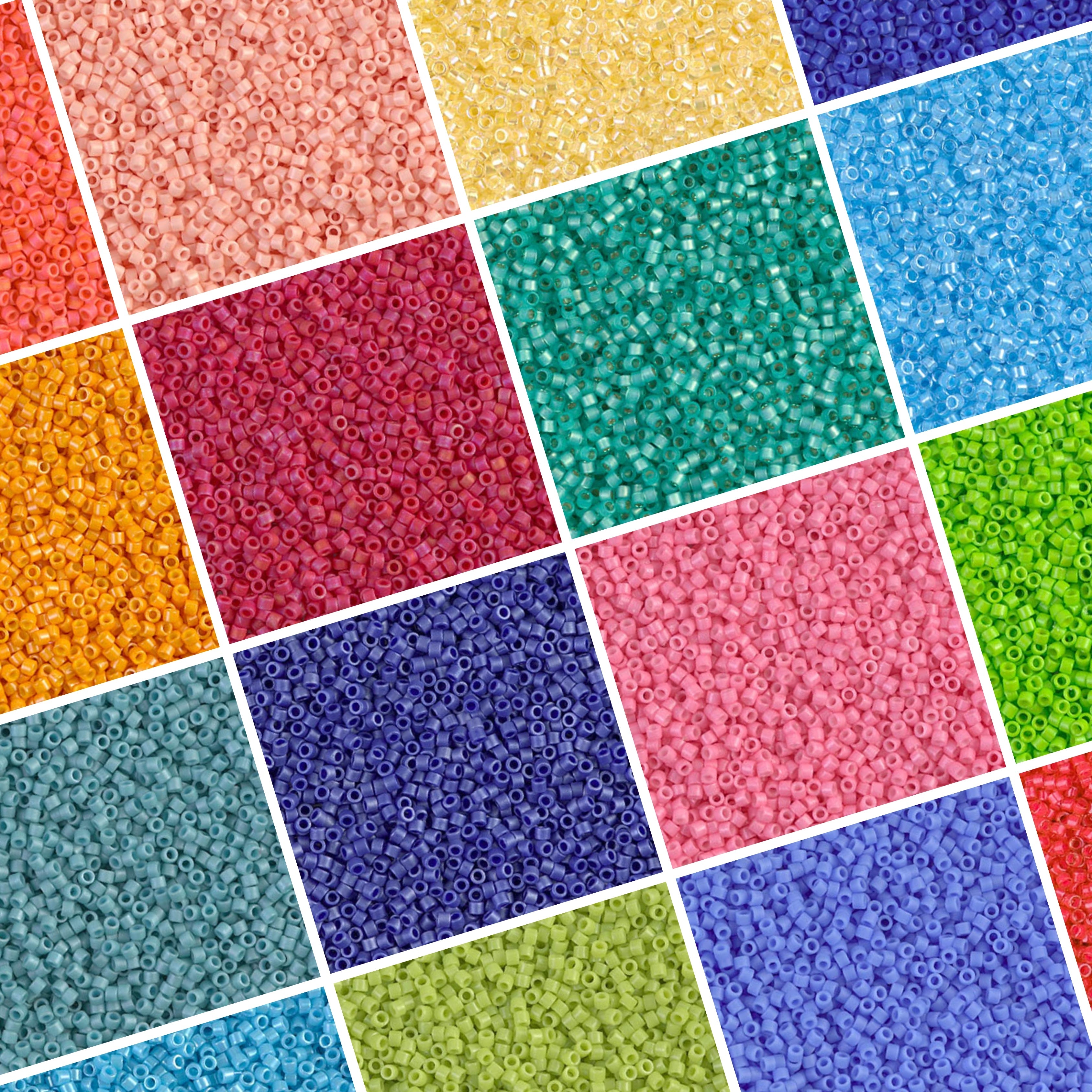
Shape and scale, mostly. A Tila bead is a flat, two-hole square tile measuring 5mm wide, 5mm tall, and 1.9mm thick, with two parallel 0.8mm holes running through it. A Delica bead is a one-hole cylinder about 1.6mm wide and 1.3mm long, also with roughly a 0.8mm hole.1 Put a single Tila next to a single Delica and the size gap is obvious. You'd need close to a dozen Delicas to cover the same surface area as one Tila.
The hole count matters too. Tila's two parallel holes let you string a row that stays flat and rigid, almost like laying tile on a floor. A Delica's single hole is sized for repeated needle passes, which is exactly what loom weaving and off-loom stitches like peyote and brick stitch need. Neither bead is "better" in the abstract. They're built for different techniques.
How do they compare for bracelet making, feature by feature?
Here's the side-by-side that actually matters if you're deciding what to string.
| Feature | Miyuki Tila | Miyuki Delica |
|---|---|---|
| Shape | Flat square tile | Round cylinder |
| Size | 5mm x 5mm x 1.9mm | ~1.6mm wide x 1.3mm long |
| Holes | 2, parallel, ~0.8mm each | 1, ~0.8mm |
| Cord fit | Sized for elastic cord stringing | Sized for beading needle and thread |
| Finished look on wrist | Flat, tiled, structured band | Fine, textured, woven fabric |
| Best technique | Stringing, stacking, two-hole patterns | Peyote stitch, brick stitch, loom weaving |
| Time to finish a bracelet | Under 30 minutes | Hours, depending on pattern size |
Why does hole size matter for elastic cord?
Hole size decides whether a bead sits still or slides around on stretch cord, and Tila's 0.8mm holes were sized with that job in mind. Two holes per bead also means you can run cord through both, which locks the tile flat instead of letting it rotate on the strand.
Delica beads have a similarly sized hole, but the bead itself is so small that stretch cord doesn't do it justice. You'd be threading hundreds of individual cylinders to match the coverage of a small handful of Tila tiles, and a properly tensioned elastic knot at the end matters more than ever when you've got that many beads riding on one strand.2 It's not impossible. It's just a lot of extra work for a look Tila already delivers in a fraction of the time.
Which one gives a better finished look on the wrist?
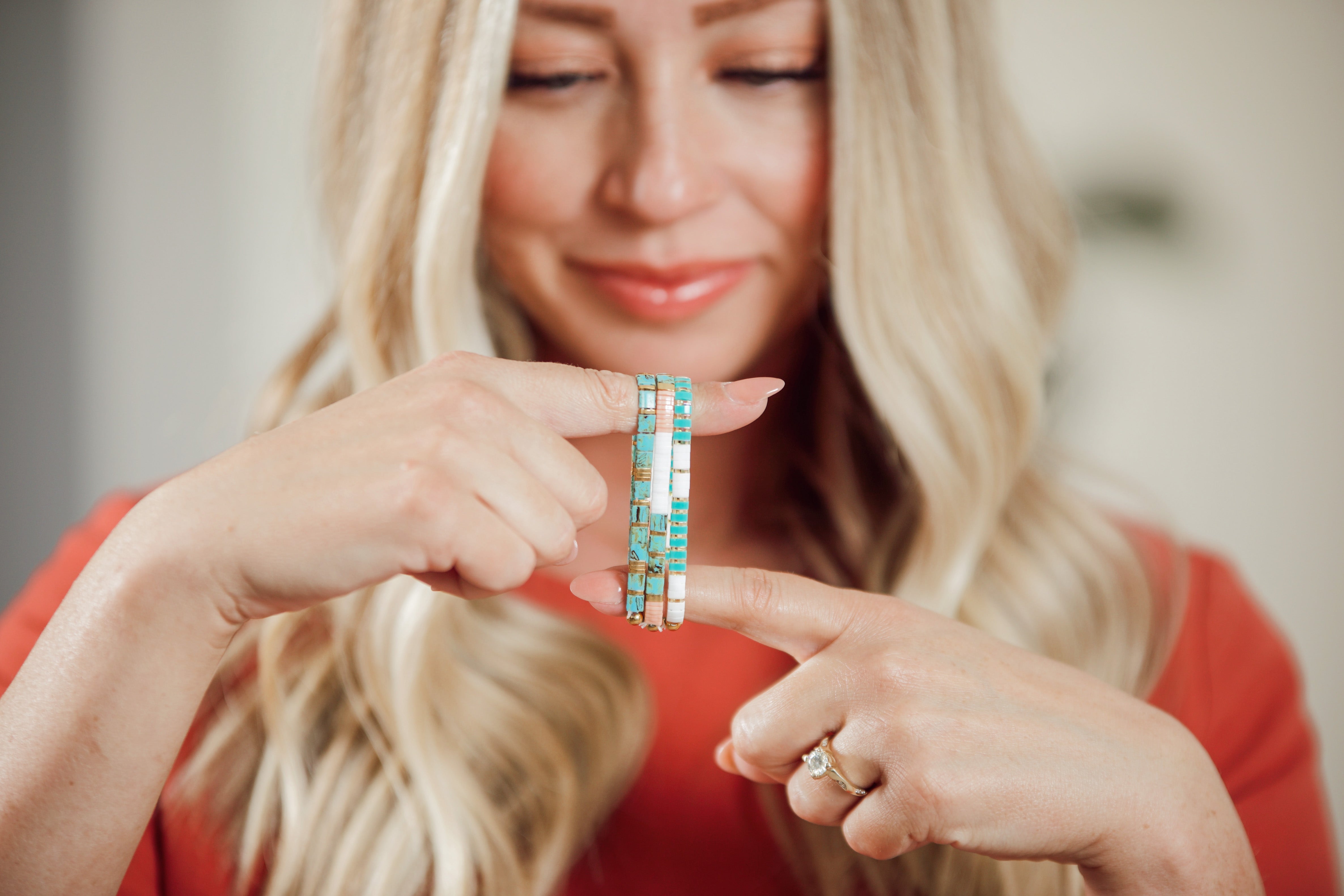
Depends on what you're going for. Tila beads lie flat against each other in a tight, tiled row. No gaps, no rolling, no bead-to-bead wobble. That structured, almost mosaic look is why Mack & Rex built its whole bracelet line around Tila. Stack two or three together and you get a clean, layered band that photographs well and holds its shape through a normal day.
Delica bracelets look completely different: fine, dense, almost fabric-like, because they're woven rather than strung. Beadweavers use Delicas for detailed geometric patterns, pixel-style designs, and cuffs with real texture. Genuinely beautiful work. It's a separate craft from stringing a stretch bracelet, though, closer to needlepoint than to threading beads on cord.3
Is one bead easier for beginners than the other?
Tila, no contest.
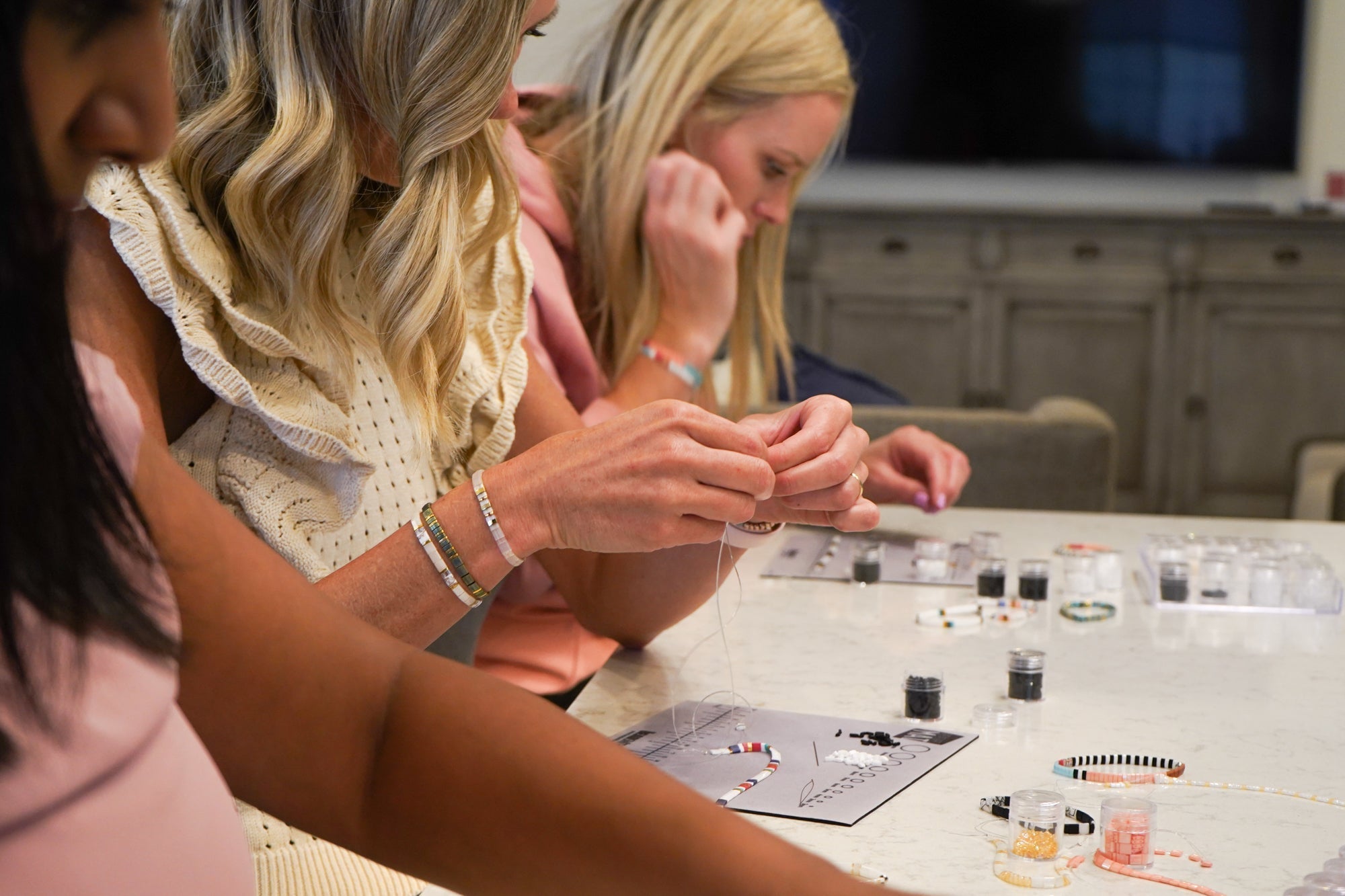
You can pick up Tila beads, string them on crystal-cord elastic, tie a secure knot, and wear a finished bracelet inside 30 minutes. No needle, no loom, no pattern chart. That's the whole reason Mack & Rex's DIY kits use Tila: a curated bead mix, pre-cut elastic, and a clasp, so a first-timer can sit down and finish something the same afternoon.
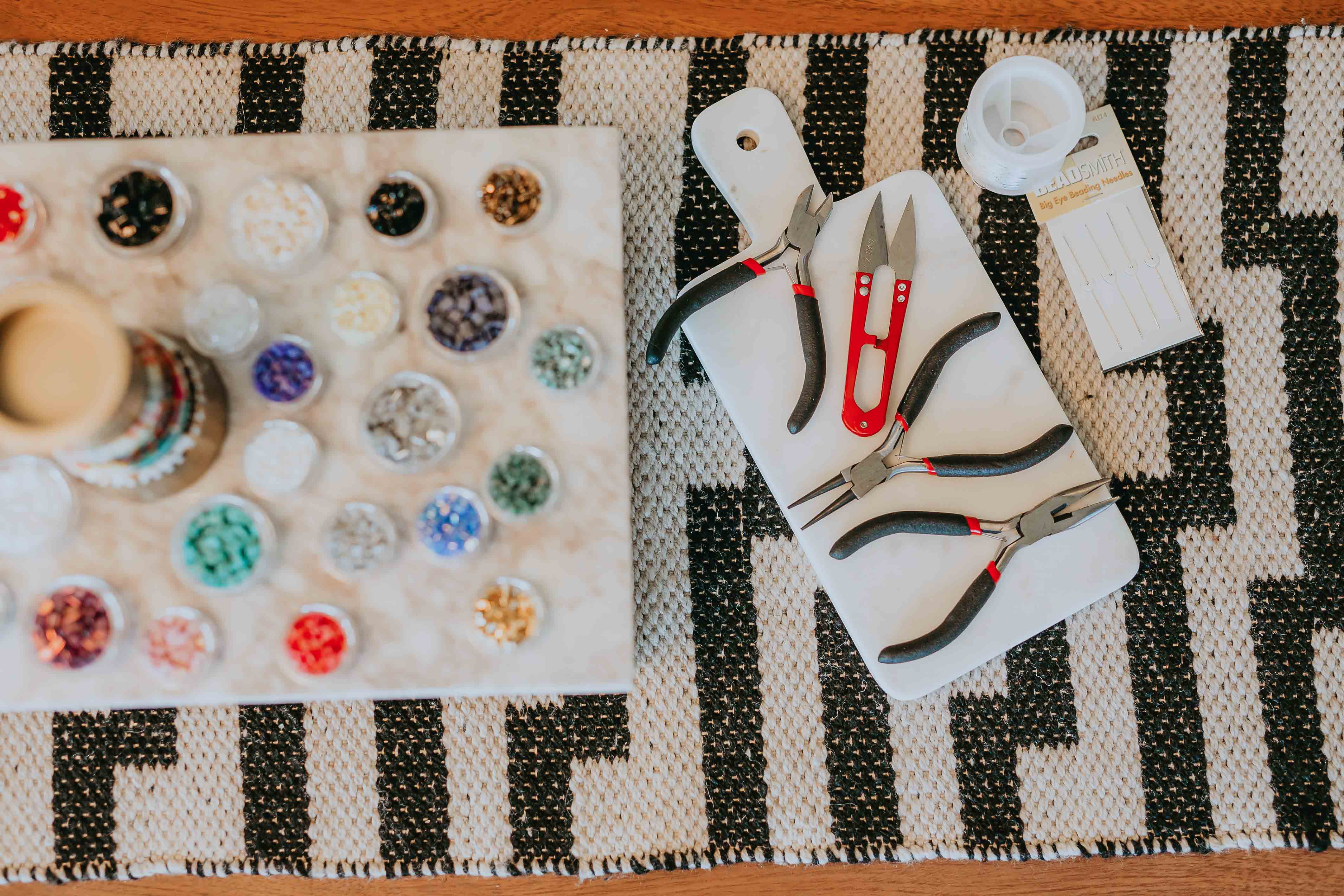
Delica beadwork is a real skill you build over time. You need a fine beading needle, thin thread, strong lighting, and patience for a stitch like peyote or brick stitch. Worth learning if you love detailed beadwork, but it's not a "make it tonight" craft the way a Tila stretch bracelet is.
A quick note on kids and loose beads
Both Tila and Delica beads are small enough to be a choking hazard, and Delicas especially so given their size. Keep loose beads away from very young children and supervise any bracelet project involving kids, regardless of which bead you're using.
Do Tila and Delica beads come in matching colors?
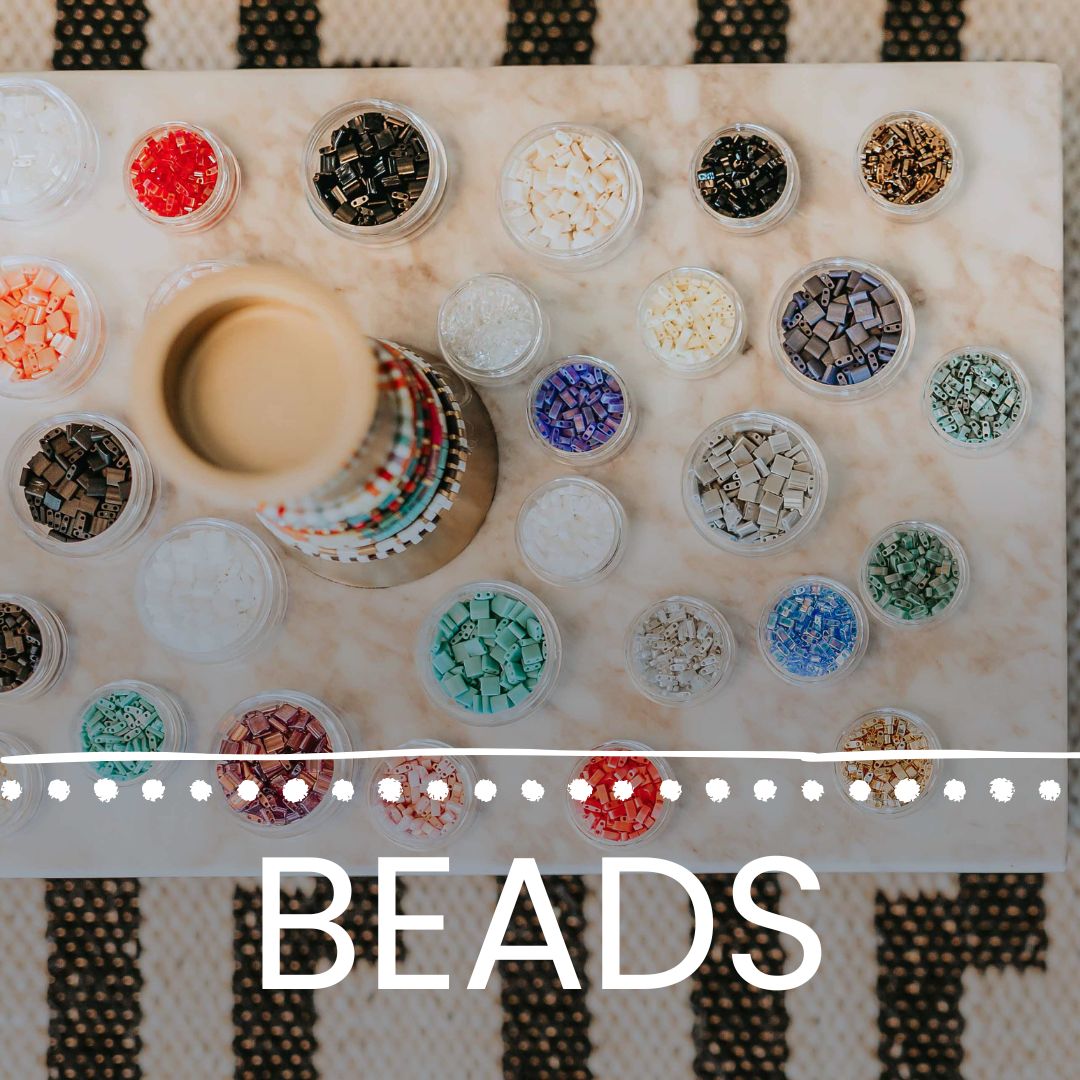
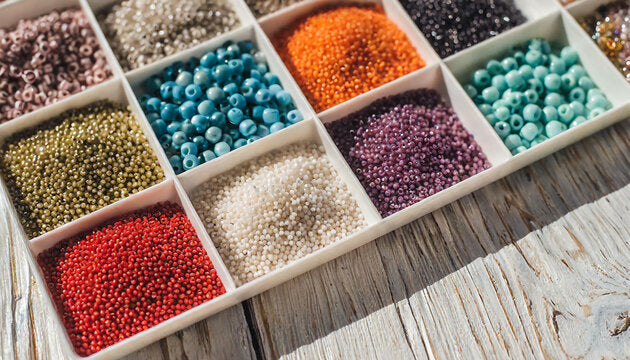
Largely, yes. Miyuki produces both lines in overlapping colorways and finishes: matte, metallic, AB (aurora borealis), opaque, and more, using the same general color-naming system across products. That said, not every Tila color has a Delica match and vice versa. Miyuki drops seasonal Tila colors that never make it into the Delica lineup, and some finishes stay exclusive to one bead or the other.
Mack & Rex works around that by curating Tila mixes in themed palettes, so you're not stuck cross-referencing a color chart to find beads that actually go together.
So which bead should go in your next bracelet?
If you're stringing a bracelet, meaning elastic cord, a clean flat look, and a project you can finish in one sitting, Tila is the bead for the job. If you're weaving, meaning a needle, thread, and a detailed pattern built up row by row, Delica is where that craft lives.
Mack & Rex sources genuine Miyuki Tila beads and sells them as curated color mixes, alongside ready-to-wear Tila bracelets and DIY kits built around them. Real offer right now: buy 3 bracelets, get 1 free, no code needed. Free shipping applies to US orders over $100.
Browse Miyuki Tila beads and seed bead mixes at Mack & Rex to see current colors in stock.
Frequently asked questions
What's the real difference between Tila and Delica beads?
Tila beads are flat, square, two-hole tiles that measure 5mm x 5mm. Delica beads are tiny one-hole cylinders around 1.6mm wide. Both are made by Miyuki, but the shape, hole count, and typical use are completely different: Tila for stringing flat bracelets, Delica for woven beadwork.
Should I use Tila or Delica beads for a stretch bracelet?
Tila beads. Their flat 5mm tile shape and 0.8mm holes are sized for stringing on elastic cord, and they sit flush against each other for a clean, structured band. Delica beads are built for needle-and-thread weaving, not stringing, and their tiny holes make elastic cord a poor fit.
Can Delica beads fit on the same elastic cord as Tila beads?
Technically yes, since both have roughly 0.8mm holes, but it's not practical. You'd need hundreds of Delica beads to match the coverage of a handful of Tila beads, and the finished piece would look thin and uneven next to a Tila bracelet's flat, tiled surface.
Are Tila beads more beginner-friendly than Delica beads?
Yes, by a wide margin. Tila beads are large enough to string by hand in under 30 minutes with no special tools. Delica beadwork requires a beading needle, thin thread, good lighting, and practice with a stitch like peyote or brick stitch.
Where can I buy genuine Miyuki Tila beads?
Mack & Rex sources Miyuki Tila beads and sells them in curated color mixes alongside finished bracelets and DIY kits. Orders ship worldwide (shipping and any customs and duties calculated at checkout), with free shipping on US orders over $100. Shop Tila beads at Mack & Rex.