

Picasso Tila Beads: What Makes Them Different
What Makes Picasso Tila Beads Different From Other Finishes?
Picasso tila beads are Miyuki tila beads finished with a mottled, matte speckle, not a solid opaque color or a shiny metallic coating, so each bead looks slightly weathered and no two match exactly. That built-in variation gives a bracelet a warm, earthy look that a flat single-tone finish just can't produce on its own.
If you've scrolled past bracelet photos and wondered why some flat-bead pieces look almost stone-like, not glassy and uniform, this finish is usually why. It's not a trick of the photo. It's how the beads are actually made.
What Does the Picasso Finish Actually Do to the Glass?
Tila beads start as the same base bead no matter the finish: a flat, square, two-hole piece of Japanese glass measuring roughly 5mm x 5mm.1 Miyuki applies surface treatments over that base glass to create the finish you see on the shelf. Opaque finishes are a flat, even coat. Metallics get a reflective coating. Picasso gets a mottled, semi-matte layer that lands unevenly, thicker in some spots and barely-there in others.
The unevenness is the whole point, not a flaw. Because the coating settles differently on each bead, you end up with a family of colors that all belong together but none of which are identical. Beaders sometimes describe it as the difference between a painted wall and a stone one. Both have color. Only one has depth you can see up close.
Mack & Rex sells Miyuki's tila beads. It doesn't make them. Miyuki is the Japanese glass manufacturer behind the tila bead and its finishes, Picasso included, and that distinction matters if you're comparing "real Miyuki" against cheaper look-alikes online.
How Do Picasso Tila Beads Look on a Finished Bracelet?
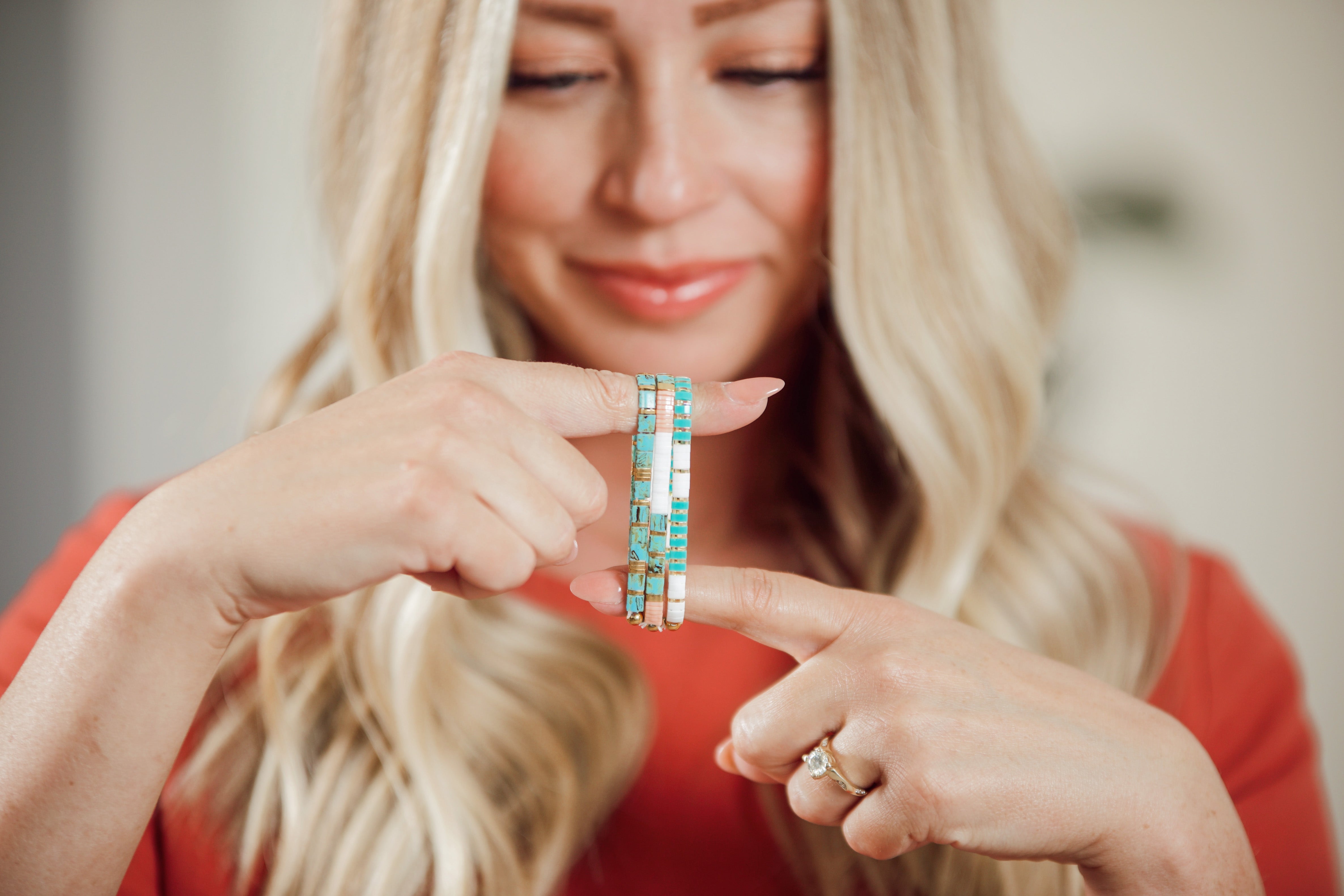
Better than photos usually show. The flat, square shape of a tila bead sits face-up against the wrist once it's strung, so you see the full speckled surface of every single bead rather than just a sliver of it.
Under indoor light the finish reads soft and warm, almost like brushed stone. Outside, the small color shifts across the speckling pick up more contrast, and the bracelet looks richer. A finished bracelet made mostly of Picasso tila reads as textured and layered even though every bead is technically the same size and shape. That's unusual for a manufactured bead. Most flat, uniform pieces read as flat and uniform. Picasso doesn't.
People who work with a lot of glass beads have written about matte and mottled finishes as a category for years, since the appeal isn't unique to any one brand.2 What sets Miyuki's version apart on a tila shape specifically is the flat face. There's simply more surface for the speckle to show off.
How Do You Use Picasso Tila Beads in a Bracelet or Stack?
A few ways to work with them, depending on how bold you want the look:
One trick that works well for a first project: keep a rough 1-Picasso-to-2-neutral ratio across the row of beads rather than alternating one-for-one. A single one-for-one alternation can look busy on a flat band this small, since every other bead is competing for attention. Spacing the Picasso beads out lets each one register as its own small detail instead of blurring into a stripe.
Go all-in on one Picasso colorway. A bracelet made entirely from a single Picasso mix (say, a warm brown-and-tan blend) leans on the bead-to-bead variation to do the visual work. No other color needed.
Anchor a neutral stack with a few Picasso pieces. Cream, ivory, and light tan opaque tila beads sit quietly next to Picasso beads and let the speckle stand out as the focal point. This is the easiest place to start if you're new to the finish.
Pair with earth tones. Terracotta, caramel, mocha, and sage green share the same visual temperature as most Picasso colorways, so they blend rather than clash.
Skip the neons. Bright, saturated opaques or shiny metallics compete with Picasso's texture more than they frame it. Save those for a different bracelet in your stack.
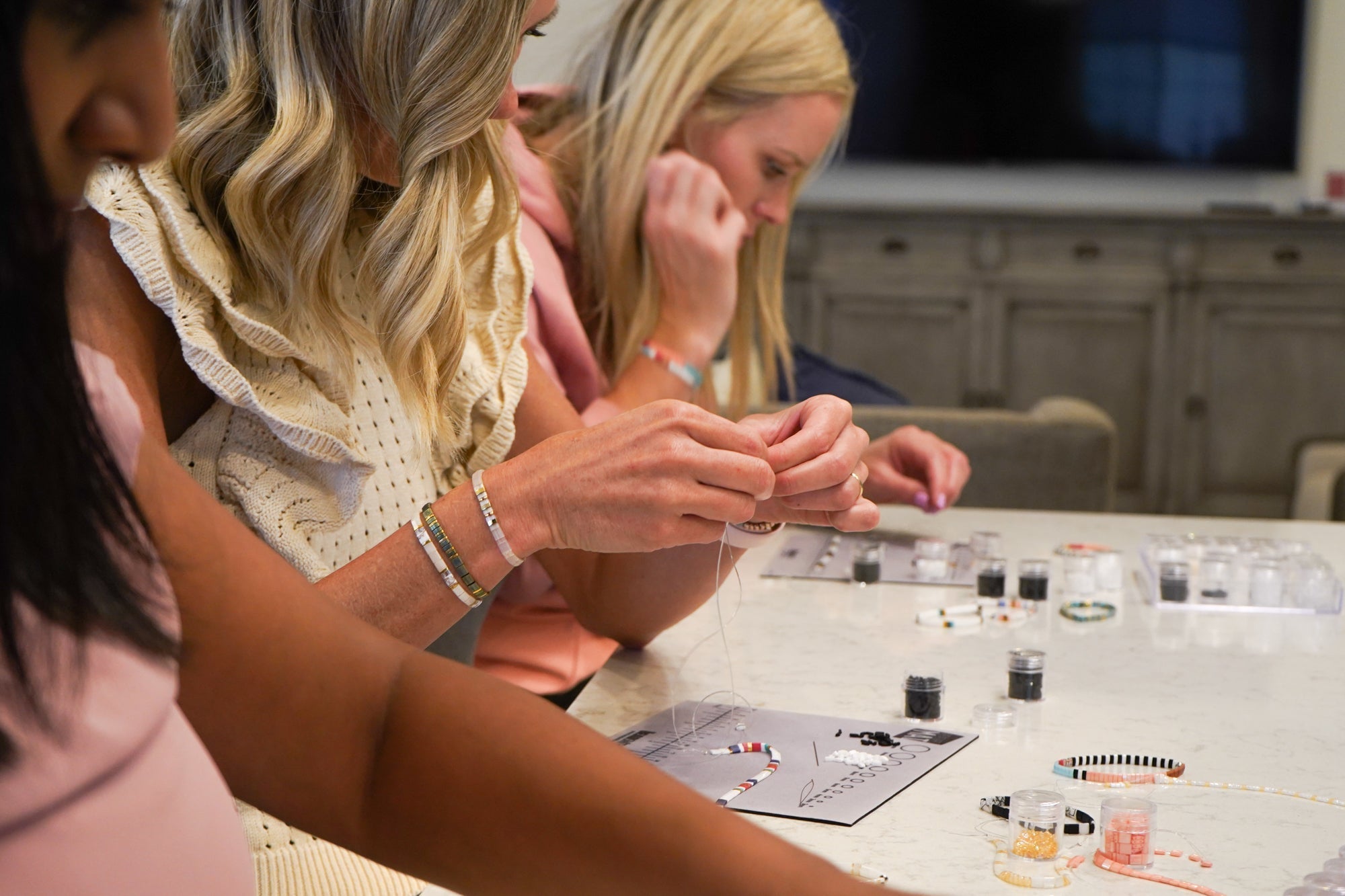
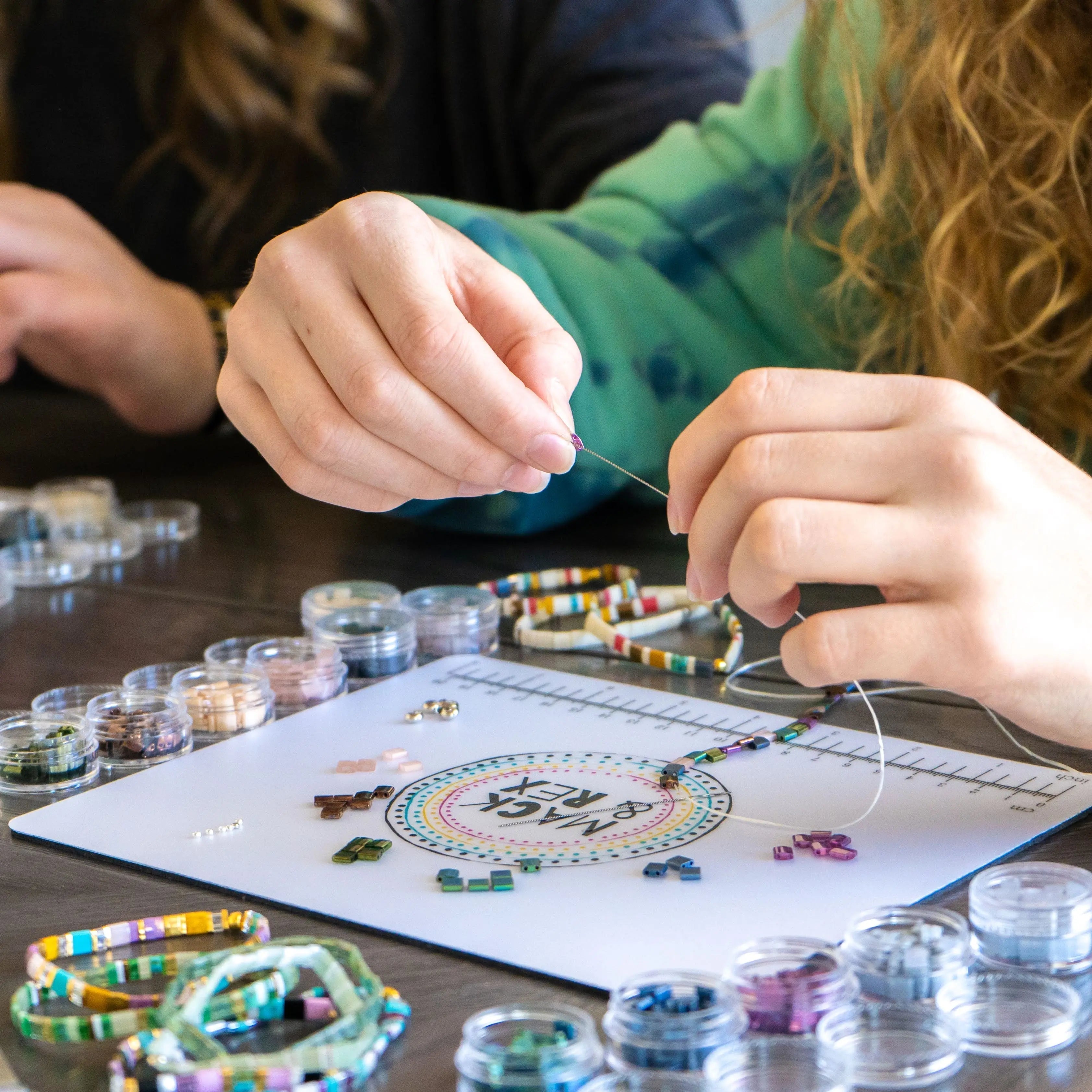
If you're stringing your own, run two strands of stretch elastic through both holes of each tila bead so the beads lock flat against each other, the same construction used across Mack & Rex's ready-made bracelets and DIY kits. And a quick safety note: loose beads, tila included, are small parts and a choking hazard. Keep them away from young kids, and supervise closely if a child is helping string a bracelet.
Where Can You Buy Real Picasso Tila Beads?
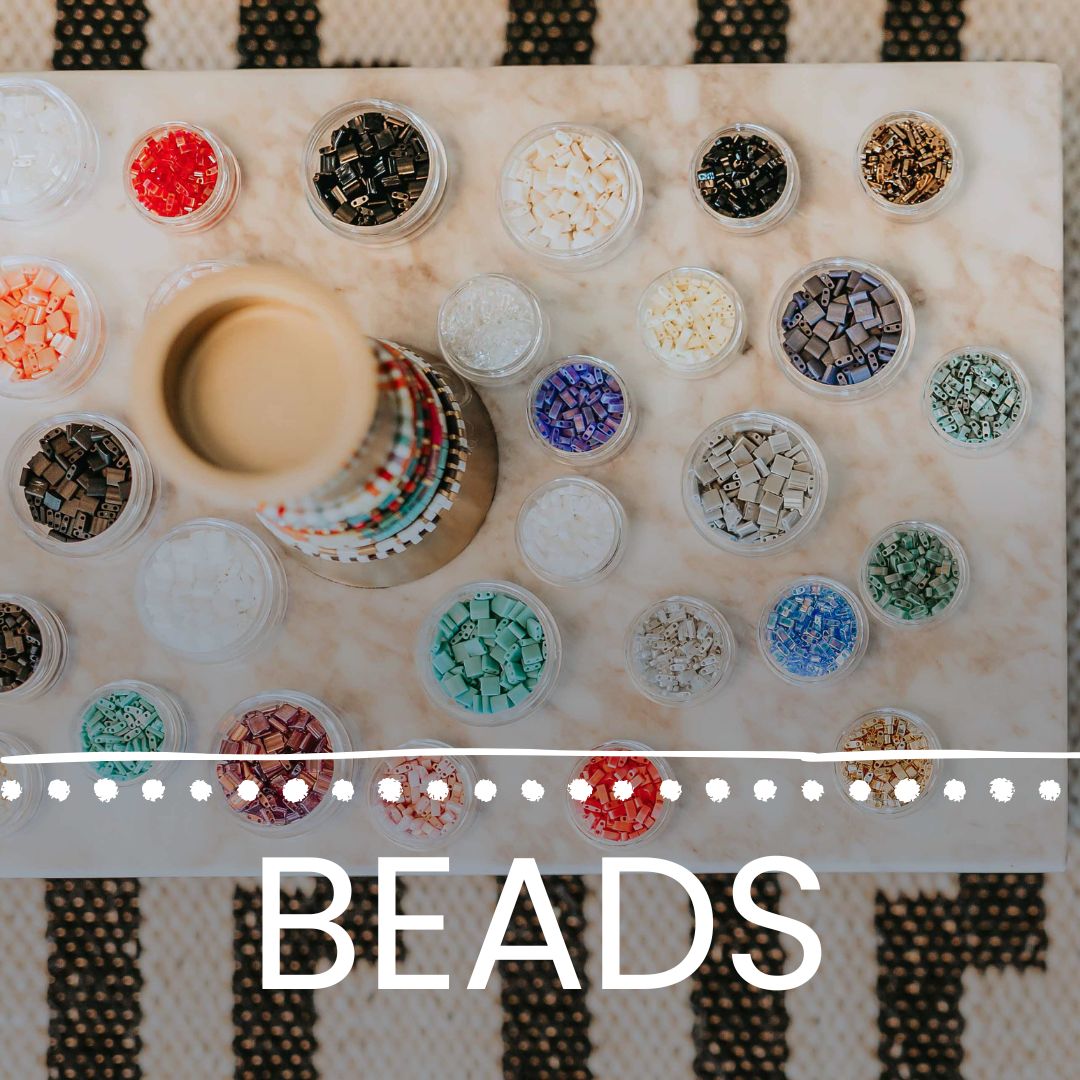
Mack & Rex carries genuine Miyuki tila beads, Picasso finishes among them, at mackandrex.com/collections/tila-beads. These are the actual Japanese glass beads from Miyuki, not a generic stand-in, sourced and resold rather than made in-house. Loose bead mixes typically run about $5 to $9. If stringing your own isn't your thing right now, ready-to-wear tila bracelets in Picasso and other finishes run roughly $20 to $25.
The collection rotates with new colorways as Mack & Rex brings in monthly drops, so a Picasso mix you love might not be there forever. Grab it when you see it. If you'd rather have someone else do the stringing, the finished-bracelet side of the same brand gives you the look without the setup, and it's easy to add a Picasso-finish piece into a stack you're already building.
Two real offers apply, depending on what you're buying. US orders over $100 ship free, no minimum tricks. And on finished bracelets specifically, it's buy 3, get 1 free, no code needed at checkout. That bracelet deal doesn't extend to loose beads or kits, so if you're building a $44.99 kit purchase, know that a single kit won't clear the $100 free-shipping line on its own either. Mack & Rex ships internationally, with shipping and any customs and duties calculated at checkout.
Whether you're filling out a color palette you already love or picking up your first Picasso mix to see what the fuss is about, the tila beads collection is the place to start.
Frequently Asked Questions
What are Picasso tila beads exactly?
Picasso tila beads are Miyuki tila beads, the flat, square, two-hole Japanese glass beads used in flat-woven bracelets, finished with a Picasso coating rather than a solid opaque or metallic one. The Picasso coating is a mottled, matte layer that settles unevenly over the glass, so each bead picks up its own pattern of speckling and no two match exactly.
Is a Picasso finish the same on tila beads as it is on other bead shapes?
The Picasso finish itself works the same way across bead shapes: a mottled, matte coating applied over base glass. What changes is how visible it is. On a small round seed bead there's not much surface to show the pattern. On a flat 5mm x 5mm tila bead, the whole speckled face sits in view, so the finish reads more clearly than it does on rounder, smaller beads.
How do I mix Picasso tila beads with other finishes in one bracelet?
Pair Picasso tila beads with matte opaque neutrals, warm browns, or dusty muted tones so the earthy speckle stays the focal point and doesn't have to compete with a shiny finish. A common approach is a mostly-neutral stack with a few Picasso beads worked in as accents. Bright metallics or neon opaques tend to pull attention away from the speckled texture more than they complement it.
Where can I buy authentic Picasso tila beads?
Mack & Rex sells genuine Miyuki tila beads, including Picasso-finish colorways, at mackandrex.com/collections/tila-beads. These are Miyuki's Japanese glass beads; Mack & Rex sells them, it does not manufacture them. US orders over $100 ship free, and loose beads are a small-parts item best kept away from young children.