

How to Build Stackable Tila Bead Bracelet Stacks
How many tila bead bracelets do you actually need to build a stack?
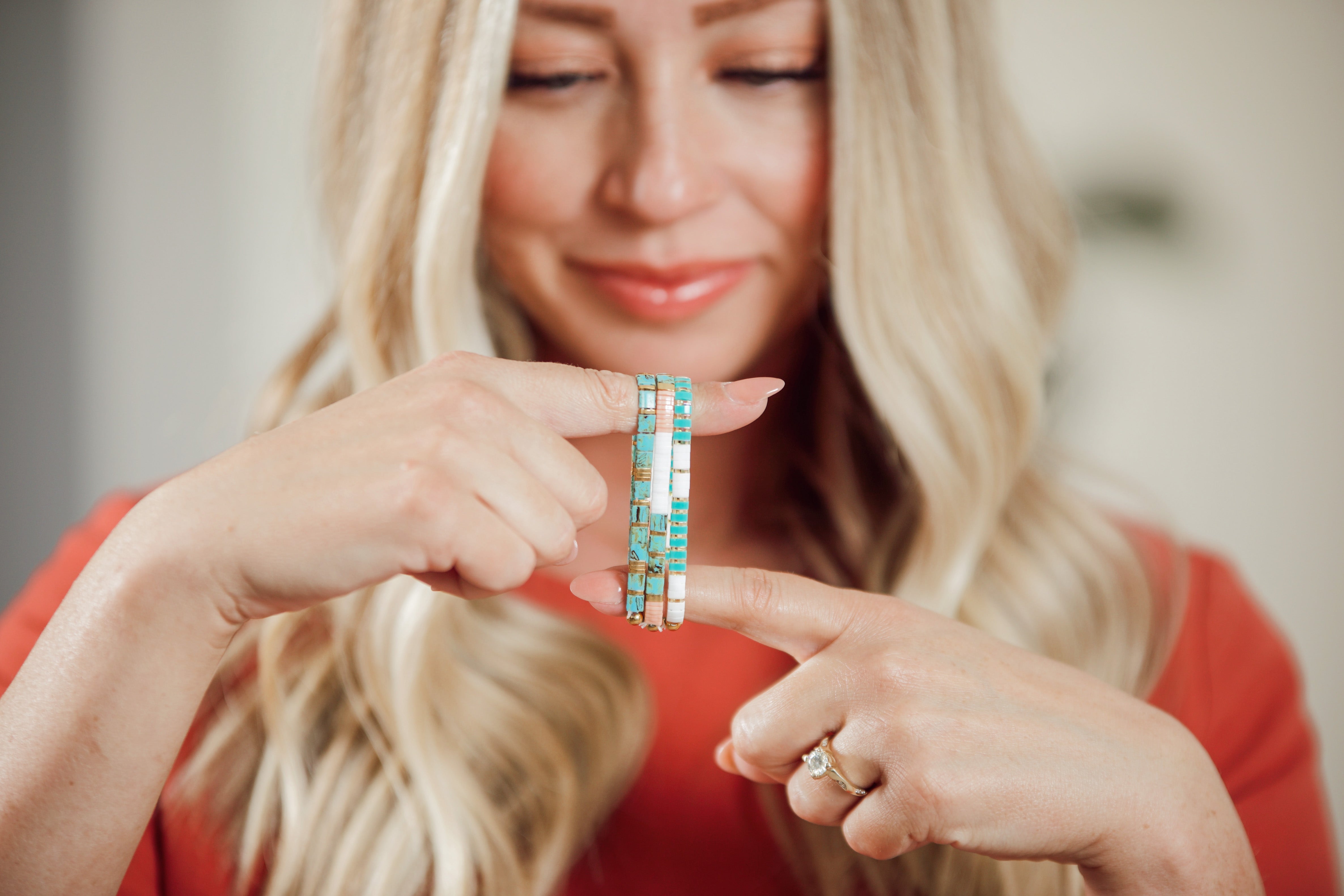
Three to five bracelets is the range that reads as an intentional stack rather than a pile of bracelets you forgot to take off. Three is the easiest starting point: one anchor color plus two supporting pieces. Five gives more depth for people who want a fuller wrist. Anything past six or seven tends to slide into "too much" for daily wear.
Stackable tila bead bracelets are having a moment for a simple reason: the flat, two-hole tile shape, developed by Miyuki and described in detail by Fire Mountain Gems, sits close and lies flat against skin, so several bracelets worn at once look layered instead of bulky. Building a good stack isn't about luck or a good eye. It's a short list of decisions, made in order, and this guide walks through each one.
What's a simple formula for building a stack that doesn't look random?
Pick your count first, then work in this order: one anchor, two mix-ins, one wildcard. That's four decisions, not four hours of trial and error.
The anchor is the bracelet you'd wear on its own if you only had one. Pick it first, in a color or pattern you already love, and let every other piece support it rather than fight it. The two mix-ins should share at least one color with the anchor, either matching tones or a coordinating shade. The wildcard is the one piece that breaks the pattern on purpose, a metallic finish, a multi-color mix, or a different bead pattern that keeps the whole stack from looking like a matched set. Add a fifth piece the same way if you're building toward five instead of three.
- Anchor: your favorite single bracelet, chosen first.
- Two mix-ins: coordinating colors that share a tone with the anchor.
- Wildcard: one piece with a different finish or pattern to add texture.
How do you mix colors without the stack looking chaotic?
Pick colors that sit either close together or directly across from each other on the color wheel, and skip everything in between. Those two approaches almost always look planned, while a scatter of unrelated hues rarely does.
Colors next to each other on the wheel, like coral, orange, and gold, blend into a soft, sunset-style palette. Colors directly across from each other, like navy and coral, or teal and rust, create sharp contrast that reads as bold rather than accidental. The color wheel has been the standard tool for this kind of pairing for centuries, and it works just as well for bracelets on a wrist as it does for paint on a canvas. Pick one lane, close or opposite, and build your two to four colors from there.
A few pairings that hold up well in tila stacks: cream and gold with a single deep garnet piece; sage green and cream with one burnt-orange accent; navy and white with a metallic silver wildcard. Keep it to two or three main colors total. A fourth color is fine as an accent, but a stack built from five unrelated colors almost never looks finished.
Should you buy single bracelets or start with a kit?
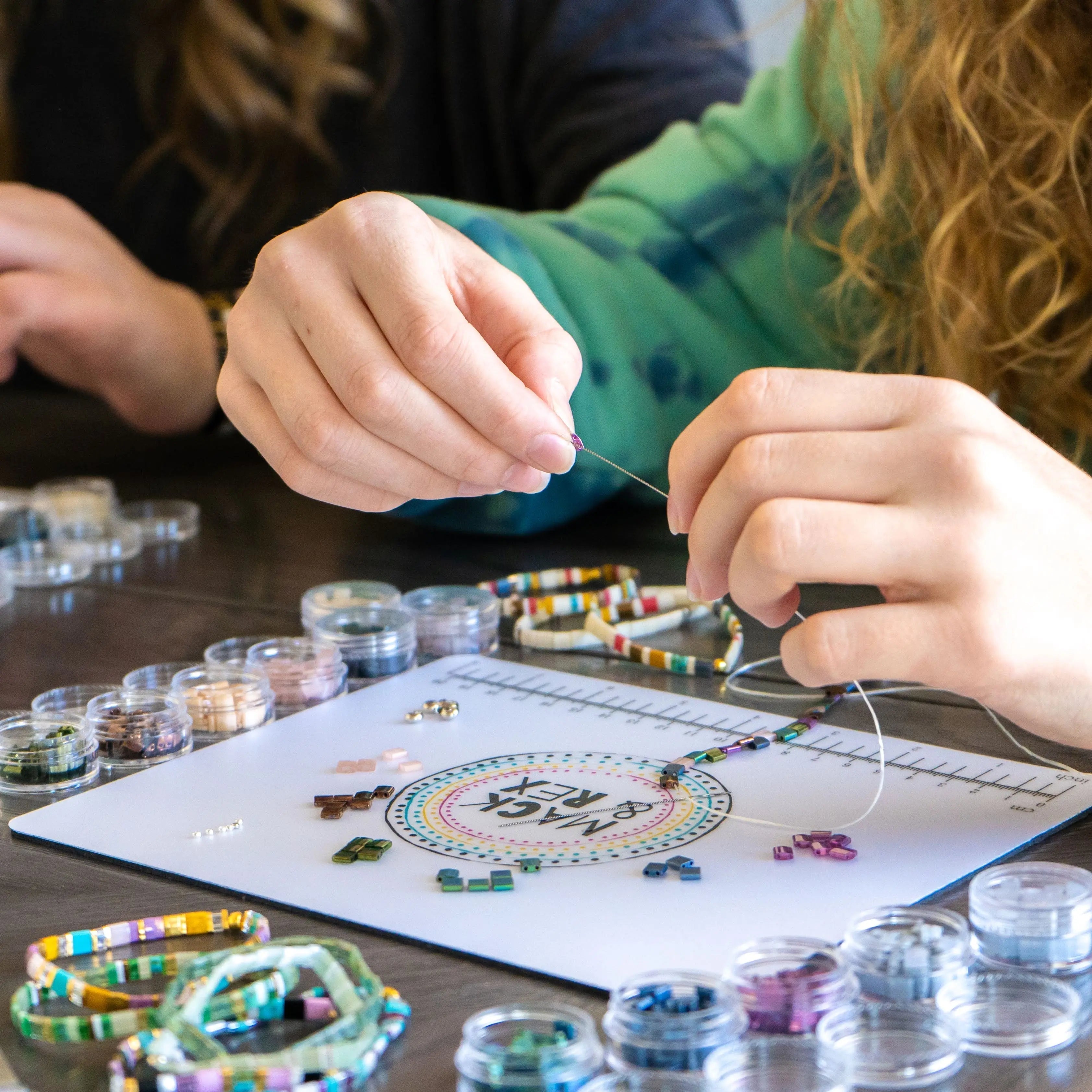
It comes down to two things. How hands-on you want to be, and how many pieces you're building toward. Buying single, finished bracelets lets you build a stack piece by piece and swap pieces in and out as new collections drop. A kit gets you three coordinated bracelets in one box, already color-matched, which is the faster route if you'd rather not shop color by color.
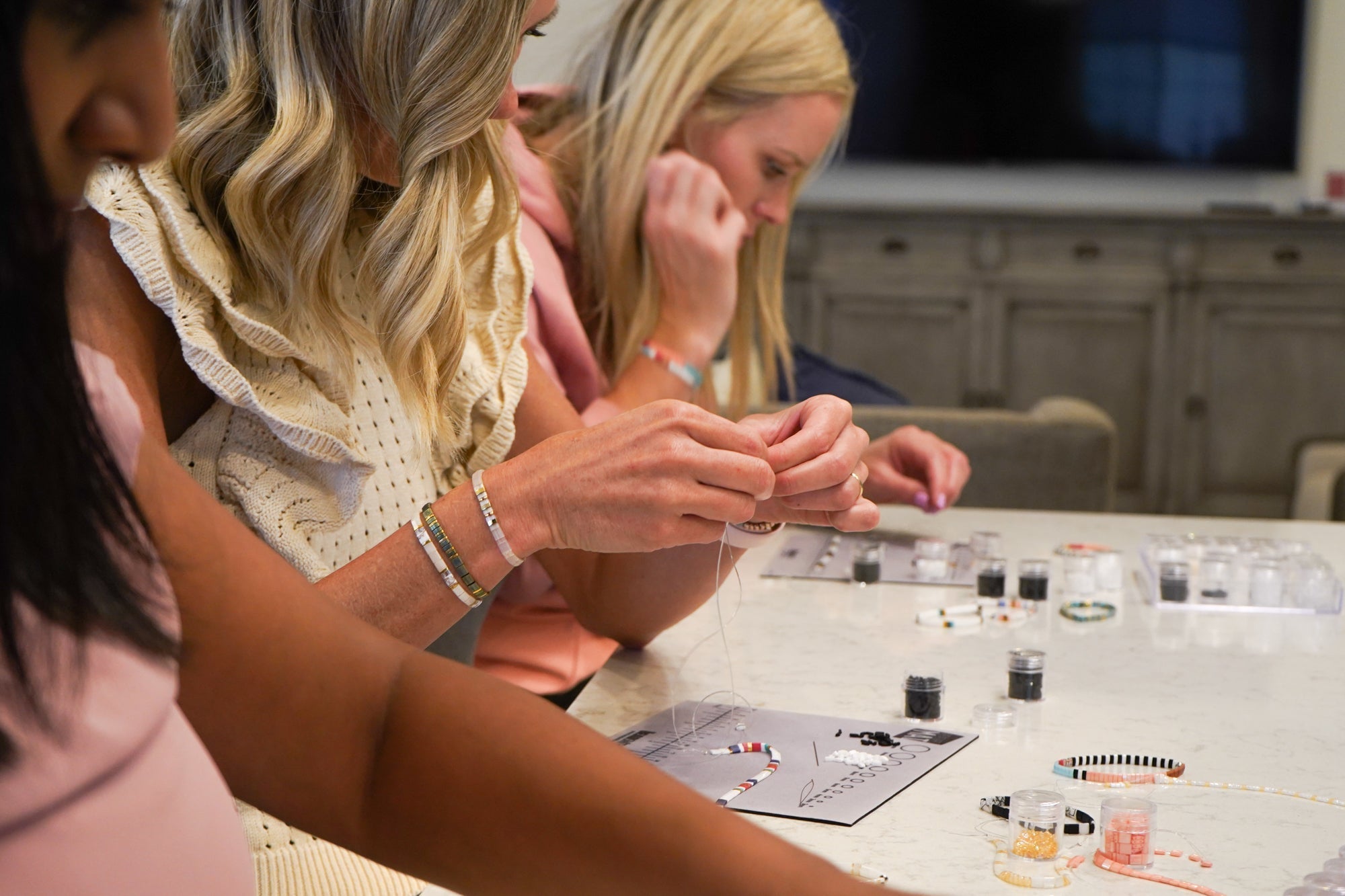
On pricing: finished single bracelets run about $20 to $25 each on mackandrex.com. A trio bracelet kit, which includes materials to make 3 bracelets yourself, runs $44.99, and the DIY Bracelet Kit Club (also 3 bracelets) runs $36.99. If you want five finished pieces and don't want to assemble anything, buying singles and using the buy 3 bracelets, get 1 free offer is the better math, since that offer applies to finished bracelets only and doesn't extend to kits or loose bead mixes. If you'd rather make your own and don't mind stringing beads onto elastic cord, a kit gets you most of the way to a 3-piece stack for one price.
Either way, a single kit purchase on its own won't clear the $100 free-shipping threshold, so if shipping cost matters to your order, plan to add a second item or a few extra bracelets.
How do you keep a multi-bracelet stack comfortable all day?
Fit is the step people skip. It's also the one that decides whether the stack survives past its first week. A bracelet that's too loose slides down over your hand by mid-morning, and one that's too tight leaves a mark by lunch.
General guidance on stretch jewelry, like the sizing notes from Lima Beads, points to the same rule: measure before you buy rather than guess. Every Mack & Rex bracelet is strung on a crystal-cord elastic and comes in inclusive sizing from XXS to 5XL, backed by our quality guarantee. Measure the widest part of your hand, not your wrist bone, and check that measurement against the size chart on each product page before you add it to your stack. Do this for every single piece, not just the first one you order. A five-bracelet stack with one wrong size still feels like a stack that doesn't fit.
Which Mack & Rex tila bracelets make the easiest stacks?
Start with a collection that's already color-matched if you don't want to build your palette from scratch. Our STAINED line runs deep jewel tones (garnet, amethyst, emerald) for a stack with some drama. BEACHY leans light and sandy with turquoise accents, an easy opposite-side-of-the-wheel pairing. RETRO SUNSET mixes coral, gold, and burnt orange in an analogous palette that needs almost no extra thought. Grab three pieces from one of these and you've already covered the anchor and two mix-ins, then add a metallic or multi-color piece from another line as your wildcard.
You can browse the full lineup, single bracelets and trio kits both, on our tila bead bracelets collection. As noted above, buy 3 bracelets and get a 4th free, no code needed, on finished bracelets, and US orders over $100 ship free.
Pick your count, pick an anchor, and let the rest of the formula (and the buy-3 offer) fill in the stack from there.
Frequently asked questions
How many tila bead bracelets should be in a stack?
Three to five is the range most people settle on. Three is easy to wear daily and simple to build, while five gives a fuller look without feeling heavy on the wrist. Stick to an odd number and one main color story.
Is it cheaper to buy single tila bracelets or a kit?
It depends on how many you want and whether you want them finished or DIY. A trio bracelet kit runs $44.99 and makes 3 bracelets you assemble yourself, while finished single bracelets run about $20 to $25 each. Compare against your target stack size before deciding, and note that the buy 3 bracelets, get 1 free offer applies to finished bracelets only, not kits.
Does Mack & Rex make the tila beads used in these bracelets?
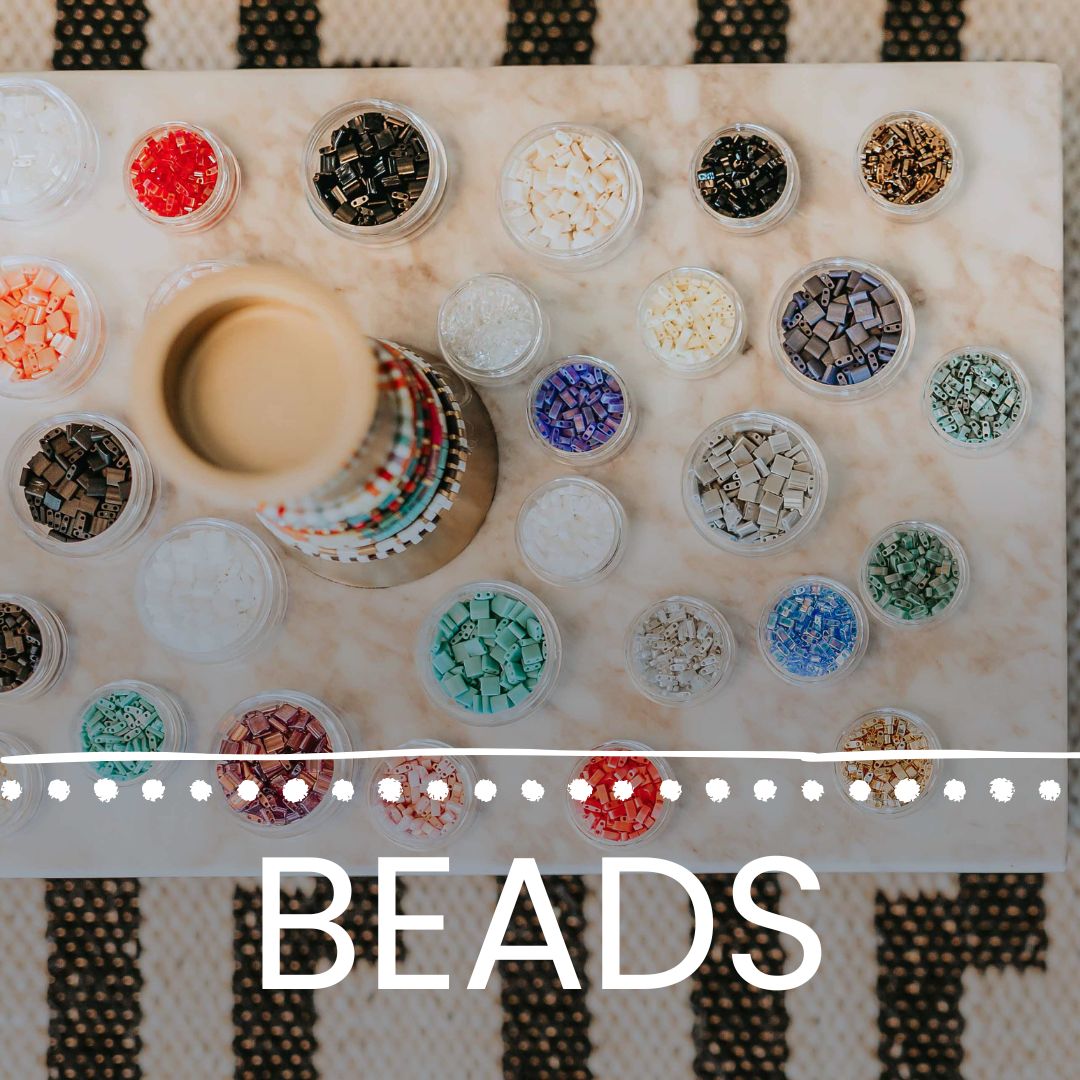
No. Tila is a trademarked bead shape made by Miyuki, a Japanese bead manufacturer. Mack & Rex sources these glass beads and strings them onto crystal-cord elastic to build the finished bracelets sold in our collections.
Will a full bracelet stack stay comfortable all day?
It will if each piece is sized correctly. Mack & Rex bracelets come in inclusive sizing from XXS to 5XL and use a crystal-cord elastic, so measure your hand and check the size chart for every bracelet you add rather than assuming one size fits the whole stack.
What is the easiest way to start a tila bracelet stack from scratch?
Start with a collection someone else already color-matched, like STAINED or BEACHY, and buy three pieces from it. That gives you a finished, coordinated stack in one order, and the current buy 3 bracelets, get 1 free offer on finished bracelets covers a fourth piece at no extra cost.