

Tila Beads vs Delica Beads: Which One Is Right for Your Bracelet?
What is the real difference between tila beads and delica beads?
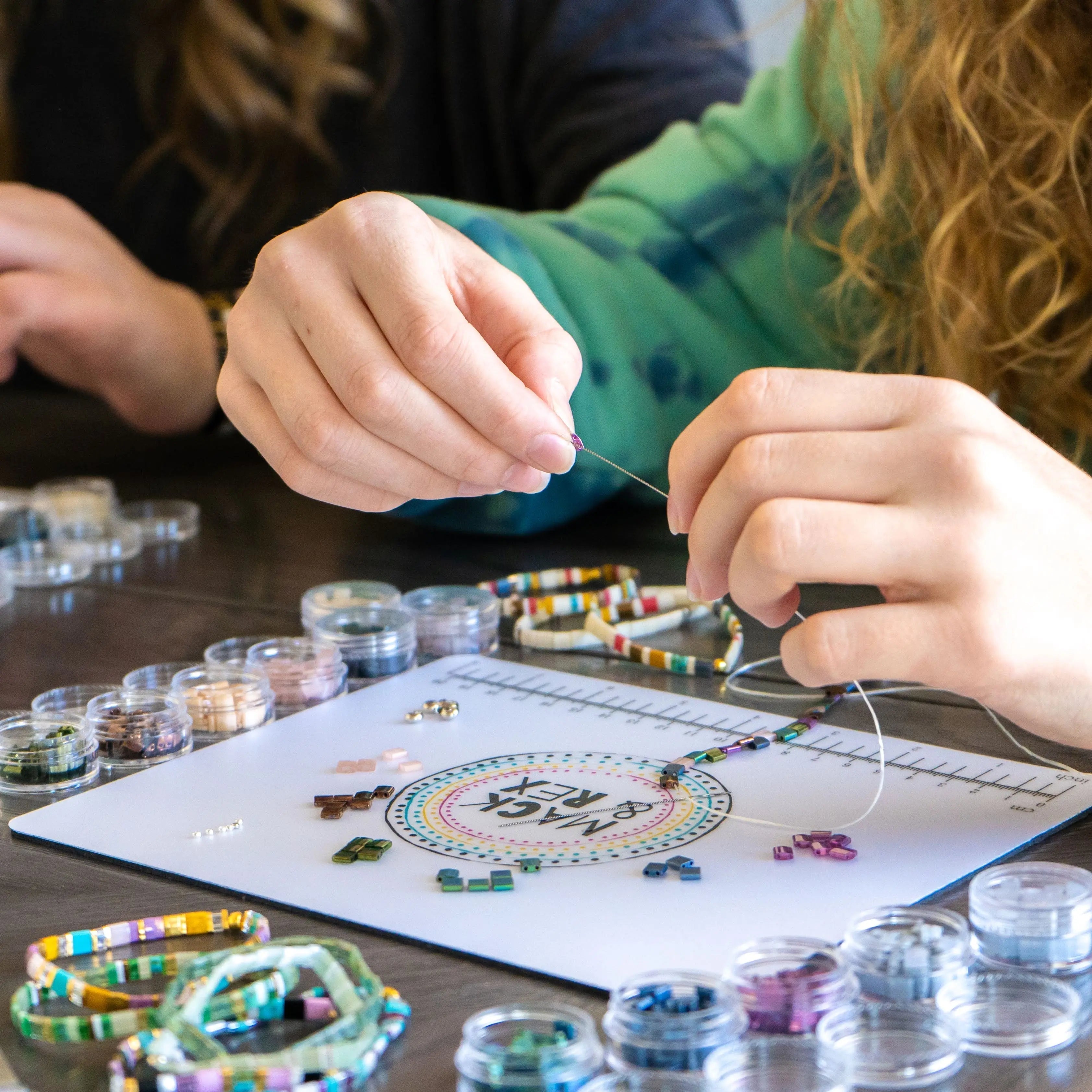
Tila beads are flat, square, two-hole glass beads made by Miyuki, about 5mm on each side. Delica beads are small cylindrical seed beads with a single hole, usually in the 1.6mm to 2.2mm range. Both come from the same Japanese glassmaker and share the same clean, uniform quality, but they behave almost nothing alike once you're actually stringing or weaving with them.
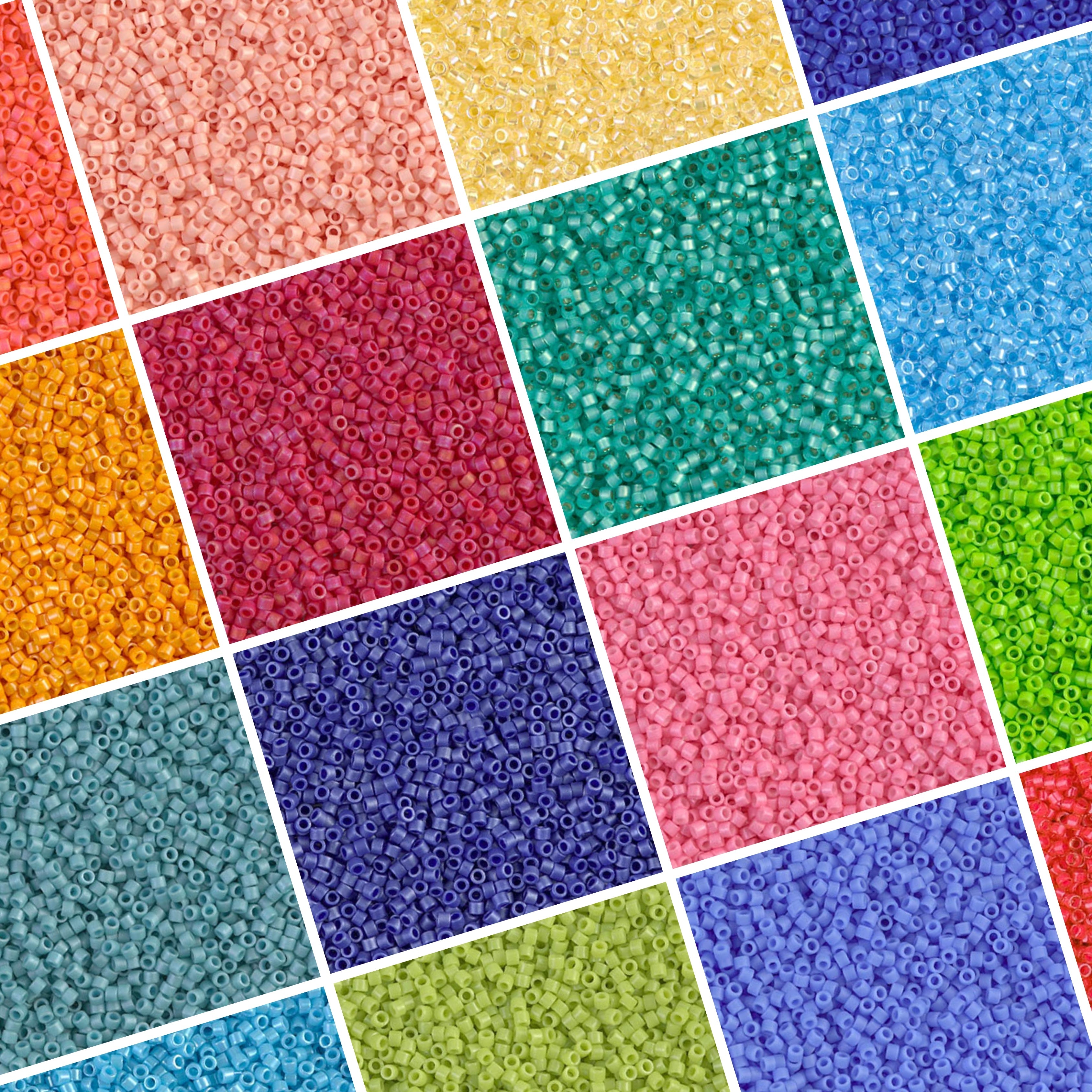
The shape is the whole story. A tila bead lies flat against the skin like a tiny tile, and its two parallel holes let you run cord straight through in a stacked, brick-like pattern without any weaving skill required. A delica bead is a short glass tube, round in cross-section, with one hole running through the center. Line up dozens of them in tight rows and they behave more like pixels, which is exactly why bead artists reach for delica when they want a design with fine detail: a word, a face, a gradient of color that shifts bead by bead.
How does each one look once it's actually on the wrist?
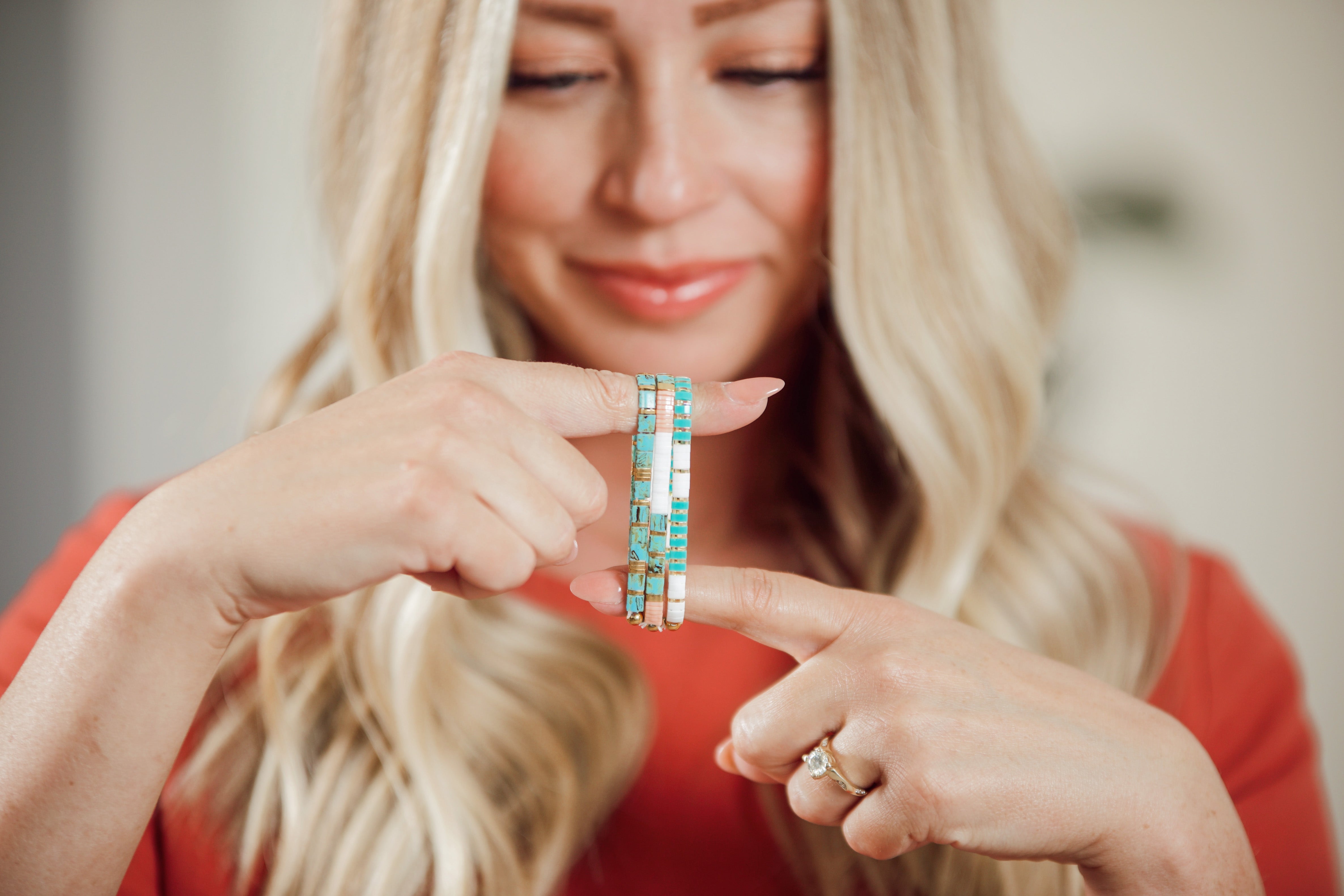
Tila beads read as bold and graphic. Because each bead is a flat square, a tila bracelet has a tiled, almost mosaic look, and the finish catches light across a wider flat surface, so metallics and iridescent glazes really pop. Stack two or three tila bracelets together and you get a chunky, layered look that photographs well and reads from across a room.
Delica beads look finer and more textile-like. A finished delica piece has a smooth, almost fabric-like surface because the cylinders pack so tightly with barely any gap between them. That density is what makes delica the bead of choice for patterned cuffs, geometric bands, and anything meant to look woven rather than strung. It's a quieter, more intricate look next to a tila stack's bolder one.
Which one is actually easier for a beginner?
Tila beads, hands down, for most people picking up beading for the first time. Bigger beads are simply easier to see and handle, especially for anyone working without a magnifier or beading late at night at the kitchen table. A two-hole flat bead also forgives small tension mistakes that would show up instantly in a tight woven pattern. String a stretch bracelet with tila beads and you can finish one in well under an hour.
Delica work takes real practice. Most delica projects use off-loom weaving stitches like peyote or brick stitch, and getting even tension across dozens of rows is a skill that develops over several projects, not one sitting. That's not a knock on delica. It's a genuinely rewarding technique once you've got the hang of it, and plenty of crafters graduate to it after starting with something flatter and faster. It's just not where most people should start.
One small caution either way: both bead types are a choking hazard for young kids, so loose beads and kits are a project for an adult or an older child working with supervision, not something to hand to a toddler.
What finishes and colors can you get in each?
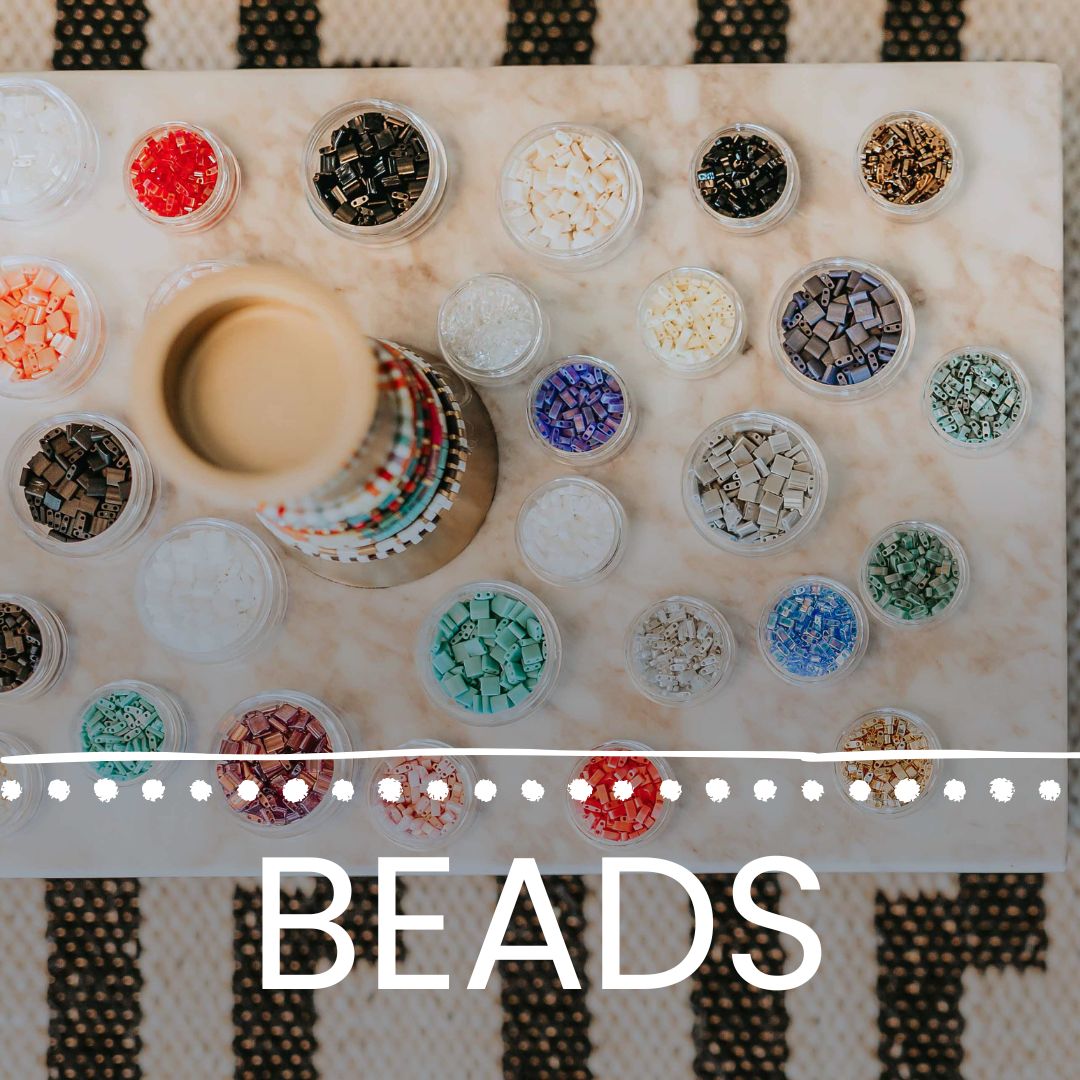
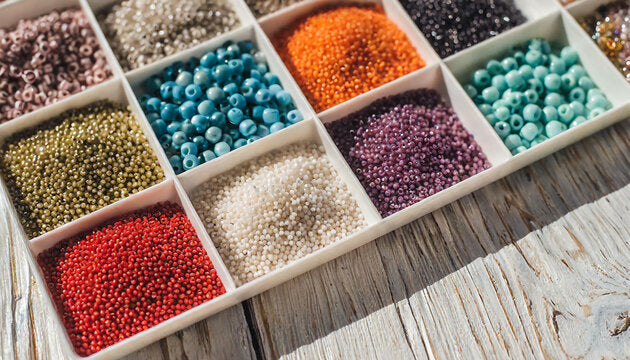
Because tila and delica both come from Miyuki, they share the same finish families: matte, opaque, metallic, iridescent (called AB, for aurora borealis), and transparent glass. What differs is how those finishes present. A tila bead's flat face shows off a metallic or iridescent coating in a big, obvious sheen, almost like a sequin. The same finish on a tiny delica cylinder reads more like a subtle shimmer across a woven surface, since each bead only shows a sliver of its finish at a time.
Both bead types get restocked in seasonal colorways, so if you've been eyeing a specific palette, it pays to check current stock rather than wait. Mack & Rex rotates named collections built around tila beads throughout the year, and those color mixes move with the drops.
When should you reach for tila beads?
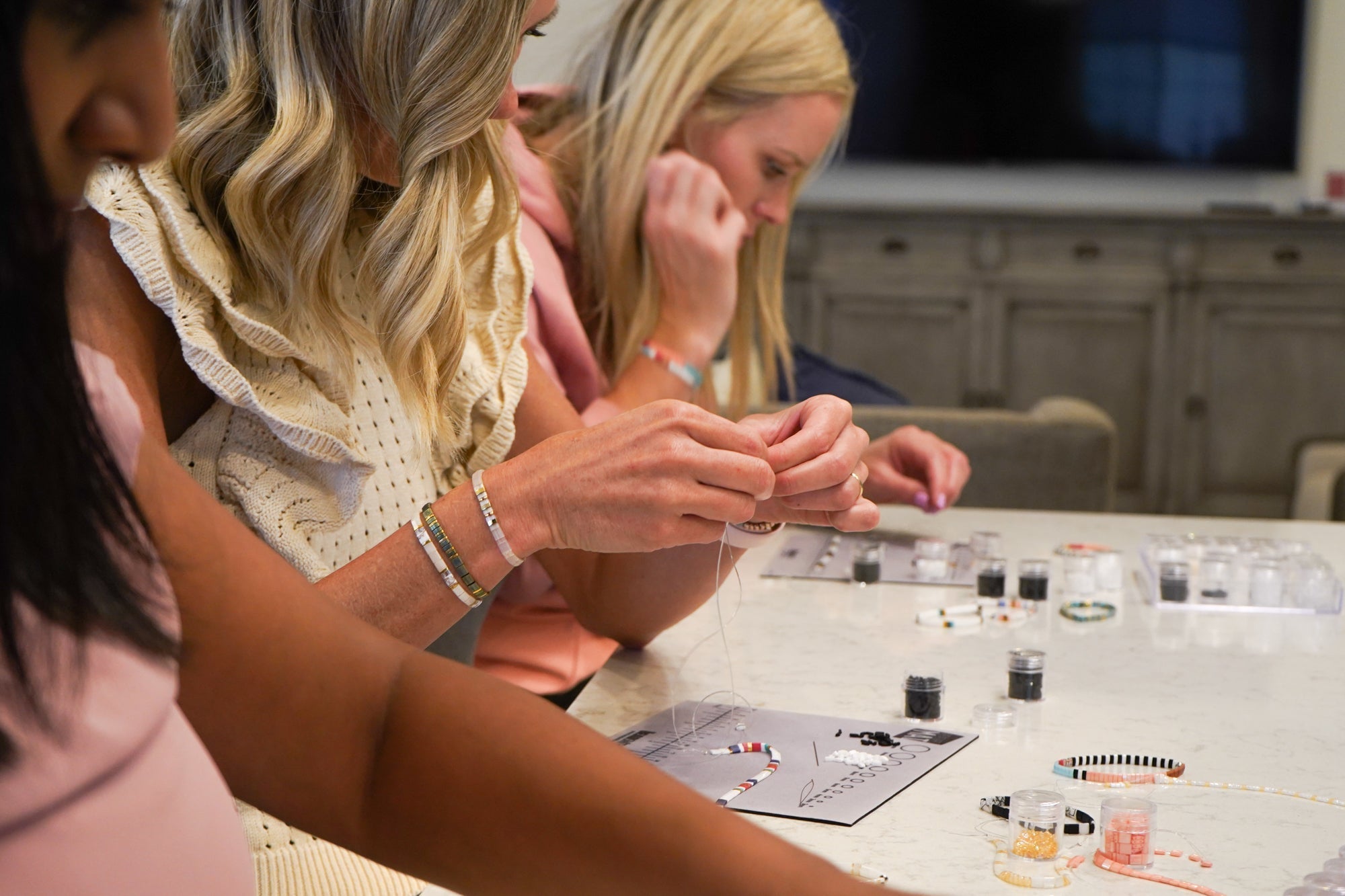
Pick tila beads when you want a finished bracelet fast, when you're teaching a kid or a grandkid to bead for the first time, or when you like a bold, stacked look. Tila's flat two-hole design means a stretch bracelet comes together in a straightforward pattern, no weaving stitch required, which makes it the better pick for a bracelet-making night with a group where skill levels vary. It's also the more forgiving choice if your hands aren't used to fine, repetitive motion yet.
Tila is the right call, too, if you're building a stack. A few tila bracelets layered together, mixing finishes and colors, gives you that full-wrist look people go for without needing five different techniques to get there.
When do delica beads make more sense?
Reach for delica beads once you want a pattern, a picture, or fine detail work that a bigger flat bead can't produce. Anything with lettering, a gradient, or a realistic image needs the pixel-level control that only a small, uniform cylinder bead gives you. Delica is also the better pick if you already have some weaving experience and want a project that's more about the process than a quick finish.
It's worth saying plainly: delica isn't a "better" bead than tila. It's a different tool for a different kind of design. A skilled beader keeps both on hand and picks based on what a project actually calls for, the same way a baker keeps more than one size of measuring spoon.
Can you combine tila beads and delica beads in one piece?
Yes, and a lot of well-designed bracelets do exactly that. A common approach uses tila beads as a flat focal section, maybe a row of three or four across the front of the wrist, with delica or small seed beads filling in the rest of the band as texture and color support. Because both come from the same manufacturer and are sized to compatible standards, they sit together cleanly on the same stretch cord without one throwing off the tension of the other.
If you're newer to beading and want to try this combination, a kit that pairs the two takes the guesswork out of proportions and color matching, since someone's already worked out how many of each bead a balanced design needs.
Tila vs delica, side by side
- Shape: Tila is flat and square with two holes. Delica is a small round cylinder with one hole.
- Size: Tila is about 5mm. Delica runs roughly 1.6mm to 2.2mm, much smaller.
- Look on the wrist: Tila is bold, tiled, mosaic-like. Delica is fine, dense, and fabric-like.
- Beginner friendliness: Tila is fast and forgiving. Delica takes practice with weaving stitches.
- Best for: Tila suits stacked, everyday bracelets and group crafting. Delica suits patterned, detailed, or pictorial designs.
Neither bead wins outright. They solve different problems, and a lot of beaders end up keeping a stash of both once they've made a few pieces.
Which one should you start with?
If you're new, start with tila. You'll finish a bracelet the same day you start it, and that quick win tends to be what keeps someone coming back to beading rather than shelving the whole kit after one frustrating attempt. Once you've got a few tila bracelets under your belt and want to try something more detailed, delica is a natural next step, and by then your hands already know the basics of tension and cord handling.
Mack & Rex sells tila beads as loose mixes, in DIY kits, and as finished, ready-to-wear bracelets for anyone who'd rather skip the stringing altogether. Finished bracelets run about $20 to $25 each, and buying three finished bracelets gets you a fourth free, no code needed. Orders over $100 within the US ship free, and Mack & Rex ships internationally with duties and shipping calculated at checkout.
Frequently Asked Questions
What is the difference between tila beads and delica beads?
Tila beads are flat, square, two-hole glass beads, about 5mm across, made by Miyuki. Delica beads are small cylindrical seed beads with one hole, closer to 1.6mm to 2.2mm depending on size. Tila beads cover more wrist space per bead and sit flatter, while delica beads are tiny and built for fine, pixel-like detail work.
Are tila beads easier than delica beads for beginners?
Yes, for most new beaders. Tila beads are bigger, so they are easier to see, pick up, and string, and a two-hole flat bead forgives small tension mistakes better than a tightly woven cylinder bead pattern does. Delica work usually involves off-loom weaving techniques like peyote or brick stitch, which take more practice to get even.
Can you mix tila beads and delica beads in the same bracelet?
Yes. A lot of finished bracelet designs use tila beads as a flat focal section and delica beads or small seed beads as fill or accent rows around them. The two are made by the same manufacturer to compatible standards, so they sit well together on the same stretch cord.
Does Mack & Rex ship tila bead orders internationally?
Yes. Mack & Rex ships internationally, with shipping and any customs or duties calculated at checkout for the destination country. Free shipping applies to US orders over $100, which is easy to reach once you add a few tila bead mixes or a bracelet kit to your cart.
Ready to try tila for yourself? Browse the Mack & Rex tila bead collection, from loose mixes and kits to finished bracelets, and buy three finished bracelets to get a fourth free, no code needed.