

5 Warning Signs You're Buying a Generic Tila Bead Bracelet Pack
How do you spot a generic tila bead pack before you buy it?
Check five things: bead sizing and cut, whether the color coating looks like it could rub off, the cord or elastic type, the clasp and overall finish, and whether the listing gives you a specific bead count and names the bead source. A pack that's vague or inconsistent on more than one of these is worth skipping.
None of these checks take more than a minute, and most of them you can do from listing photos before the pack even ships. Here's what to actually look for at each step, and why it matters once you're threading a bracelet.
Why does bead sizing and cut matter so much?
It's the difference between rows that sit flat and rows that pucker. Tila beads are flat, two-hole rectangles, and genuine Miyuki-made ones are cut to a tight, repeatable size: 5mm x 5mm x 1.9mm. When every bead in a row matches, the finished piece lies smooth against the wrist. When beads vary even slightly, the row bows or twists.
Zoom in on listing photos before you buy. Do the beads look uniform, or does one look noticeably wider or thinner than its neighbor? Rough, chipped edges are another tell. A clean cut catches the light evenly across a whole row of beads; a sloppy cut looks dull and uneven in spots, especially where the glass was trimmed.
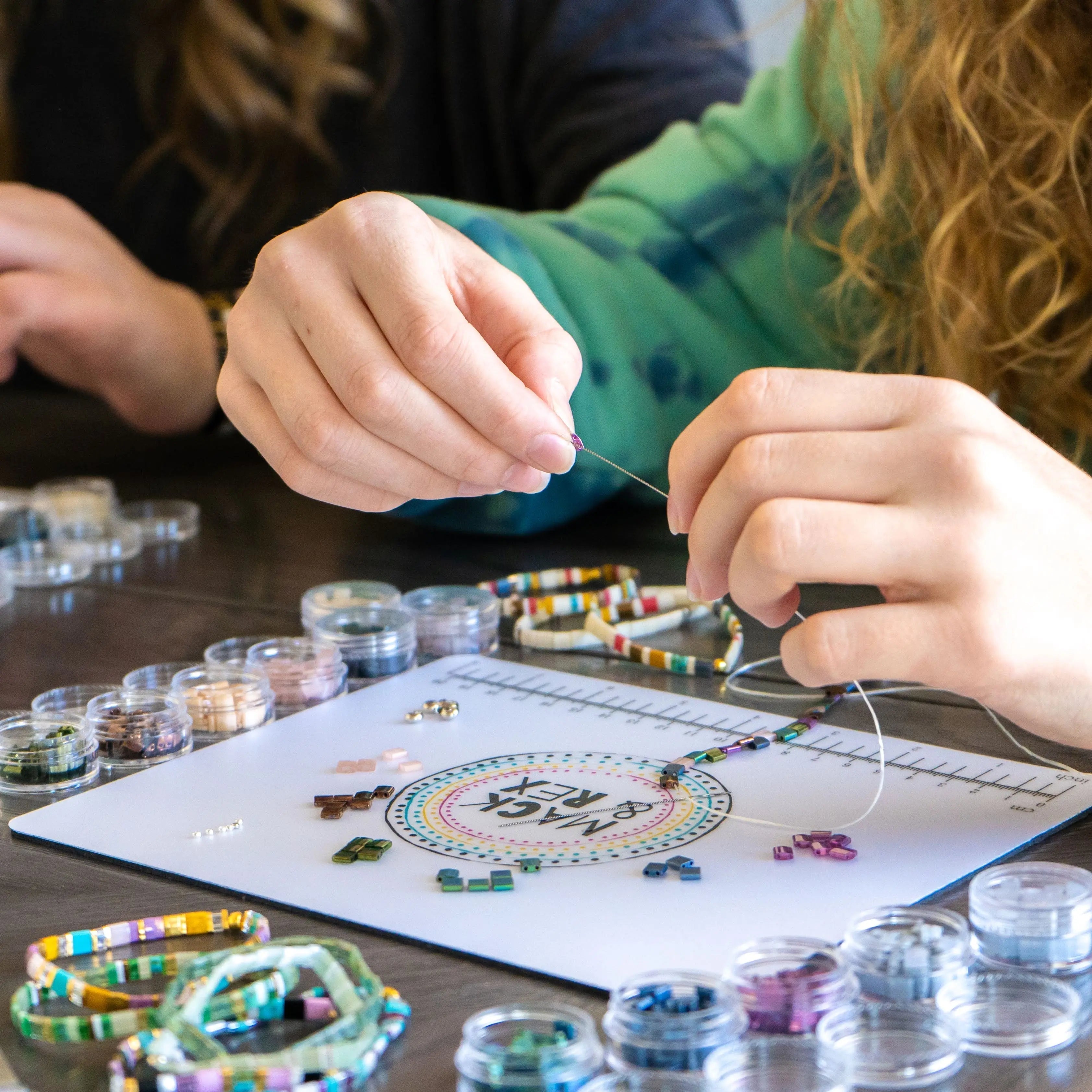
If you already have a pack in hand, pour a few beads onto a flat surface and line them up side by side. Any visible gaps or height differences mean you're compensating for that inconsistency on every single stitch.
What does it mean if the color rubs off on your fingers?
Run a few beads between your fingers. If you see a dusty residue or the color looks lighter afterward, the finish is a surface coating rather than color built into the glass, and it's going to keep shedding with wear. This is one of the fastest tells and one buyers often miss until after they've already strung a bracelet.
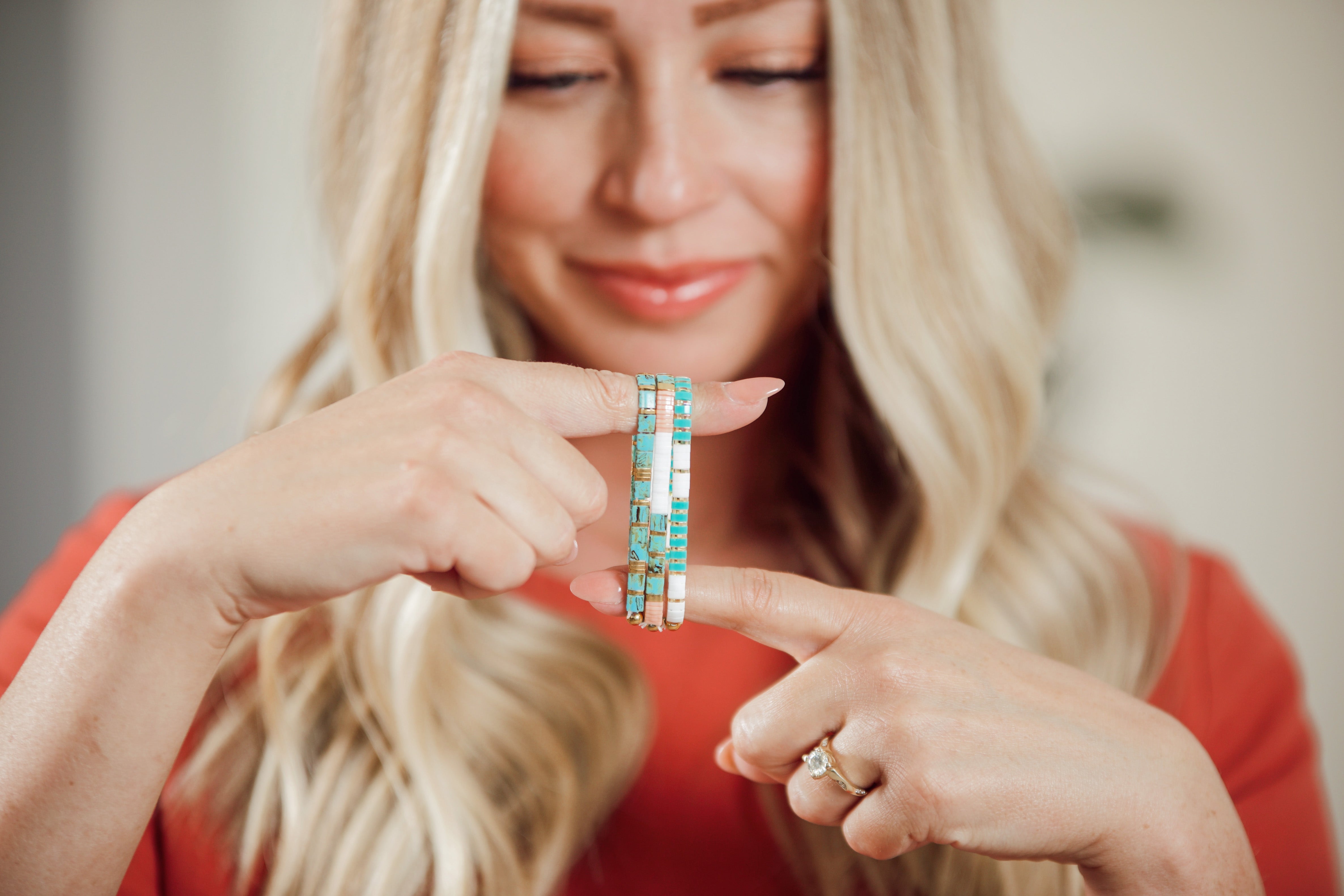
Cheap dyed or painted beads look fine on day one. The problem shows up after a few weeks of normal wear: at the wrist crease, against a watch band, or anywhere skin and fabric rub the beads repeatedly. Color that's baked into the glass or applied with a durable finish process holds its tone through washing hands, sweat, and everyday friction. One long-time customer put it simply: "This is the 4th bracelet I've purchased and I wear it daily. The elastic has not stretched out and the tiles are as beautiful as the day I got it." That's the standard a coating should meet, not the exception.
How do you check the cord before it's too late?
Read the listing for a named cord type. "Elastic" or "stretch cord" alone tells you nothing. Crystal-cord elastic is thicker and built to hold a knot through repeated stretching. Thin, unnamed elastic sold in budget packs tends to lose tension or snap right at the knot within a matter of weeks, usually right when you've started wearing the bracelet daily.
If the listing doesn't say what cord is included, or bundles cord as an afterthought with no detail, that's a gap worth noticing. Cord quality is easy to skip in product photos because it's thin and unglamorous, so sellers cutting corners often just don't mention it at all.
What should the clasp and finish look like?
Look for clean knots, flush crimps, and no visible glue residue. If a pack includes a clasp or closure, check whether it sits flat against the beads or looks bulky and loose. A rushed assembly job shows up at the connection points first: a knot that's too big to hide, a crimp bead that's crushed unevenly, or a clasp that doesn't quite close flush.
This is a quick visual check, even from photos. Zoom into the closure area of any bracelet photo. A tidy finish at that spot says a lot about how much care went into the rest of the piece.
Why do vague bead counts and sourcing matter?
A trustworthy pack tells you what's inside: a bead count (exact or a clear estimate) and where the beads come from. Listings that just say "assorted beads" or "bulk pack" with no numbers and no named brand are giving you less information than they should, and that's often because the seller can't say more, not because it's not important.
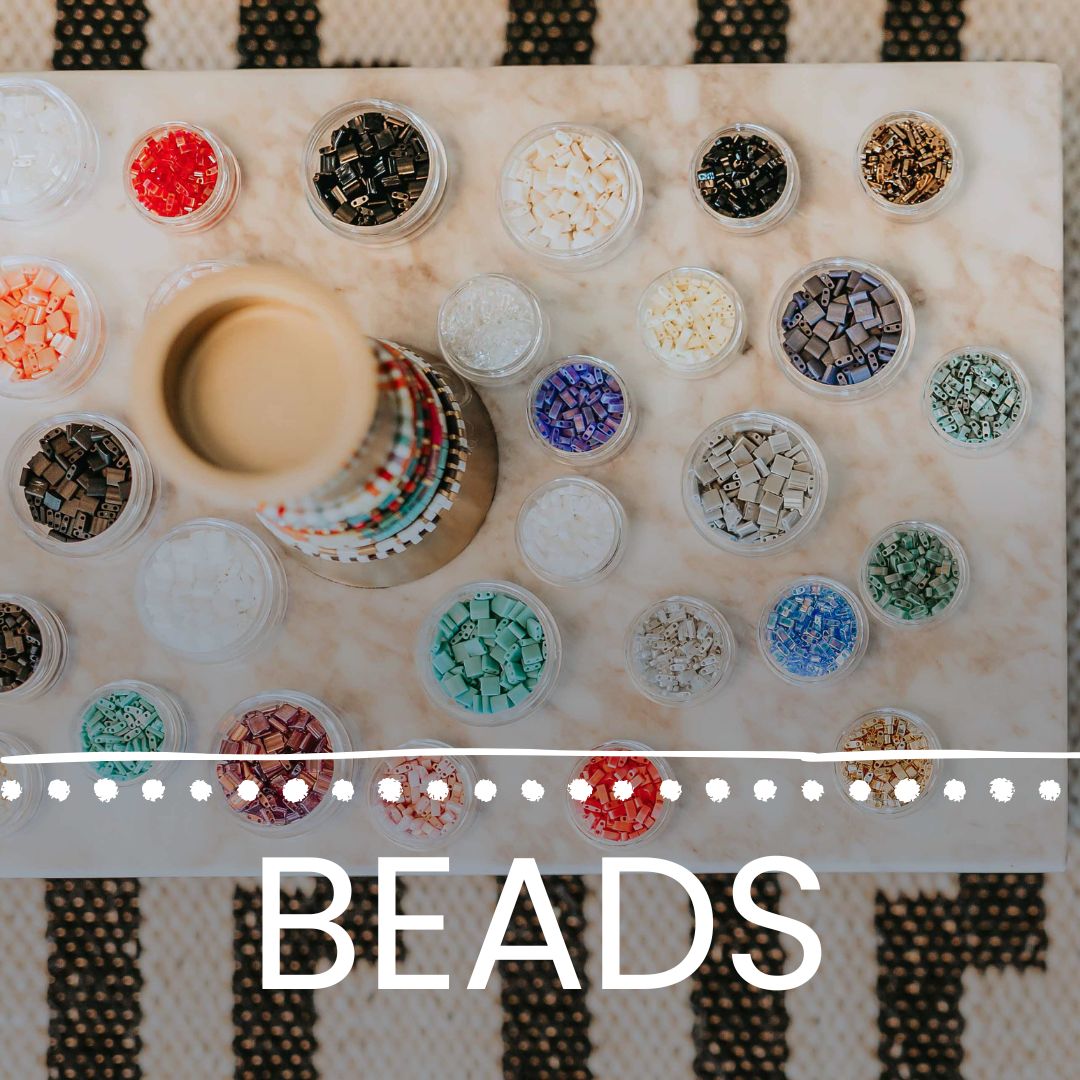
Compare that to a listing that states its bead count clearly, like a pack built to make 20+ bracelets, and names Miyuki as the bead source. That specificity is a sign someone actually knows their supply chain. Sourcing you can name and trust is worth something.
Vague sourcing doesn't mean a bead is automatically bad. It means you have no way to verify quality before you commit, and that's the whole point of checking.
What's the difference between this checklist and buying premium?
This checklist is for inspecting what's in front of you, whether that's a listing you're considering or a pack you already opened. If you want the fuller picture on why curated, named-source bead packs outperform generic ones and what a premium pack actually includes, we cover that side of the comparison in our guide to premium alternatives to generic tila bead bracelet packs. Read that one for the why; use this one to actually check a pack before you buy it.
Mack & Rex curates its tila bead mixes and color packs from genuine Miyuki Tila beads, with a stated bead count on every listing and a quality guarantee behind the finished bracelets. Nothing here claims Mack & Rex manufactures the beads. Miyuki makes the glass in Japan; Mack & Rex sources it, curates the color combinations, and stands behind what ships.
Beads are small parts and present a choking hazard. If you're crafting with kids or grandkids, keep loose beads supervised and away from very young children.
Where to check a genuine, curated pack for yourself
Browse Mack & Rex tila bead mixes and color packs at mackandrex.com/collections/tila-beads. Every listing states its bead count and sourcing plainly, so you're not guessing before you buy. Orders over $100 ship free within the US, and bracelets are buy 3, get 1 free, no code needed.
Sources
- PotomacBeads: Miyuki Tila Beads (bead sizing and material reference)
- Fire Mountain Gems: Stretch Cord Guide (elastic cord quality reference)
- Wikipedia: Beadwork (general craft and technique background)
Frequently asked questions about spotting generic tila bead packs
How can you tell if tila beads are genuine Miyuki?
Genuine Miyuki Tila beads are flat, two-hole glass rectangles measuring a consistent 5mm x 5mm x 1.9mm, with a clean cut and even finish. If a listing doesn't name Miyuki specifically, shows beads with visibly different sizes in the same photo, or has reviews mentioning rough edges, treat it as unverified rather than assuming it's genuine.
Why does the coating on cheap beads rub off?
Lower-cost dyed or painted beads often coat the surface with color rather than running it through the glass itself. That surface layer wears away with handling, friction against other beads, and normal daily wear. Beads with color baked into the glass, or a durable finish process, hold up much longer.
What cord should a quality tila bracelet pack use?
Look for crystal-cord elastic, a thicker stretch cord built to hold a knot through repeated wear and removal. Thin, unnamed elastic sold with budget bead packs tends to lose stretch or snap at the knot within weeks of regular use.
Does Mack & Rex make its own Tila beads?
No. Mack & Rex resells genuine Miyuki Tila beads, which are manufactured by Miyuki in Japan. Miyuki and Tila are Miyuki trademarks. Mack & Rex curates the color mixes and packs, sourced from Miyuki, and stands behind them with a quality guarantee, but does not manufacture the glass beads themselves.
Is it worth paying more to avoid a generic tila bead pack?
For most buyers, yes. A generic pack that looks like a deal upfront often costs more in frustration: uneven beads that won't thread cleanly, cord that fails early, or a bead count that comes up short mid-project. A curated pack with named, consistent beads and quality cord tends to hold up and finish the way you expected.
Ready to check a pack you can actually trust? Shop Mack & Rex tila bead mixes and color packs at mackandrex.com/collections/tila-beads. Every pack lists its bead count and genuine Miyuki sourcing up front. Orders over $100 ship free within the US.