

What Are Picasso Tila Beads? A Guide to the Speckled Finish Everyone's Asking About
What are Picasso tila beads?
Picasso tila beads are Miyuki tila beads with a Picasso finish: a mottled, speckled surface coating that makes each bead look subtly earthy and individual. The base bead is the same flat, square, two-hole Japanese glass bead you find in any Miyuki tila collection, measuring 5mm x 5mm. What sets the Picasso variety apart is what happens to the outside of that glass. A speckled, matte surface treatment is applied that reads as vintage, organic, and textured rather than shiny or uniform.
The finish comes from Miyuki, the Japanese manufacturer that makes tila beads.1 Mack & Rex sources and sells Miyuki's finished beads; we don't apply the Picasso coating ourselves. The finish is Miyuki's, and it's one of their most-asked-about surface treatments.
What does the Picasso finish actually look like?
It's not uniform. That's the whole point.
The Picasso finish is a light application of darker color over the base glass, settling unevenly across each bead's surface: a little heavier in one corner, lighter across the face. The result is a mottled, speckled look that suggests something aged or naturally worn rather than factory-perfect. The surface is matte rather than glossy, so there's no shine, no reflection. What you get is texture you can almost feel just by looking at it.
Because the coating lands differently on each bead, no two are exactly alike. One might have heavier speckling along one edge. Another might show more of the base glass color through the middle. Spread across a finished bracelet, those small variations blend into something that looks warm and layered rather than repetitive. Beaders who've worked with a lot of glass finishes often call it the closest thing to an organic or handmade feel you can get from a manufactured bead.
Glass bead finishes like this are generally achieved through surface treatments applied over the base glass after forming, a technique that's been part of decorative glasswork for a long time.2 The Picasso name, used widely across bead manufacturers and finish types, refers to that mottled, painterly quality the surface treatment creates.
How is the Picasso finish different from opaque or metallic tila finishes?
Three distinct looks, three different jobs in a bracelet stack.
Opaque tila beads have a flat, consistent color with no variation across the surface. Every bead in a tube of opaque matte cream is the same tone. That consistency is useful when you want clean geometric patterns or a solid block of color in a stack. Nothing wrong with it. It's just not what Picasso does.
Metallic tila beads go the other direction: reflective, shiny, light-catching. They can add a finished or dressy feel to a stack. The finish is smooth and even, and the effect is more polished than earthy.
Picasso sits in between, and it does something neither of those finishes can. The speckle creates bead-to-bead variation within a single color family, so even an all-Picasso bracelet has visual depth and movement. You're not getting one flat tone, and you're not getting mirror-shine. You're getting something that looks like it could have come from a pottery studio or a canyon wall, in the best possible way.
How do Picasso tila beads look strung flat on a bracelet?
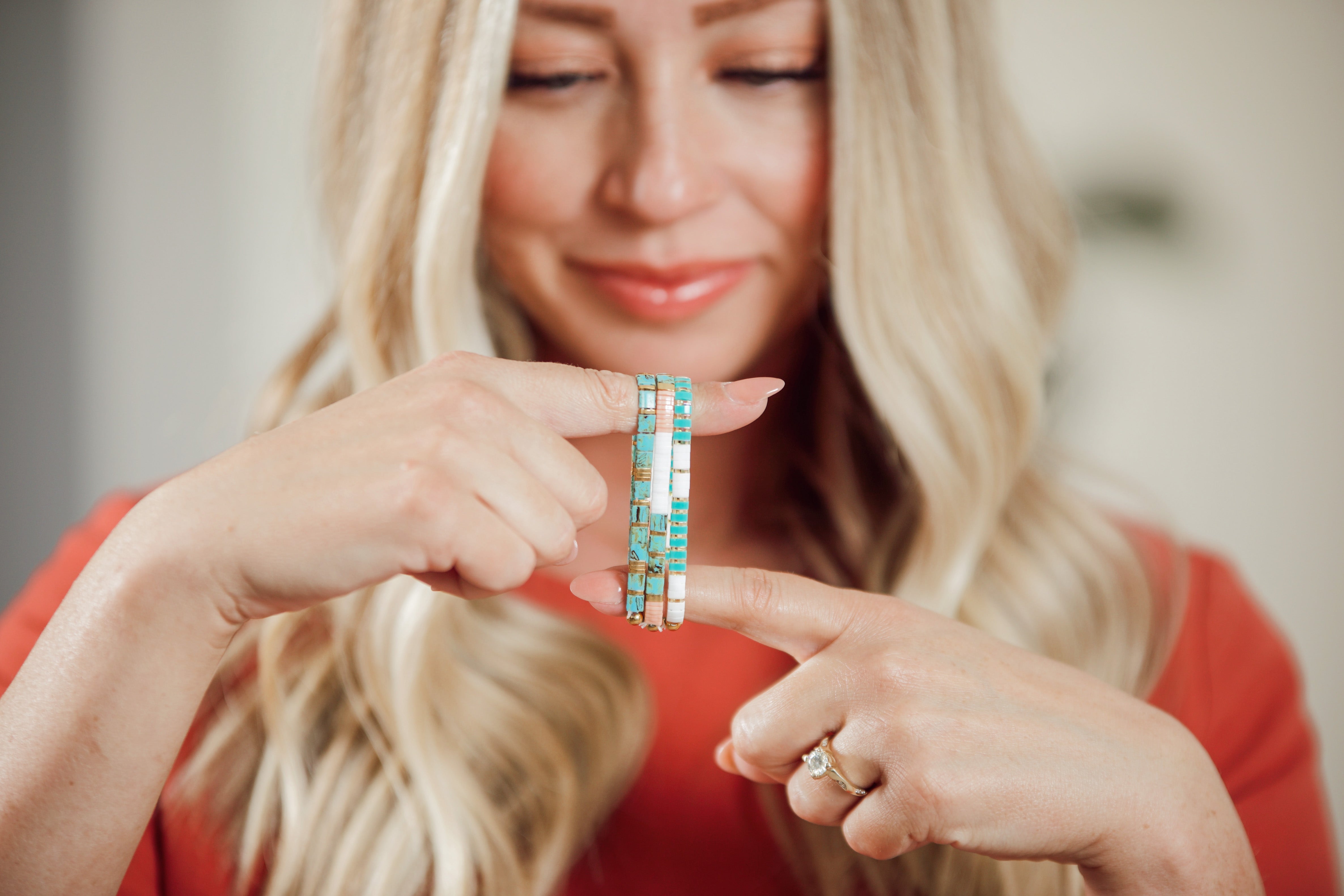
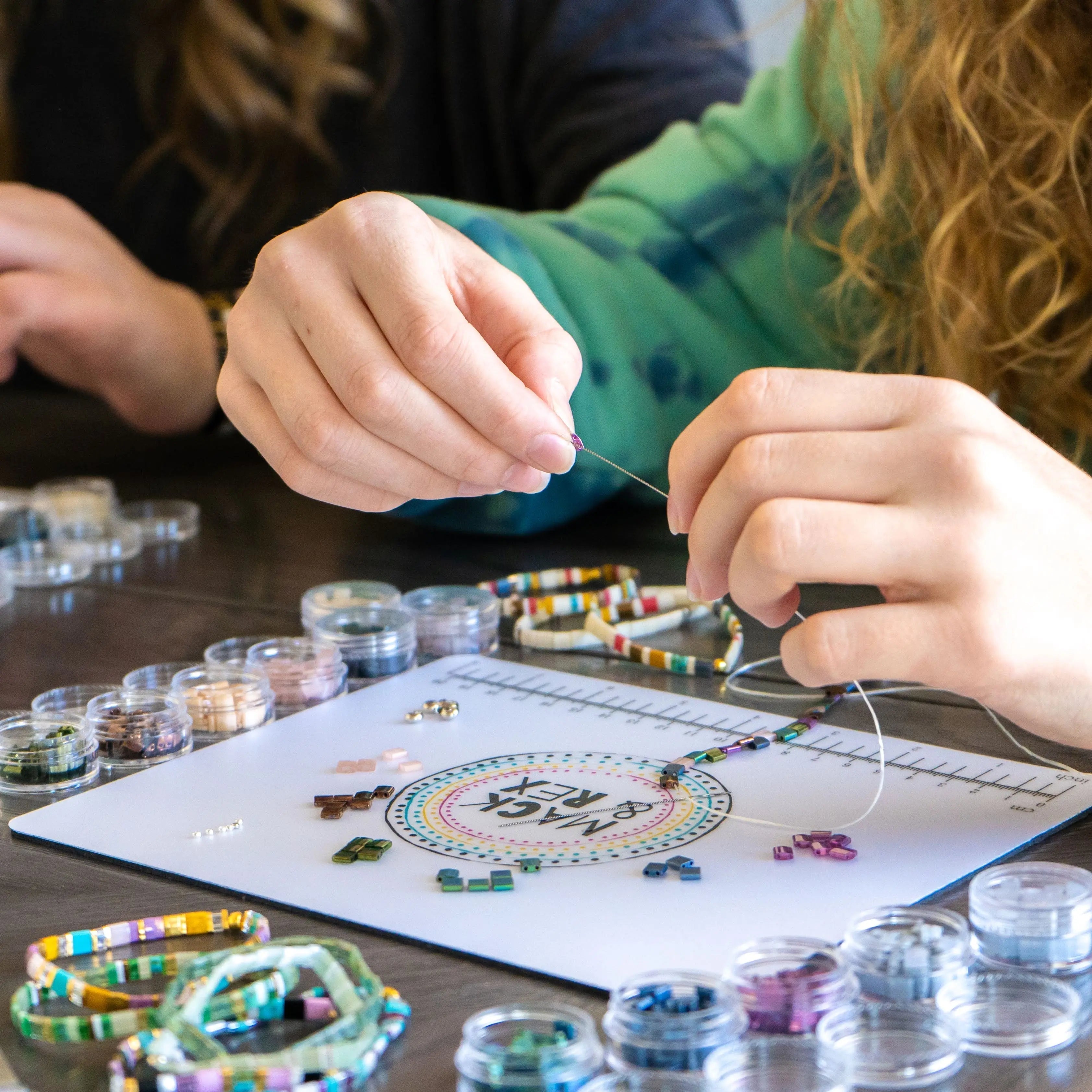
Really good, actually. The flat, square shape of a tila bead sits flush against the wrist, and when you run two strands of elastic through both holes, the beads lock into a smooth, tile-like band. That flat surface is what makes the Picasso finish so readable on a finished bracelet. You're seeing the full face of each bead, the whole speckled pattern, rather than just an edge.
On a 5mm flat tila, the speckle pattern is visible enough to register as texture without being busy. The matte finish keeps the light soft, so the bracelet reads as warm rather than flashy. In person, people often reach out to touch it before they realize it's glass, because the visual texture is that convincing.
Picasso tila bracelets tend to look richer in natural light than under fluorescents. The subtle color variation in the coating picks up warmth from sunlight in a way indoor lighting misses. If you stack bracelets for an everyday wear look, Picasso tila pieces have enough going on visually to anchor a stack without demanding attention.
Which color stacks work best with Picasso tila beads?
The earthy, muted quality of the Picasso finish plays well with a specific category of colors. Get this right and the whole stack looks intentional.
Neutrals and warm beiges. Cream, ivory, warm white, and light tan opaque tila beads sit next to Picasso pieces without competing. The flatness of the opaque beads makes the Picasso finish read as even richer by comparison.
Earth tones. Warm browns, caramel, mocha, and terracotta share the same visual temperature as most Picasso colorways. They stack naturally without requiring much thought about whether they "go."
Sage and muted greens. Dusty, gray-green tones echo the earthy undertones common in Picasso-finish beads. A sage opaque tila next to a brown Picasso tila reads as very intentional, like a color palette from a home goods catalog you actually like.
Dusty or desaturated tones generally. Blush, mauve, dusty lavender, and muted slate all work for the same reason. The Picasso finish is soft rather than saturated, so it pairs well with other soft, toned-down colors.
What doesn't tend to work: bright neons, highly saturated primary colors, and anything with a lot of chromatic energy. Those colors pull the eye away from the Picasso finish and make the whole stack feel like it's fighting itself.
Where to find Picasso tila bead mixes
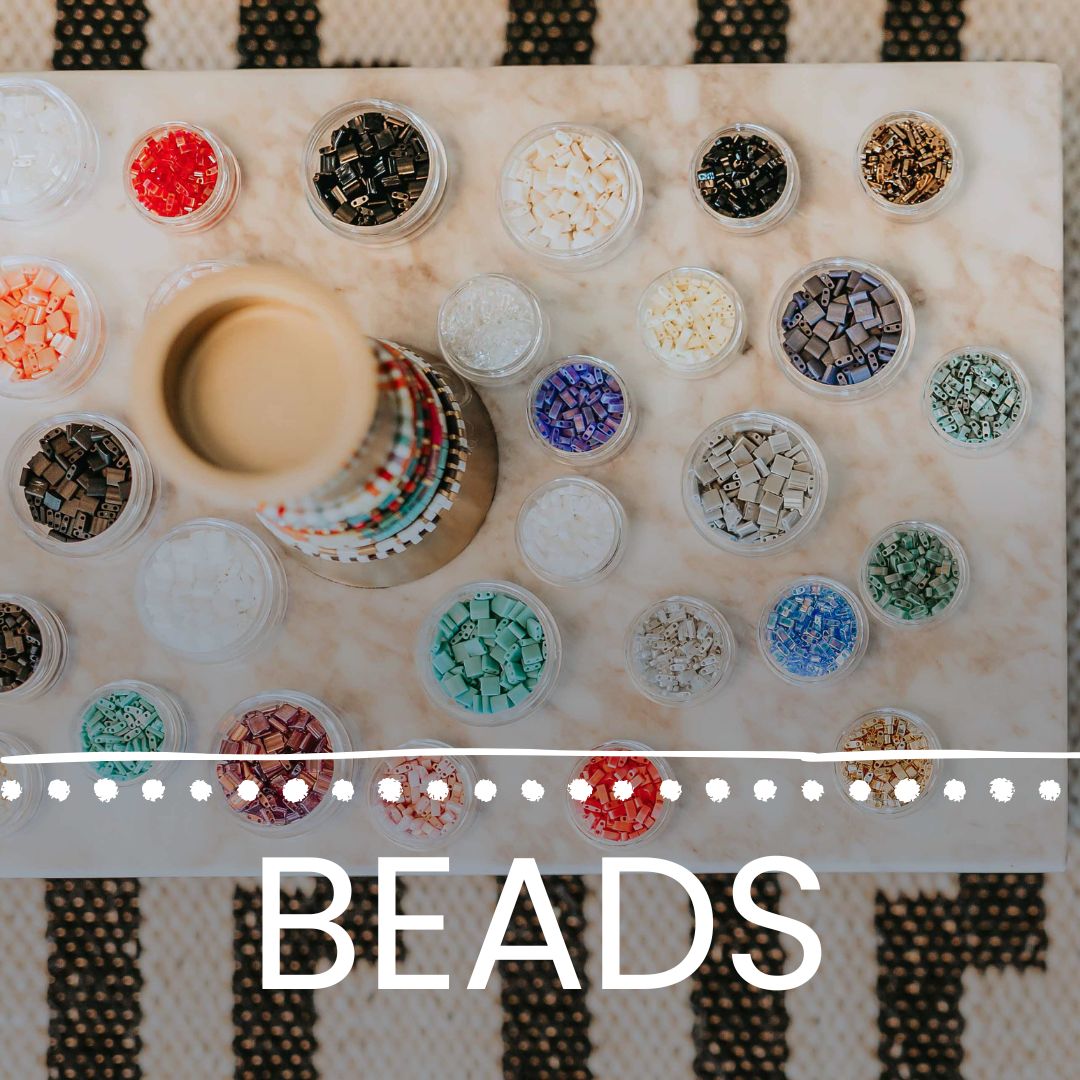
If you want to work with Picasso tila beads, starting with a curated mix is the easiest way in. Rather than figuring out which individual Picasso colorways work together, a pre-selected mix does the pairing work for you.
Mack & Rex carries Picasso tila bead mixes selected specifically to work together in a bracelet. These are Miyuki Japanese glass tila beads, the same source and material quality as any other Miyuki tila. Mixes run roughly $5-9. If you want a finished bracelet to wear while you figure out whether you love the Picasso look, ready-to-wear tila bracelets start around $20-25.
US orders over $100 ship free. There's also a buy-3-get-1-free deal on bracelets, no code needed. Mack & Rex ships internationally, with shipping and any customs and duties calculated at checkout.
A note on safety: loose beads of any type are small parts and a choking hazard. Keep them away from young children.
Frequently Asked Questions
What are Picasso tila beads?
Picasso tila beads are Miyuki tila beads (flat, square, two-hole Japanese glass beads) with a Picasso finish applied to the surface. The Picasso finish is a mottled, speckled coating that gives each bead an earthy, matte appearance with subtle variation from bead to bead. The effect reads as vintage or handmade rather than shiny or polished.
What does the Picasso finish look like?
The Picasso finish looks like a light dusting of darker color over the base glass: speckled, slightly rough to the touch, and earthy rather than glossy. No two beads are exactly alike because the coating lands slightly differently on each one. When the beads are strung in a bracelet, the variations blend together into a texture that reads as warm and organic rather than uniform.
How is the Picasso finish different from regular opaque or metallic tila bead finishes?
Opaque tila beads have a flat, consistent solid color with the same tone across every bead and no variation. Metallic finishes are shiny and reflective. The Picasso finish sits between those: it's matte rather than glossy, and the speckled surface creates bead-to-bead variation that opaque and metallic finishes don't have. That natural variation is the main reason people reach for Picasso beads.
What colors stack well with Picasso tila beads?
Picasso tila beads pair best with neutrals and earth tones: warm browns, terracotta, cream, sage green, and dusty or muted shades. They can clash with bright neons or highly saturated colors that compete with the earthy speckle. Mixing one or two Picasso pieces into a neutral stack gives the whole bracelet a grounded, layered feel.
Where can I buy Picasso tila bead mixes?
Mack & Rex sells curated Picasso tila bead mixes at mackandrex.com/collections/picasso-tila-bead-mixes. These are Miyuki Japanese glass tila beads selected to work together in a bracelet. US orders over $100 ship free. Loose beads are small parts, so keep them away from young children.