

What Makes a Bracelets Making Kit Worth Buying? A First-Timer's Answer
Is a Bracelets Making Kit Actually Worth It for a First-Timer?
Yes, with one condition. A bracelets making kit is worth buying if it bundles the right materials together so you can focus on the craft rather than the sourcing. For most first-timers, a good kit cuts the learning curve in half: the beads are already color-coordinated, the cord is the right gauge, and the count is done for you. The only time it's not worth it is when a kit skimps on materials or buries you in pieces you'll never use.
That one condition matters more than most guides admit. This post walks through exactly what separates a kit that earns its place from one that just looks good in a photo.
What Comes in a Good Bracelets Making Kit?
Five things. Every decent kit has them.
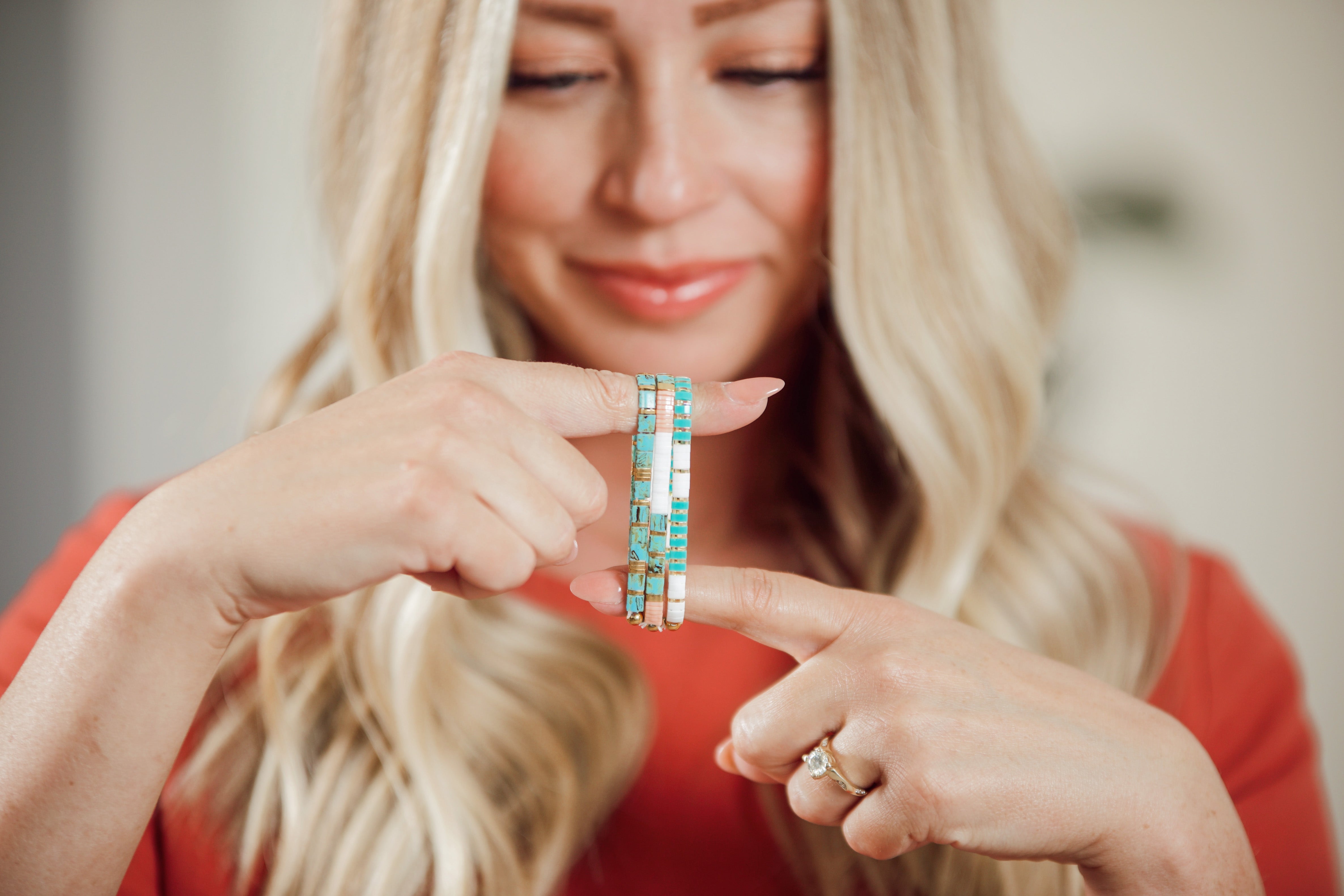
The first is enough beads to actually finish a bracelet. Sounds obvious, but cheaper kits lowball the count and leave you short on the last inch. A Tila bead bracelet typically takes around 60 to 70 two-hole flat beads for an average wrist, depending on the pattern. A kit should have that plus a few extra for dropped or cracked beads.
The second is cord or string that matches the bead hole size. Miyuki Tila beads (the Japanese glass tile beads used in quality stretch bracelets) have a 0.8mm hole. You need crystal elastic or a fine beading thread that passes through twice. If the kit uses cheap nylon that frays, expect frustration.
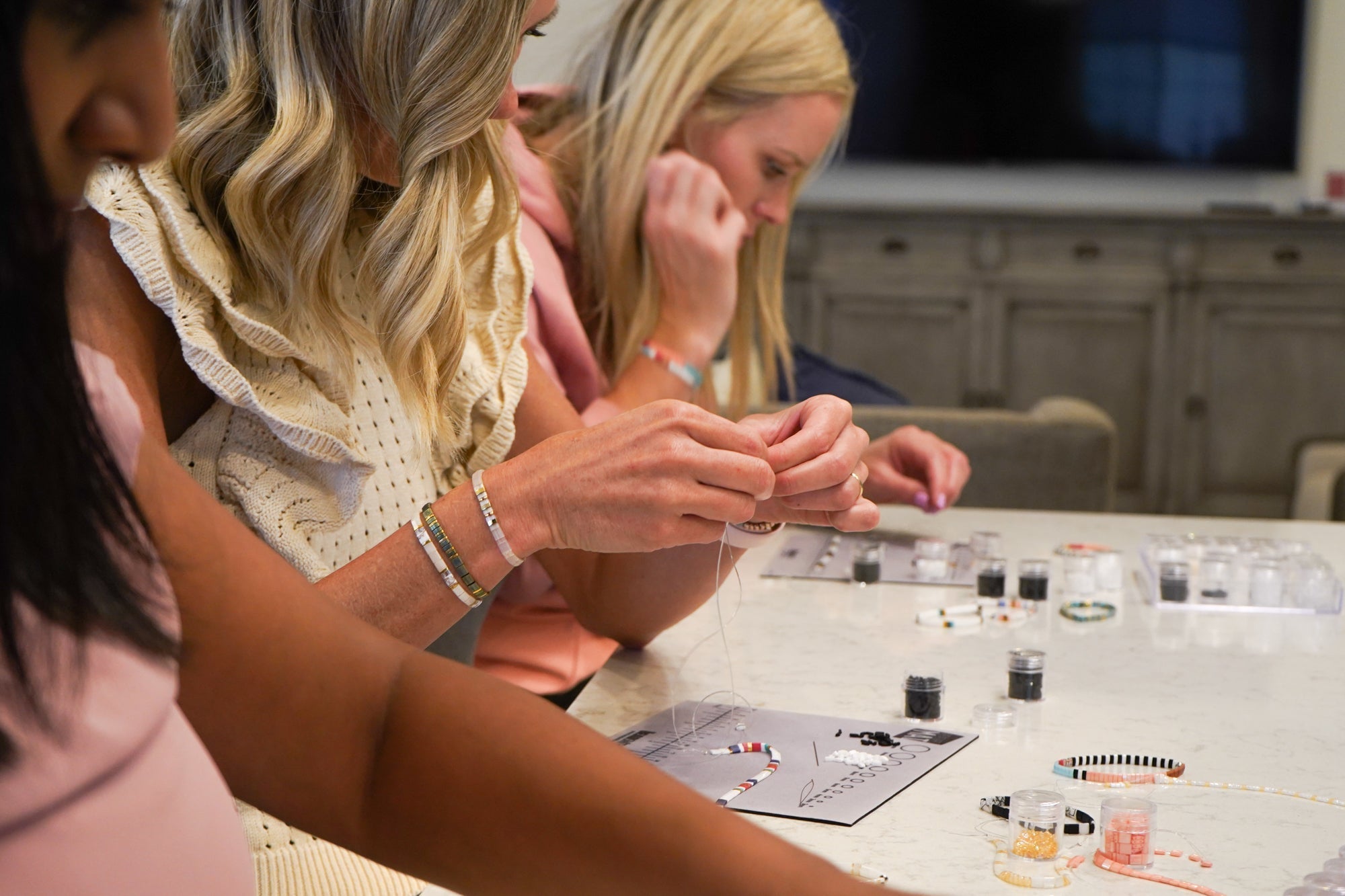
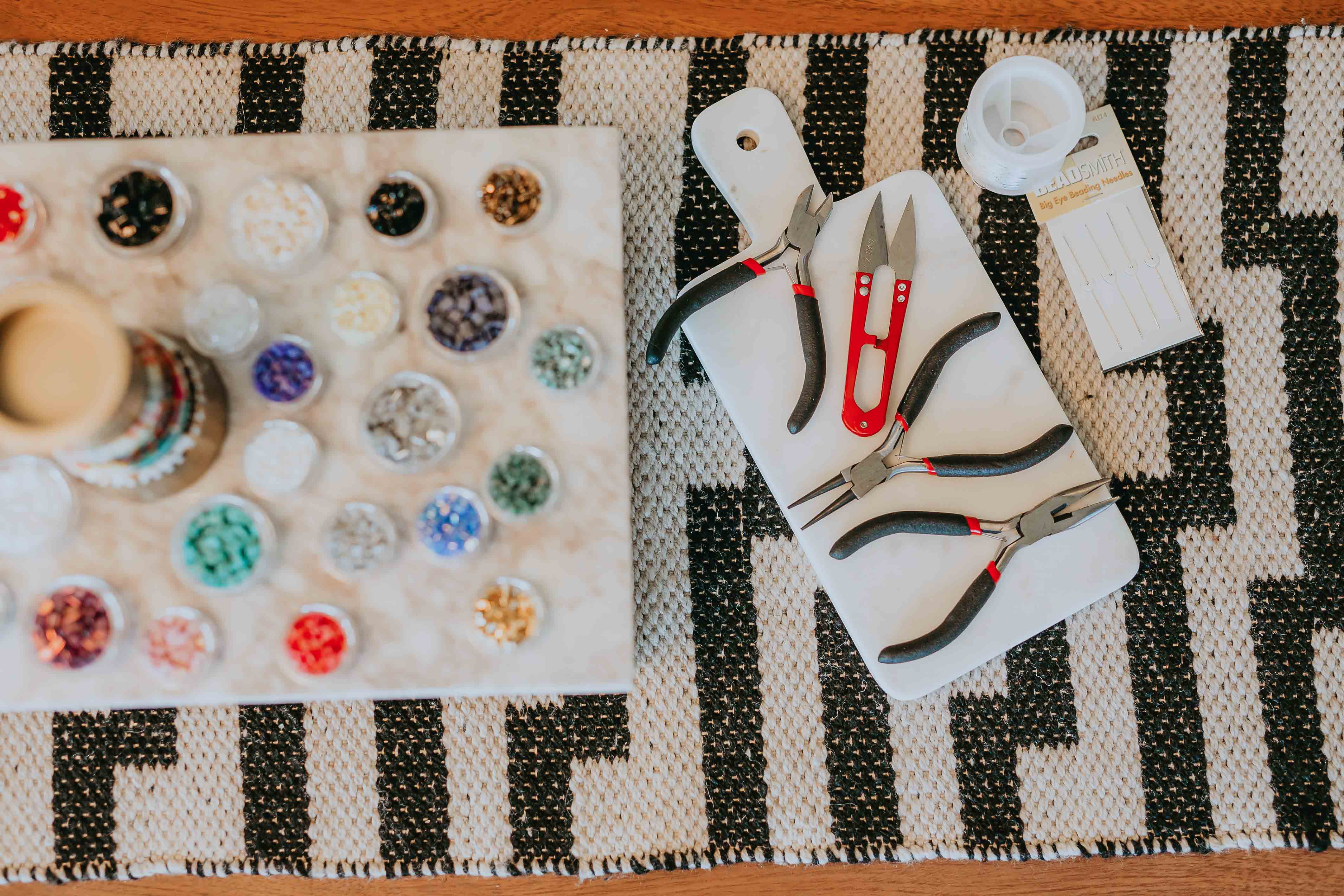
The third is a needle. A big-eye needle or a flexible beading needle makes threading beads on elastic far easier than trying to push cord through by hand. A lot of budget kits skip this and call it "beginner friendly." It's not.
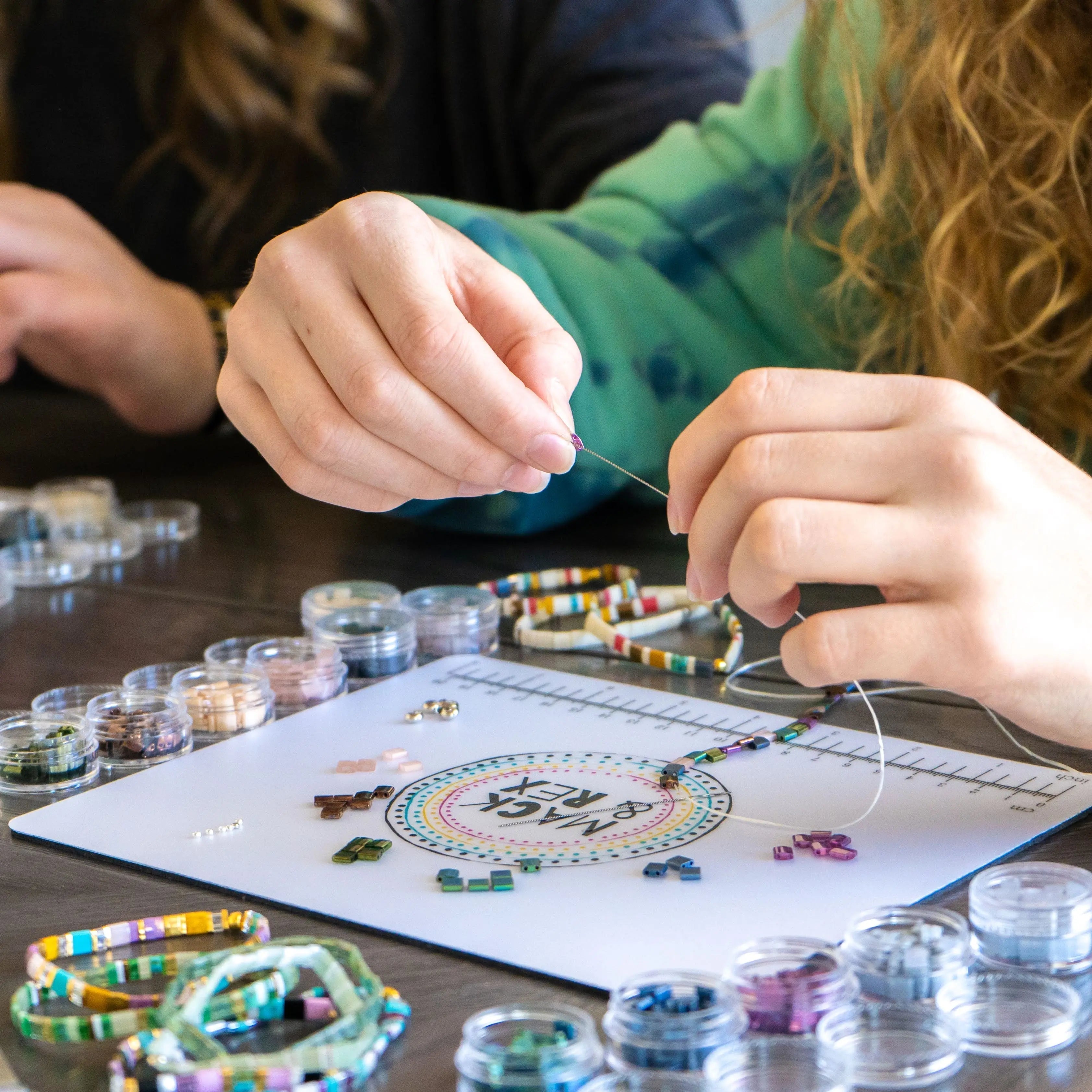
The fourth is a clear pattern or instruction guide. Video instructions are even better. One first-timer who bought a Mack & Rex kit put it well: "The videos on making these bracelets is a lifesaver if you're stuck on a step." That kind of support makes the difference between a finished bracelet and an abandoned project.
The fifth is some kind of surface or organization help, even just a bead tray or small mat. Working with loose tile beads on a hard table is a sliding, scattering mess. A felt mat or foam pad keeps beads in place while you thread.
What Separates a Kit Worth Buying from One That Wastes Your Money?
Bead quality is the biggest split.
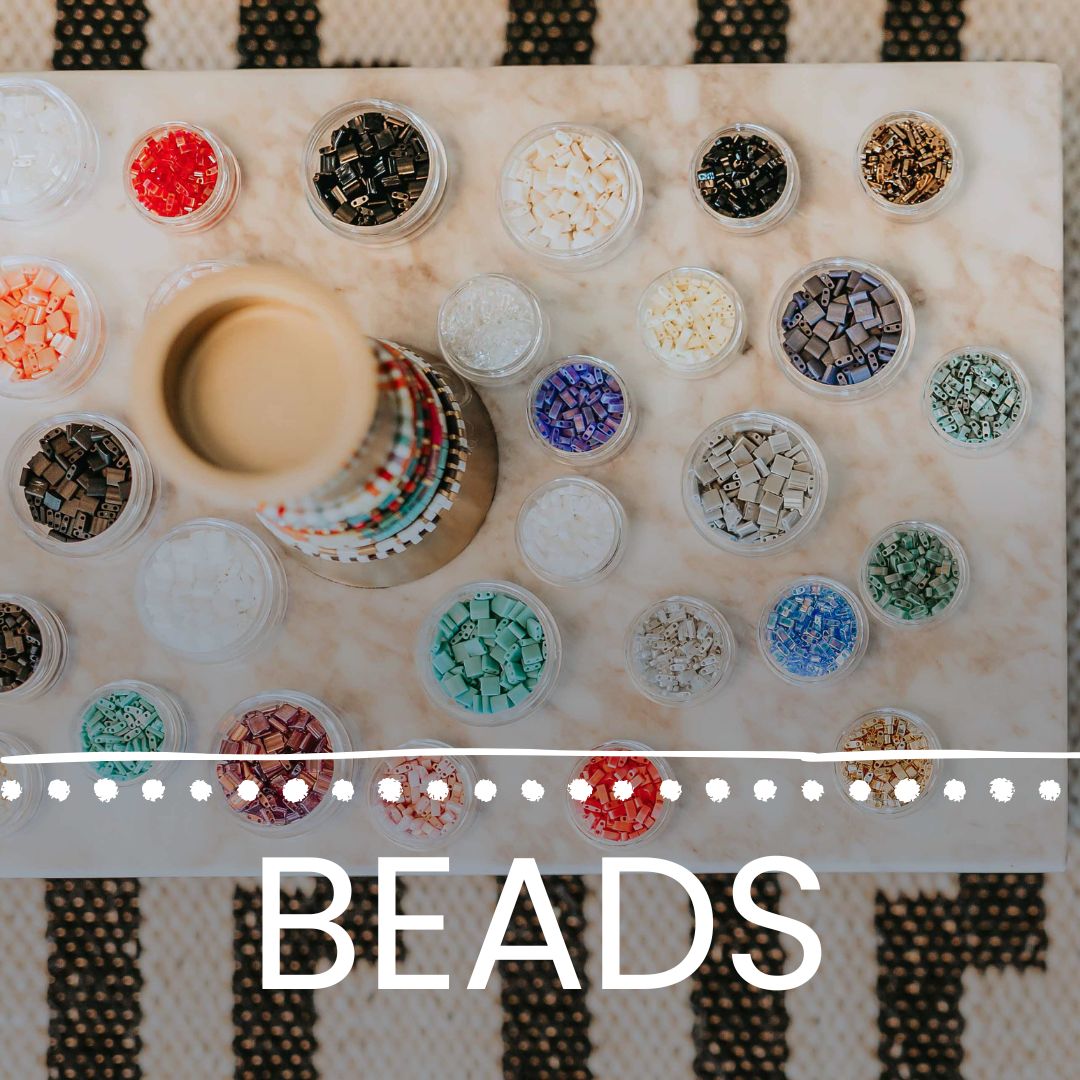
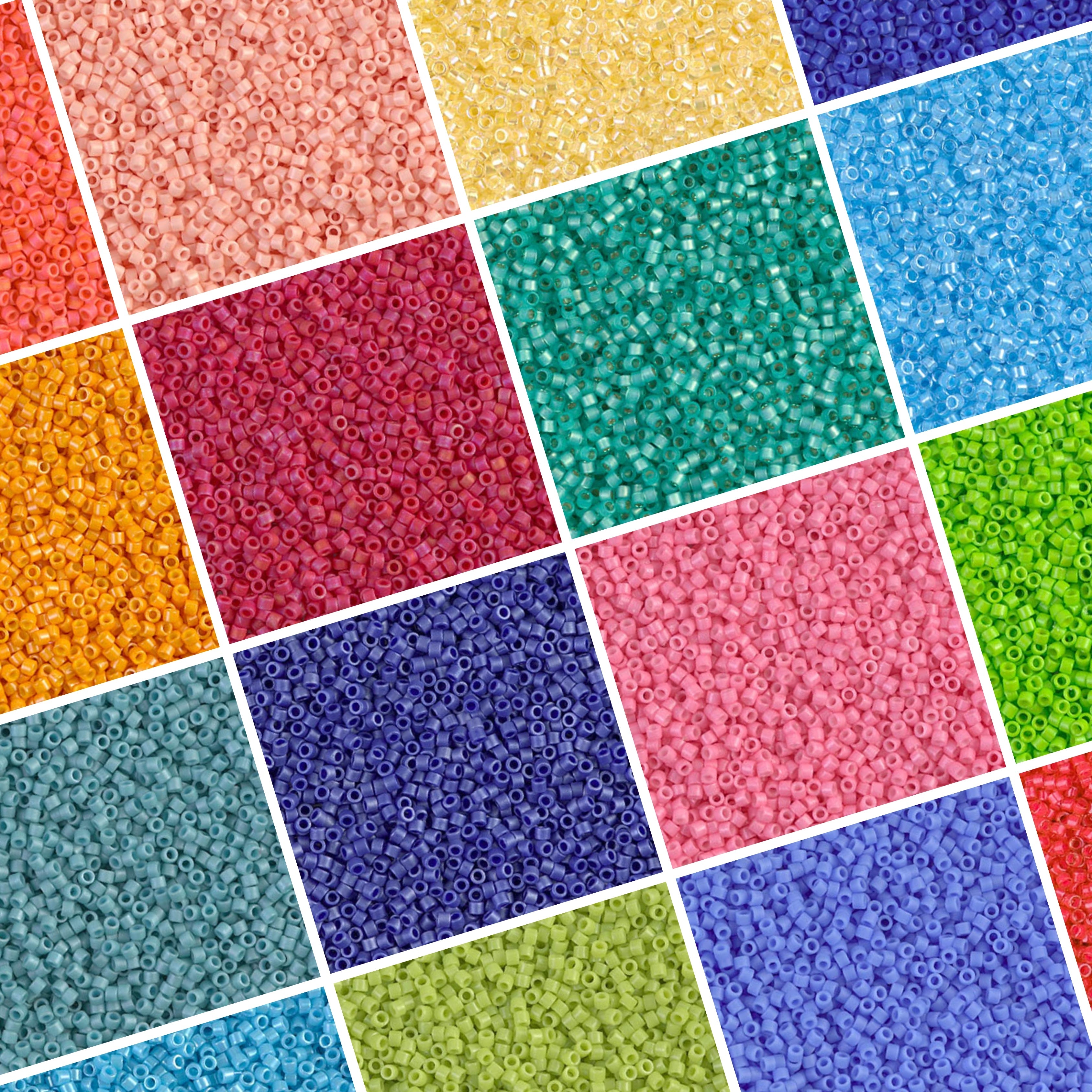
Miyuki glass beads are made in Japan to tight tolerances. The holes are consistent, the sizes are uniform, and the finishes (matte, picasso, metallic, luster) hold their color over time. That uniformity matters when you're threading 60+ beads onto elastic: even one oversized or misshapen bead can jam the thread or create a lumpy finished bracelet.
Cheaper kits use generic acrylic or glass beads with inconsistent sizing. The finished bracelet looks different from the photo, and the cord can snap prematurely because the bead holes have rough edges that wear through elastic over time. According to Beadaholique's stretchy cord guide, quality bead-hole consistency is one of the main factors in bracelet longevity, especially for stretch designs.
The second split is sizing. This is one most first-timers don't think about until their finished bracelet is too tight. A good kit either comes in multiple sizes or gives you enough cord to size up. Mack & Rex kits, for example, support inclusive sizing from XXS to 5XL, which is rare in the bracelet-making space and matters a lot if you have larger wrists or are making something as a gift.
The third split is the "kit math." How many complete bracelets does this kit make? A trio kit gives you enough material for three coordinating bracelets, which means you practice the same pattern three times. By the third bracelet, the threading motion is natural and the finishing knot is clean.
Should a First-Timer Buy a Kit or Just Buy Beads Separately?
Buy the kit first. Every time.
Buying beads separately sounds more flexible, but it requires knowing how many beads per inch your pattern uses, which cord weight pairs with your bead hole size, and which colors actually work together at scale rather than just in a swatch. Those are intermediate-level decisions. A kit pre-solves all of them.
Once you've finished two or three kits, you'll have a clear sense of your bead preferences and pattern style. That's the right moment to start building your own stash. The Spruce Crafts notes that most beginners who skip structured kits spend more on wasted materials in their first three months than they would have on a well-curated starter set.
Loose beads make sense after you've finished a few kits and want to experiment with custom color combos.
What Makes a Bracelets Making Kit Right for Adults Specifically?
Adult crafters have different priorities than kids. Most adults want a finished product that looks good enough to wear in public, something beyond a completed craft project. That pushes quality up the priority list fast.
Adult kits should use real glass beads, not plastic. They should include enough material for a bracelet with genuine visual detail. And the instruction quality should assume you can follow steps, not that you need the process gamified. One customer at 66 years old picked up a Mack & Rex kit with zero prior experience and called it "pleasantly surprising" how easy it was to start. That's the right benchmark for an adult beginner kit.
Pattern variety also matters for adults who are making multiple bracelets. A kit that only does one color combination gets boring fast. Look for kits that offer different themed color mixes, or a brand that releases new kit designs regularly, so you're not repeating the same project every time.
Adult wrist sizing matters too. Many mass-market kits default to a 6.5-inch finished length, too small for a large portion of adult women. If the kit doesn't address sizing, check the brand's size chart before buying.
A Quick Decision Guide: Is This the Right Moment to Buy a Kit?
Run through these four questions.
First: do you have zero bead supplies at home? If yes, a kit is almost certainly the faster and cheaper path to a finished bracelet.
Second: do you have a specific aesthetic in mind? Boho neutrals are different from bright summer colors. Make sure the kit's palette matches your vision rather than just buying whatever's labeled "beginner."
Third: are you making this solo or with someone else? Kits designed for two people (or for a group crafting night) typically package multiples so everyone has enough material. A single-bracelet kit runs out fast when there are two people at the table.
Fourth: what's your actual goal? If you want to make three bracelets and call it a hobby, a trio kit is enough. If you want to stack five or six, look at a larger starter kit so you're not reordering cord after the first session.
If you're shopping for a kit that passes all four filters and uses Miyuki Japanese glass beads with inclusive sizing, Mack & Rex bracelet making kits are worth a close look. They're built around the Tila bead format, come in coordinated color palettes, and include enough material to make three complete bracelets per kit. Orders over $100 ship free within the US.
A small note if you're buying for a child: all loose bead kits carry a choking hazard for young children. These are projects for older kids with close adult supervision, not independent play activities.
Frequently Asked Questions
Is a bracelets making kit worth buying for a complete beginner?
Yes, for most first-timers a kit is worth it because everything is measured, matched, and prepped for you. You skip the sourcing headache and start making immediately. The main exception is if you already have a large bead stash and just need a pattern.
What should come in a good bracelets making kit?
A solid kit includes enough beads to make at least one complete bracelet, elastic cord or string, a needle or big-eye needle, a clasp or instructions for a stretch finish, and a clear pattern or step-by-step guide. Better kits add a bead mat or tray and a finishing tool.
How long does it take to make a bracelet from a kit?
Most single-strand stretch bracelets with tile beads take 30 to 60 minutes for a first-timer. Once you have the threading rhythm down, the same bracelet runs closer to 20 minutes on your second or third try.
What is the best bracelets making kit for beginners?
For adults who want quality results fast, a Tila bead bracelet kit using Miyuki Japanese glass beads is a strong choice. The flat tile shape threads predictably, the glass is durable, and the finished bracelets look polished rather than craft-fair. Mack & Rex bracelet making kits are built around this format.
Are bracelets making kits safe for kids?
Kits with loose beads are not suitable for young children. Beads are a choking hazard and should only be used by older children with close adult supervision. Always check the age guidance on any kit before buying for a child.