



Why Do Cheap Elastic Bracelets Break? How to Make Durable Handmade Ones Instead
Why Do Cheap Elastic Bracelets Keep Snapping?
Cheap stretch bracelets usually snap for one of four reasons: elastic cord that was already losing stretch before it left the shelf, a cord gauge that doesn't match the bead holes, a single overhand knot with no crimp or seal, and rough-edged filler beads that saw at the cord every time you bend your wrist. Fix those four things and most bracelets stop failing.
None of this is bad luck. It's math and materials, and it's fixable at home with the right kit.
What Actually Wears Out the Elastic Itself?
Rubber-based stretch cord breaks down through repeated flexing, heat, and exposure to body oils and lotion, the same way a rubber band left in a sunny car goes brittle and snaps. Every stretch cycle stresses the polymer chains a little more, and cheap cord starts that process with fewer reserves to begin with.
Rubber and rubber-like elastomers degrade through oxidation over time, and heat and UV exposure speed that process along considerably (Wikipedia's overview of natural rubber covers how oxidation and aging affect elasticity). That's why a $3 bracelet from a gift shop bin, stored who knows how long before you bought it, often snaps within a week even if you barely wear it.
Over-stretching adds another layer of damage. Cramming a bracelet over a hand that's a size too big for it, over and over, thins the cord faster than normal daily wear ever would.
Is the Cord Gauge Actually Wrong for Your Beads?
Bead hole size and cord thickness need to match, or the bracelet is working against itself from the first knot. A cord too thin for the hole lets beads shift and grind directly against each other with nothing cushioning the friction; a cord too thick can't seat properly in a small knot and ends up under more tension than it should carry.
Stretch cords made from synthetic materials like nylon-coated elastic or lycra-style spandex blends behave differently depending on their construction, which is part of why gauge matters as much as brand name (nylon's properties as a synthetic polymer are a useful baseline for understanding coated cord). A .5mm to .7mm cord generally suits standard seed and tila bead holes; anything thinner is asking for trouble on a bracelet that gets real wear.
Why Do Bracelets Actually Fail at the Knot?
The knot fails first, more often than the cord does. A single overhand knot has almost nothing holding it in place under repeated stretching, and it can work itself loose in days.
Knot security is a well-documented concept in rope and cord work generally (Wikipedia's general knot reference covers why doubled and locking knots resist slipping better than a single pass). A doubled overhand, tied like a surgeon's knot and then locked with a crimp bead or knot cover, holds up far longer than a bare knot glued and hoped for.
One concrete detail worth knowing: a lot of dollar-bin bracelets skip the crimp bead entirely and rely on a dab of glue over a single knot. Glue dries out. A crimp bead doesn't.
Are the Filler Beads Themselves Part of the Problem?
Cheap acrylic or painted "filler" beads often have rough, uneven holes left over from a fast production process. Every one of those rough edges acts like a tiny saw against the elastic threaded through it.
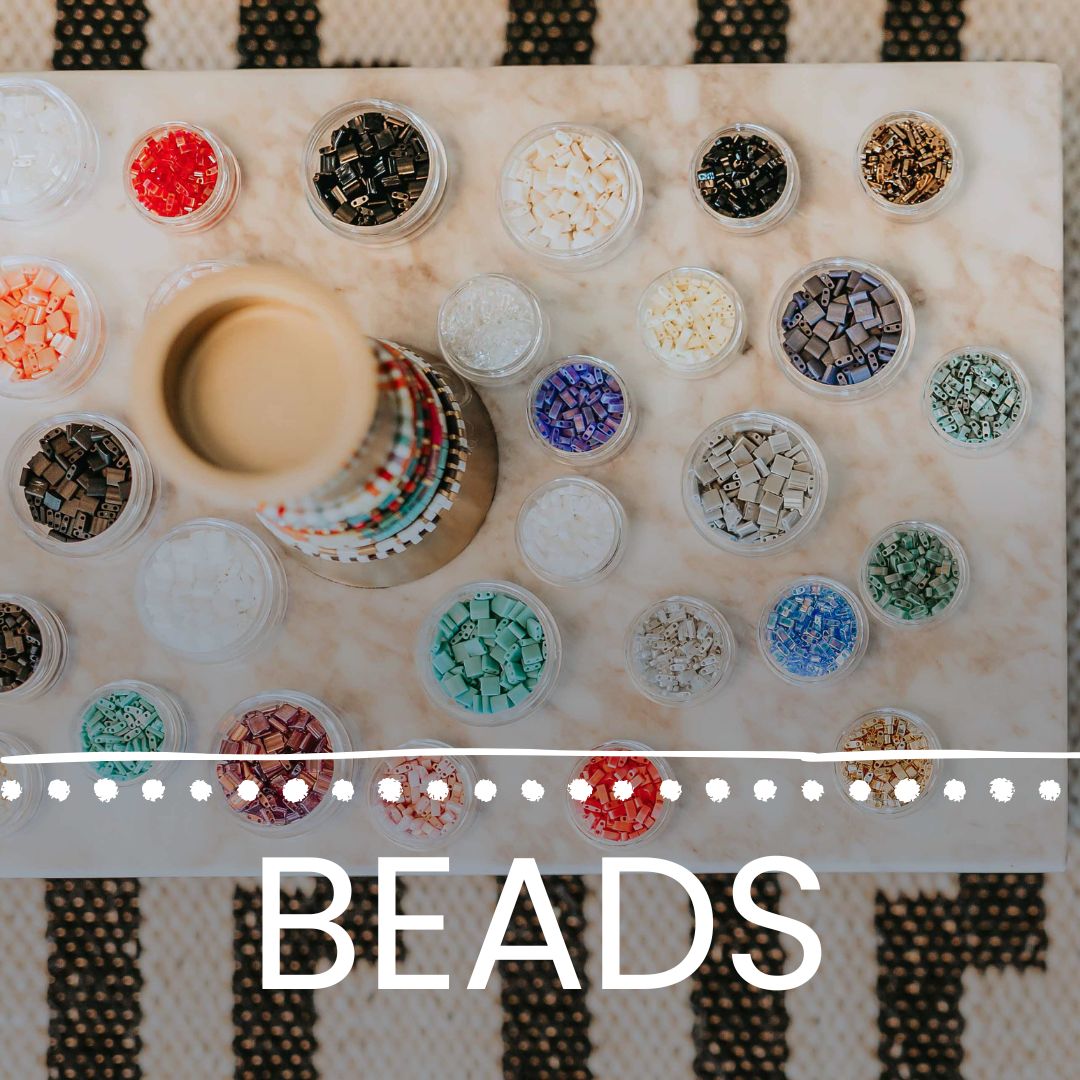
Genuine glass beads, like real Miyuki and Tila, are cut with tighter tolerances and smoother interior holes, so they're gentler on stretch cord over months of wear. Mack & Rex resells authentic Miyuki and Tila beads sourced from the brand; it doesn't manufacture the beads themselves, and it's upfront about that.
What Does a Proper DIY Bracelet Kit Actually Fix?
A well-built kit solves all four failure points at once. The elastic is a real crystal-cord stretch material sized for the bead holes it ships with, not a mystery cord bagged separately at the lowest possible cost.
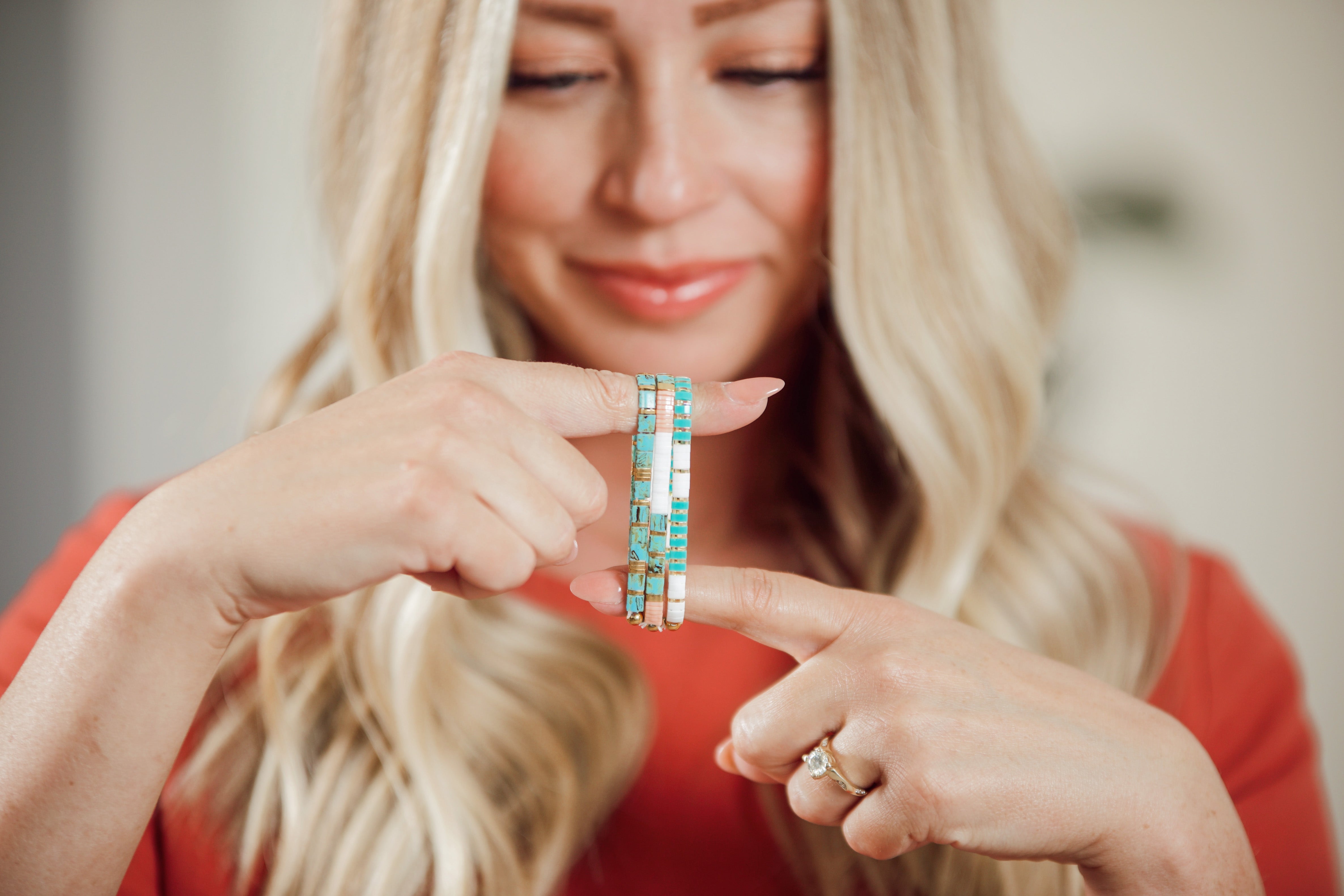
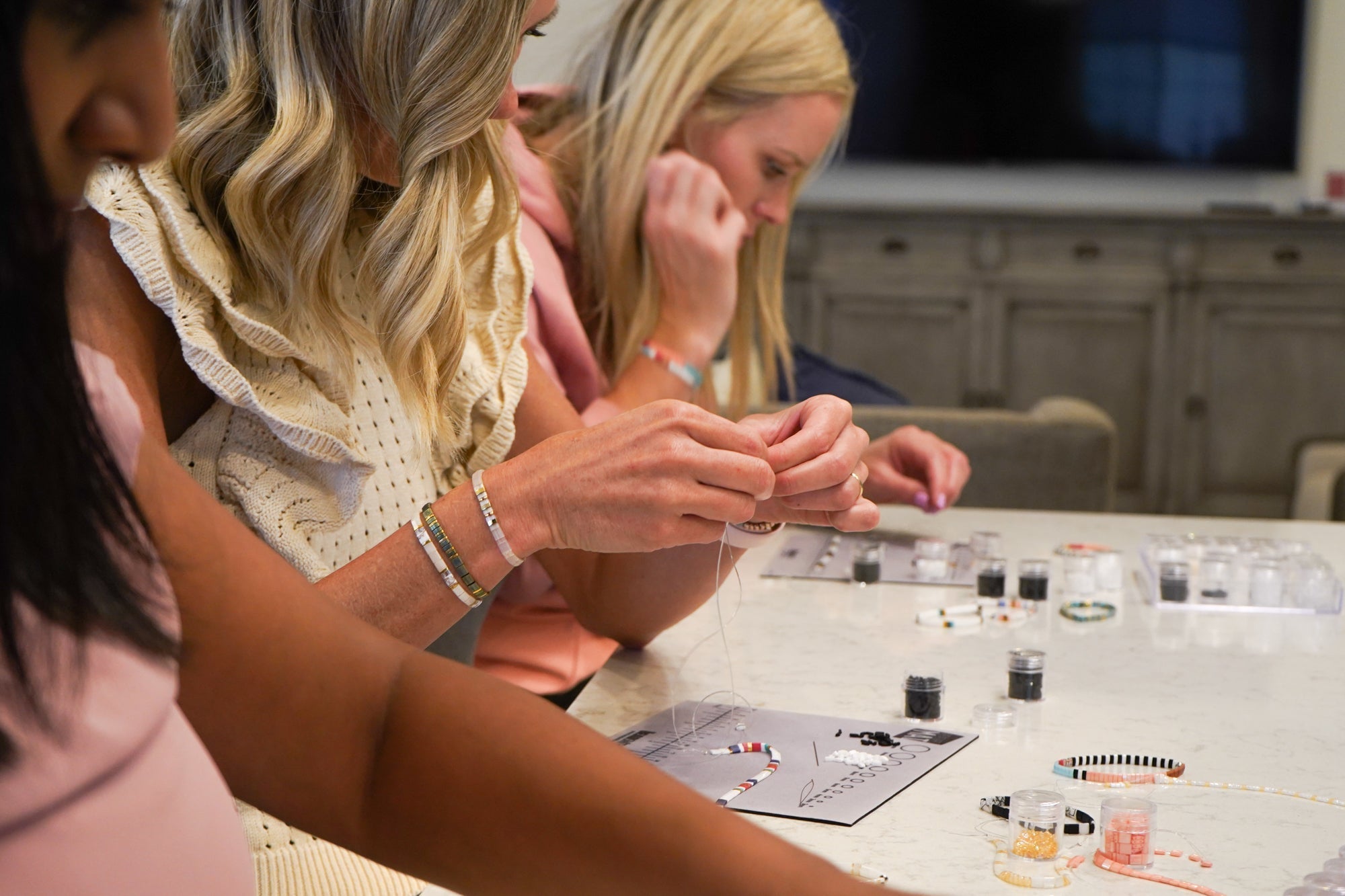
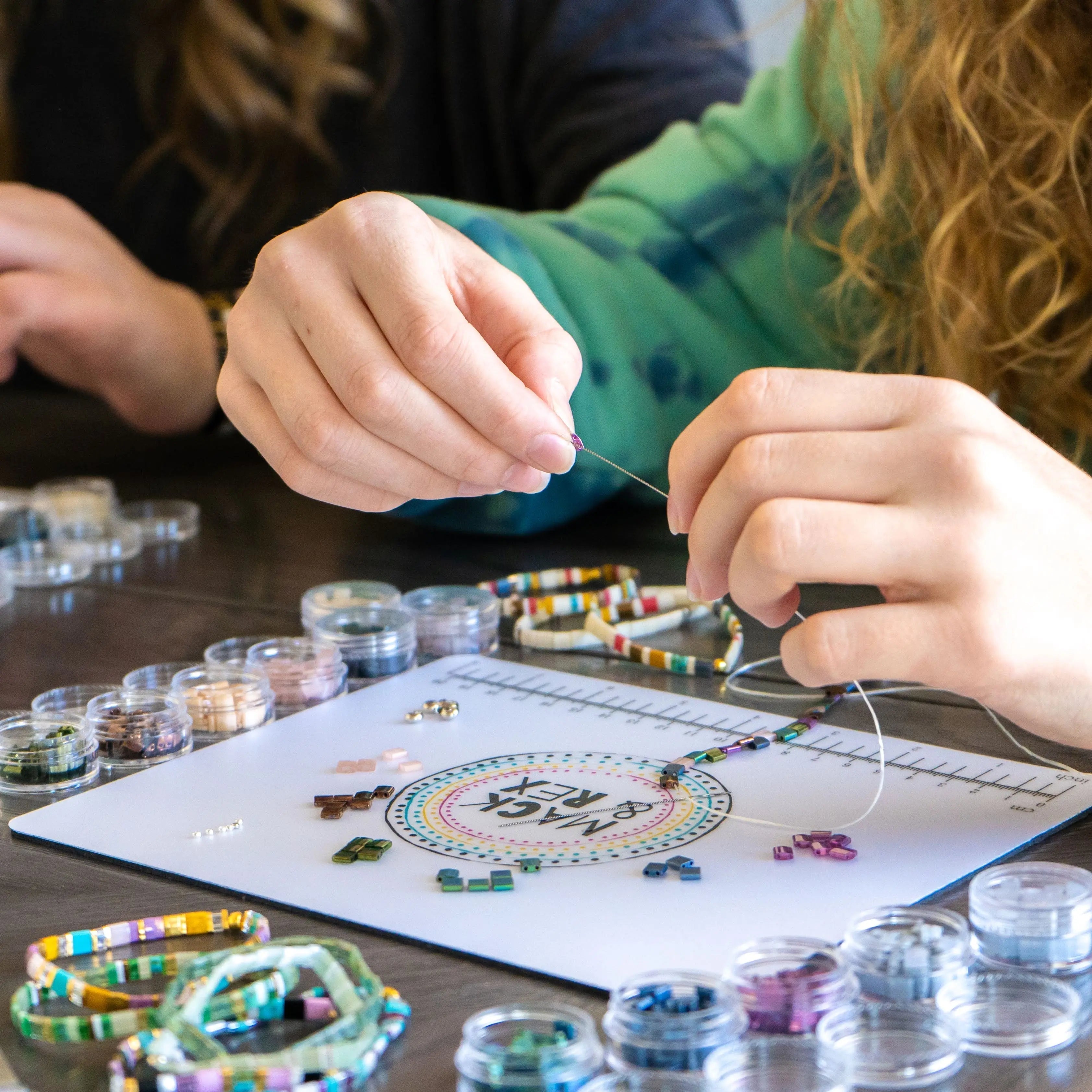
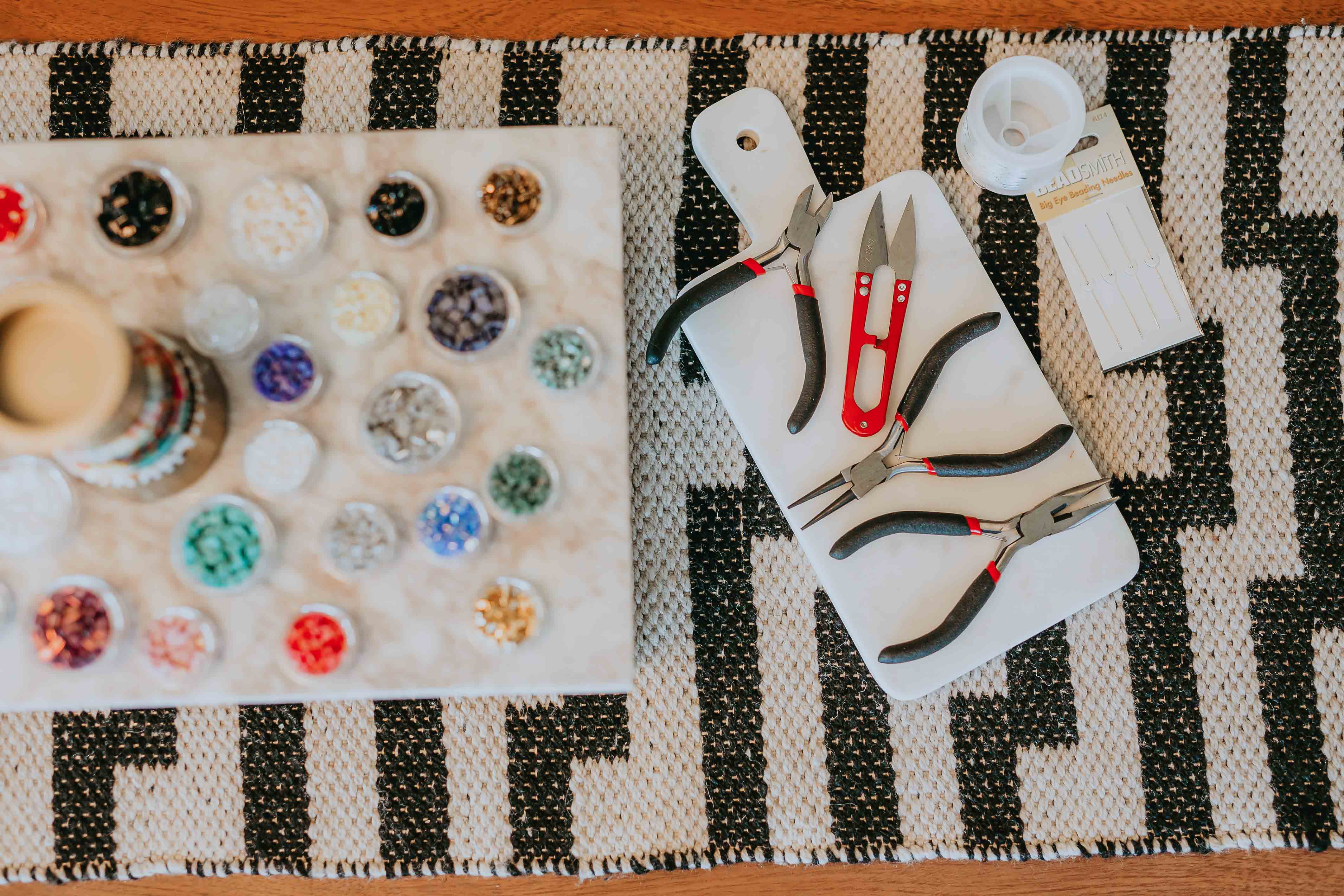
Mack & Rex's bracelet kits, for example, include .5mm crystal elastic stretch cord, crimp beads so the knot doesn't slip, knot covers to finish the ends cleanly, beading needles that lock at the top so the cord doesn't slide back off while you're stringing, and a bead mat with a built-in ruler for sizing before you knot anything. Trio kits (three bracelets per kit) run $44.99, the DIY Bracelet Kit Club runs $36.99 for three bracelets a month, and the larger Tila Bead Starter Kit ($189.99) makes around 20. You can browse the current lineup at Mack & Rex's bracelet making kits.
None of that is marketing shorthand. It's the actual parts list on the product page, and it's the same list that determines whether a bracelet lasts three days or three seasons.
How Do You String and Finish a Bracelet So It Doesn't Snap?
Measure first. Wrap a soft tape around your wrist, add about half an inch to an inch of stretch allowance, and use that number as your target strung length before you thread a single bead.
Match your cord gauge to the bead holes, then lay your pattern out on a bead mat so you're not improvising order as you go. String the beads, wrap the unfinished strand around your wrist to test the fit, and adjust the bead count before you commit to a knot. Tie a doubled overhand (a surgeon's knot), lock it with a crimp bead or knot cover, trim the excess close, and slide the knot inside the nearest bead so it sits flat against your wrist rather than poking out.
Quick safety note if kids or grandkids are helping string: beads and crimp pieces are a choking hazard for small parts, so keep the project supervised. It's a kit for hands old enough to handle small pieces safely, not for very young children on their own.
How Long Should a Well-Made Stretch Bracelet Actually Last?
With the right cord gauge, real glass beads, and a properly crimped knot, a handmade stretch bracelet should hold up to months of regular wear, including workouts and showers, before the elastic shows real fatigue. That's a realistic bar, not a lifetime guarantee. Elastic is still elastic, and it will eventually need restringing no matter how well you build it the first time.
What changes is how long "eventually" takes. Weeks versus seasons is the actual gap between a dollar-store bracelet and one built from a proper kit.
Frequently Asked Questions
Why do cheap elastic bracelets break so fast?
Most cheap stretch bracelets fail from a combination of low-grade elastic that's already lost stretch on the shelf, a cord gauge that doesn't match the bead holes, and a single overhand knot with no crimp or seal. Rough-edged filler beads make it worse by sawing at the cord every time you flex your wrist.
What is the best knot for a stretch bracelet?
A doubled overhand knot, essentially a surgeon's knot, tied and then locked with a crimp bead or knot cover, holds far better than a single overhand knot alone. The crimp or cover takes the stretch load off the knot itself.
What cord thickness should I use for a DIY bracelet kit?
Match the cord diameter to your bead hole size. Mack & Rex kits use a .5mm crystal elastic stretch cord sized for standard tila and seed bead holes, thick enough to hold tension without being too wide to knot securely.
Can a stretched-out elastic bracelet be fixed?
Sometimes. If the cord itself is still intact, restringing the same beads onto fresh elastic with a properly sealed knot can save a bracelet. If the cord looks dull, sticky, or cracked, replace it rather than trying to retie it.
Are Miyuki or Tila beads better for a bracelet that needs to last?
Genuine Miyuki and Tila glass beads have smooth, consistent holes that are gentler on stretch cord than many painted plastic filler beads, whose rough or uneven holes can wear through elastic faster. Mack & Rex resells authentic Miyuki and Tila beads; it does not manufacture them.
Ready to stop restringing the same bracelet every month? Shop Mack & Rex's DIY bracelet making kits for crystal-cord elastic, crimp beads, and knot covers built to hold. Free shipping applies on US orders over $100, and the buy-3-get-1-free offer covers finished bracelets, not kits.