

How to Build a Colorful Stackable Tila Bracelet Set That Actually Lasts
What Makes a Colorful Stackable Tila Bead Bracelet Set Actually Work?
A stack lives or dies on three things: color plan, bead quality, and fit. Get one wrong and the whole set looks off, even if each bracelet is pretty on its own.
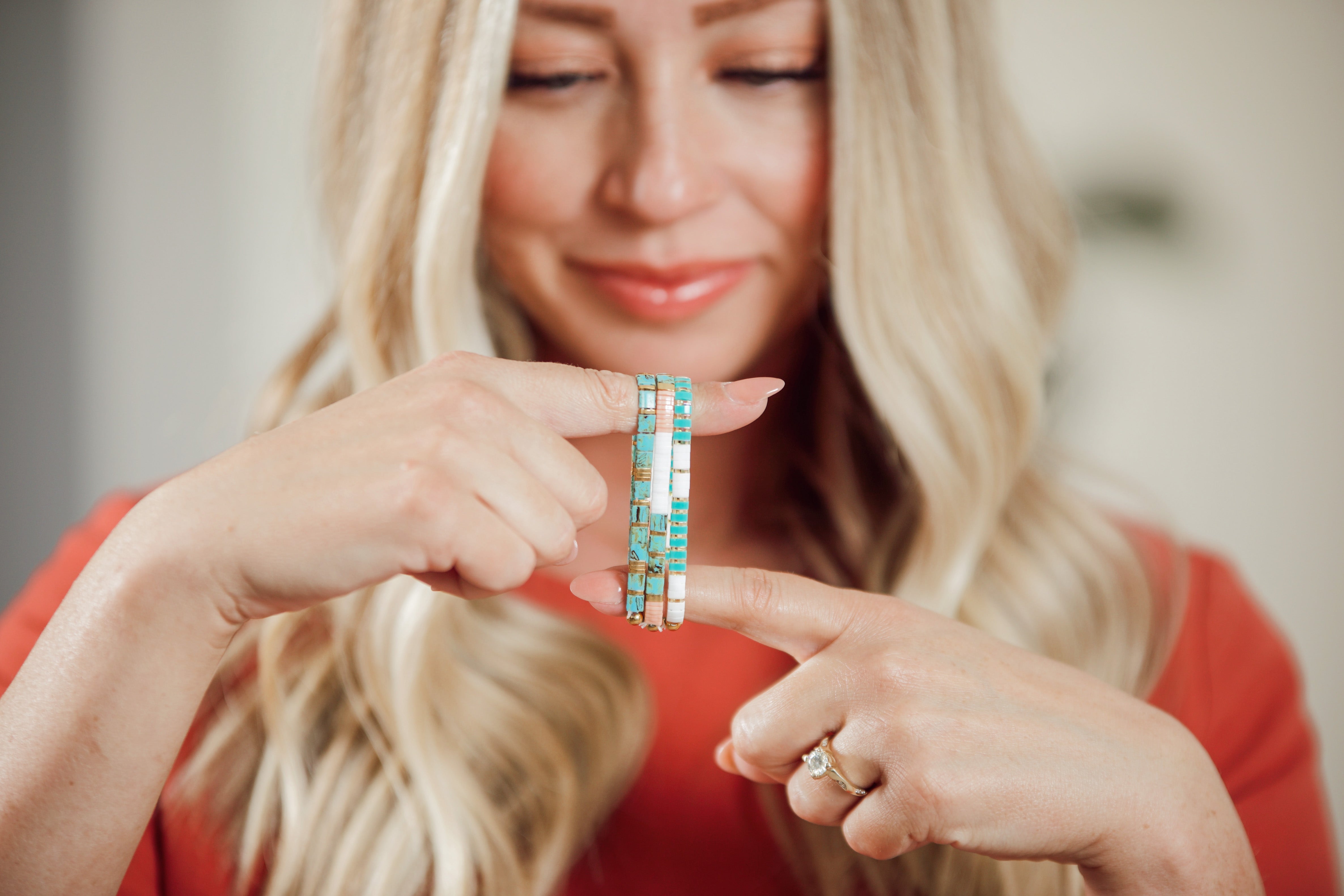
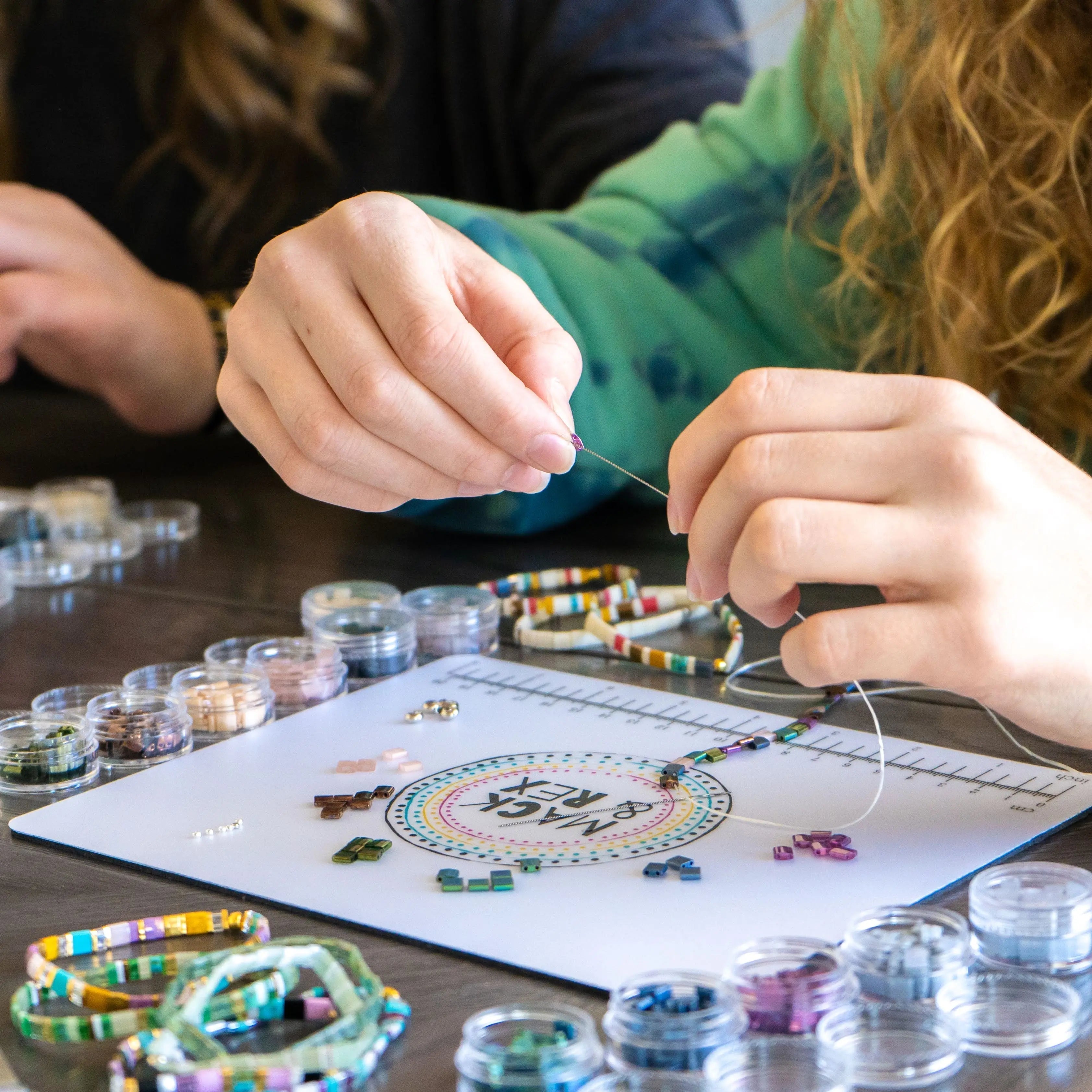
The best stackable tila bead bracelets share a limited color story (usually 3 to 5 shades), a mix of matte and glossy Miyuki tila finishes, and real crystal-cord elastic sized to the wrist. Mack & Rex builds its ready-to-wear stacks this way and sells matching colorways as DIY kits, so you can buy the set or make it yourself.
Tila beads are two-hole, flat square Miyuki glass beads, originally made in Japan, and they lie side by side in a way round seed beads don't. Glass beads in general have been shaped and colored for jewelry for thousands of years, but the flat, two-hole tila shape is a more recent Miyuki design built specifically to sit edge to edge. That flat stack is exactly why a set of tila bracelets reads as one "colorful bracelet stack" instead of a pile of single busy pieces, and it's the whole reason this style took off with women who like to layer bracelets rather than wear just one.
How Do You Choose a Color Palette for a Stack?
Pick one story, not five random favorites.
Start with an anchor color, usually the one you wear most, then build out with 2 to 4 supporting shades in the same family (warm, cool, or neutral) plus one accent that pops. A basic color wheel makes this easier: colors next to each other on the wheel blend, colors across from each other contrast on purpose. That's a well-documented starting point for pairing colors in any craft, beading included, and it takes the guesswork out of picking a fourth or fifth shade once the first two are locked in.
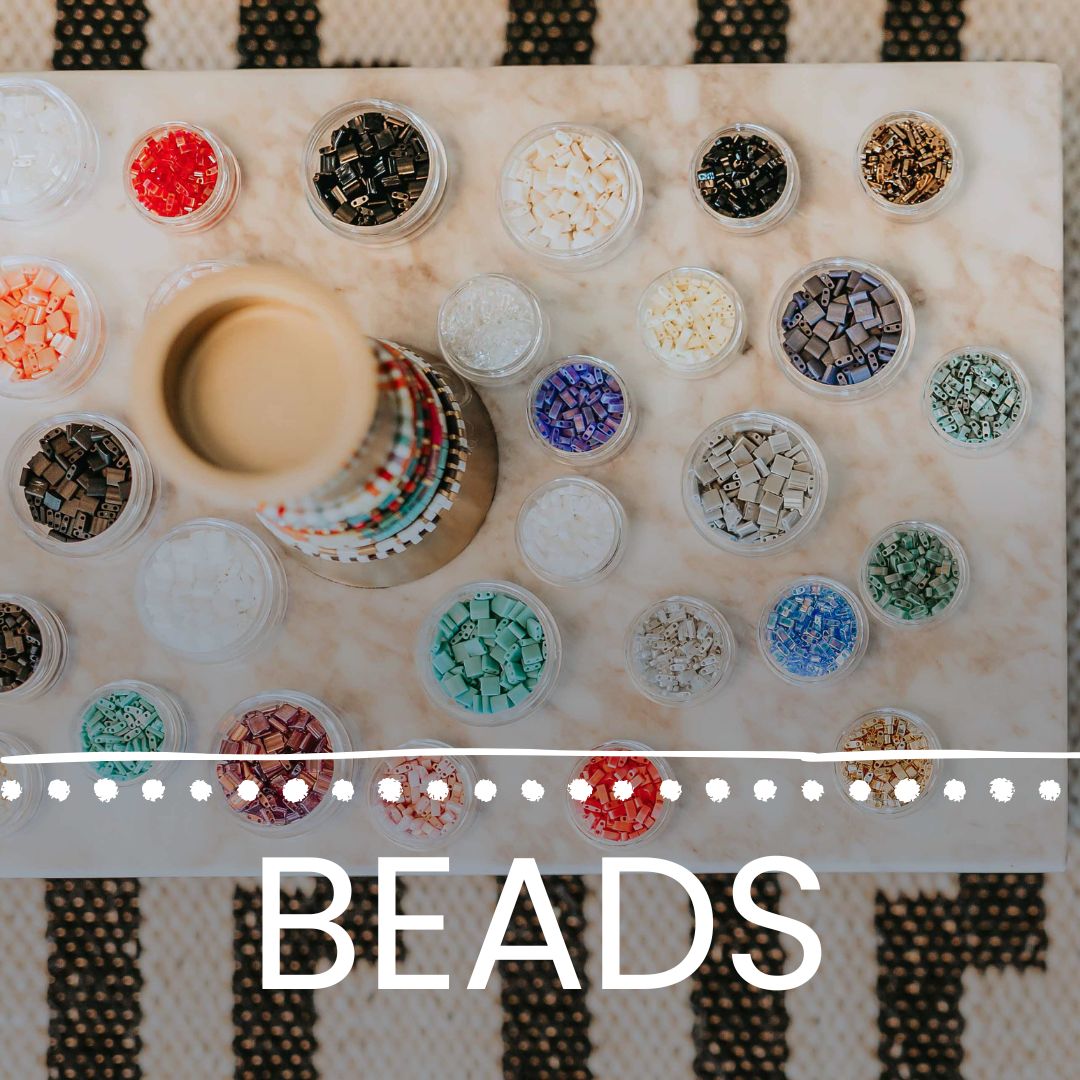
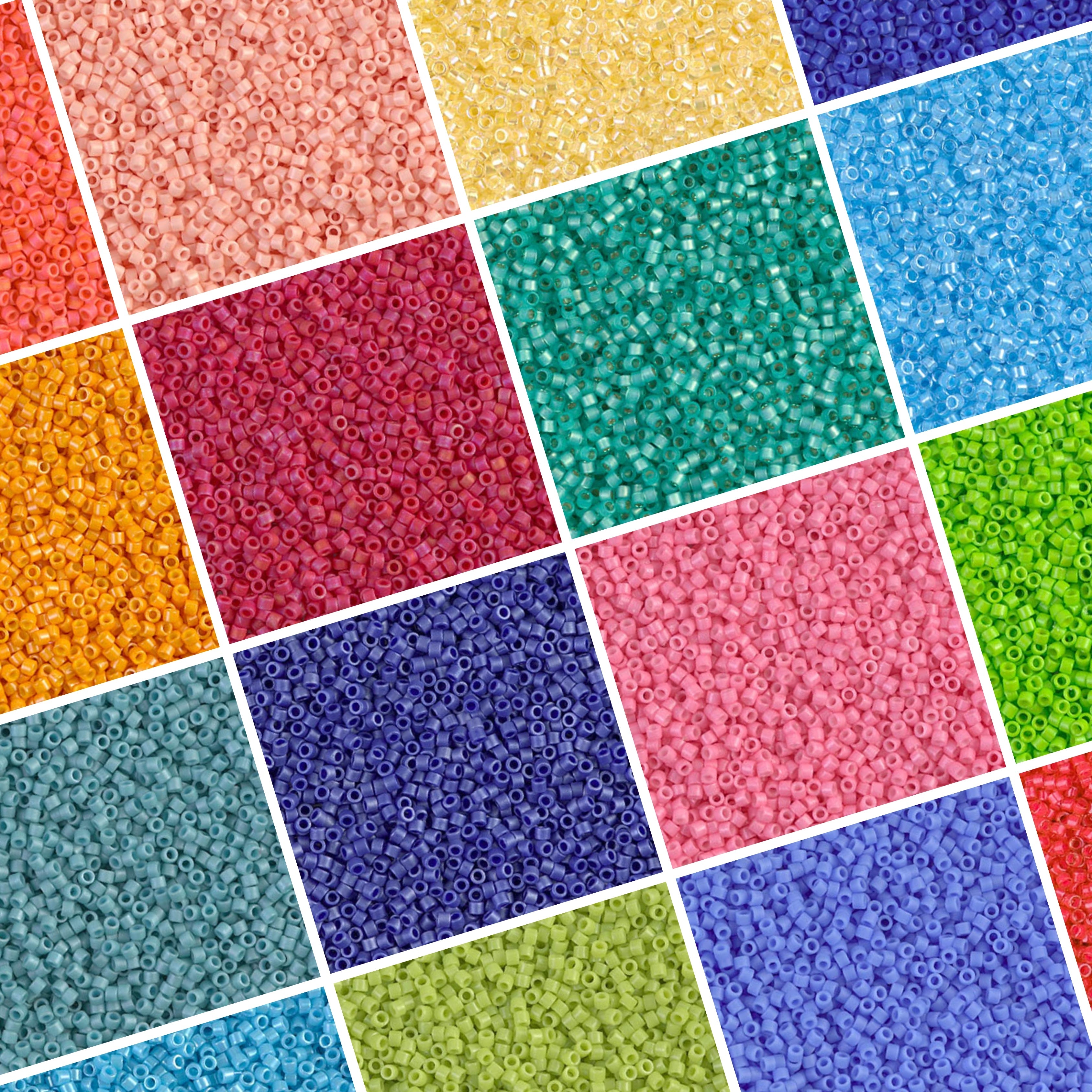
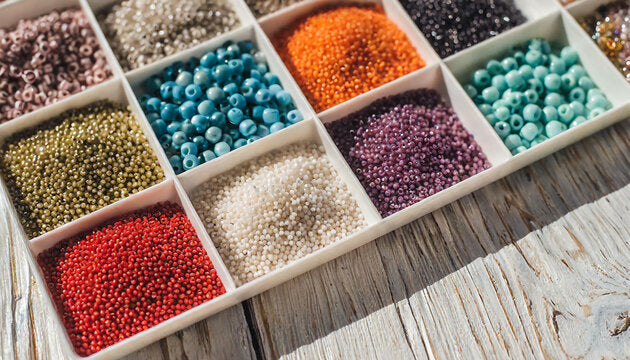
Mack & Rex's named collections do this work for you. The EVERGREEN EDIT bracelets, for example, build a full stack around one connected palette instead of scattered single colors, which is why buying a set from one collection usually looks more finished than mixing bracelets from different lines. If you're building your own, the all-seed-beads page groups Miyuki tila mixes by color family, so you can shop a palette instead of guessing at loose beads one at a time.
A quick trick for gift stacks: pick the recipient's go-to jewelry metal (gold, silver, or rose gold tones) and build the palette around beads that photograph well next to it. Simple, and it keeps the whole set wearable with what she already owns.
How Many Bracelets Belong in One Stack?
Three is the floor. Five is the sweet spot for most wrists.
Two bracelets can look like an accident. Three or more reads as a deliberate set, and most women land on 4 to 5 tila bracelets per stack before it starts feeling heavy or the pattern gets muddy. Wrist size matters here too: a smaller wrist can look crowded past 5, while a larger wrist has more room to add a 6th or a plain accent bracelet as a palate cleanser between busier patterns.
This is where Mack & Rex's trio kits earn their name. A trio bracelet kit makes 3 bracelets in one connected colorway, which is enough to start a real stack without buying one at a time and hoping the colors land right together. Add an accent bracelet or one more tila piece later and you've got a 4 or 5-bracelet stack that started as a single purchase.
Think about how the stack behaves day to day, too. A bracelet worn to a workout or while doing dishes takes more wear than one saved for date night, so a smart stack usually has a couple of sturdy everyday pieces plus one or two you can add for a dressier look. That way the whole set doesn't have to come off every time life gets busy.
Should You Mix Matte and Glossy Finishes?
Mix them. It's the fastest way to make a stack look intentional.
A stack made entirely of glossy beads can look flat under indoor light, and an all-matte stack can look muted next to skin tone. Combining matte and glossy tila finishes in the same palette adds texture without adding more colors, so the set still reads as one cohesive group instead of five different bracelets thrown together. It's a small styling call, but it's the difference between a stack that looks curated and one that looks like it was grabbed off a bargain bin.
If you're not sure where to start, look at how a ready-made stack pairs finishes and copy the ratio. Two matte, two glossy, one metallic accent is a reliable formula that works across almost any color family.
Why Does Real Miyuki Tila and Quality Cord Make a Stack Last?
The beads and the string matter more than the pattern.
Miyuki is the Japanese bead manufacturer behind genuine tila beads, and Mack & Rex resells authentic Miyuki tila (not a knockoff shape), which matters because the two-hole design only lies flat and even when the bead is cut to spec. Off-brand "tila-style" beads are often slightly warped or uneven, and a stack made from them can look crooked from day one.
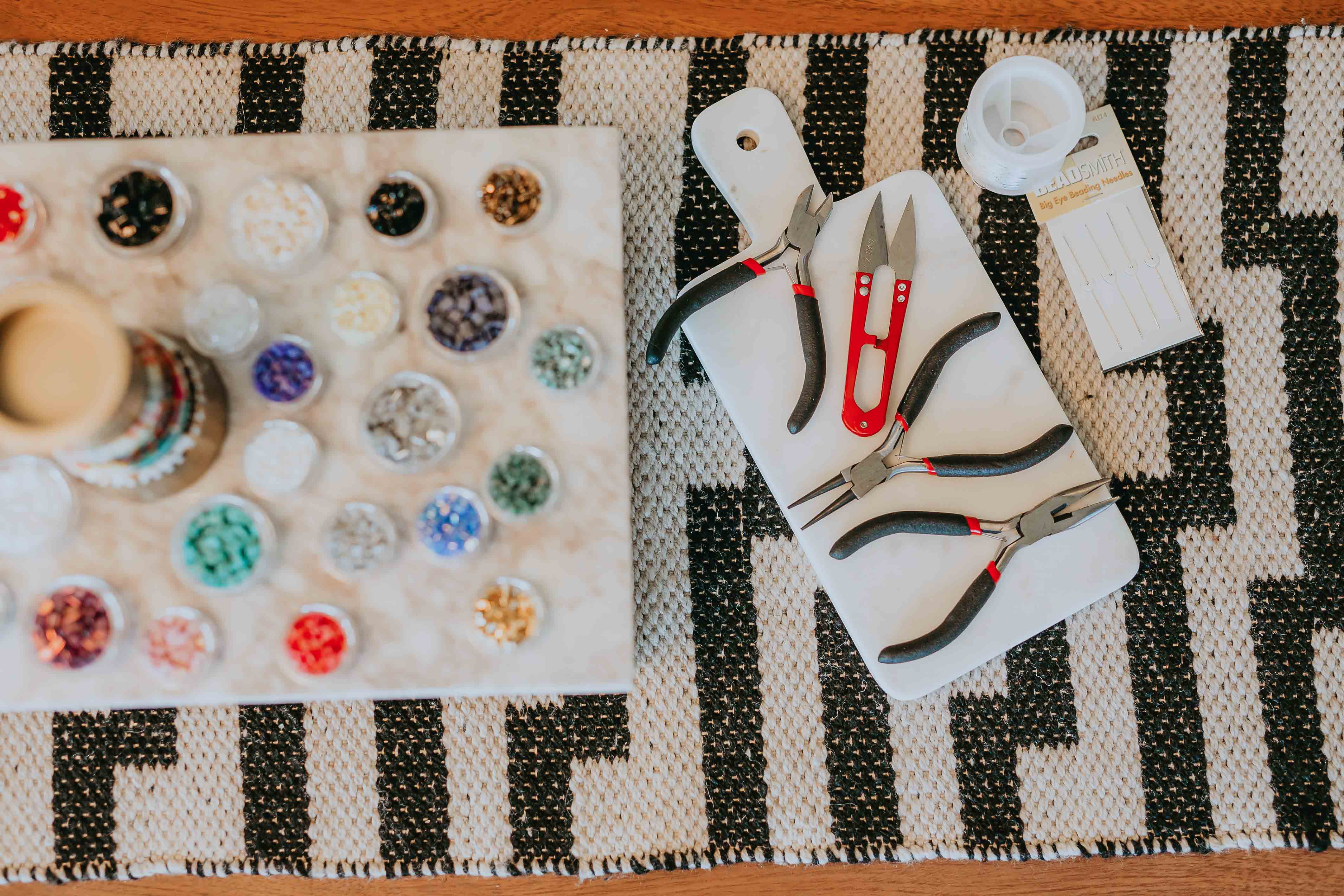
The other half of durability is the cord. Craft suppliers like Fire Mountain Gems stock several stringing materials for beaded jewelry, from thin round elastic to flatter cord, and the choice matters more with tila beads than with round seed beads. Mack & Rex bracelets use crystal-cord elastic, not the thin round elastic that shows up in cheap bracelet kits. Round elastic tends to fray and snap where it rubs against the flat edges of a tila bead; a flatter crystal cord distributes that stress more evenly across the stack. Every finished Mack & Rex bracelet also comes with the brand's quality guarantee, so a stack you build with their pieces is backed by more than a hope that the elastic holds.
None of this replaces basic care. Take bracelets off before swimming or heavy lotion use, and store a stack flat instead of balled up in a drawer, and the beads and cord both hold their color and shape a lot longer.
How Do You Get Sizing Right So a Stack Doesn't Slide or Snap?
Measure the wrist, not the hand.
Wrap a soft tape (or a strip of paper) around the wrist just below the bone, and that measurement, not a guess at "small, medium, large," is what should decide the bracelet size. A stack that's slightly loose will spin and slide down during a workout or a busy day of chasing kids, and one that's too tight will dig in by the end of the day. Mack & Rex sizes its finished bracelets and kits from XXS through 5XL, which is a wider range than most bracelet brands offer, so a stack fits the wrist it's actually going on instead of a generic "average" size.
If you're building a stack for someone else as a gift, size up slightly rather than down. A little give is more comfortable in a multi-bracelet stack than a snug fit, since 4 or 5 bracelets stacked together sit closer to each other than one bracelet worn alone. When you're not sure which size to pick, go with the number closest to the actual wrist measurement rather than rounding down to look smaller on paper. A bracelet that has to be forced over the hand will get less wear than one that slides on comfortably, no matter how nice the color combination is.
Ready-to-Wear Stack or DIY Kit, Which Should You Start With?
Buy the stack if you want it finished today.
A single finished Mack & Rex tila bracelet runs roughly $20 to $25, and the brand's current offer is buy 3 bracelets, get 1 free on finished bracelets, no code needed, which is an easy way to land a 4-bracelet stack in one order. Pair that with the accent bracelets collection for a plain piece that breaks up busier patterns in the stack.
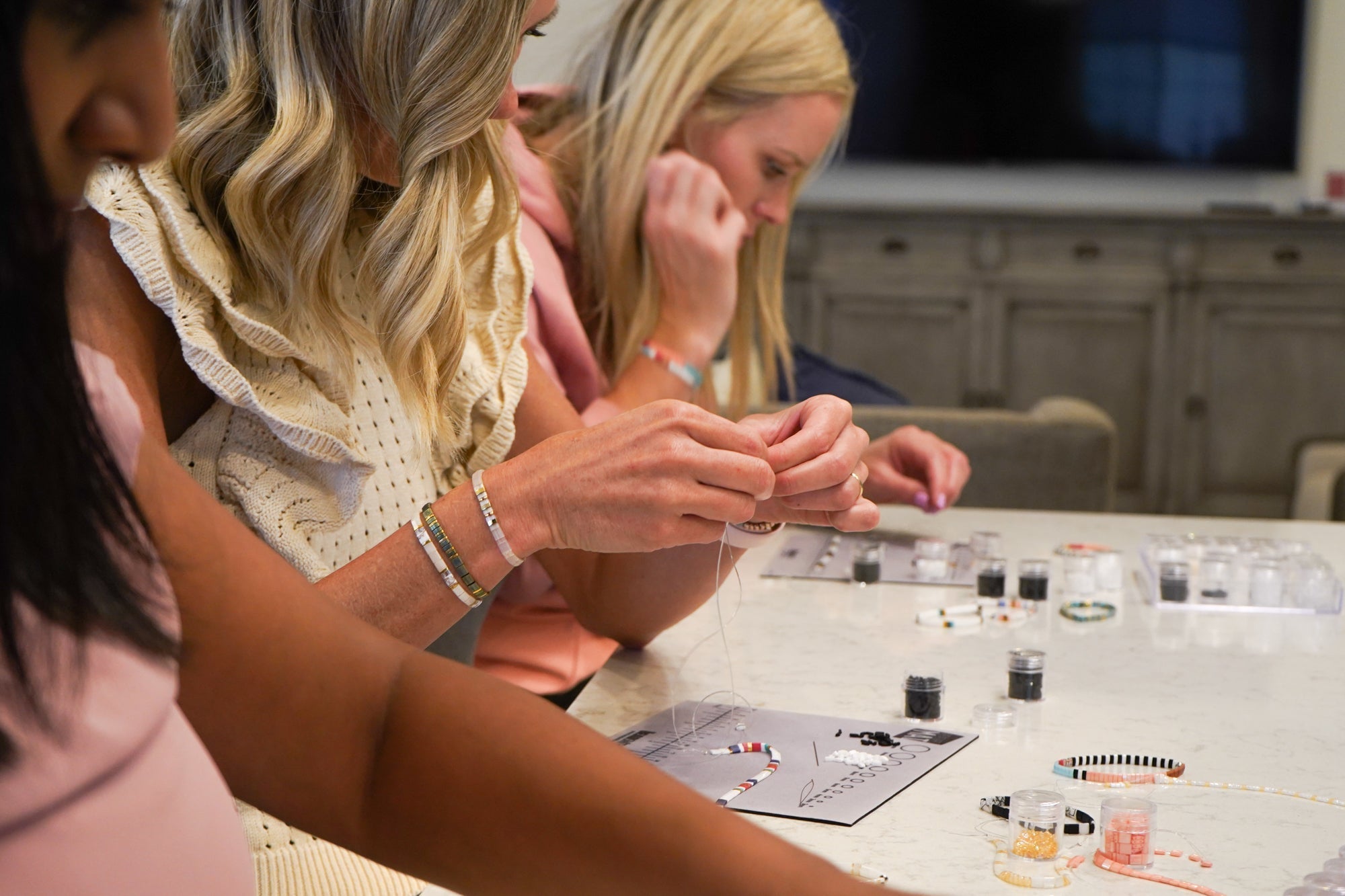
Choose a DIY kit if you want to pick your own colors or make it a project with your kids or grandkids. A trio bracelet kit (makes 3 bracelets) runs $44.99, and the DIY Bracelet Kit Club option runs $36.99 for the same 3-bracelet output as an ongoing subscription. Both are a fast way to a real stack without buying loose beads and cord separately. One safety note if young kids are helping: tila beads are small enough to be a choking hazard, so keep loose beads away from very young children and supervise any bracelet-making session with kids.
Shipping is calculated at checkout and Mack & Rex ships internationally, with free shipping on US orders over $100, so a couple of finished bracelets plus a kit can clear that threshold in one order.
Start with the bracelet stacks collection at mackandrex.com/collections/bracelet-stacks if you want to see how Mack & Rex pairs colors and finishes before you build your own, or browse trio kits at mackandrex.com/collections/trio-bracelet-kits to make your own set from scratch.
Frequently Asked Questions
How many tila bracelets should be in one stack?
Most stacks look best with 3 to 5 bracelets. Fewer than 3 reads as one piece instead of a set, and past 6 or 7 the wrist starts to feel crowded and bracelets compete instead of working together. Start with 3 and add one at a time.
Can you mix matte and glossy tila beads in the same stack?
Yes. Mixing matte and glossy Miyuki tila finishes in one stack adds texture without adding more colors, so it's one of the easiest ways to make a set look intentional rather than random.
Do tila bead bracelets stretch out or break down over time?
Quality depends on the elastic and the beads. Mack & Rex bracelets use crystal-cord elastic and genuine Miyuki tila glass beads, and every finished bracelet is backed by the brand's quality guarantee. Cheap round elastic and off-brand beads are the usual reasons a stack loosens or the color rubs off faster.
Should I buy a ready-made tila bracelet stack or a DIY kit?
Buy a ready-made stack if you want a finished color set today with no assembly. Choose a DIY kit if you want to pick your own palette or make it a family project. Mack & Rex sells both, from single finished bracelets to trio kits that make three at once.