



Do Tila Bead Bracelets Stretch Out Over Time? What to Know
Do Tila Bead Bracelets Stretch Out Over Time?
Yes, but not the way most people assume. Every elastic bracelet loosens a little with wear because the cord itself gradually loses recoil. The real question is how fast. A bracelet strung on quality elastic beading cord, sized correctly and knotted right, can stay snug for a year or more. A cheap one often goes slack in a few weeks.
If you've ever pulled a bargain-bin stretch bracelet out of a drawer and found it hanging loose on your wrist like an old scrunchie, you already know how this goes. The good news: stretch-out isn't random. It's mostly cord quality, cord thickness, and how the ends were secured, and all three are things you can control.
Why Do Beaded Stretch Bracelets Loosen With Wear?
Elastic cord loses stretch because the polymer chains that give it recoil break down every time the cord is pulled over your knuckle and released. That's a mechanical fact of elastomers, not a defect. But heat, moisture, lotion, sweat, and UV light all speed up that breakdown, and thin, low-grade cord has less material to lose before it stops snapping back.
Think of it like a rubber band left in a hot car versus one kept in a drawer. Both eventually get tired. The one exposed to heat and sun gives out first. A bracelet worn in the shower, at the gym, or slathered in lotion every day is doing the elastic equivalent of that hot car, and a thin dollar-store cord simply doesn't have the reserve to handle it for long.
Cheap Elastic vs. Quality Cord: What Actually Makes the Difference?
Diameter and polymer grade. A hobby-grade elastic cord under 0.5mm thick stretches thin fast and loses its memory after a few dozen wears. A thicker, jewelry-grade elastic beading cord, generally 0.7mm to 1mm, has more material distributing the load, so it holds its shape through thousands of stretch-and-release cycles instead of hundreds.
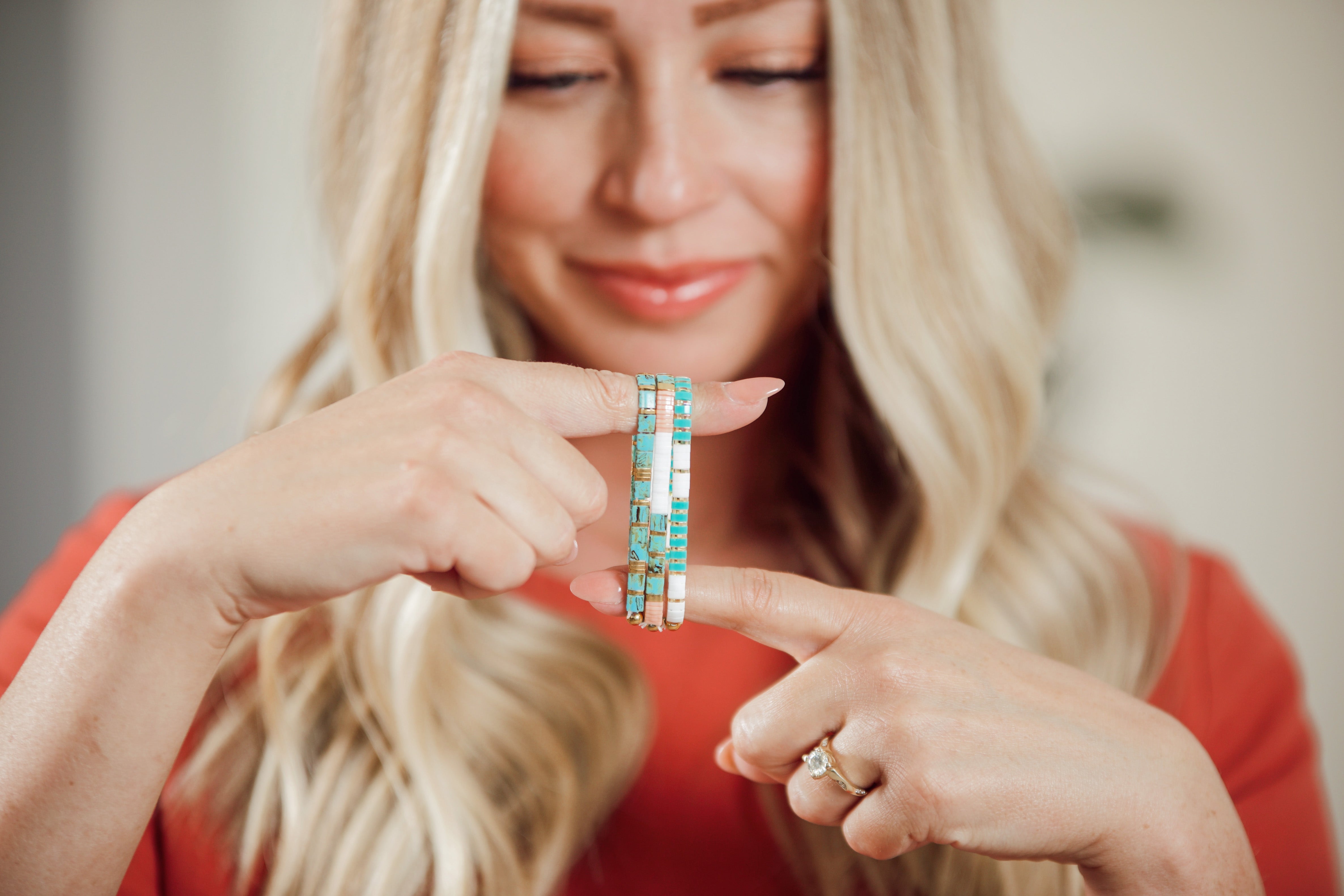
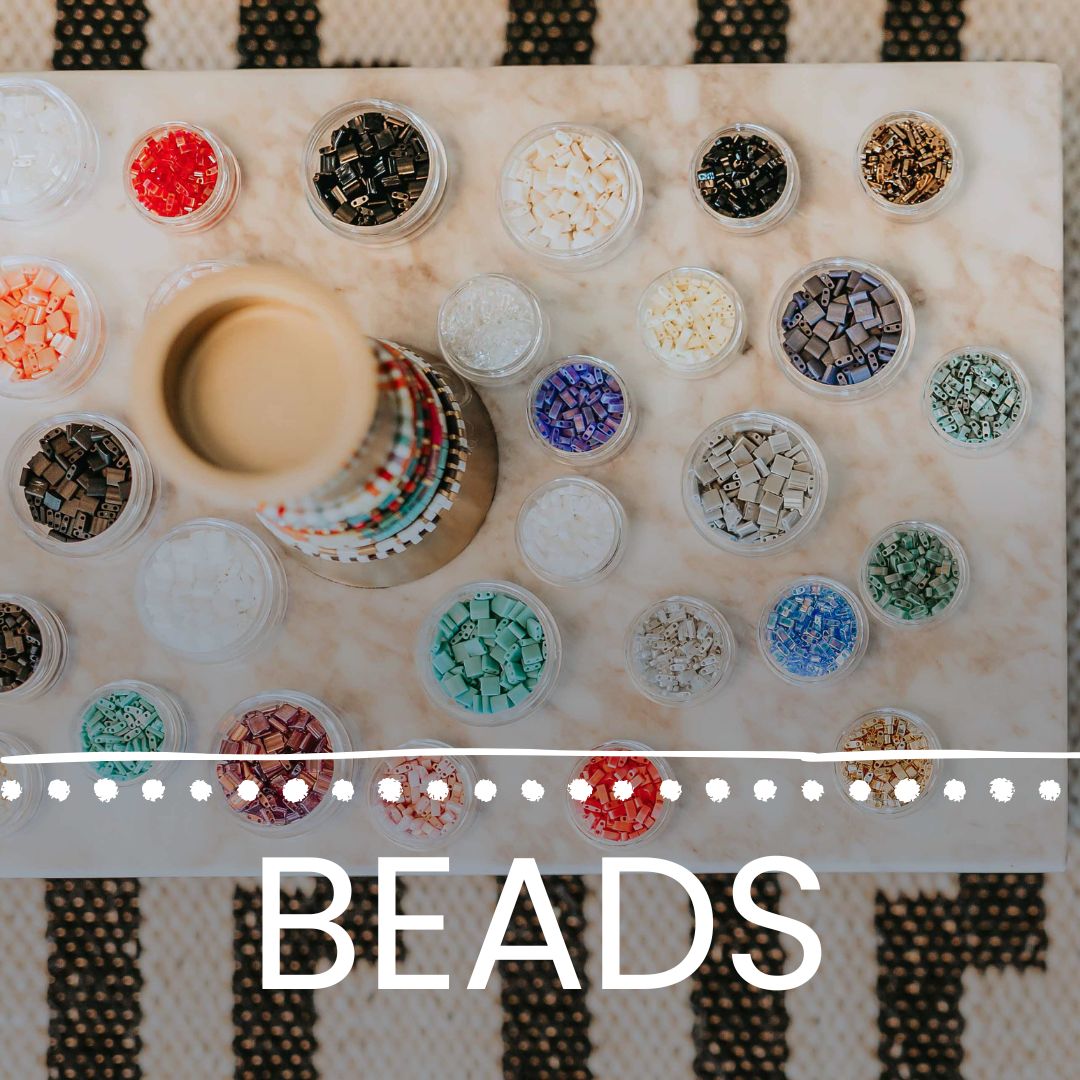
This is also why the bead itself matters less than people think. Miyuki Tila beads are Japanese-made glass tile beads that Mack & Rex sources and sells, not manufactures, and their smooth, uniform two holes are gentle on cord because there's no rough edge sawing at the elastic with every wear. Cheap acrylic beads with jagged drill holes do the opposite: they nick the cord a little each time you flex your wrist, and that micro-damage adds up to premature stretch-out and eventual snapping.
Does Knotting Technique Change How Long a Bracelet Lasts?
It changes more than people expect. A single overhand knot slips under tension, letting the bracelet loosen at the knot even while the cord itself is still fine. A surgeon's knot, crossed twice on the first pass and once on the second, grips tighter and resists that slow creep.
A small drop of glue on the knot, like G-S Hypo Cement or clear nail polish, locks it in place so it can't work itself loose over months of wear. Skip that step and you'll often see the bracelet loosen at the knot within weeks, even on decent cord. It's a five-second detail that determines whether a bracelet fits the same in month six as it did on day one.
Why Do Store-Bought Elastic Bracelets Loosen So Much Faster?
Cost. Mass-market bracelets are built to a price point, which usually means thin cord, a single quick knot with no adhesive, and beads with rougher drill holes. That combination is exactly the recipe for fast stretch-out: thin cord has less reserve, an unsealed knot slips, and rough beads chew at the elastic with every wear.
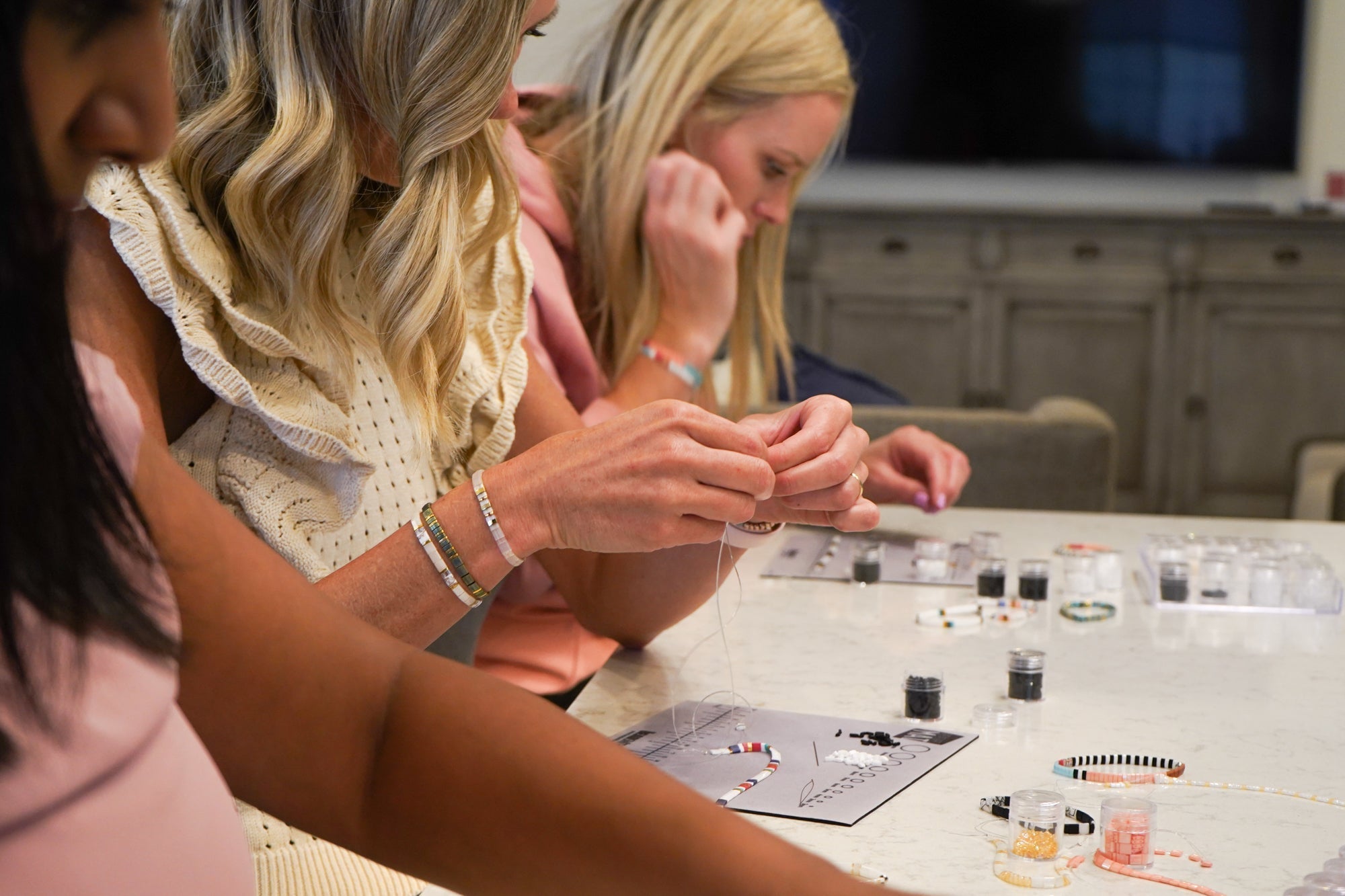
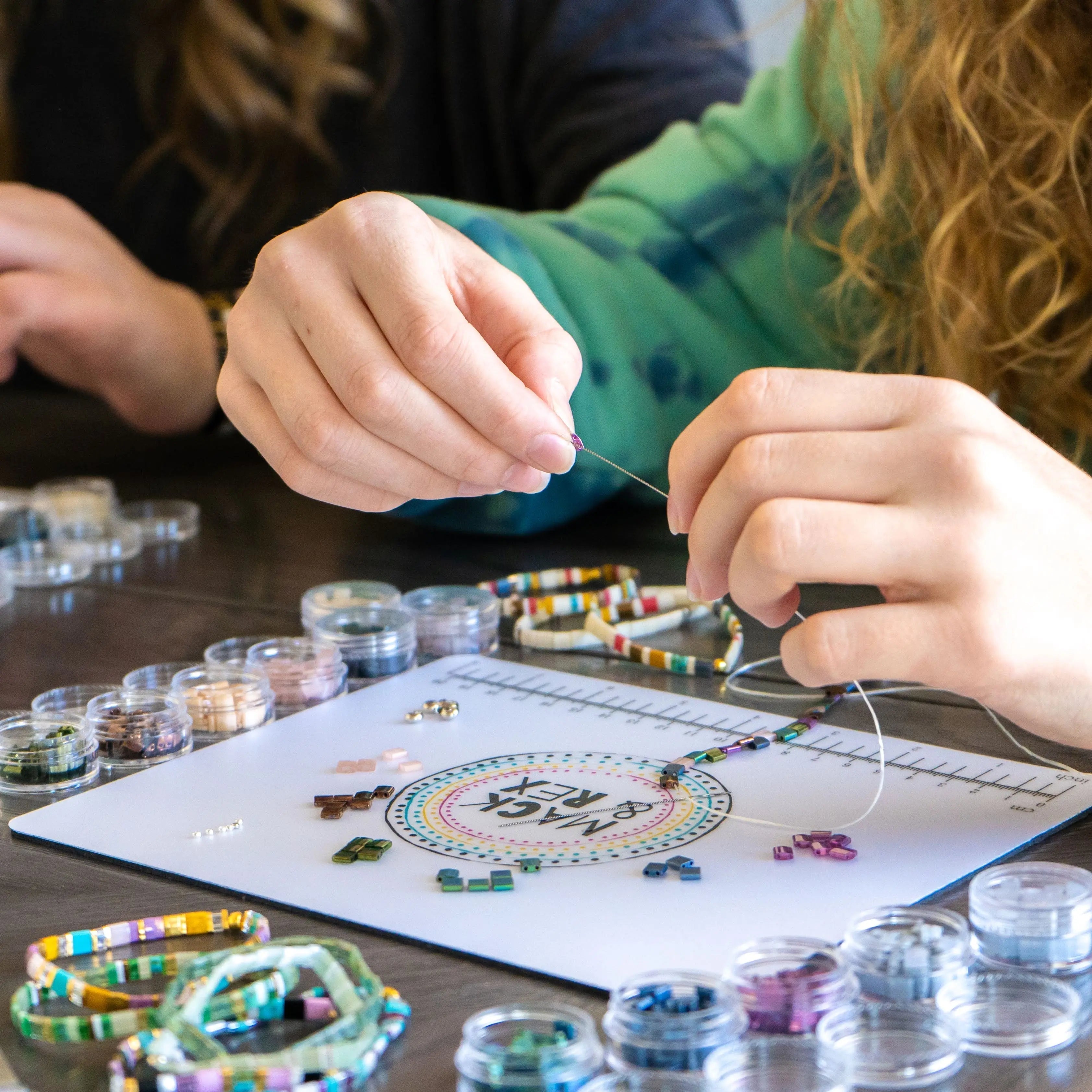
None of that is visible on a store shelf. A bracelet can look identical to a well-made one and still go slack in a month because the cord inside is a fraction of the thickness. This is the gap a bracelet-making kit closes: you control the cord grade, the knot, and the beads rather than trusting a label.
How Do You Prevent a Bead Bracelet From Stretching Out?
Four things make the biggest difference, in order: use a proper diameter elastic beading cord, size the bracelet snug rather than loose to start, tie a surgeon's knot, and seal that knot with glue. Skipping any one of these shortens the bracelet's life, and skipping two or three is basically why cheap bracelets fail so fast.
Beyond the build, a little care habit stretches the lifespan further: take bracelets off before showering, swimming, or applying lotion, and keep them out of direct sun when you're not wearing them. None of this is complicated. It's the same reason a well-made bracelet from a real kit, with jewelry-grade elastic and Miyuki Tila beads, tends to outlast a $5 gas-station stretch bracelet by a wide margin.
Is It Worth Making Your Own Instead of Buying Cheap Elastic Bracelets?
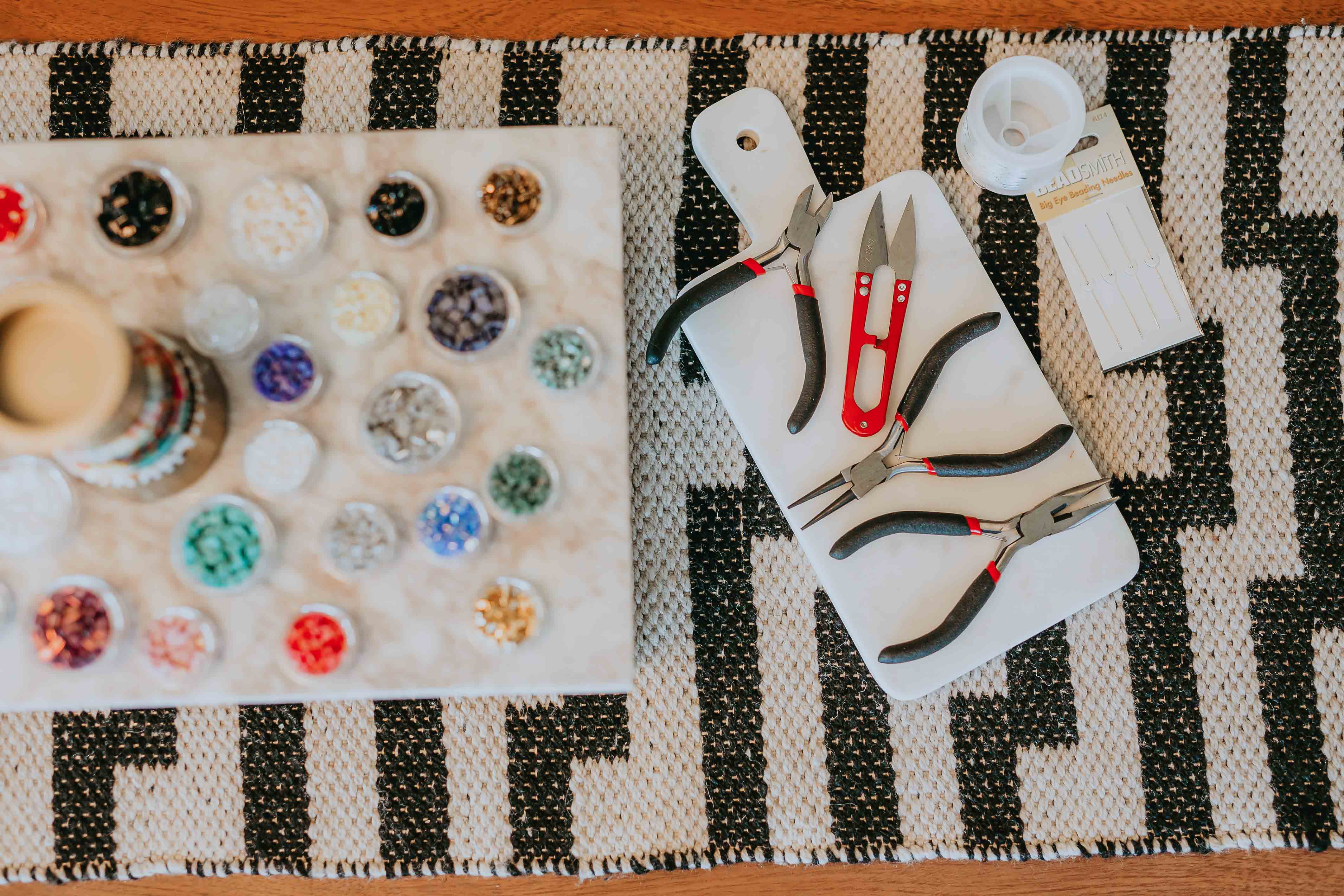
If you're tired of replacing loose, stretched-out bracelets every couple of months, yes. Our bracelet-making kits come with jewelry-grade elastic beading cord, real Miyuki Tila beads, and everything you need to tie a knot that holds. You control the fit and the materials, so the bracelet you make actually lasts through daily wear, without loosening up in the first month.
Shipping is free on US orders over $100, and buy 3 finished bracelets, get 1 free, no code needed. If you'd rather skip the DIY step, our ready-to-wear bracelets are built the same way, with the same cord and beads, so you get the durability without threading a single bead yourself.
Frequently Asked Questions
Do Tila bead bracelets stretch out over time?
Some loosening is normal after months of daily wear, but a bracelet strung on quality elastic beading cord with a proper knot should hold its fit far longer than a cheap store-bought elastic bracelet, which often goes slack within weeks.
What causes a beaded stretch bracelet to go loose?
Repeated stretching over the knuckle, heat, moisture, lotion, and UV exposure all break down the polymer chains in elastic cord, causing it to lose recoil. Thin, low-grade cord and a weak knot make the problem show up much faster.
What elastic beading cord holds up best?
A thicker crystal-style elastic beading cord, around 0.7mm to 1mm, rated for jewelry use holds its stretch longer than thin hobby elastic. Diameter and the polymer quality of the cord matter more than brand names.
Can you fix a stretched-out bead bracelet?
Yes. If the beads and elastic are still in good shape, cut off the old knot, pull the bracelet slightly snugger, and re-tie a surgeon's knot with a small dot of glue. If the cord itself feels brittle or discolored, it's time to restring on fresh cord.
How long should a handmade Tila bracelet last before it loosens?
With quality cord, correct sizing, and basic care, many wearers get a year or more of daily wear before a bracelet needs restringing. Cheap mass-market elastic bracelets often loosen or snap in a few months of the same use.
Small parts note: bead bracelets and DIY kits include small components that are a choking hazard. Keep loose beads away from young children and craft with adult supervision.
Sources: Soft Flex Company, "Everything You Need to Know About Stretch Bracelets and Stretchy Cord"; Fire Mountain Gems, Stretch Cord Guide; Wikipedia, "Elastomer".