

Heishi Bead Bracelets: What They Are and How to Style Them
What Are Heishi Beads, Exactly?
Heishi beads are small, flat, disc-shaped beads strung through the center like tiny washers. Most heishi beads sold today, including the ones in the Mack & Rex heishi beads collection, are made from polymer clay rather than the hand-cut shell the style started with.
The name comes from the Kewa Pueblo language, where heishi originally meant a hand-cut shell bead. The Bead Chest traces the term back to Pueblo artisans in the American Southwest who ground and drilled shell into small discs long before craft stores existed. Today "heishi" describes the shape more than the material. You will find the discs made from shell, stone, coconut, and, most commonly now, polymer clay.
The shape is what carries over from the original craft. A flat, round disc with a hole through the center, strung close together so the bracelet reads as one smooth, unbroken line instead of a row of separate beads. That is true whether the disc came from a shell or a block of clay.
How Are Modern Polymer Clay Heishi Beads Made?
The process is simple. Clay is rolled into a log, sliced into thin rounds, and cured until firm, which is why heishi beads have that consistent, slightly matte look no matter the color.
Polymer clay is a PVC-based modeling material that stays soft until it is baked, which lets makers slice it into uniform discs before curing. The heishi beads in our collection run about 6mm across and thin enough that a full bracelet lies flat against the wrist rather than stacking up in height the way rounder beads do. That flatness is the whole appeal. It is what makes a heishi stack read as sleek and not bulky, even with five bracelets layered on one wrist.
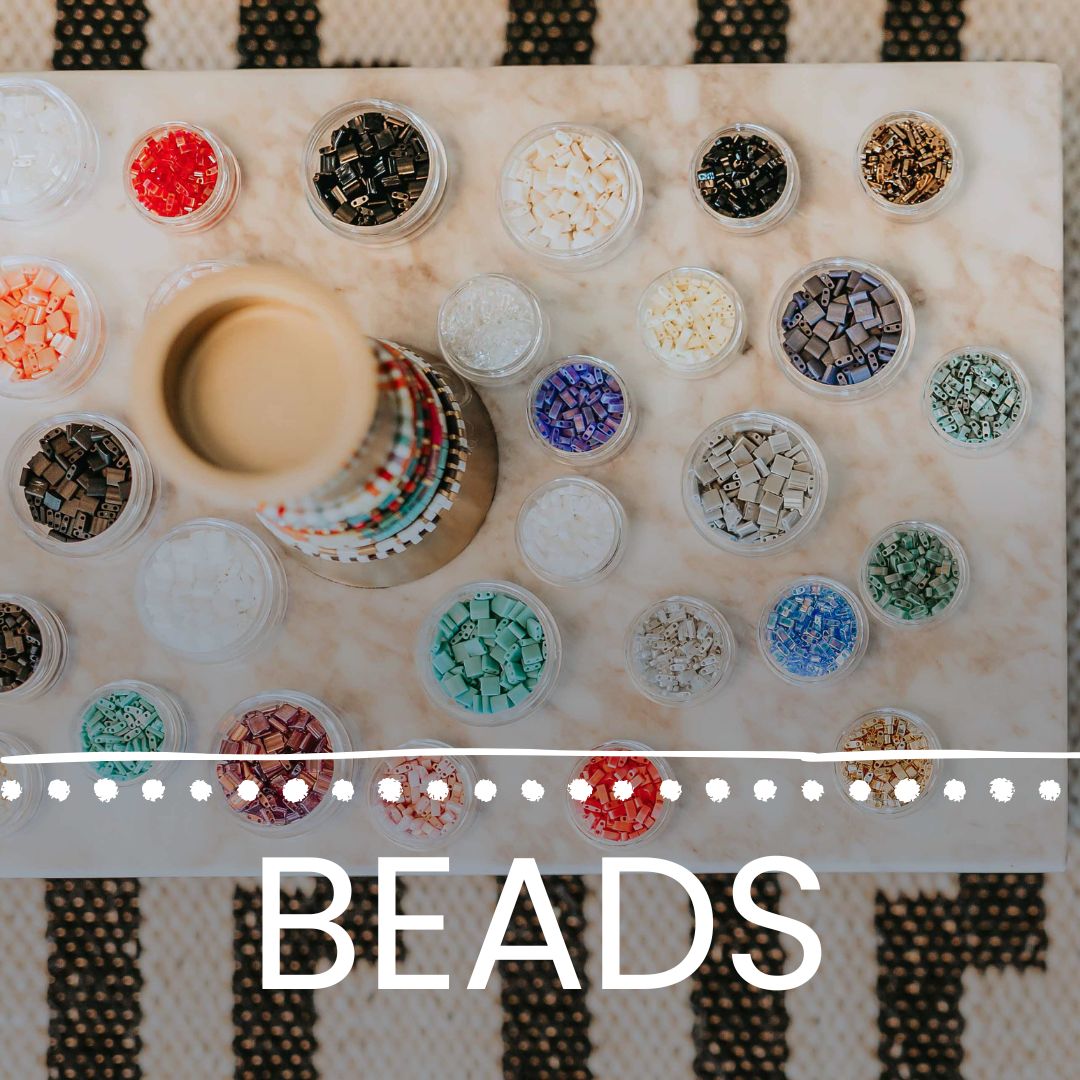
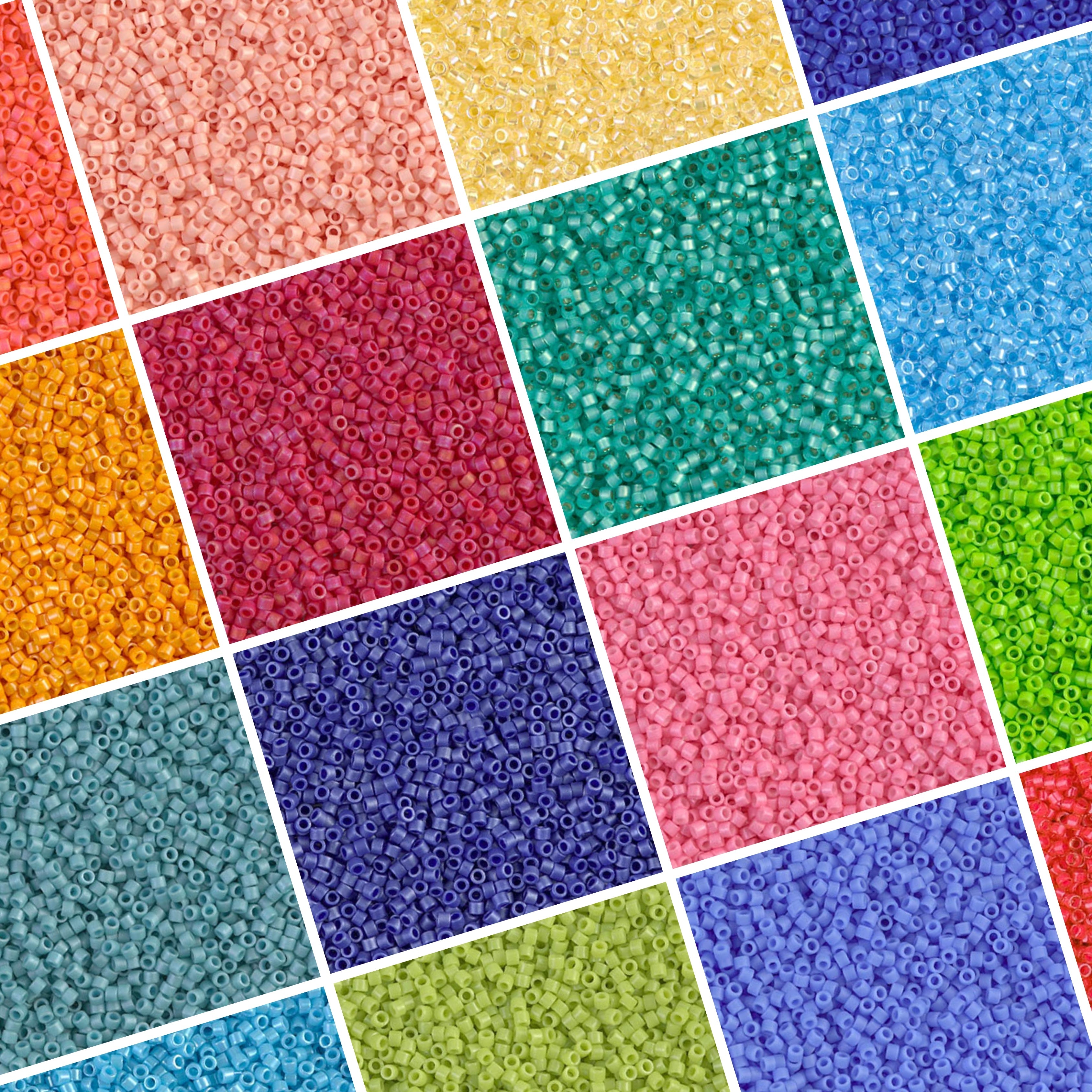
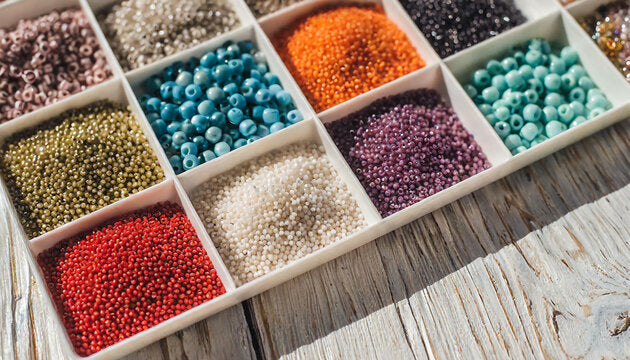
Polymer clay also holds color well, which is part of why heishi comes in so many finishes now: soft pastels like peach puff and pearl pink, neutrals like light gray and rosy brown, and a handful of neons for anyone who wants a pop of color in the mix.
How Do You Style a Heishi Bead Bracelet Stack?
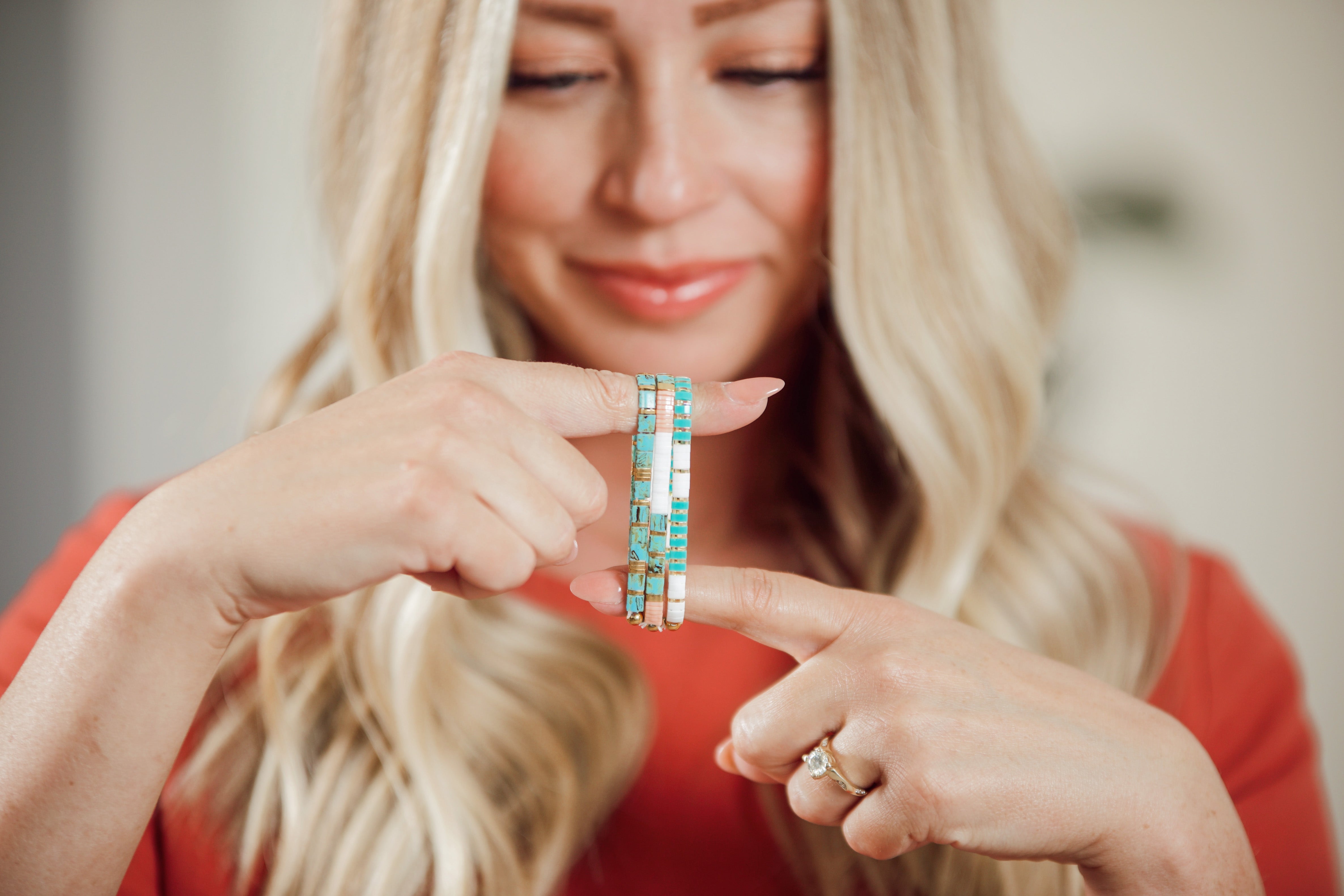
Start with one color. A heishi stack looks put-together when there is a clear anchor color, a neutral, and one bright accent, not when every bracelet is competing for attention.
- Pick one anchor color. Gold, dark gray, and pearl pink all work as a base you build the rest of the stack around.
- Add a neutral. Light gray or peach puff gives the brighter pieces room to stand out rather than fight each other.
- Mix in one bold color. Neon tangerine or neon yellow reads as the accent piece when it is the only saturated color in the stack.
- Vary the shape. Pair flat heishi discs with a rounder or squared bead, like Miyuki Tila tiles, so the stack picks up some texture rather than lying totally flat.
- Check the fit. Heishi discs click against each other when the elastic is loose, so size each bracelet close to the wrist.
Three to five bracelets is a comfortable range for daily wear. Fewer looks thin on the wrist, and much more than five starts to bunch and slide as you move your arm. If you wear a watch or track your steps, leave a little extra room on that wrist so the stack does not compete with the band.
What Color Combos Work Best for Heishi Stacks?
Warm neutrals are the easiest starting point. Gold, rosy brown, and light salmon layer together without much thought, and they go with almost anything already in your jewelry box.
For something bolder, pair a single loud color, like neon yellow or neon tangerine, against two muted tones. Misty rose and dusty pink read soft and work well for spring or a gift stack. Dark gray and light gray, worn together with one gold bracelet, land closer to a minimalist, everyday look that reads fine at the office. A monochrome stack, all one color in slightly different shades, tends to photograph the best and works if you are building a gift set for a bridesmaid or a friend.
If you are shopping by color, order a few options at once, since the shades vary more in person than they do on a screen. Orders of $100 or more ship free within the US, so stocking up on three or four colors at a time is often the easier way to shop than ordering one at a time.
Can You Mix Heishi Beads with Tila Bracelets?
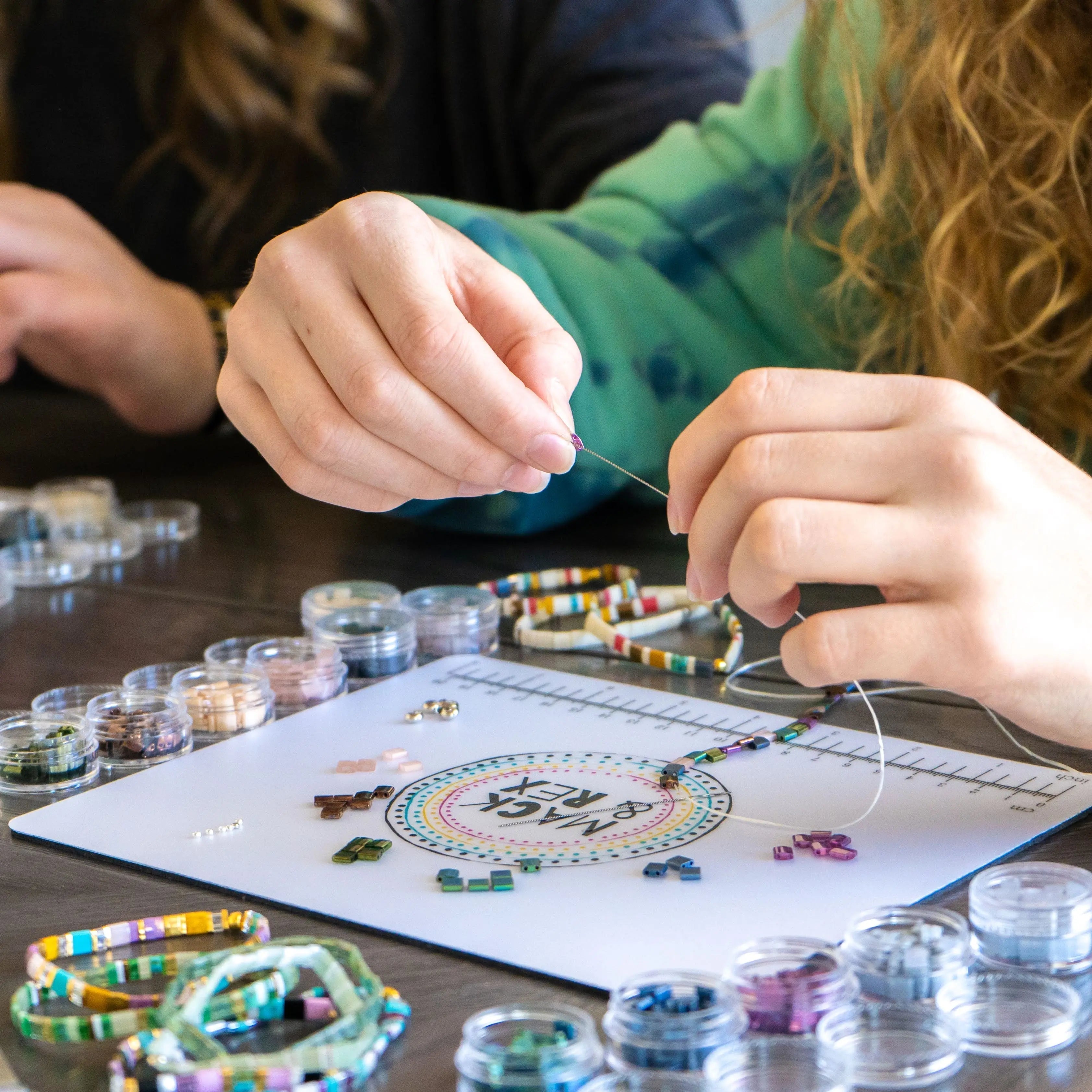
Heishi and Miyuki Tila beads pair well because their shapes contrast. Heishi is a flat, round disc. Tila is a small, flat square with two holes, so the two styles catch light differently and keep a stack from looking one-note.
A stack of three heishi bracelets plus one Tila bracelet in a matching color tends to look intentional rather than random. If you already have a favorite Tila bracelet from a collection like STAINED or EVERGREEN EDIT, pull one matching shade from the heishi lineup and add it to that stack rather than starting from scratch.
Bracelets do not have to match season to season either. A gold heishi bracelet from last summer works fine layered with a newer Tila piece from this year's drop. Mixing old and new pieces is part of what makes a stack feel like it belongs to you.
How Do You Size a Heishi Bracelet for Your Wrist?
Fit matters more with heishi than with rounder beads. A loose stack of flat discs shifts and clicks as you move your hand, which gets old fast if you are typing or cooking most of the day.
Measure your wrist with a soft tape or a strip of paper marked against a ruler, then size the bracelet to sit snug without pinching. A properly sized bracelet should turn on the wrist with light pressure and stay in place otherwise. If a bracelet keeps sliding down over your hand, it is too loose to hold a full heishi stack in place through a normal day.
How Do You Care for a Heishi Bead Bracelet?
Polymer clay heishi beads hold up fine to everyday wear, including hand-washing and rain. They are not sold as waterproof, so long soaks, pools, and hot tubs are the situations most likely to dull the matte finish over time. Wipe beads dry after they get wet, and store bracelets flat rather than balled up in a drawer, or the crystal-cord elastic can stretch unevenly over months of tangled storage.
A quick safety note if you are stringing heishi beads with kids or grandkids: loose beads and cord are a choking hazard for young children, so keep supervision close and beads out of reach when you step away from the table.
Ready to Build Your Heishi Stack?
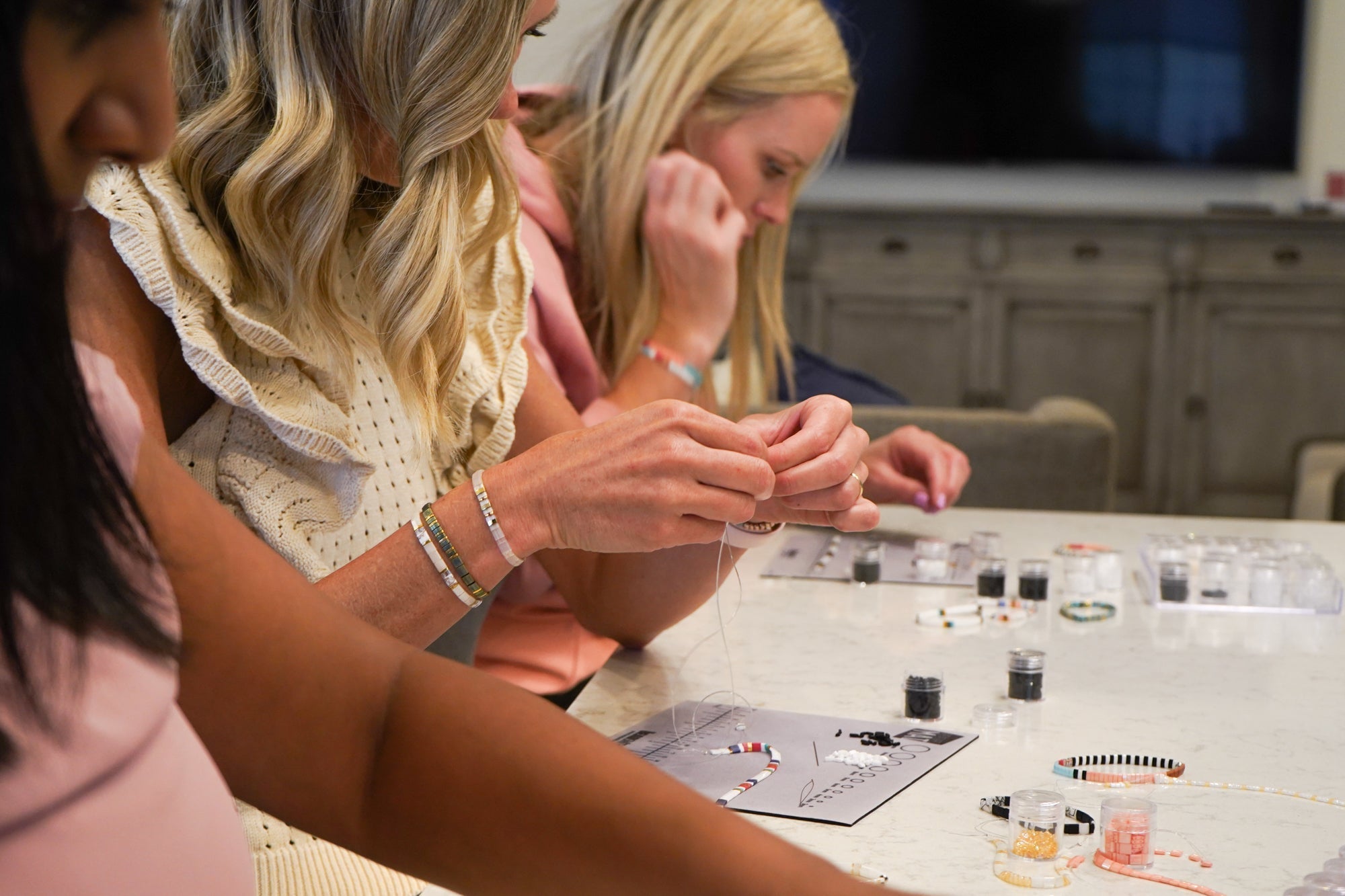
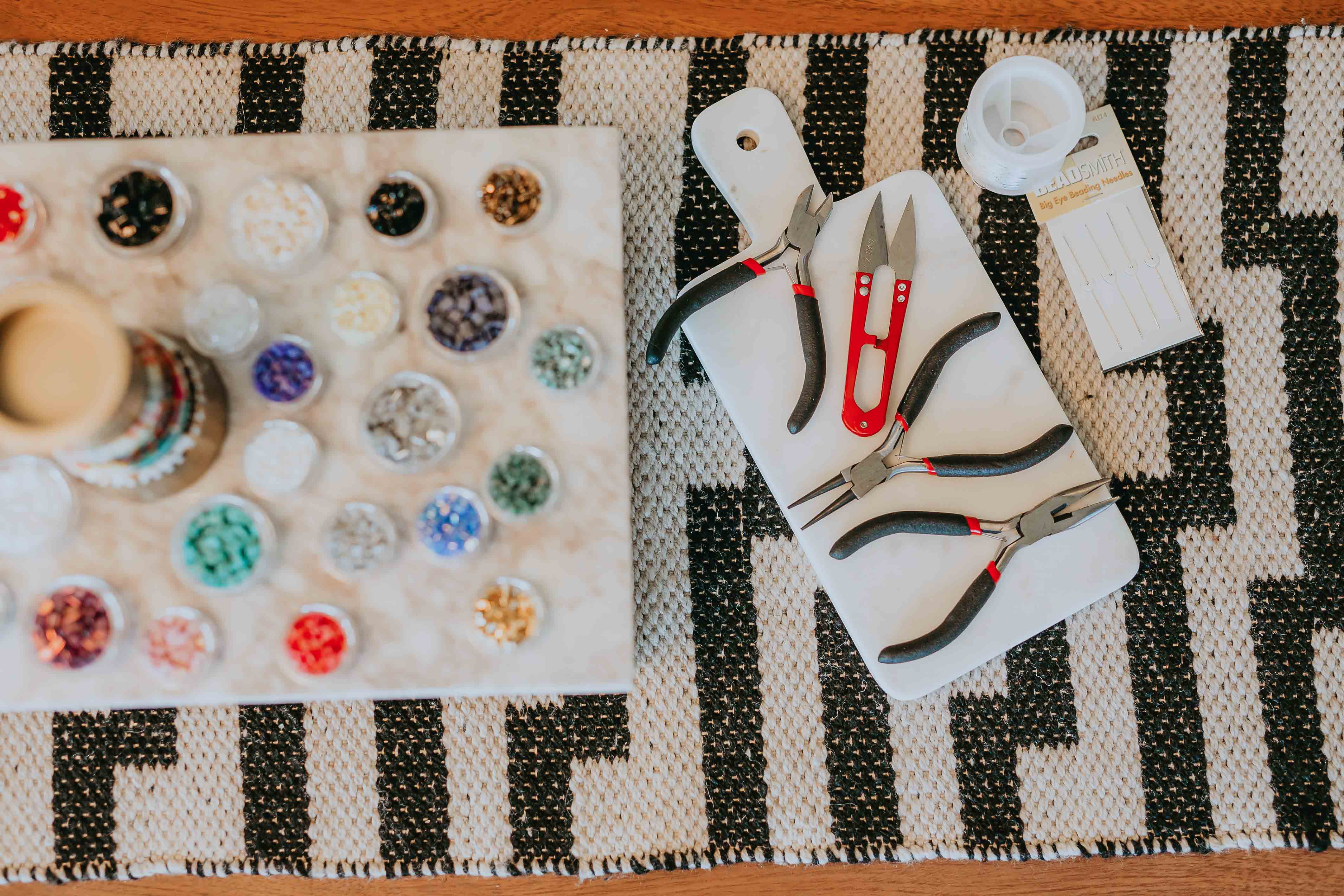
Mack & Rex sells heishi beads by the color, so you can pick exactly the shades you want, from soft yellow to dark gray to gold, and string your own stack at home. Browse the full heishi beads collection to see what is in stock and start building your combo. Orders of $100 or more ship free within the US.
Heishi Bead Bracelet FAQ
What are heishi beads made of?
Most heishi beads sold today are made from polymer clay, though the style started with hand-cut shell discs made by Pueblo artisans. Mack & Rex's heishi beads are 6mm polymer clay discs, colored and cured for a smooth, matte finish.
How do you pronounce heishi?
Heishi is pronounced HEE-shee. The word comes from the Kewa Pueblo language and originally referred to hand-cut shell beads, long before polymer clay versions existed.
Can you mix heishi beads with Tila beads in one stack?
Yes. Flat heishi discs and square Miyuki Tila tile beads have different shapes and light reflection, so pairing them in the same stack adds texture and avoids a repetitive look.
Are heishi bead bracelets durable for everyday wear?
Polymer clay heishi beads hold up well to daily wear and light water exposure, like hand-washing or rain. They are not marketed as waterproof, so soaking them for long periods or swimming often can dull the finish over time.
How many heishi bracelets should I stack at once?
Three to five bracelets is a good range for most wrists. Fewer than that can look sparse, and much more than five tends to bunch up and click together when you move your arm.