


How Long Does It Take to Make Bracelets From a DIY Bracelet Kit?
How Long Does It Take to Make Bracelets From a DIY Bracelet Kit?
Most beginners finish one bracelet in 20 to 45 minutes once the beads are sorted and laid out, with the whole process running closer to an hour the very first time through. A trio kit that makes three bracelets usually takes 1.5 to 2.5 hours start to finish for a first-timer, and a lot faster on bracelet two and three once the pattern clicks.
That range covers the actual stringing, not the time spent hunting for scissors or re-reading a step you skipped. Give yourself the full hour the first time. Every bracelet after that gets quicker.
How Long Does One Bracelet Actually Take, Beginner to Finish?
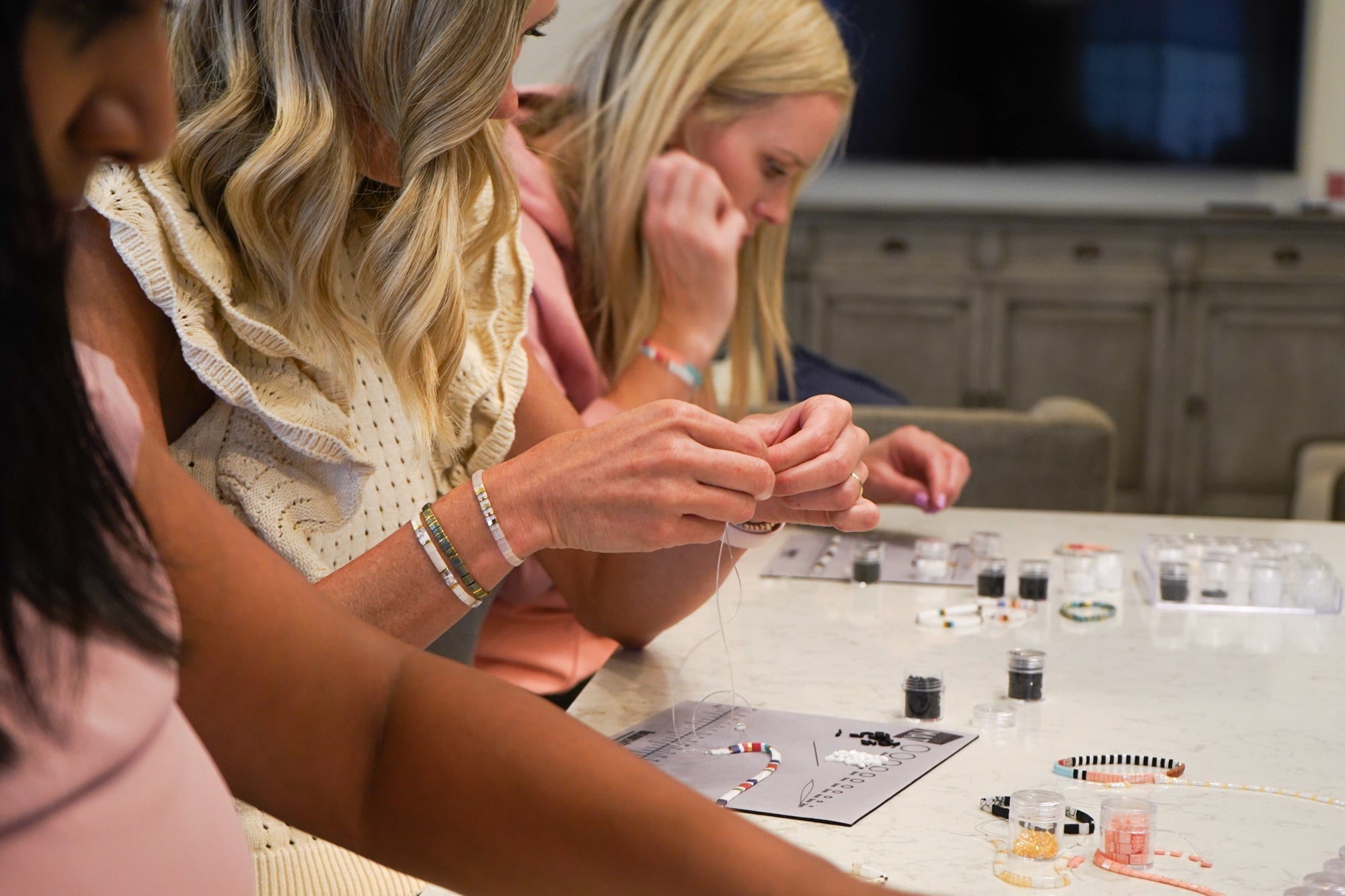
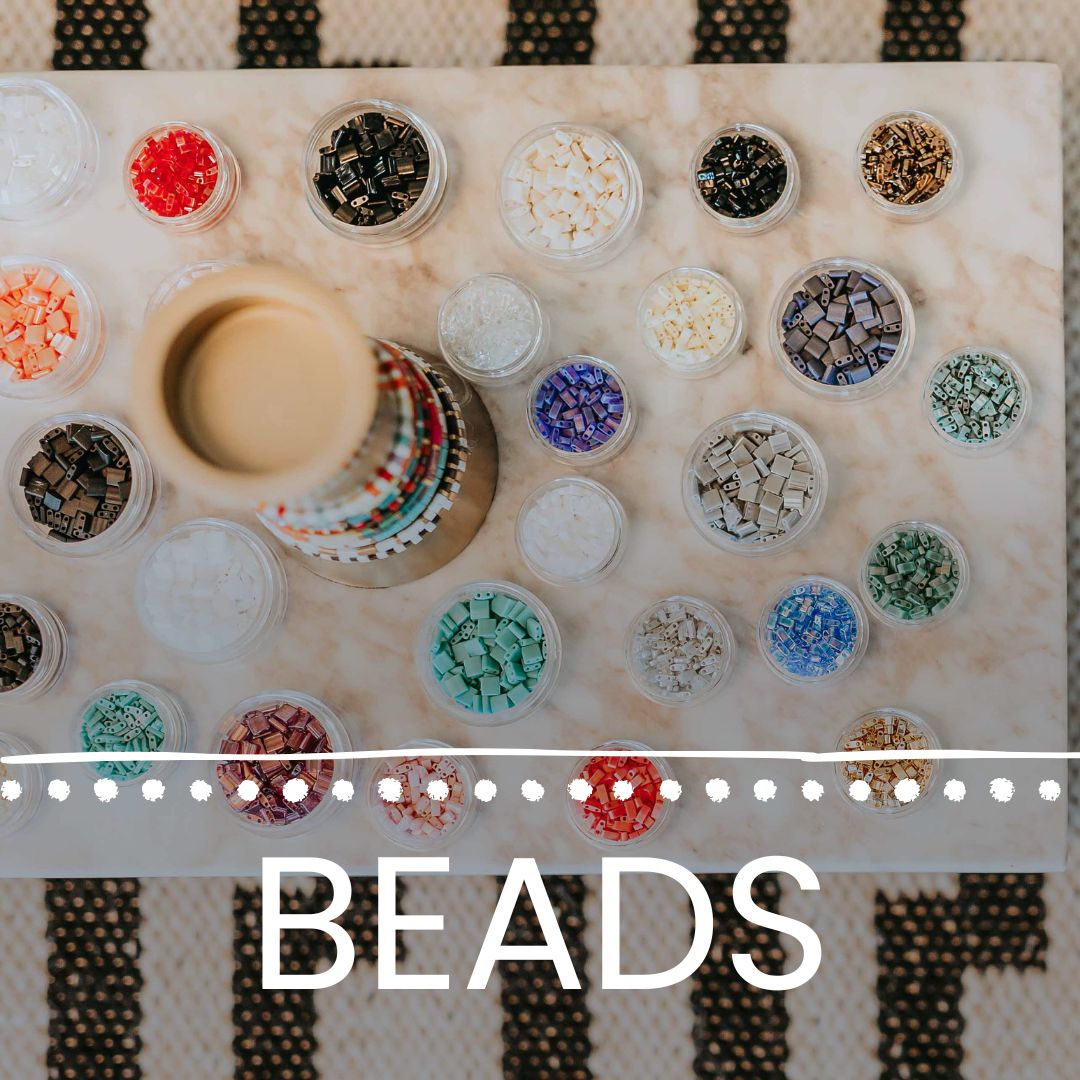
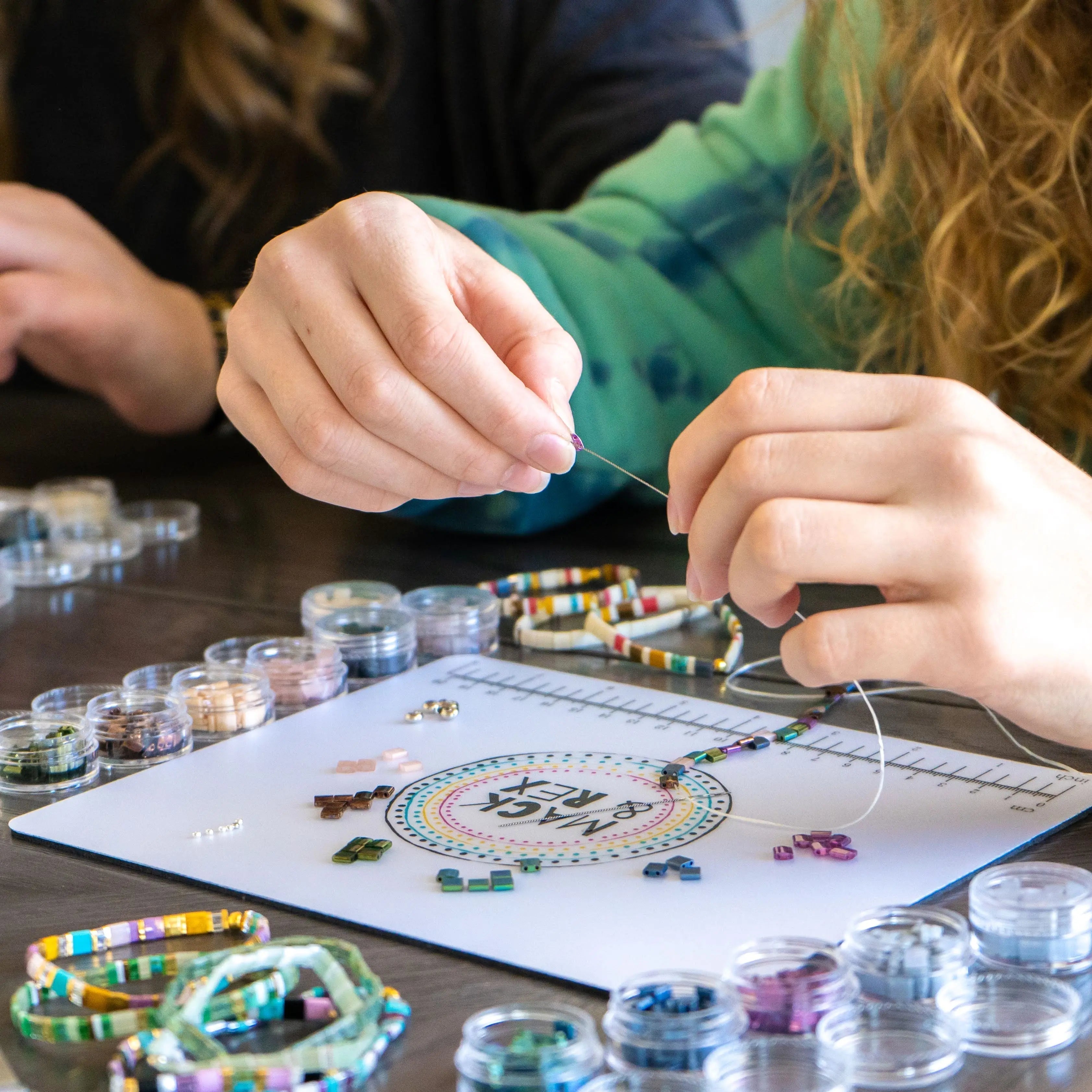
Break it into three chunks: setup, stringing, and finishing. Setup (reading the pattern, sorting tila beads by color) runs about 10 to 15 minutes for someone who has never worked with these flat, two-hole beads before. The actual stringing takes 15 to 30 minutes depending on the bracelet length and pattern complexity. Finishing, tying off the crystal cord elastic or securing the clasp, adds another 5 to 10 minutes.
Add it up and a first bracelet from a DIY bracelet kit lands around 30 to 55 minutes for most people, with retirees and total beginners sometimes running a bit longer on the first attempt. One Mack & Rex customer, a 66-year-old who picked up a bracelet making kit to get through a long winter, put it this way: "I am pleasantly surprised at how easy it was to pick up this new hobby/craft making adventure. The videos on making these bracelets is a lifesaver if you're stuck on a step like I was." That's the realistic bar. Not instant, not frustrating, just a real first attempt with a video to lean on when a step doesn't make sense.
What Slows You Down the First Time You Try a DIY Bracelet Kit?
Two things, mostly. Pattern reading is the first. A repeating bead sequence looks simple on paper but takes a minute to actually parse before your hands catch up, and general beadwork references note that even experienced beaders slow down when switching to an unfamiliar repeat or bead type, as Wikipedia's overview of beadwork techniques covers in its rundown of weaving and stringing methods.
Cord tension is the second. Too loose and the finished bracelet gaps between beads. Too tight and it won't stretch over a hand without fighting you. Tila beads also have two holes instead of one, which trips up first-timers who are used to simple round beads on a single strand; the second hole exists to lock the beads flat against each other so the finished row sits even, but it does mean threading through both holes correctly on the first pass. Expect to redo a few beads the first time. That's normal, not a sign you're doing it wrong.
A quick caution here since kits often get opened with kids or grandkids at the table: tila beads, crimps, and the small tools inside a kit are a choking hazard, so younger children need an adult hands-on the whole time rather than a kit handed over to open alone.
Does Kit Size Change the Time? Trio Kit vs. Starter Kit vs. Ultimate Kit
Yes, but not in a straight line. The trio kits ($44.99) and the DIY Bracelet Kit Club ($36.99) each make three bracelets, landing around 1.5 to 2.5 hours total for a beginner. The Tila Bead Starter Kit ($189.99) makes 20 bracelets, and the Ultimate Tila Bracelet Kit ($399.99) makes 80. Multiply the per-bracelet time by the count and you'd expect the Ultimate Kit to take all weekend, and the first few bracelets really do take that long per-piece.
After that, time per bracelet drops. Once the pattern and tension are familiar, most people settle into a rhythm closer to 15 to 20 minutes per bracelet, sometimes less once you're sorting beads in batches rather than one at a time. A step-by-step bracelet tutorial walks through roughly the same stages described here, setup, stringing, finishing, which lines up with why the second attempt always moves faster than the first, per wikiHow's guide to making a beaded bracelet.
What's Already in the Kit vs. What You Need to Add?
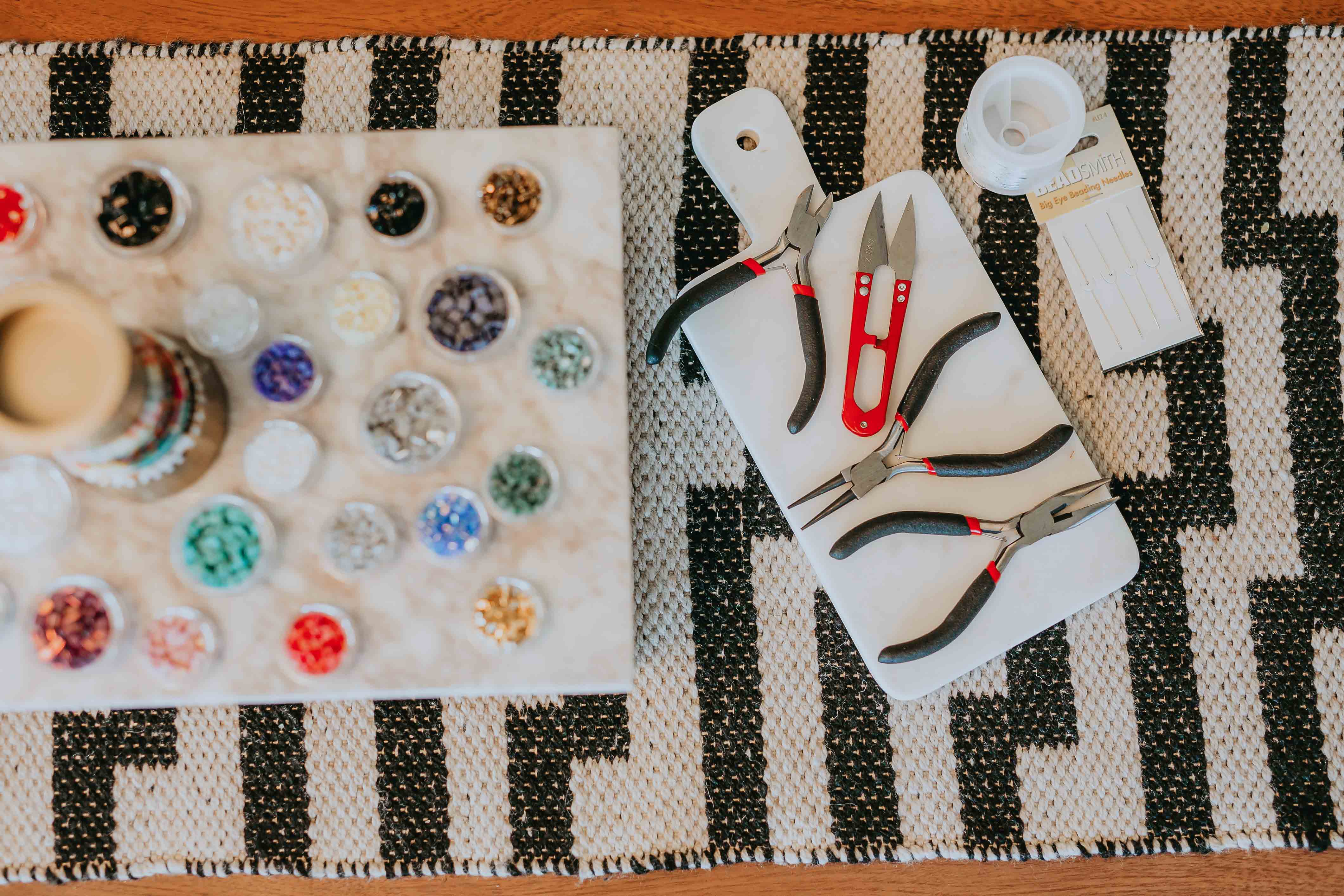
A DIY bracelet kit from Mack & Rex comes with Miyuki Tila beads (a Japanese glass bead brand Mack & Rex sells, not manufactures), crystal cord elastic, and a pattern or color plan already worked out, so there's no separate trip to a craft store before you start. The All-in-One tools and supplies kit ($39.99-43.99) is the one to add if you don't already own basic jewelry pliers or a bead mat, since a trio or starter kit assumes you have simple tools on hand.
Nothing in a standard kit requires special equipment. Jewelry making as a craft has used hand tools like crimping pliers and flat-nose pliers for generations, and a DIY bracelet kit follows that same basic toolkit rather than anything specialized, as general references on jewelry making techniques describe. That's part of why the time estimates above hold up. You're not waiting on a tool you don't have.
How Do You Make the Second and Third Bracelet Faster?
Sort every bead by color before you start bracelet two, not as you go. That single habit removes most of the stop-and-search time that padded out bracelet one. Watch the included video once through before touching beads if you skipped it the first time; it's faster to watch a 3-minute clip than to redo a section you strung backward.
Lay out all three (or more) bracelets' worth of beads in separate piles before starting the batch, rather than finishing one fully before sorting the next. It's a small change, and it's the one thing that reliably cuts a trio kit from "2.5 hours of stop-and-start" down to under two.
Ready to Try a DIY Bracelet Kit Yourself?
Pick a trio kit if you want three bracelets and a Saturday afternoon, or go bigger with the Starter or Ultimate Kit if you're planning a bracelet-making night with friends or want enough to gift all season. Browse Mack & Rex's bracelet making kits collection to see what's in stock right now. A quick note on checkout: free shipping applies to US orders over $100, so the Starter Kit and Ultimate Kit clear that threshold on their own, while a single trio kit won't. Mack & Rex ships internationally too, with shipping and any customs or duties calculated at checkout outside the US. The buy-3-get-1-free offer is for finished bracelets only, so it doesn't stack with a kit purchase.
Frequently Asked Questions
How long does it take to make bracelets from a DIY bracelet kit?
Most beginners finish one bracelet in 20 to 45 minutes once the beads are sorted and laid out, with the whole process running closer to an hour the very first time. A trio kit that makes three bracelets usually takes 1.5 to 2.5 hours start to finish for a first-timer, faster on bracelets two and three.
What takes the longest when you're new to a bracelet making kit?
Reading the pattern and sorting beads by color eats more time than the actual stringing for most first-timers, often 10 to 15 minutes before you thread a single bead. Getting the tension right on the stretch cord is the other slow spot, since too loose and the bracelet gaps, too tight and it won't stretch over a hand.
Does a bigger kit like the Starter Kit or Ultimate Kit take proportionally longer?
Close to it, but not exactly, because the slow part is learning the pattern once. The Tila Bead Starter Kit makes 20 bracelets and the Ultimate Tila Bracelet Kit makes 80, and after the first one or two, each additional bracelet takes less time than the first since the technique is already familiar.
Is a DIY bracelet kit a good activity to do with kids?
Yes, for older kids and teens with an adult at the table, not for toddlers or young children. Tila beads, crimps, and the small tools in a kit are a choking hazard, so close supervision matters any time a kit gets opened around a child who still puts things in their mouth.
Can you really finish a bracelet from a kit in one sitting?
Yes. A single bracelet from a DIY bracelet kit is designed to be a one-sitting project, generally under an hour once you're set up, which is part of why they work for a quick evening activity or a stocking-stuffer-adjacent gift that actually gets used the same day it's opened.