

How Many Bracelets Make a Good Stack? A Layering Guide
How Many Bracelets Make a Good Stack?
Three to five bracelets is the range that reads as a real stack without overwhelming your wrist. Three is the floor: fewer than that and you're wearing a couple of bracelets, not a stack. Five is close to the ceiling for most people. Past seven, pieces start competing for space and the whole thing can slide around instead of sitting flat.
That range isn't a rule pulled from nowhere. It comes down to wrist real estate. The average adult wrist runs about 6 to 7 inches around, and each tila bead bracelet, depending on width, takes up somewhere between a quarter-inch and three-quarters of an inch of vertical space when it's sitting flat. Do the math and you'll see why five pieces fills a wrist nicely while ten turns into a pileup.
Why Three Bracelets Is the Minimum for a Real Stack
Two bracelets read as a pair. Three reads as a decision.
Once you add a third piece, your brain starts registering the group as a set rather than noticing each bracelet on its own. That's the number to start at if you're new to stacking or building out a look for the first time: one bracelet that sets the main color, a second that supports it, and a third that adds contrast, whether that's a different width, a metallic finish, or an accent color.
A three-piece stack also travels well. It's the count most people can wear daily without thinking about whether it matches every outfit, which is part of why Mack & Rex's buy-3-get-1-free offer on finished bracelets lines up so cleanly with how most customers actually build a stack.
Why Five Is the Sweet Spot for a Fuller Look
Five bracelets gives you enough pieces to tell a real color story while still leaving room on the wrist for each one to sit flat.
At five, you can run a dominant color across two or three bracelets, bring in a supporting tone for one or two more, and use your last piece purely as an accent, whether that's a bright pop of color or a different bead finish entirely. It's also the point where mixing widths starts to matter more than mixing colors. Five identical narrow bracelets in different colors can still look flat. Five bracelets in a mix of widths look layered even in a single color family.
Fashion coverage on the current beaded-jewelry trend has pointed out that stacking works best when pieces vary in scale rather than repeating the same size, a principle that applies just as much to bracelets as it does to the layered necklaces the trend started with, per Town & Country.
When Do You Have Too Many Bracelets on One Wrist?
Once bracelets start overlapping rather than sitting side by side, you've gone past the useful range.
This usually shows up around piece number seven or eight, though the exact number depends on width. Five wide bracelets can crowd a wrist faster than eight narrow ones. Watch for two signs: bracelets riding up toward your hand when you move, or pieces stacking on top of each other rather than lying flat in a row. Both mean it's time to pull one or two off, not add more.
Oversized stacks also tend to slide during normal activity, which is the opposite of what most Mack & Rex customers want from a bracelet meant to stay put through a workout or a full day with the kids.
Odd or Even: Does the Number Actually Matter?
Odd numbers usually look more deliberate. Even numbers can look accidental if they're not styled with intent.
Three and five are the classic odd counts because an odd number resists splitting evenly down the middle. A stack of four bracelets, by contrast, can read as two matched pairs if you're not careful, which flattens the visual interest you're going for. The fix isn't to avoid even numbers. It's to break up the pairing. If you're wearing four bracelets, vary the widths or finishes so no two pieces feel like a matched set.
Jewelry styling guidance from Marie Claire on the layered-stack trend makes a similar point about necklaces: uneven counts and varied lengths (or, on a wrist, varied widths) are what keep a layered look from feeling stiff, according to Marie Claire.
How Do You Mix Widths, Colors, and Textures in a Tila Stack?
Vary one element at a time so the stack still feels coordinated, not random.
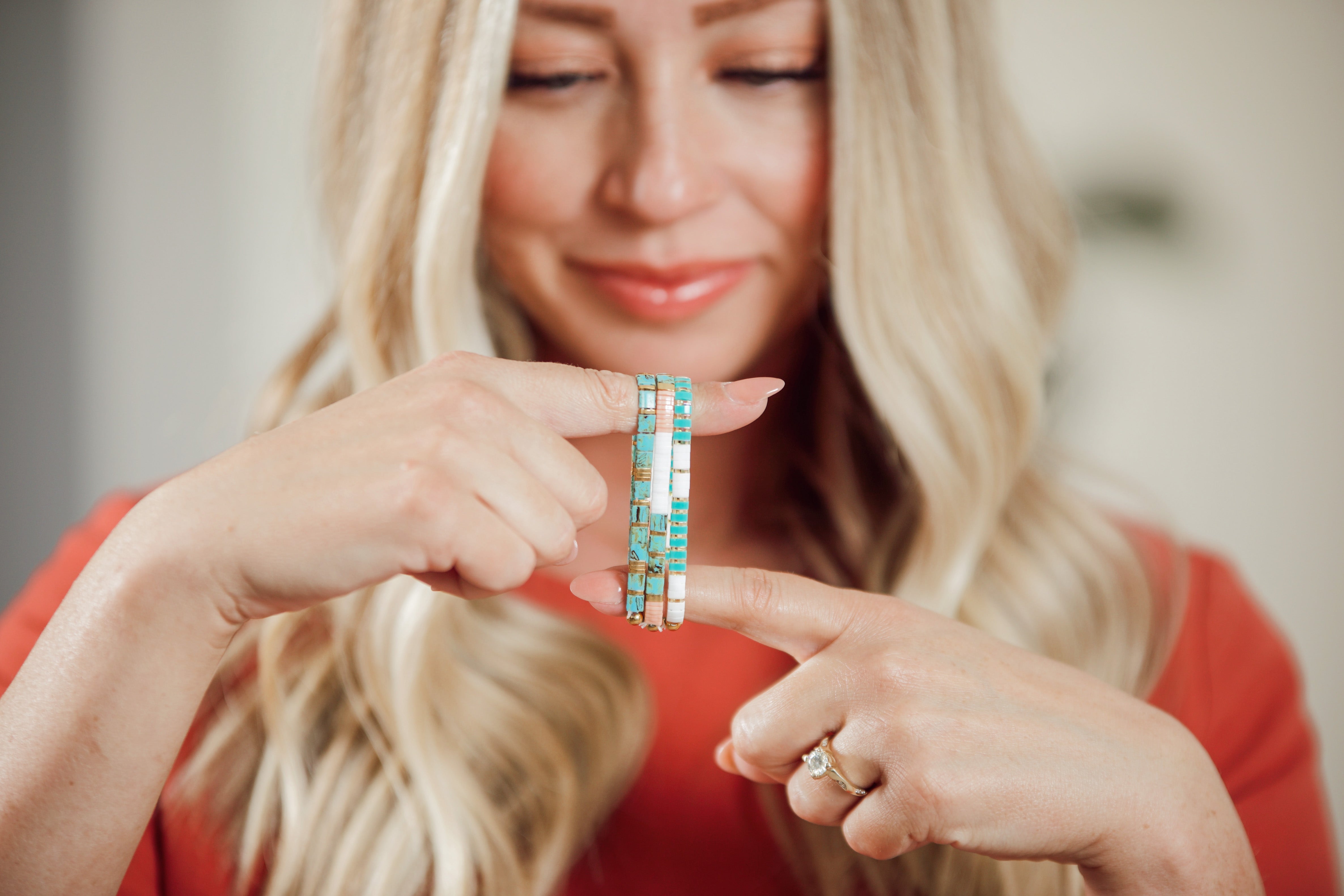
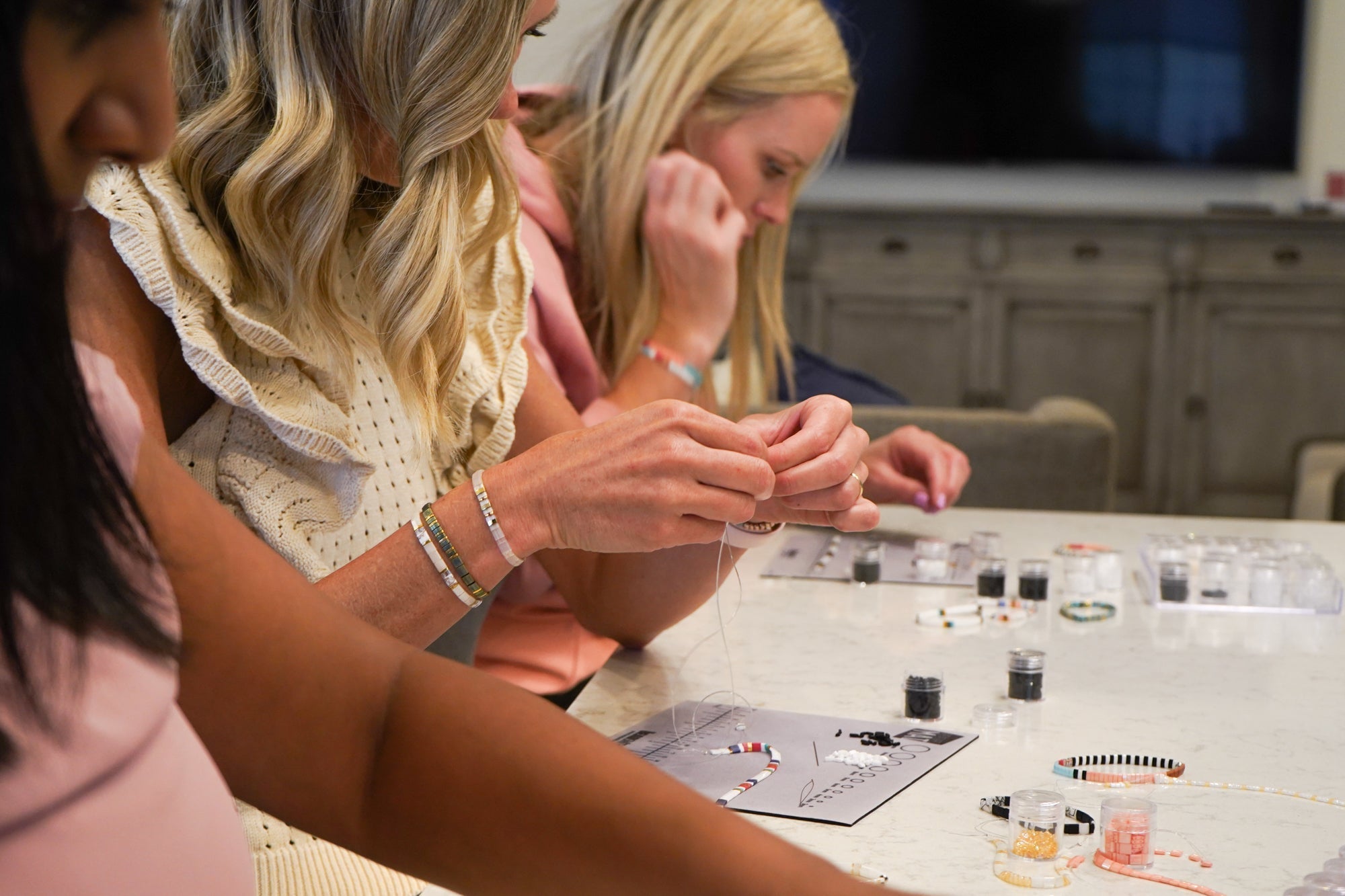
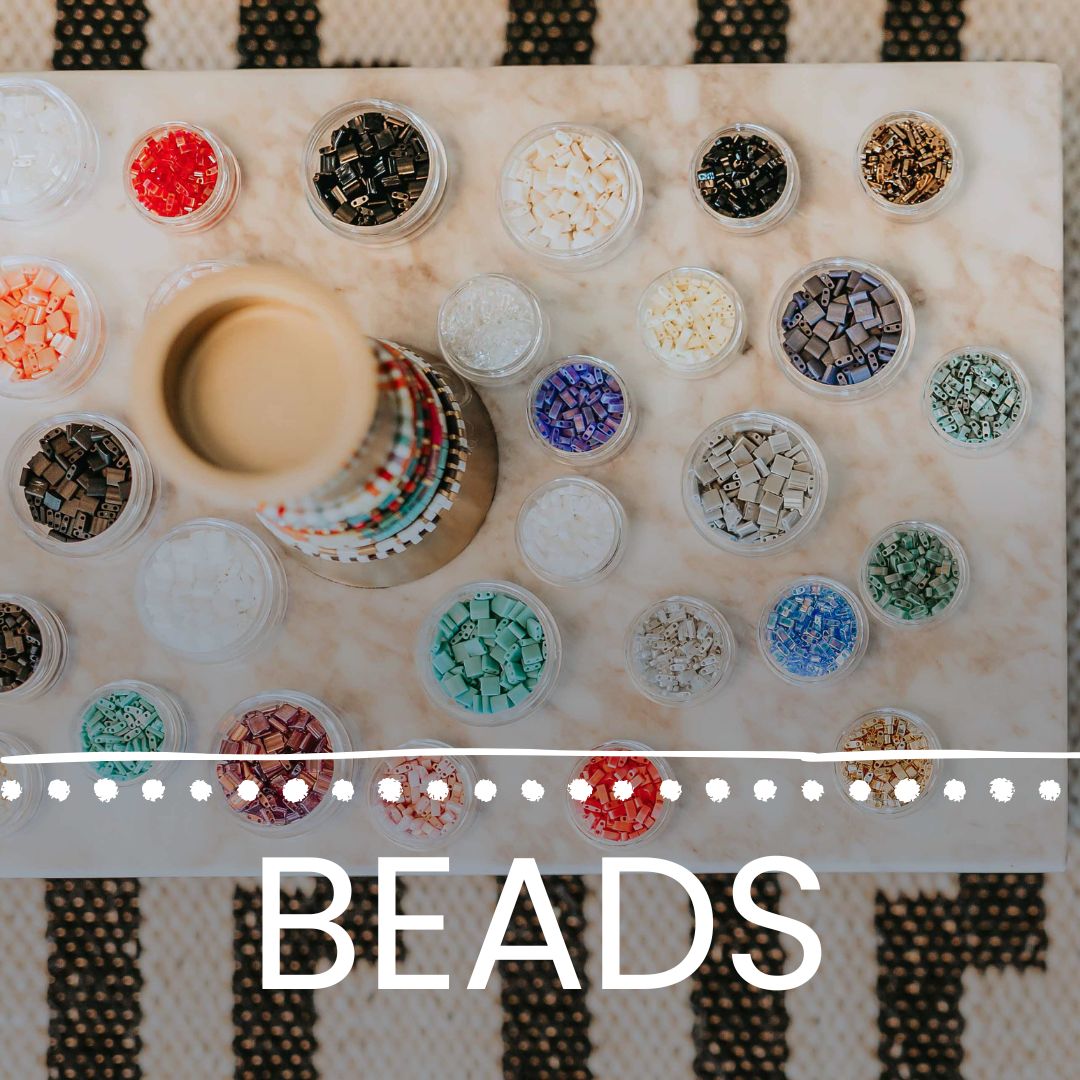
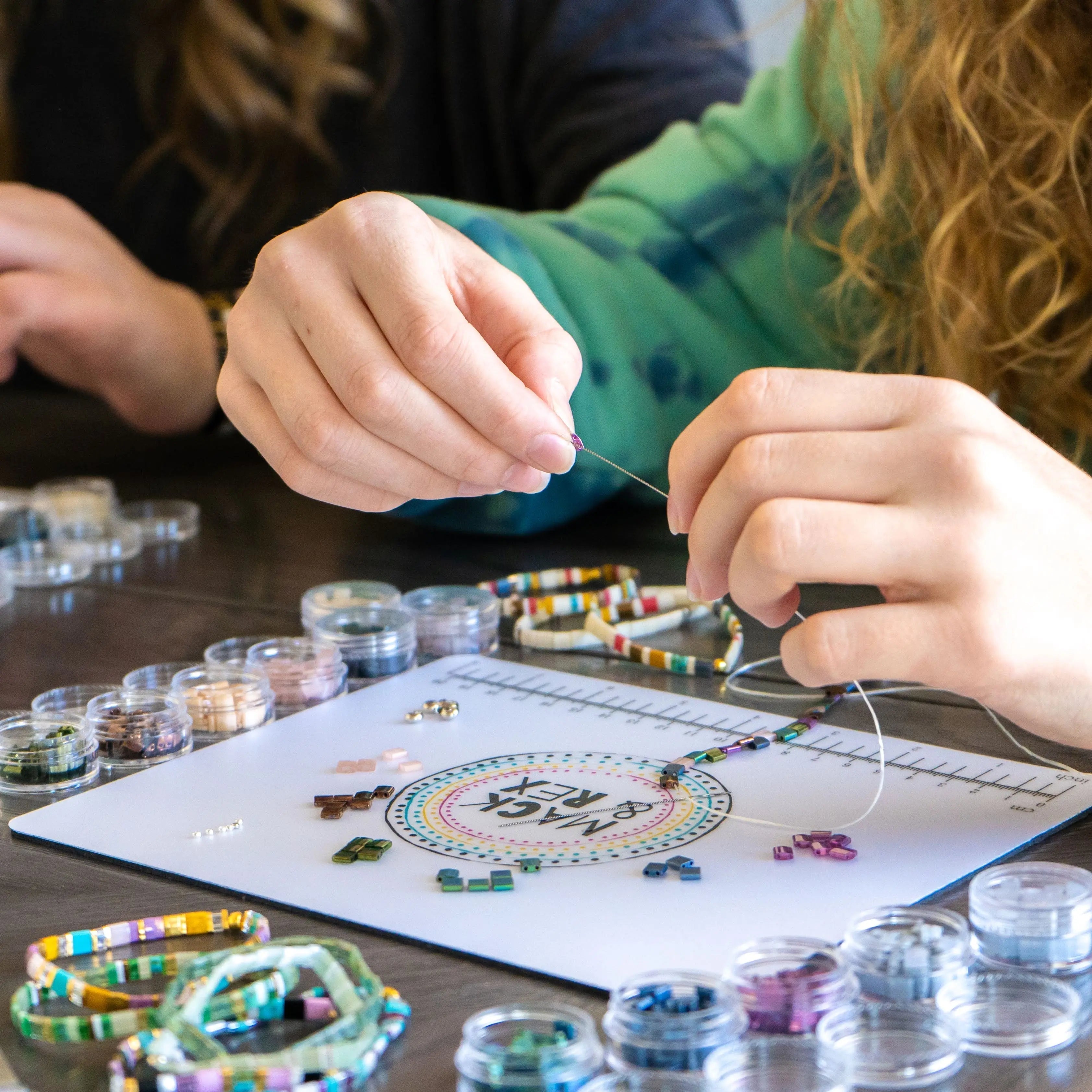
Tila beads are Miyuki's flat, two-hole glass tile beads, a material Mack & Rex sources from the brand and builds into every finished bracelet in its collection. Their flat shape is part of what makes them so easy to mix: single-row tila bracelets sit narrow and slim, while multi-row styles run wider and sit more like a cuff. Pairing a narrow single-row piece with a wider multi-row bracelet in a related color gives you width variation without needing to match anything exactly.
Color-wise, stick to one dominant color across most of the stack and let one or two pieces bring in a supporting or accent tone. Texture works the same way: mixing a matte-finish tila bracelet with a glossy or metallic one adds depth even within a single color family. According to material background from Potomac Beads, tila beads come in a wide range of finishes precisely because the flat, uniform shape shows off finish differences more clearly than round beads do, which is exactly why finish contrast reads so well in a stack.
A quick way to plan a five-piece mix:
- Two bracelets in your dominant color, one narrow and one wider
- One or two in a supporting tone from the same color family
- One accent piece in a contrasting color or metallic finish
How Do You Build a Coordinated Tila Bead Stack Without Guessing?
Start from a collection built for stacking rather than picking individual bracelets and hoping they work together.
Coordinating a stack from scratch means checking that widths vary, colors relate, and finishes contrast, which takes real trial and error if you're sourcing pieces one at a time. Mack & Rex's tila bead bracelet collection groups pieces designed to sit together, so a three- or five-bracelet stack is closer to picking your favorites than building a palette from zero. Every bracelet is sized from XXS to 5XL, so each piece in your stack can be fitted to your actual wrist rather than an average one.
Beads are a choking hazard, so if kids are around while you're trying on bracelets or building a stack together, keep loose pieces and small components away from little ones who still put things in their mouths.
Buy 3 bracelets and get 1 free, no code needed, which makes a four-piece starter stack one of the more efficient ways to test the three-to-five range for yourself. Free shipping applies to US orders over $100.
Frequently Asked Questions About Bracelet Stacking
How many bracelets should you wear in a stack?
Three to five bracelets is the range that works for most wrists and most looks. Three is enough to register as a stack rather than a single piece. Five fills the wrist without crowding it. Past seven, bracelets tend to overlap and slide unless every piece is sized precisely.
Is an odd or even number of bracelets better for stacking?
Odd numbers, especially three and five, tend to look more intentional because they avoid the split-down-the-middle symmetry an even count can create. Four or six bracelets stack fine too, as long as the widths and colors vary rather than repeat in matched pairs.
Should every bracelet in a stack be the same width?
No. A stack of identical widths tends to read as one thick band rather than several distinct pieces. Mixing a slim single-row tila bracelet with a wider multi-row style gives the eye more to look at.
How small a wrist can still wear a five-bracelet stack?
It depends more on fit than wrist size. A properly sized bracelet sits close and doesn't need extra room to move, so even a smaller wrist can carry five pieces if each one is sized correctly.
What's the easiest way to buy a bracelet stack that's already balanced?
Buy pieces from a collection built for stacking rather than sourcing bracelets one at a time. Mack & Rex's tila bead bracelet collection groups colors and widths that are designed to sit together, which removes most of the guesswork.