


How Do You Keep Tila Bead Bracelets From Breaking?
What's the Real Reason a Tila Bracelet Snaps or Frays?
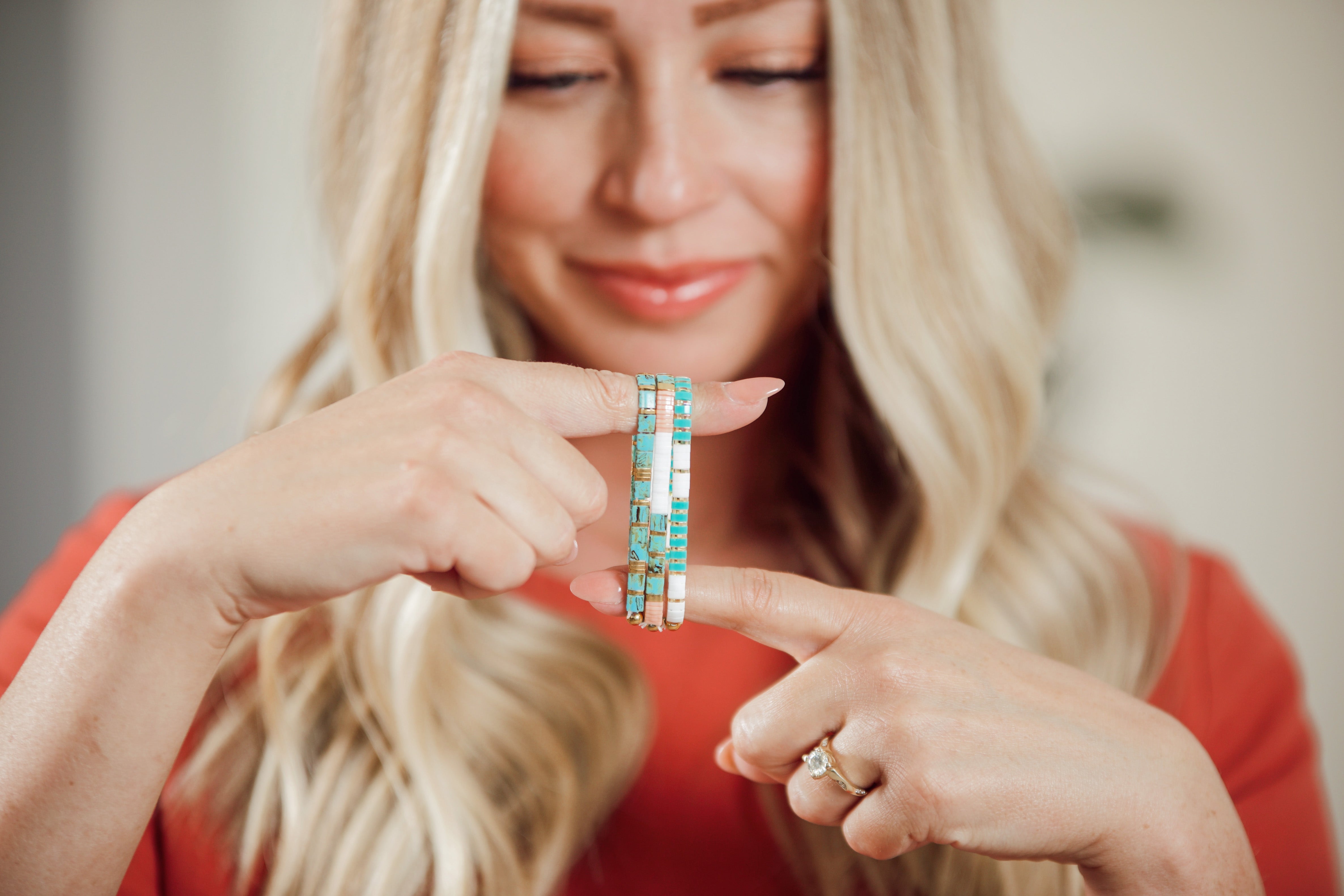
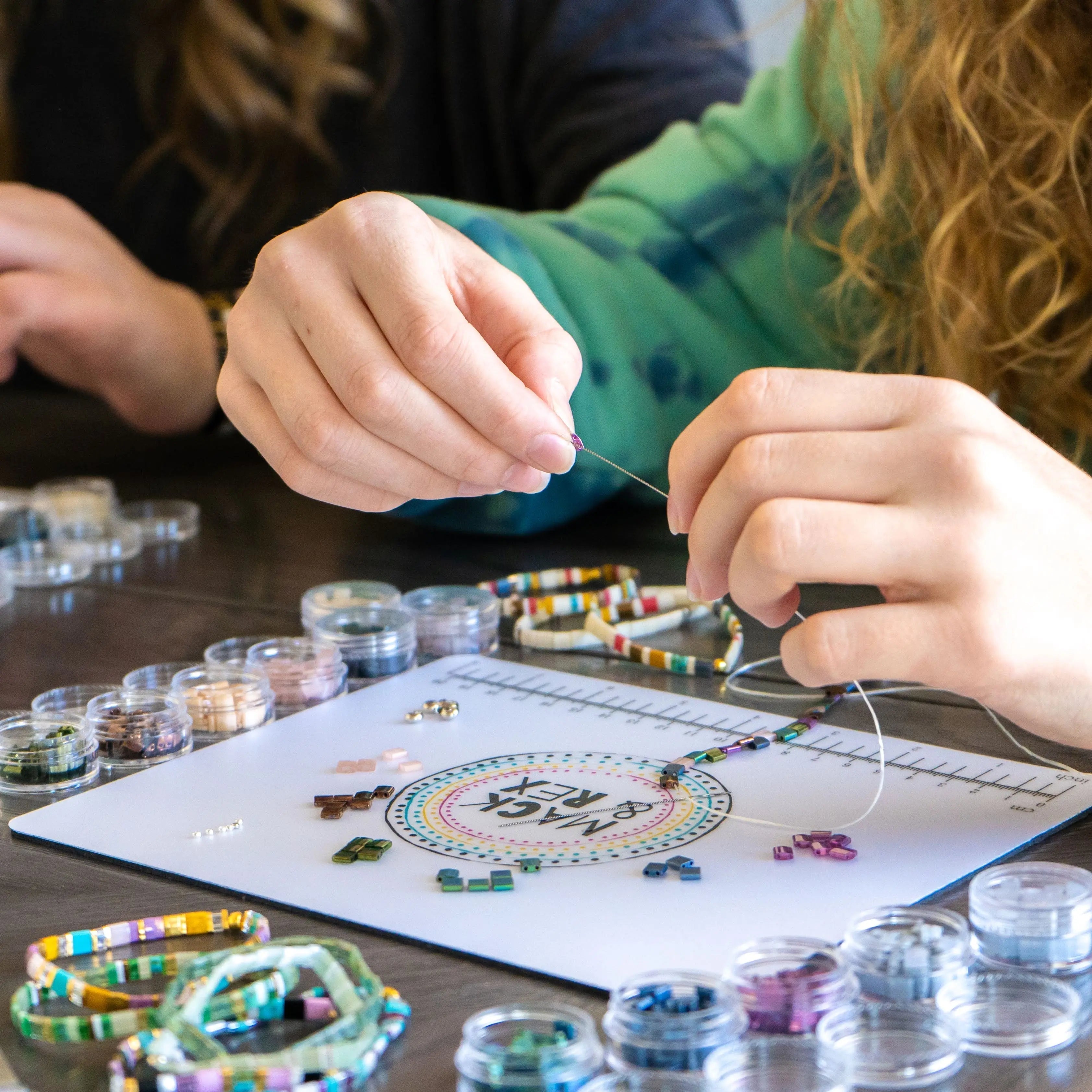
Most Tila bracelets don't fail because the glass beads are fragile. They fail because the stretch cord is too thin for the bead holes, the finishing knot isn't locked down with a crimp, or the bracelet got strung too tight in the first place. Mack & Rex builds every finished bracelet on crystal-cord elastic sized to the bead and a hidden, crimped knot, specifically to avoid all three.
Tila beads themselves are tough. It's the cord and the knot doing the work, and that's where a bracelet actually gives out.
Stretch Cord or Beading Wire: Which Actually Holds Up on a Tila Bracelet?
Stretch cord is the right call for a Tila bracelet, not stiff beading wire. A bracelet needs to flex over your hand every time you put it on, and wire simply doesn't give that way without a clasp doing the real work.
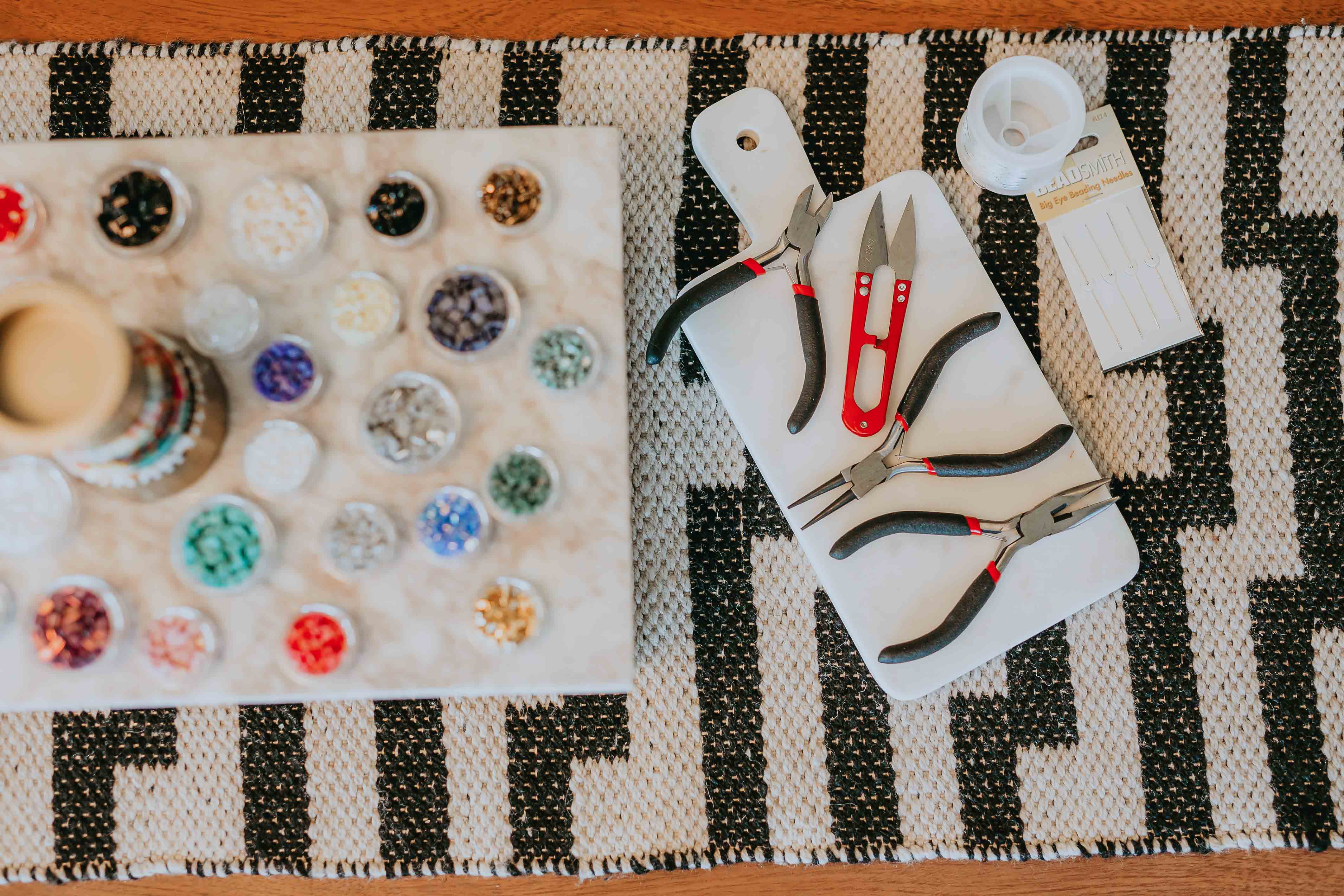
Beading wire has its place on necklaces and bracelets with a clasp, where nothing needs to stretch. For a slip-on bracelet, a round crystal-cord elastic, roughly matched to the bead hole in diameter, is what lets the piece stretch over a hand and spring back afterward. Fire Mountain Gems' materials reference covers this same split between rigid wire and stretch elastic (source).
Why Do Tila Bead Holes Wear Through Cord Faster Than Round Beads Do?
Tila beads are flat and square with two parallel holes instead of one center hole, so cord runs through a shorter, straighter channel with less room to cushion itself against the glass edge. A hole that's even slightly rough will act like a tiny blade on that same spot every time the bracelet flexes.
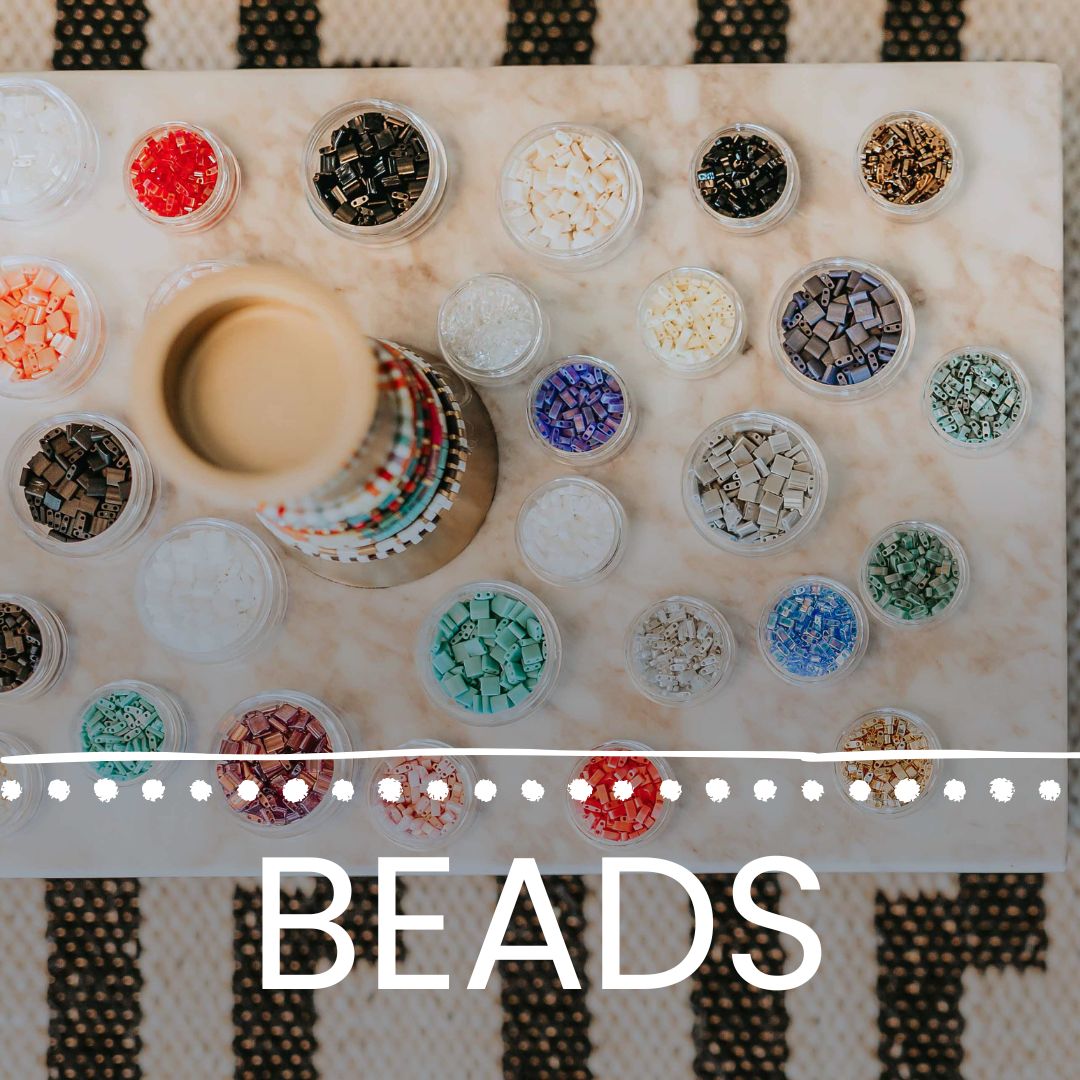
Run a finger over each bead before stringing. Genuine Miyuki-made Tila beads are cut with tight, consistent tolerances, but any bead with a chipped or gritty hole edge, real or knockoff, should get set aside. Mack & Rex sells authentic Miyuki Tila beads and finished bracelets built from them; it doesn't manufacture the glass itself. Precision-cut Japanese seed and tile beads have been a beading standard for decades for exactly this reason (background here).
What Knot and Crimp Combination Actually Keeps a Tila Bracelet Together?
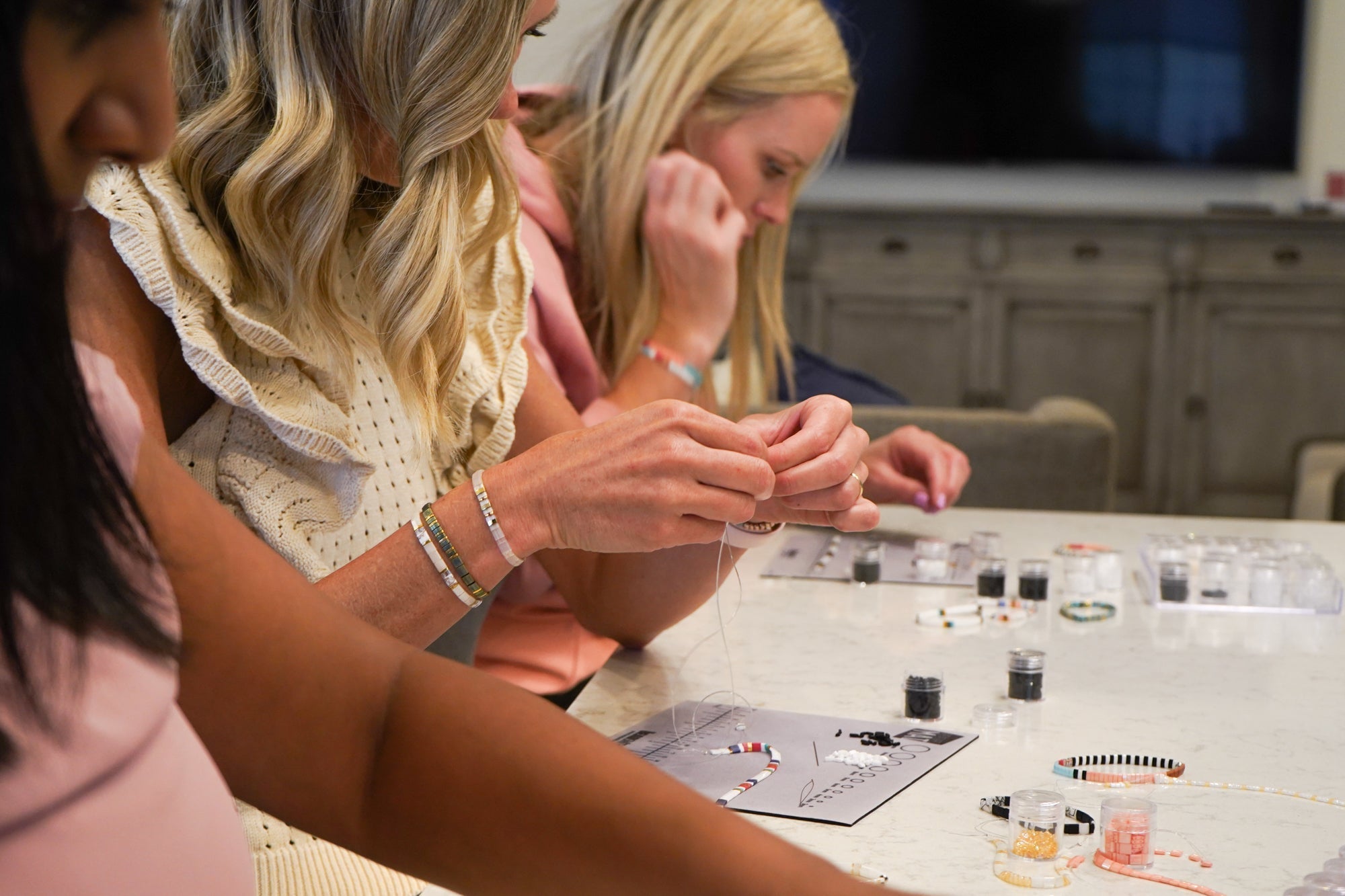
A single overhand knot is not enough. Tie an overhand knot, feed the working end through a second time (a doubled knot, close to a surgeon's knot), then lock it with a crimp bead flattened over the knot or a knot cover seated around it.
That crimp is doing more work than the knot. It takes the stretch load off the knot itself so the knot doesn't slowly work loose every time the bracelet stretches over a wrist. Trim the extra cord close and tuck the whole knot inside the nearest bead so it doesn't sit exposed, catching on sleeves or scratching skin.
How Tight Should a Tila Bracelet Actually Be Strung?
String with the beads resting naturally against each other, not pulled taut. A cord under constant tension the moment it's tied off starts thinning from day one, long before you've worn the bracelet even once.
Test before you commit. Wrap the unfinished strand around your wrist; it should slide over your hand with a light stretch, not a struggle. If it's fighting you, the fix isn't stronger cord, it's one or two more beads.
When Should You Restring a Tila Bracelet Instead of Tossing It?
If the cord looks dull, feels sticky, or shows any visible fray near a bead hole, restring rather than keep wearing it. Sound Tila beads move straight onto fresh elastic; you're rarely replacing anything but the cord and the knot.
Watch for a bracelet sitting looser than it did new. That's usually the cord stretching out with age, and it's the clearest sign a rebuild is due before it snaps somewhere inconvenient.
Where Should You Store Tila Bracelets Between Wears?
Lay bracelets flat in a small dish or a drawer tray instead of balling them into a knot in the bottom of a jewelry box. Elastic holds its shape better when it isn't sitting stretched at an odd angle for weeks at a time.
Take bracelets off before a shower, a swim, or lotion. Water and oils speed up how fast the elastic breaks down, the same reason a rubber band left somewhere warm and damp goes soft and loses its snap early.
Ready for a Tila Bracelet Built to Actually Last?
Browse Mack & Rex's Tila bead collection for finished bracelets already strung on properly sized crystal-cord elastic with a crimped, hidden knot. Buy three finished bracelets and get a fourth free, no code needed, and US orders over $100 ship free. Mack & Rex ships internationally too, with shipping and any customs costs calculated at checkout.
Frequently Asked Questions
Why do Tila bead bracelets break faster than other stretch bracelets?
Tila beads have two flat holes instead of one round one, so the cord passes through a shorter, straighter channel with less cushioning. A rough hole edge or the wrong cord gauge wears through faster than it would on a rounder bead.
What's the best cord for a Tila bead bracelet?
A round crystal-cord stretch elastic sized close to the bead's hole diameter. Stiff beading wire isn't the right choice for a slip-on bracelet since it doesn't stretch over the hand the way elastic does.
How often should a Tila bracelet be restrung?
There's no fixed schedule. Restring when the cord looks dull or sticky, shows fraying near a hole, or the bracelet has clearly gone looser than it fit new, whichever comes first.
Does tension really affect how long a Tila bracelet lasts?
Yes. Cord strung too tight starts under stress the moment it's knotted, before it's even been worn. A bracelet that slides over the hand with light stretch, rather than a fight, holds up longer.
Is it safe for kids to help string Tila bracelets?
With supervision. Beads, crimps, and cord ends are small parts and a choking hazard for young children, so stringing is a project for hands old enough to manage small pieces safely, with an adult nearby.