


Are Tila Bead Bracelets Safe Around Toddlers? A Parent's Guide
Are Tila Bead Bracelets Safe Around Toddlers?
The short answer: loose tila beads and DIY bead kits are not safe for toddlers and should always be kept out of their reach. A finished, ready-to-wear bracelet worn by a parent is a different situation, but it still calls for adult awareness. Here's what every parent needs to know.
Why Loose Beads Are a Choking Hazard
Small beads. Big risk.
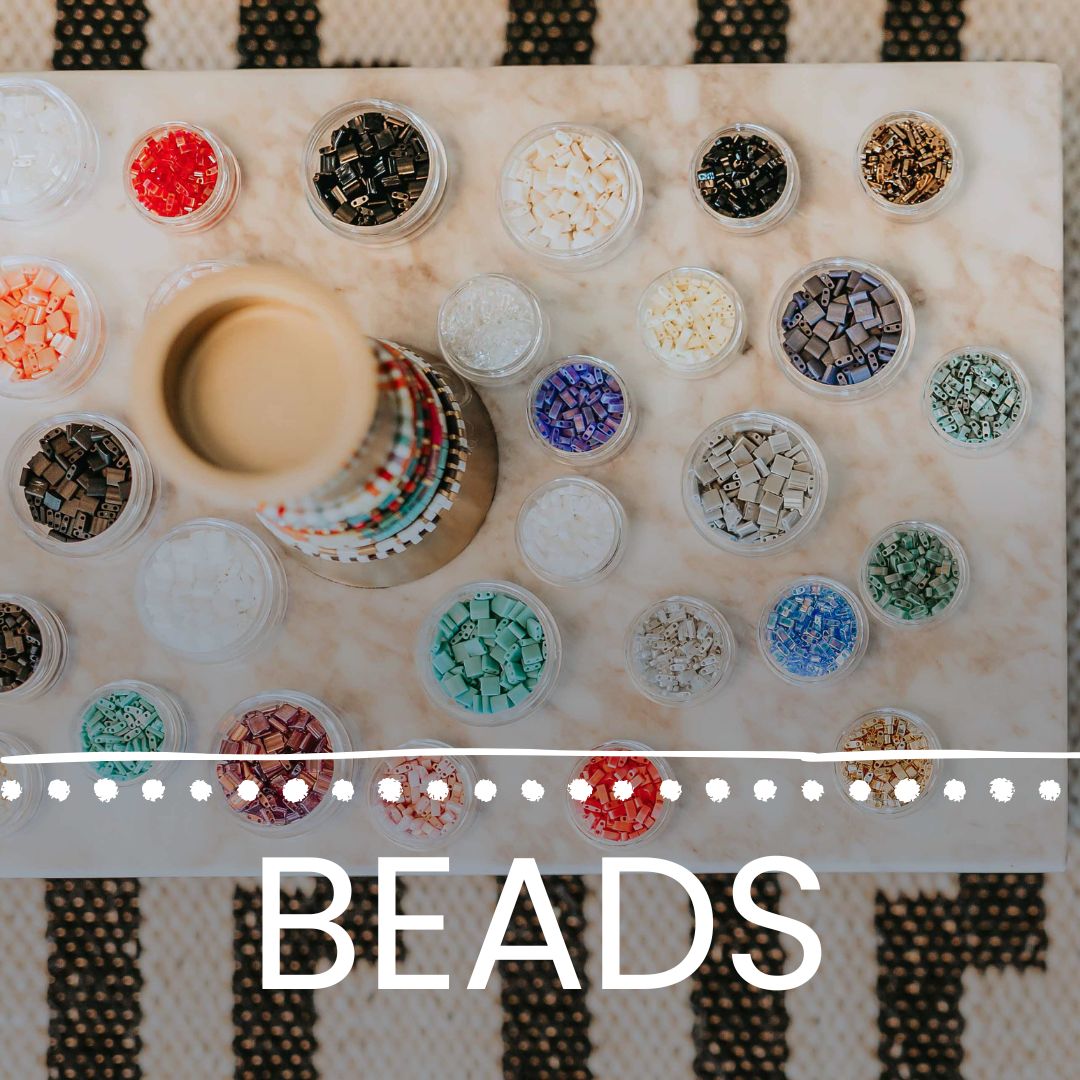
Tila beads are flat, two-hole Japanese glass beads made by Miyuki. They're beautiful, and they're also small enough to pass the U.S. Consumer Product Safety Commission's small-parts test cylinder without question. That test cylinder is roughly 1.25 inches in diameter and 2.25 inches deep, the approximate dimensions of a young child's throat. Any object that fits inside it is classified as a choking hazard for children under 3.
Individual tila beads fit that definition easily. So do seed beads, accent beads, and most other components in a bead mix or bracelet-making kit. That's not a knock on the beads themselves; it's just physics and a hard safety line you shouldn't cross.
The CPSC recommends that products with small parts carry a warning for children under 3, and most reputable bead suppliers follow that guidance. CPSC small-parts guidance is publicly available and worth reading if you're planning any craft activity with young children around.
What About a Finished Bracelet on Mom's Wrist?
This is where context matters a lot.
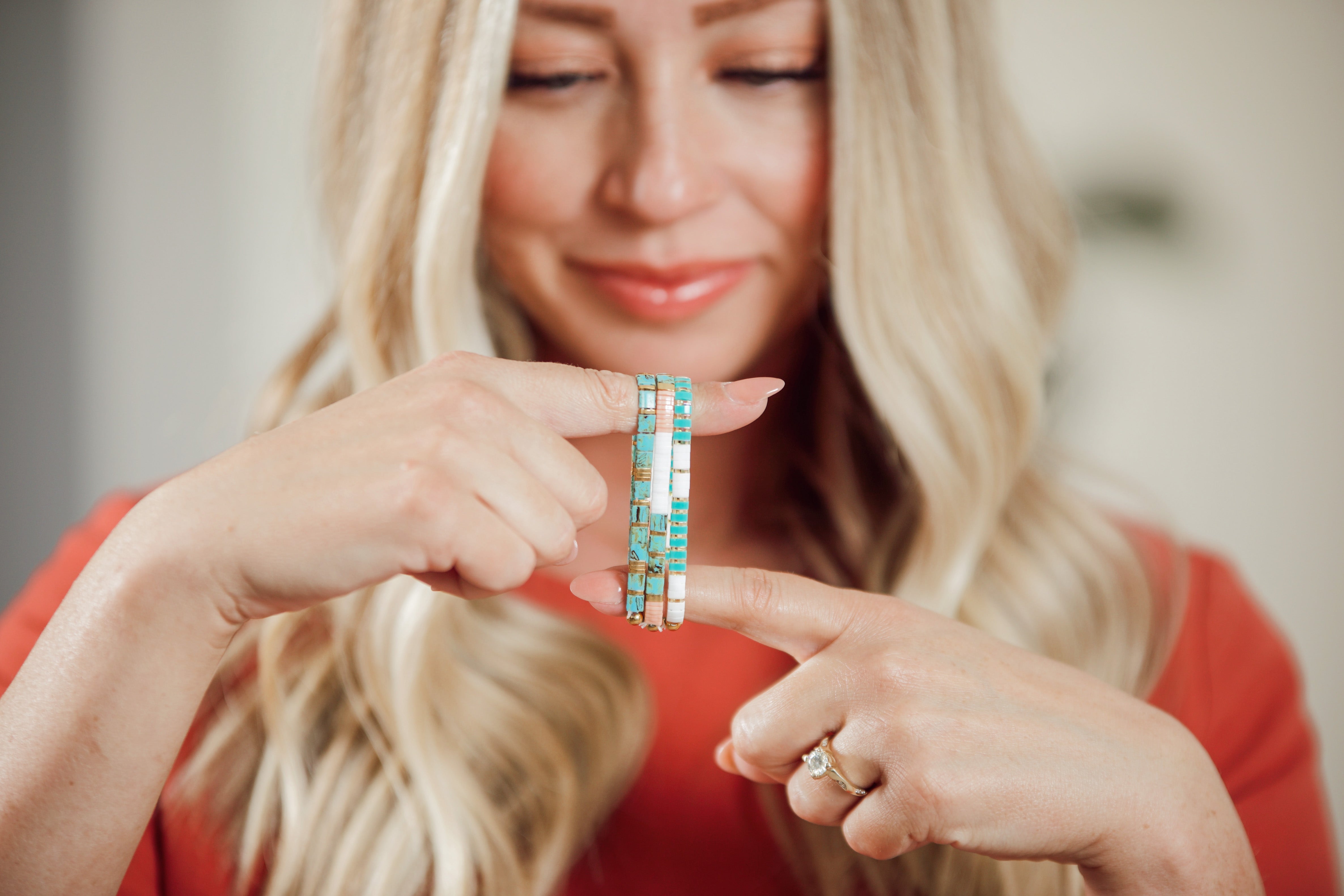
A finished, ready-to-wear stretch bracelet is a different object from a pile of loose beads. The beads are strung on crystal-cord elastic and held together by the bracelet's construction. If the bracelet stays intact and stays on the wearer's wrist, the individual beads aren't loose and accessible.
That said, "stays intact" is the key phrase. Toddlers grab, pull, and chew on things. A toddler yanking on a bracelet can snap the cord and send beads across the floor in seconds. The risk isn't zero.
Practical steps parents take:
- Remove beaded bracelets before holding or floor-playing with toddlers.
- Store bracelets on a high shelf or in a closed jewelry box, well out of reach.
- If you're wearing a bracelet, watch for small hands reaching for it and redirect.
- Inspect bracelets regularly for any signs of cord wear or looseness.
Stretch bracelets made with quality elastic cord, like the crystal-cord construction Mack & Rex uses, are more resilient than knotted designs. A knotted bracelet that unravels can release all its beads at once. A quality stretch bracelet stretches before it snaps. But neither design is something you want a toddler to put in their mouth, and neither design changes the small-parts rule.
DIY Kits and Loose Beads: Keep These Away From Toddlers
No workarounds here.
Bracelet-making kits, loose bead packs, and bead mixes are crafting supplies with small parts. They are not appropriate for toddlers. Full stop. The Spruce Crafts and other established beading resources consistently rate bead activities for ages 5 and up, with adult supervision, for exactly this reason. Beading safety basics from The Spruce Crafts covers this age guidance clearly.
If you have toddlers in the house and you're a beader, set up a dedicated crafting space that can be secured when not in use. A closed door, a high table, or a tackle-box-style storage container with a latch all help. Never leave a bead project out on a coffee table when small children are present.
This applies to Mack & Rex's bead packs, trio kits, and any other product with loose beads or small components. Those products are made for adults and older kids crafting with adult supervision.
When Kids Can Get Involved
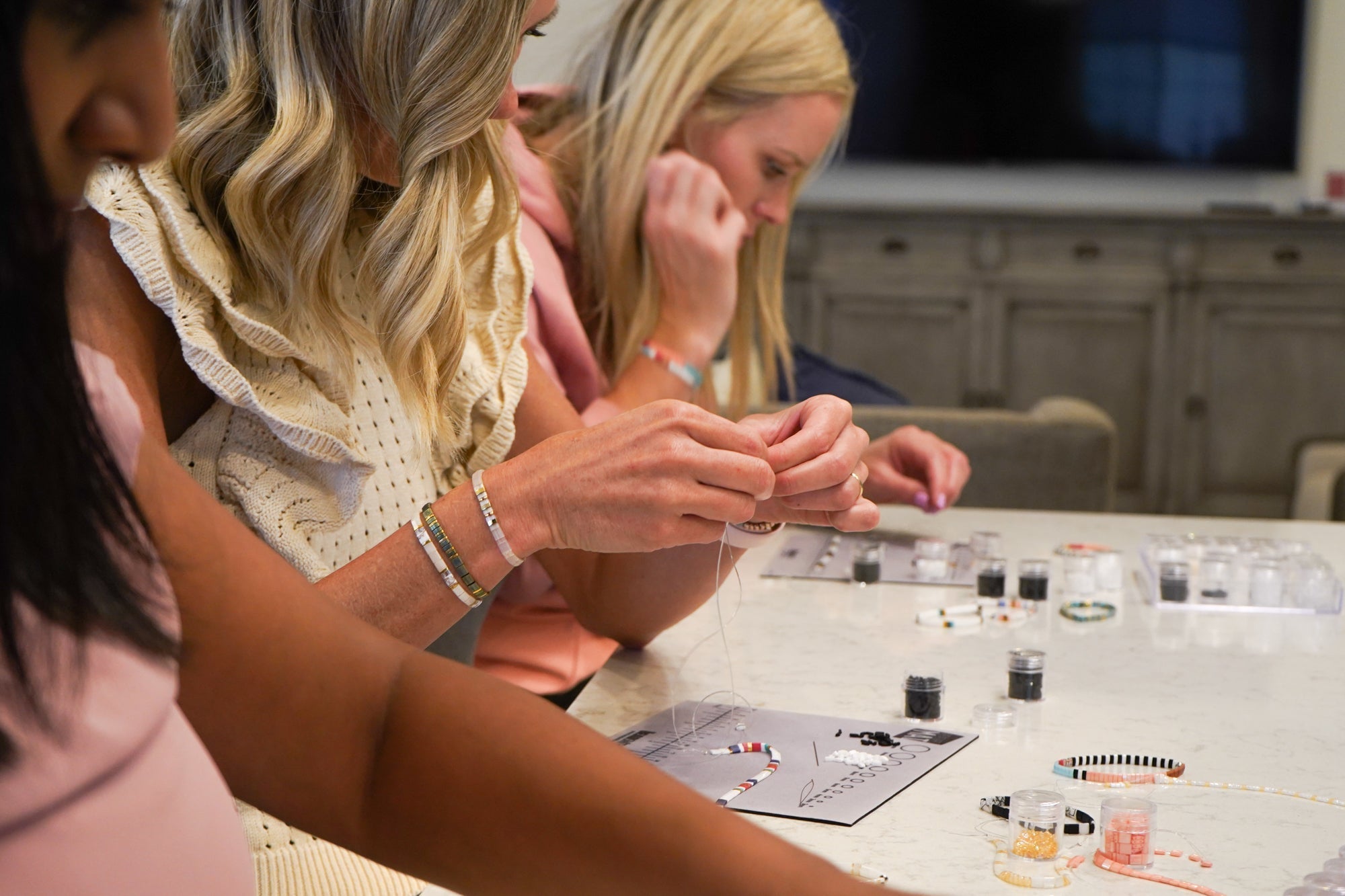
Most guidance puts bead crafting activities at age 5 and up, with a parent sitting right there. That's a manageable window. Mack & Rex started as a mom-and-daughters project (the brand name literally comes from the two daughters, Mack and Rex), and the "make it together" angle is a real part of what they do. But "together" means an adult is actively involved, not just nearby.
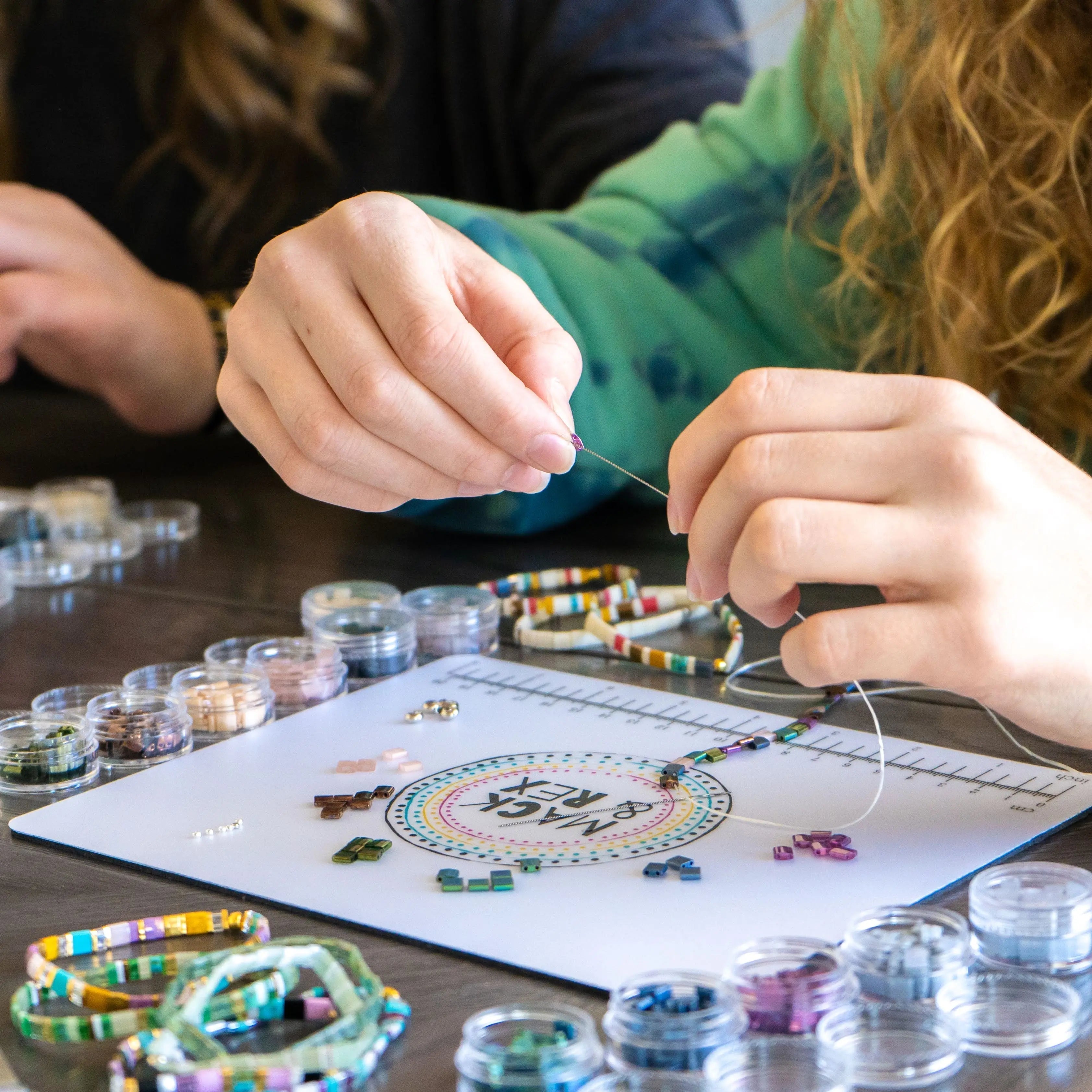
For kids who are ready, bracelet-making is genuinely fun. Picking color combinations, threading beads, seeing a finished bracelet take shape. The trio kits (three coordinated bracelets in one project) are well-suited to an older child doing the project alongside a parent. The kit does the color-matching work for you, which keeps the focus on the making.
Before any bead session with kids aged 5 to 8, run through these steps:
- Clear the workspace. Remove everything from the table except what's needed for the project.
- Use a bead mat or tray. Beads roll; a mat keeps them contained and makes clean-up faster.
- Set the rule upfront. Beads stay on the mat. No touching beads with wet or sticky hands.
- Sit next to them, not across the room. Active supervision means you can see what they're doing in real time.
- Count the beads at the end. A quick check that all the beads are accounted for before clean-up is a good habit.
What About "Toddler Bracelets" in General?
When parents search for toddler bracelets, they're often looking for something their child can actually wear, not a parent's bracelet to keep away from them. That's a specific product category: jewelry sized and constructed for toddlers, typically with larger, softer elements that don't pose a choking risk.
Tila bead bracelets, including the ones at Mack & Rex, are adult and older-child jewelry. They're sized from XXS to 5XL to fit a very wide range of adults. They're not sized or designed for toddlers as wearers. A parent or grandparent wearing one, a school-age child making one as a craft project with supervision, a teenager customizing a stack: all of these fit the product well. Putting a tila bead bracelet on a two-year-old's wrist is not what it's designed for, and the bead-size issue makes it genuinely unsafe.
That distinction matters because it's honest. Mack & Rex is upfront about what their bracelets are: adult accessories made from quality Japanese glass beads, built to stay on during a workout and last through daily wear. Beadaholique's jewelry-making safety page is another practical reference for parents who want to understand small-parts risk before a craft session.
The Bottom Line on Bracelet Safety
Loose tila beads and bead kits are crafting supplies with small parts. They're not for toddlers, period. A finished bracelet worn by an adult is safer than a scatter of loose beads, but it still requires you to watch what small hands are doing. For kids aged 5 and up, supervised bead crafting can be a great project. Under 5, keep the beads put away.
If you're ready to browse finished, ready-to-wear tila bead bracelets for yourself or as a gift for an older child or teen, Mack & Rex's accent bracelet collection has a wide range of color combinations and sizes from XXS to 5XL. Orders over $100 ship free within the US, and the buy-3-get-1-free offer applies to bracelets with no code needed.
Frequently Asked Questions
Are tila bead bracelets safe for toddlers?
Finished, ready-to-wear tila bead bracelets are generally worn by adults and older children. Loose tila beads and DIY kits are NOT safe for toddlers, as individual beads are a serious choking hazard. Any bracelet worn near toddlers requires constant adult supervision, and loose beads or crafting supplies should be kept completely out of reach.
Can toddlers wear beaded bracelets?
Most safety experts advise against young toddlers wearing beaded bracelets independently. If a toddler is around an adult wearing a beaded bracelet, the main risk comes from loose or detached beads. Finished stretch bracelets made with strong elastic cord are more secure than knotted designs, but adult supervision is always required when any beaded jewelry is present.
What is the choking hazard rule for beads?
The U.S. Consumer Product Safety Commission (CPSC) defines a choking hazard as any object that fits entirely inside a standard small-parts cylinder (approximately 1.25 inches diameter, 2.25 inches deep). Individual tila beads easily fit inside this test cylinder, making them a serious choking hazard for children under 3.
At what age are bead bracelets safe for kids?
Bead crafting activities are typically recommended for children aged 5 and up, with supervision. The CPSC small-parts warning on most bead products states "not for children under 3." Children between ages 3 and 5 should only do bead activities with direct adult hands-on supervision and should never be left alone with loose beads.
What makes a stretch bracelet more secure than a knotted one?
Stretch bracelets made with quality crystal-cord elastic hold the beads firmly along the whole cord. If the bracelet is pulled hard, it stretches rather than snapping and scattering beads. Knotted designs can unravel if a knot fails, releasing multiple beads at once. Neither design eliminates the choking risk entirely around very young children.