

Upgrading from Cheap Elastic Bracelets to Durable Handmade Stacks
Why Do Cheap Elastic Bracelets Fade, Stretch Out, and Snap?
Thin cord and cheap beads. That's really the whole story. Mass-market stretch bracelets typically use a low-grade elastic cord that wasn't built for years of daily wear, paired with dyed plastic or acrylic beads that fade under sun and lotion. Every time you pull one over your hand, the cord stretches a little more than it recovers, and within a few months it's either loose and sliding around or it's snapped in your bag.
Heat and body oils make it worse. Cheap elastic is a rubber-based elastomer, and elastomers break down faster with repeated flexing plus sun, sweat, and lotion exposure, which is exactly the environment a wrist bracelet lives in every day. It isn't a defect so much as the design: those bracelets are priced to be replaced, not repaired or restrung.
The beads fail before the cord usually does
Dyed glass-look plastic and coated acrylic beads scratch, dull, and can shed color onto your skin or clothes over time. Glass has been a stable, colorfast material for beadwork for centuries, and that difference shows up fast on a bracelet you wear daily. A five-dollar bracelet from a bin at the mall was never built to survive a full year of showers, gym sessions, and sunscreen. It was built to survive checkout.
What Does "Durable Handmade" Actually Mean for a Bracelet?
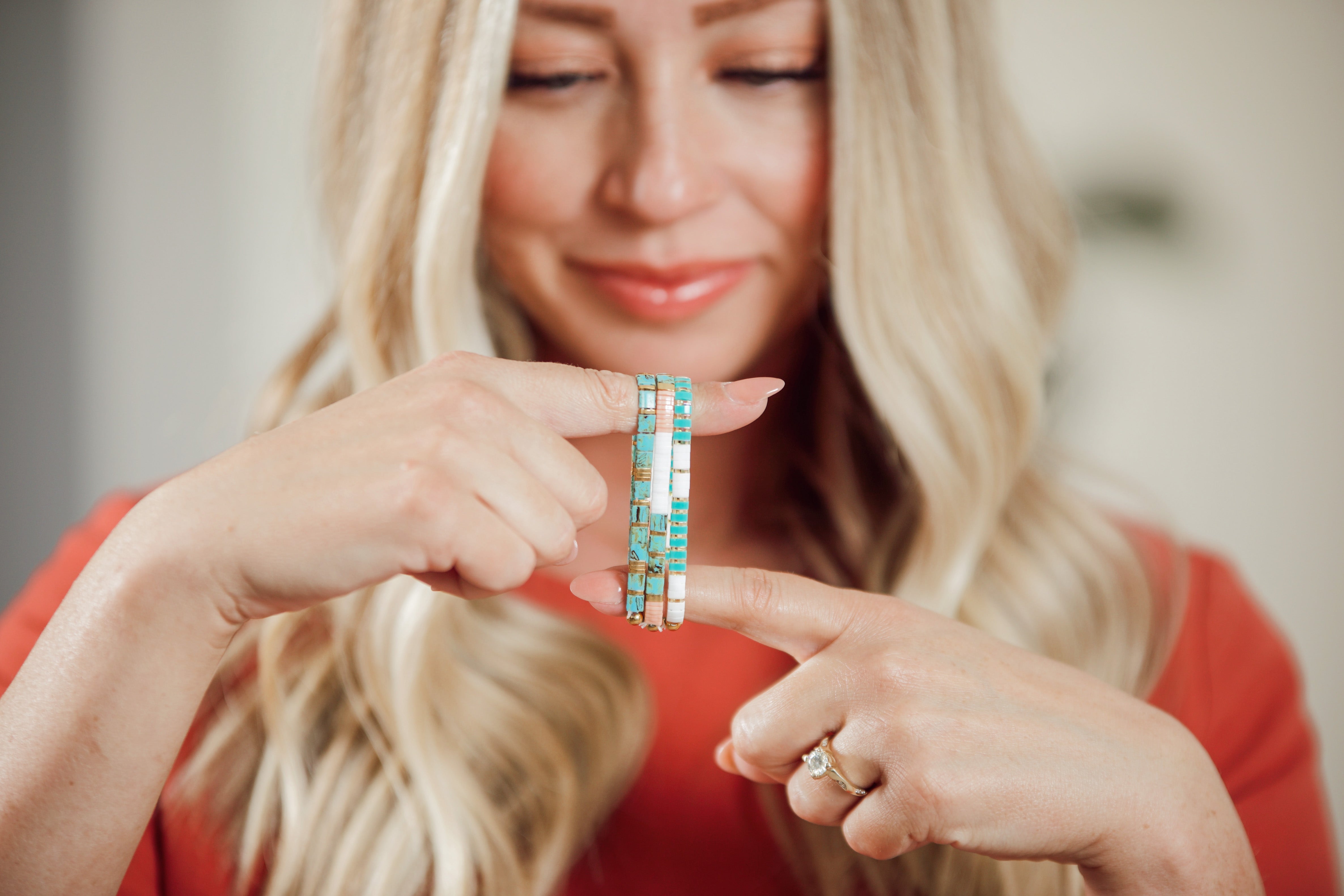
It means two upgrades happening at once: a stronger cord and a better bead. Durable handmade bracelets pair crystal-cord elastic, a thicker, higher-grade stretch cord, with genuine glass beads rather than thin cord and painted plastic. That combination is what lets a bracelet keep its shape and stretch through months of real wear instead of weeks.
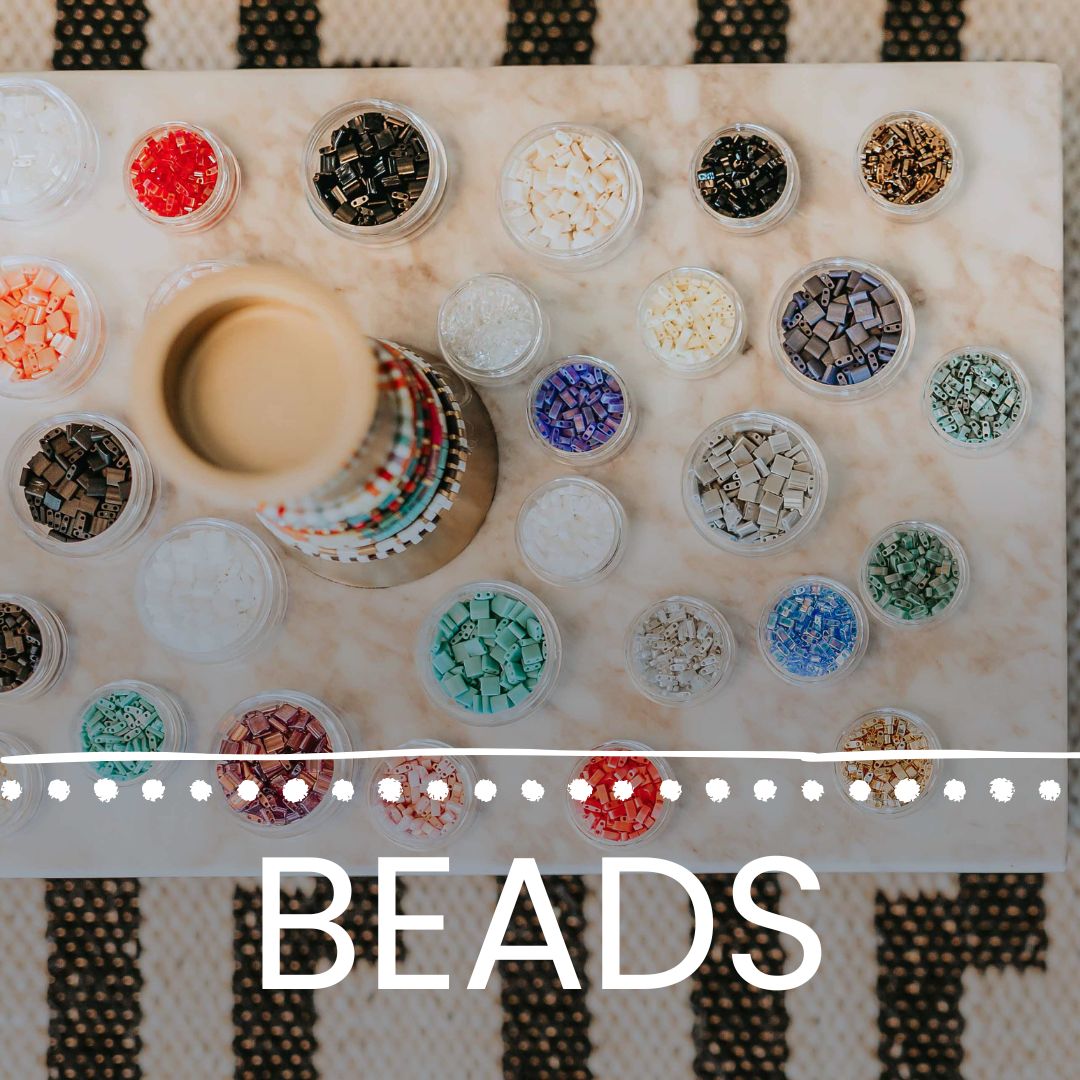
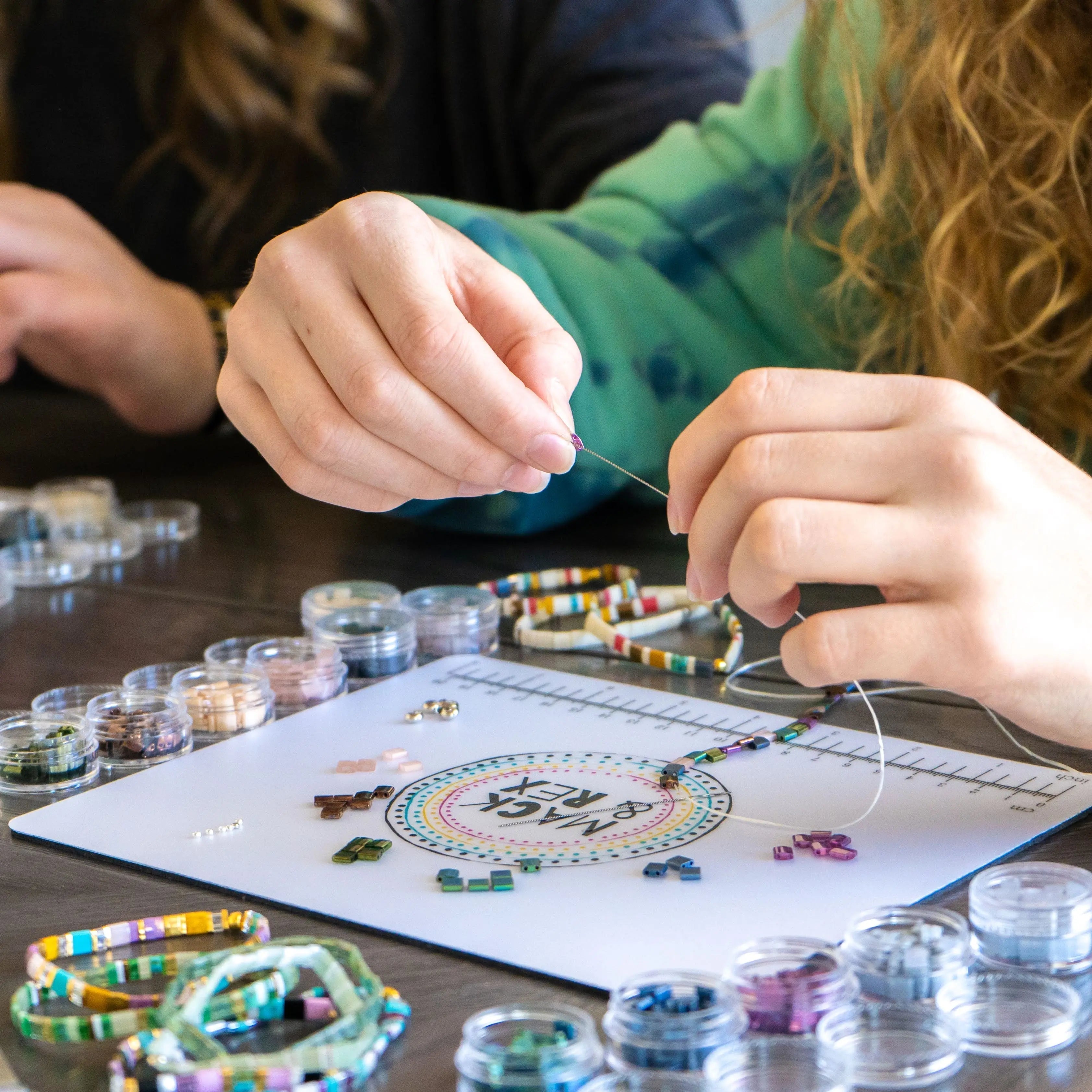
Mack & Rex builds every finished bracelet and kit around Miyuki Tila beads, flat, two-hole glass tiles made by Miyuki in Japan. Mack & Rex sources and resells these beads; it doesn't manufacture them, and it's worth being straightforward about that since Miyuki and Tila are Miyuki's own trademarks. What Mack & Rex controls is the craftsmanship around that material: the cord, the knotting, the sizing, and the finish.
The cord matters as much as the bead
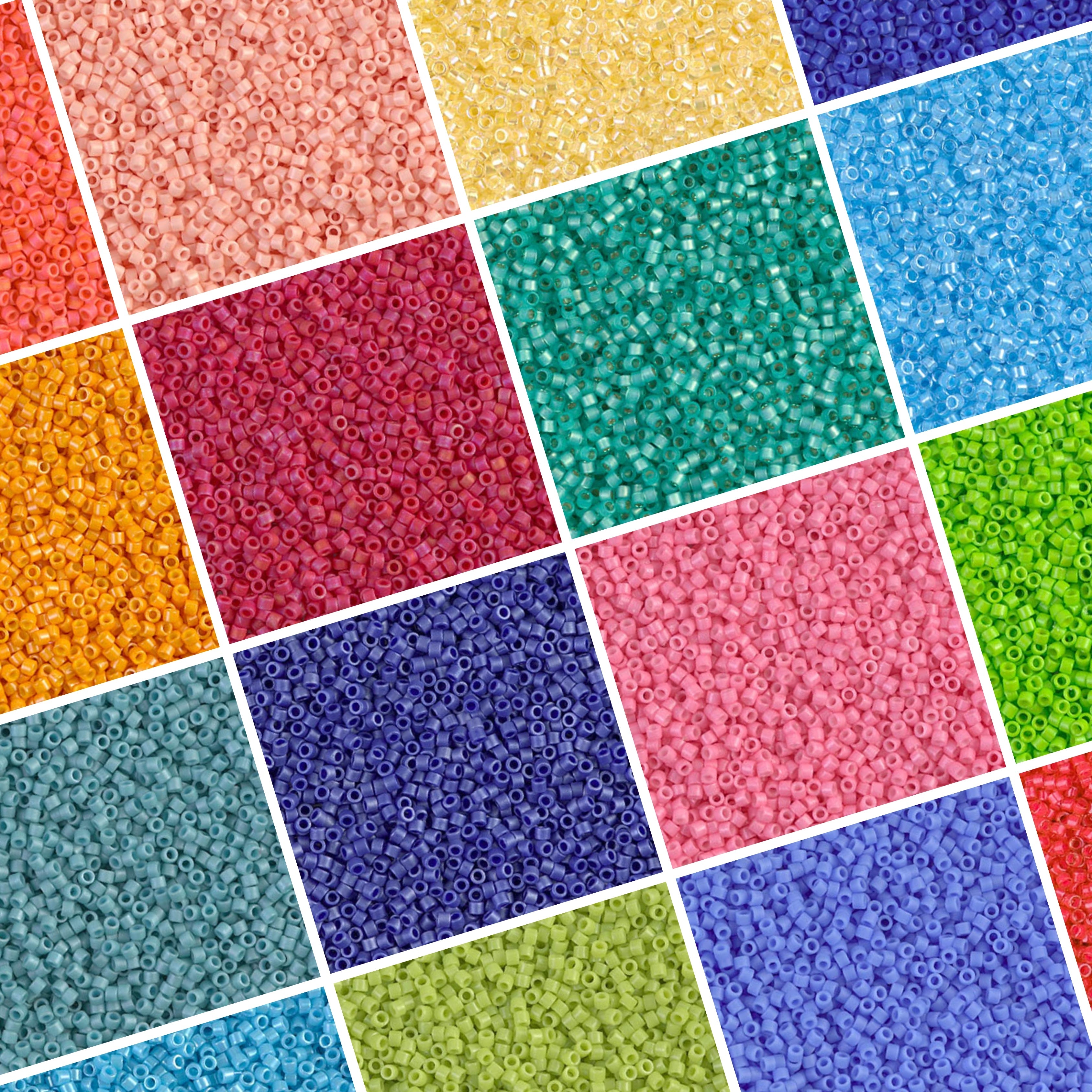
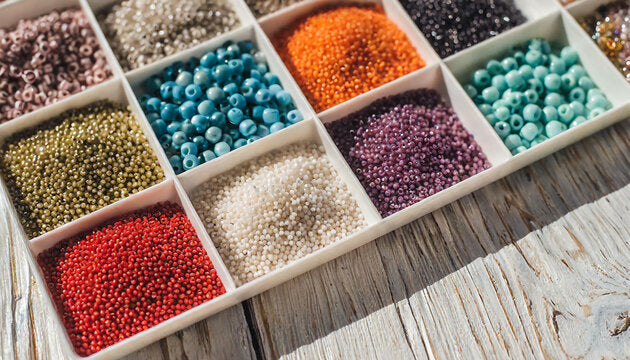
A gorgeous bead strung on flimsy elastic still snaps. Miyuki's glass bead lineup is a useful reference for the range of finishes that go into handmade stacks, and pairing that glass with crystal-cord elastic rather than a thin cord is what keeps a bracelet from stretching out after a dozen wears. The knot matters too. A low-profile, tied-off knot that sits flush against the beads holds up better than a glued closure, which is one more reason mass-produced bracelets fail faster: glue dries out and cracks long before a properly tied cord gives way.
Real reviews tell the durability story
One Mack & Rex customer put it plainly: "This is the 4th bracelet I've purchased and I wear it daily. The elastic has not stretched out and the tiles are as beautiful as the day I got it." Another wrote, "The quality is excellent, I should know because I have some that I never take off and they last and still look just like new." That's the actual test for durable handmade: daily wear over years, not a single trip through a gift box.
How Do Fit and Sizing Affect a Bracelet's Durability?
A bracelet that's too tight stretches beyond its limit every single time you put it on. One-size-fits-most stretch bracelets force a single band to cover every wrist from petite to plus, which means it's either loose on some people or overstretched on others from day one. Overstretching is one of the fastest ways to wear out elastic cord early.
Mack & Rex sizes bracelets from XXS through 5XL based on real wrist measurements, so the cord isn't fighting your wrist size every time you wear it. Comfort is part of it, but the bigger win is durability. A properly sized bracelet slides on without maxing out the elastic's stretch capacity, which is why it lasts longer.
How Do You Actually Make the Switch to Durable Handmade Bracelets?
Start small. You don't need to replace an entire jewelry box in one order. Pick one or two finished bracelets in colors you already reach for, measure your wrist against a real sizing chart rather than guessing, and see how they hold up over a season before you build out a full stack.
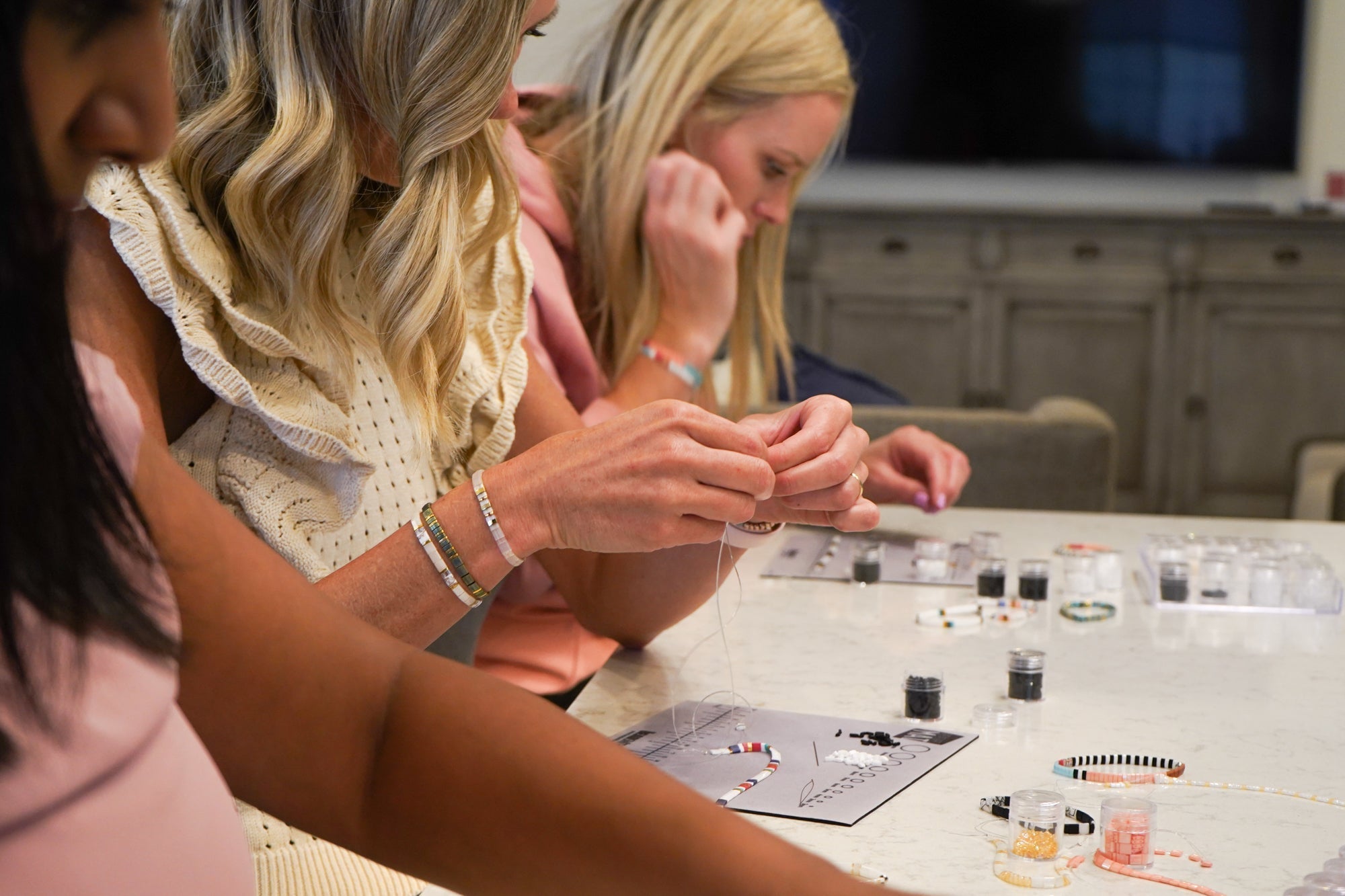
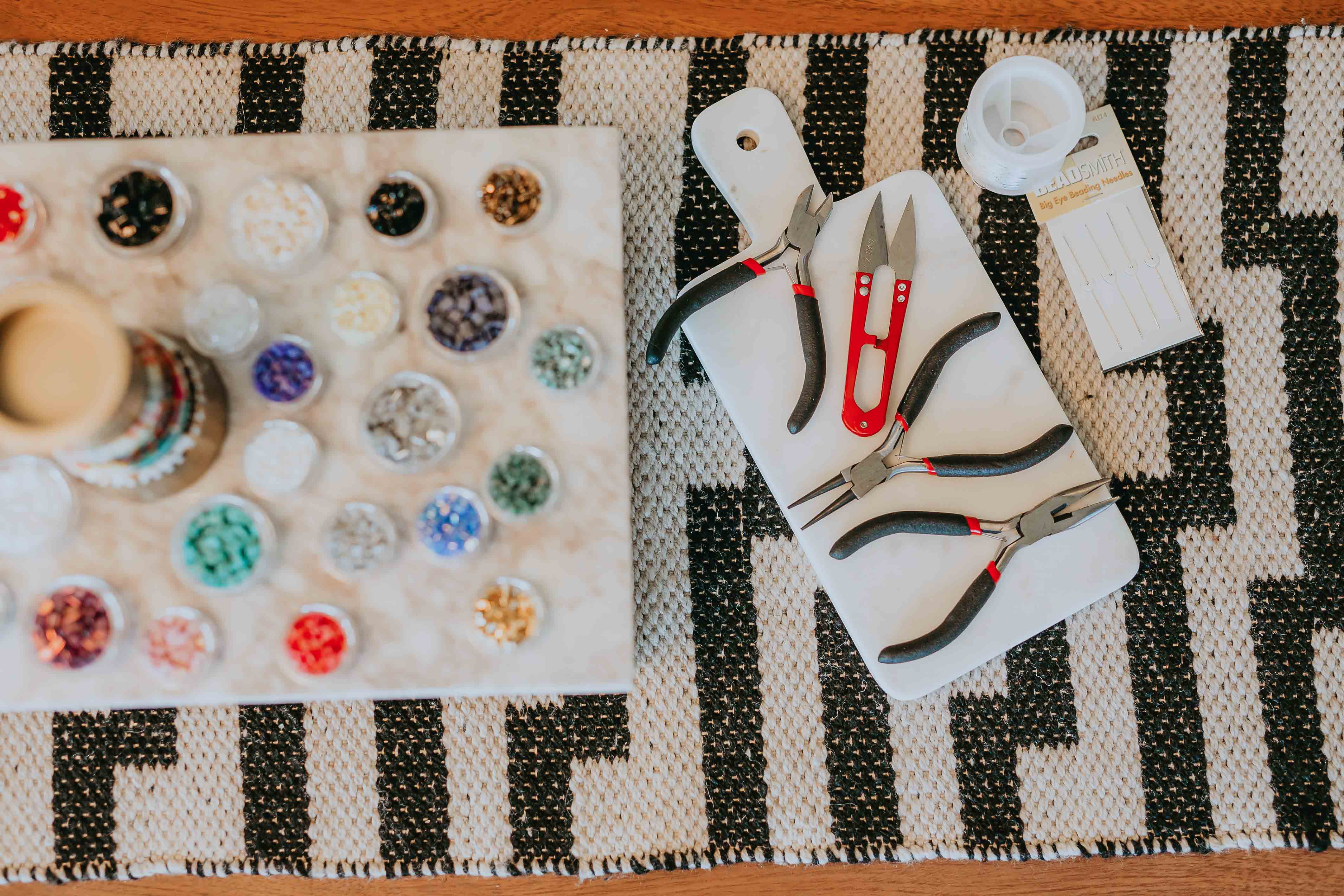
If you'd rather build your own, a trio kit is the low-risk way to try the materials firsthand. Mack & Rex's bracelet making kits pair crystal-cord elastic with genuine Miyuki Tila beads and clear instructions, so you can compare the feel of real glass and real cord against whatever's currently fading in your jewelry drawer. A single trio kit runs $44.99 and makes three coordinated bracelets; finished, ready-to-wear bracelets run roughly $20 to $25 each if you'd rather skip the assembly step entirely.
What to look for when you're shopping
Check three things before you buy: the bead material (genuine Miyuki glass, not an unbranded glass-look substitute), the cord (crystal-cord elastic, not a thin generic stretch string), and whether the seller stands behind the piece with a quality guarantee. Mack & Rex backs its stretch bracelets with exactly that guarantee, which is a fair test of whether a brand actually believes in its own durability claims.
Buy 3 finished bracelets and get 1 free, no code needed, if you're ready to build a full stack at once. And if your order clears $100, shipping is free within the US; Mack & Rex also ships internationally, with any shipping cost and customs or duties calculated at checkout.
Frequently Asked Questions
Why does my elastic bracelet keep snapping?
Most mass-market bracelets use thin, low-grade elastic cord that was never meant to hold up to years of stretching over a hand. Every wear cycle weakens the material, and heat, lotion, and sun exposure speed up the breakdown until the cord snaps.
What makes a handmade bracelet more durable than a cheap one?
Two things: the cord and the beads. Handmade stacks built on crystal-cord elastic strung with Japanese Miyuki glass beads hold their stretch and color far longer than dollar-bin bracelets made with thin cord and dyed plastic or acrylic beads that fade and crack.
Are Miyuki Tila beads worth the extra cost?
Yes, if you want a bracelet you're still wearing next year. Tila beads are precision-cut Japanese glass tiles that hold color and shape indefinitely, unlike coated plastic beads that scratch, dull, and shed color within months of regular wear.
Will inclusive sizing actually fit my wrist?
Mack & Rex sizes bracelets from XXS through 5XL using real wrist measurements, not one stretchy band forced to fit everyone. That range matters for durability too, since a bracelet sized correctly doesn't get over-stretched every time you put it on.
How do I switch from cheap elastic bracelets to a handmade stack?
Start with one or two finished bracelets in a color palette you already wear, or a trio kit if you want to build your own stack. Measure your wrist first, pick genuine Miyuki Tila beads over unbranded glass-look beads, and check that the seller backs the piece with a quality guarantee.
Ready to stop replacing bracelets every few months? Browse Mack & Rex bracelet making kits and see the difference crystal-cord elastic and genuine Miyuki Tila beads make on a stack you actually keep.