

What Makes a Good Tila Bead Bracelet Kit? A Buyer's Checklist
What makes a good tila bead bracelet kit?
A good tila bead bracelet kit uses authentic Miyuki Tila beads rather than generic tile lookalikes, states an honest bead count that matches the promised number of bracelets, includes the tools you actually need, ships with instructions you can follow without guessing, and uses crystal-cord elastic strong enough for daily wear. Skip any one of those and the kit falls apart, sometimes literally.
Five checkpoints separate a kit you'll actually finish from one that ends up in a drawer. Bead authenticity. Bead count honesty. Tool completeness. Instruction clarity. Cord quality. Run any kit you're eyeing through all five before you check out, especially when you're buying online and can't hold the box first.
Are the beads actually Miyuki Tila, or just tila-style filler?
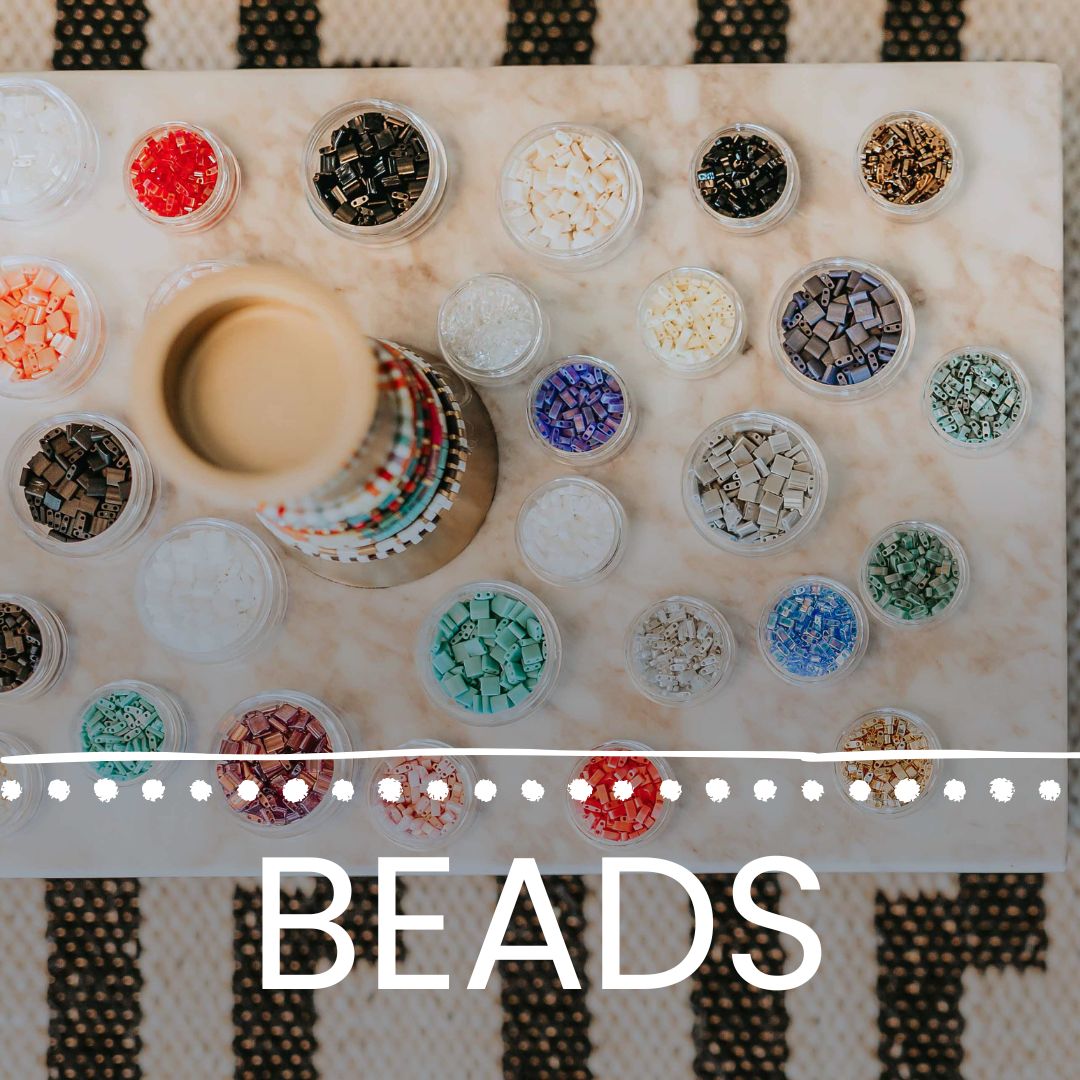
Check whether the listing names Miyuki directly. Miyuki is the Japanese manufacturer behind the Tila bead, a flat, two-hole square bead machine-cut to consistent dimensions, and "Tila" is a Miyuki product name, not a generic bead shape anyone can produce identically.
Plenty of sellers describe square glass tile beads as "tila style" or "tila inspired" and never mention Miyuki once. That's usually a signal the beads come from a cheaper, less consistent source. Genuine Miyuki Tila beads have uniform hole placement and a finish that stays even from bead to bead, which matters once you're threading two rows through tiny holes and trying to keep a pattern straight. A kossdesign guide to Miyuki bead types breaks down how the company's manufacturing tolerances differ from off-brand glass beads, if you want the deeper explanation. No Miyuki name on the listing. No real answer when you ask the seller what brand the beads are. That combination should make you keep browsing.
Mack & Rex kits use Miyuki Tila beads, sourced as a reseller. Miyuki and Tila are Miyuki's own trademarks, and Mack & Rex doesn't manufacture them; it just picks good color combinations and packages them into kits people can actually finish.
Does the kit give you an honest bead count?
A trustworthy listing states the exact number of finished bracelets a kit produces, not just a weight in grams. That number lets you calculate a real cost per bracelet and compare kits at different price points on the same terms, without guessing from package size alone.
Here's where the math gets useful. The $44.99 trio kit makes 3 bracelets. The Tila Bead Starter Kit runs $189.99 and makes 20. The Ultimate Tila Bracelet Kit is $399.99 and makes 80. Divide each by its bracelet count and you land in roughly the same per-bracelet range across all three tiers, which tells you the pricing scales honestly instead of padding the bigger box. If a listing only gives you a weight ("50g of tila beads!") with no bracelet count and no bead size specified, you can't actually do that math, and that's the point. Vague weight claims hide value, or the lack of it.
What tools should actually be in the box?
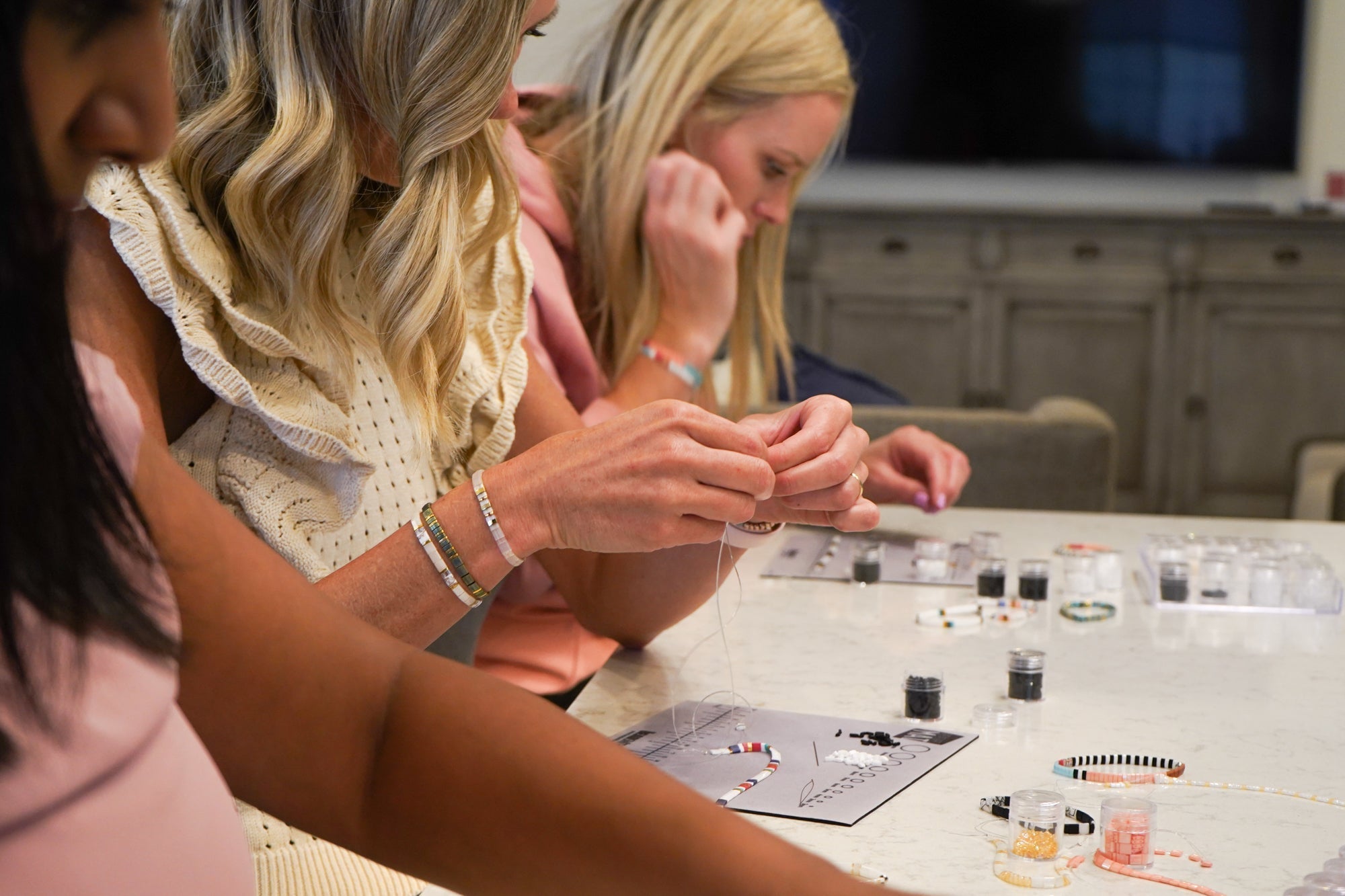
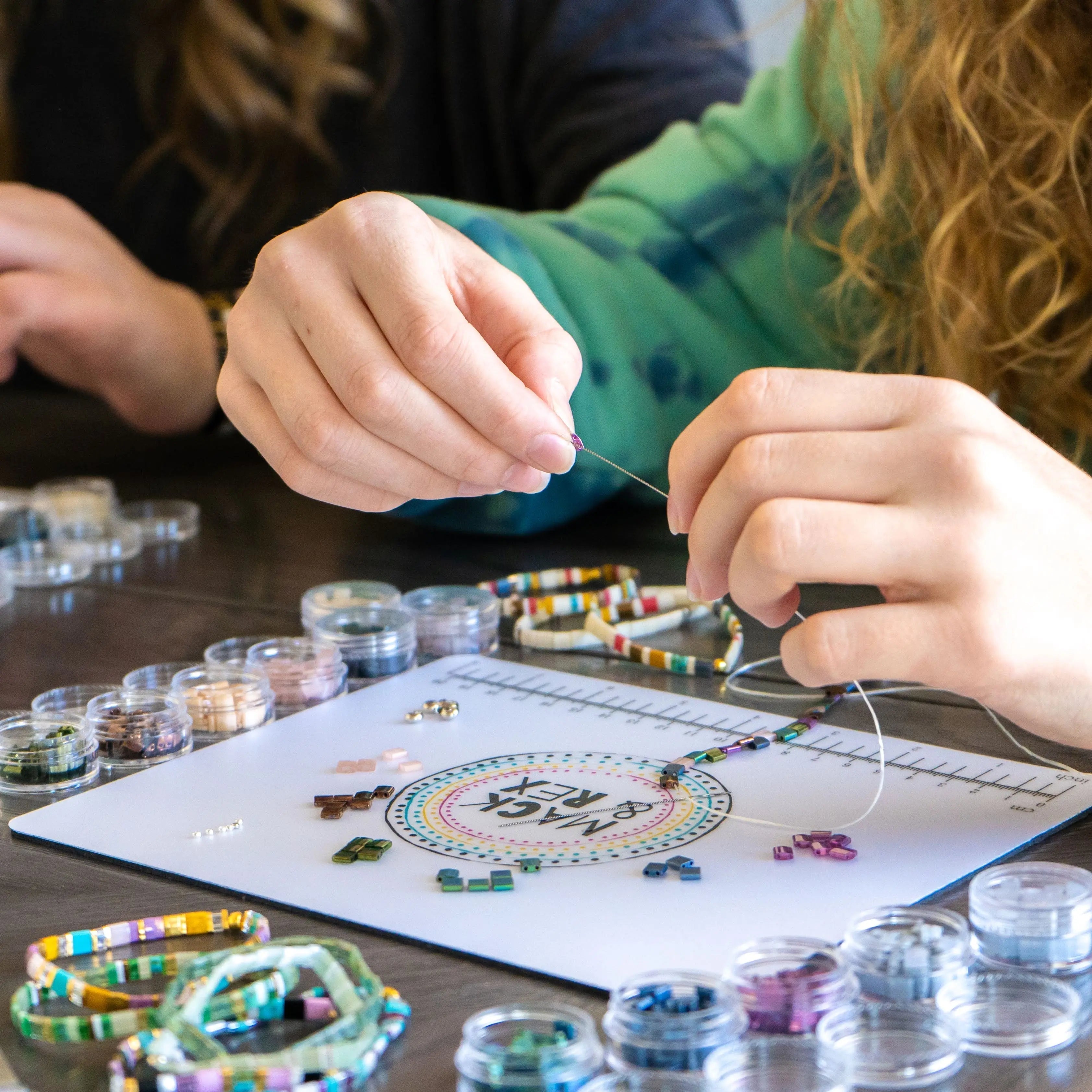
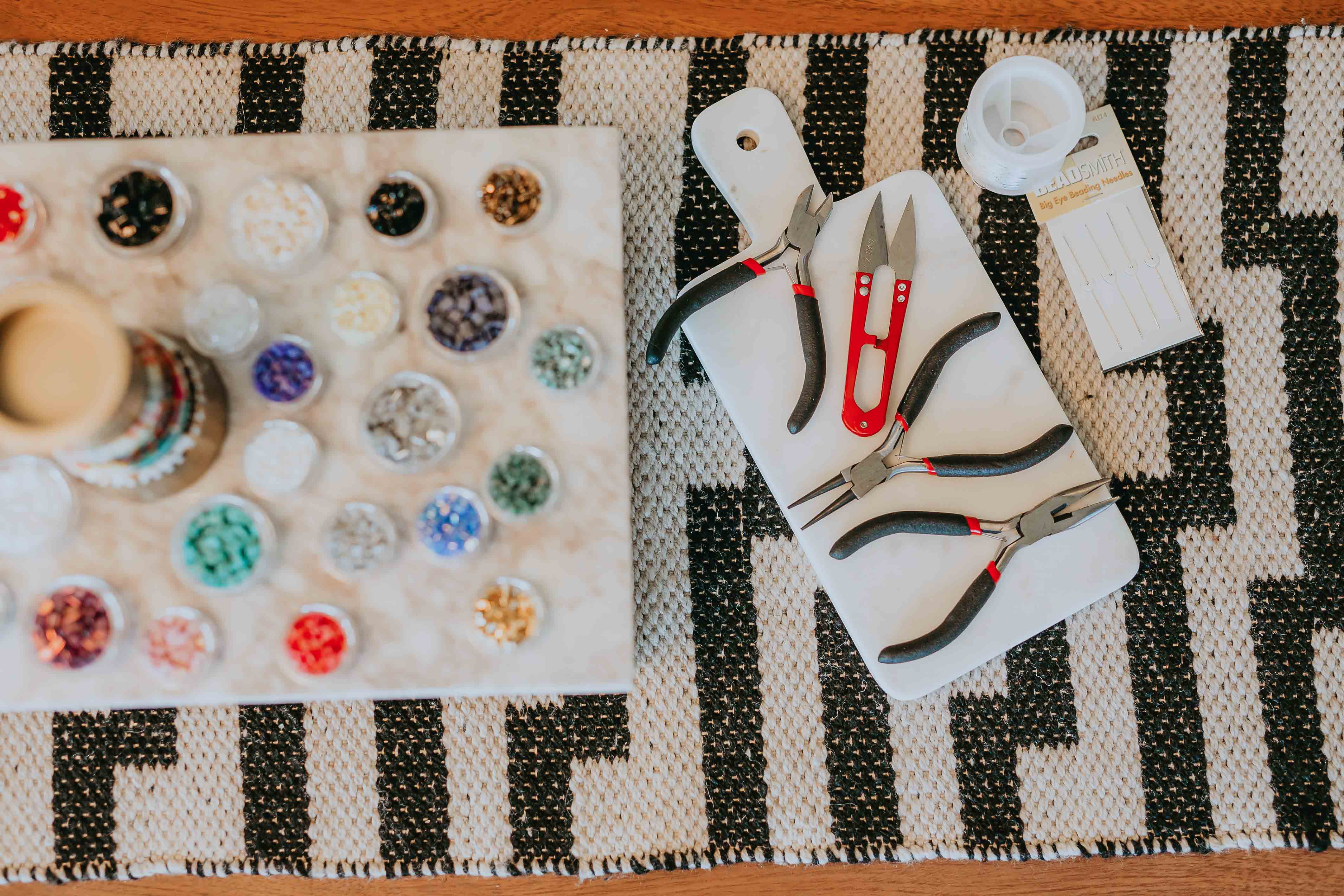
At minimum, expect beads, cord, and instructions. A stronger kit adds a beading needle built to lock at the top, crimp beads, knot covers, side cutters or scissors, and a bead mat with a ruler for sizing your wrist. Anything less and you're making an extra supply run before you can start.
One buyer summed up why this matters: "I am new to bracelet making and purchased this as an easy way to get started. It came with all the supplies I needed and included great instructions for getting started." That's the experience a complete kit should deliver, no separate trip to a craft aisle required. Before you buy, check whether you already own needles or pliers. If you do, a beads-and-cord-only kit might be the better value; if you're starting from zero, pay for the version with the full tool set.
How clear do the instructions need to be?
Instructions carry more weight than most buyers expect going in. A kit with quality beads and a single diagram still leaves you stuck at the first knot. Look for step-by-step written instructions plus a video walkthrough, since watching someone tie off the elastic is a lot easier to follow than reading it.
Reviewers notice the difference immediately. One customer wrote, "The videos on making these bracelets is a lifesaver if you're stuck on a step like I was." Another put it simply: "Great instruction, super patient explaining how to do string and also tie it." A general guide to tying a secure knot on a stretch bracelet, like the one from Cut Out + Keep, is worth a look too, since knot technique matters no matter whose kit you're using.
Is the cord actually built to hold up?
Cord quality decides whether a bracelet lasts a season or a year. Crystal-cord elastic, thicker and more durable than thin single-strand craft elastic, holds a knot without slipping and keeps its stretch through repeated wear. Thin elastic from a bargain bin tends to snap at the knot within weeks, no matter how nice the beads look.
A halsteadbead.com guide to elastic cord covers the general differences in cord weight and durability if you want the material science behind it. On the reviewer side, one customer described their finished piece this way: "Well made, strong bead cord," and another noted the "elastic feels secure when stretched." That's the standard to hold any kit to, whether it's a $15 impulse buy or a $189.99 starter set.
How does this checklist play out across Mack & Rex's own kit tiers?
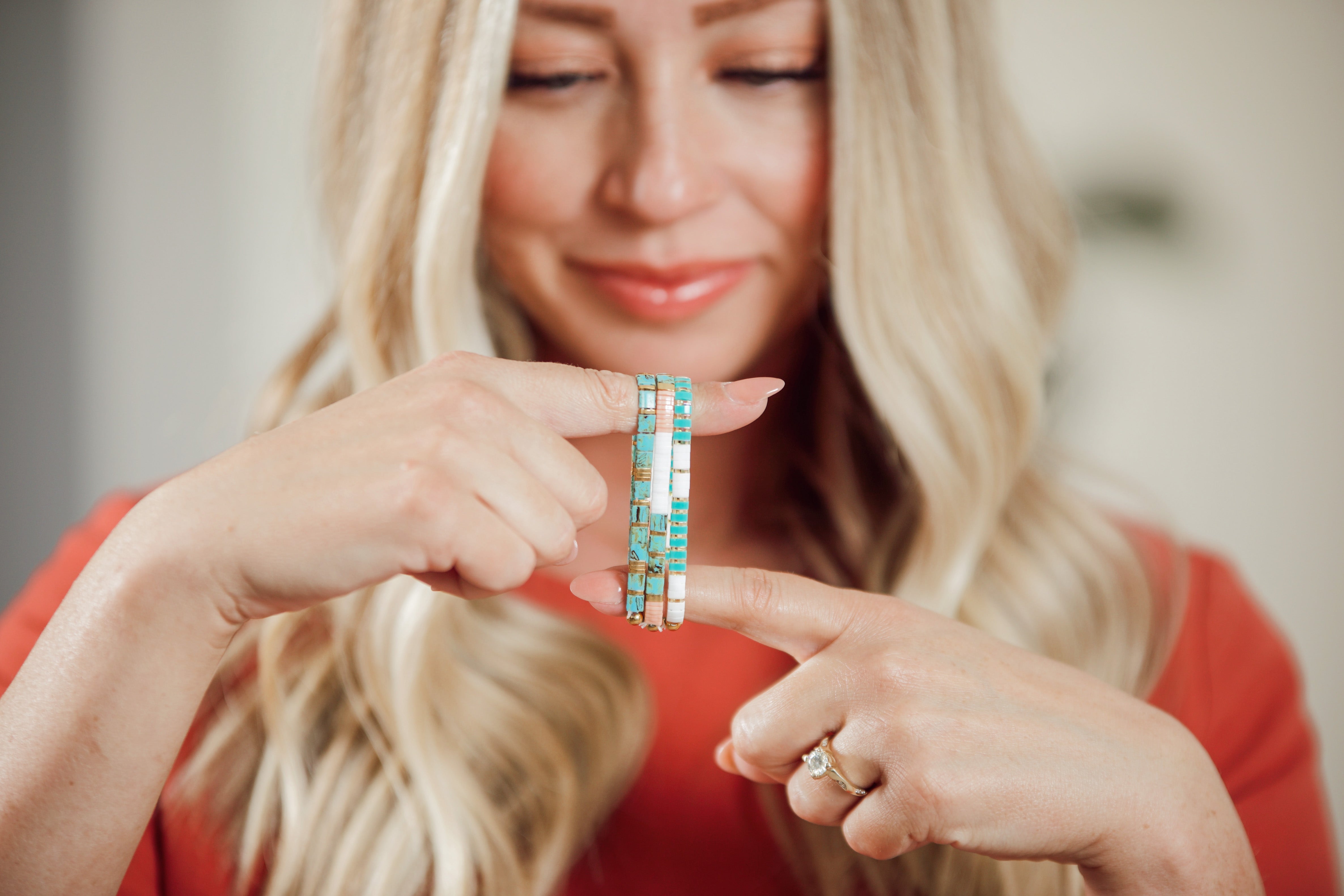
Run the five checkpoints against Mack & Rex's own lineup and here's what shows up. The trio kits ($44.99, makes 3 bracelets) use genuine Miyuki Tila beads in curated color stories like STAINED GLASS and AMBER ROMANCE, paired with crystal-cord elastic. The Tila Bead Starter Kit ($189.99, makes 20 bracelets) adds the full tool set: pliers, side cutters, two locking needles, crimp beads, knot covers, and a bead mat with a built-in ruler, across your choice of four color packs. The Ultimate Tila Bracelet Kit ($399.99, makes 80 bracelets) scales that same setup up to 32 colors for anyone hosting a bracelet-making night or stocking up for a year of gifting.
A quick note on math: a single $44.99 trio kit doesn't clear the $100 threshold for free shipping on its own; pairing it with a starter or ultimate kit, or a few other items, does. Shipping is free on US orders over $100; Mack & Rex ships internationally (shipping and any customs and duties calculated at checkout). And to be clear, the "buy 3 bracelets, get 1 free" offer applies to finished, ready-to-wear bracelets, not kits, so don't expect it to apply at kit checkout.
You can browse the full lineup at Mack & Rex's bracelet-making kits collection and run each listing through the same five checks: real Miyuki beads, an honest bracelet count, the tools you need, instructions you can actually follow, and cord built to last.
One more note before you buy: beads are small parts and a choking hazard. If kids are joining in on kit night, keep the loose beads and findings supervised.
Sources
- Koss Design: What Are Miyuki Beads? (Miyuki manufacturing background)
- Halstead Bead: Elastic Cord Guide (general elastic cord material reference)
- Cut Out + Keep: How to Tie a Surgeon's Knot on a Stretch Bracelet (general knotting technique)
Frequently asked questions about tila bead bracelet kits
What makes a good tila bead bracelet kit?
A good tila bead bracelet kit uses authentic Miyuki Tila beads rather than generic tile lookalikes, states an honest bead count that matches the promised number of bracelets, includes the tools you actually need, ships with instructions you can follow without guessing, and uses crystal-cord elastic strong enough for daily wear.
How can I tell if a kit uses real Miyuki Tila beads?
Look for the word Miyuki on the product listing. Miyuki is the Japanese manufacturer that makes the Tila bead, a flat, two-hole square bead cut to tight tolerances. Listings that only say tila style, tila inspired, or square glass tile beads without naming Miyuki are usually describing a cheaper, less consistent substitute.
How many beads should I expect in a tila bead bracelet kit?
It should match the bracelet count printed on the listing, not just a weight in grams. A trio kit should have enough beads and cord for 3 finished bracelets. A larger kit should list a specific bracelet yield, like 20 or 80, so you can work out cost per bracelet before buying.
Do tila bead bracelet kits come with tools, or just beads?
It depends on the kit, so check the listing before you buy. Some kits are beads and cord only. Others include pliers, side cutters, locking needles, crimp beads, knot covers, and a bead mat. Mack & Rex's Tila Bead Starter Kit includes the full tool set plus a free tutorial link.
Which Mack & Rex kit fits a first-time buyer?
The trio kit at $44.99 is the lowest-commitment entry point and makes 3 coordinated bracelets. Buyers who want to try more colors or make a bigger dent in gifting can step up to the Tila Bead Starter Kit ($189.99, makes 20 bracelets) or the Ultimate Tila Bracelet Kit ($399.99, makes 80 bracelets).
Ready to put this checklist to work? Shop Mack & Rex's tila bead bracelet kits at mackandrex.com/collections/bracelet-making-kits and compare each option against real Miyuki beads, honest bracelet counts, full tool sets, clear instructions, and crystal-cord elastic. Orders over $100 ship free within the US.