

What Makes Miyuki Tila Beads Worth It? A Quality Guide
What actually makes Miyuki Tila beads worth it?
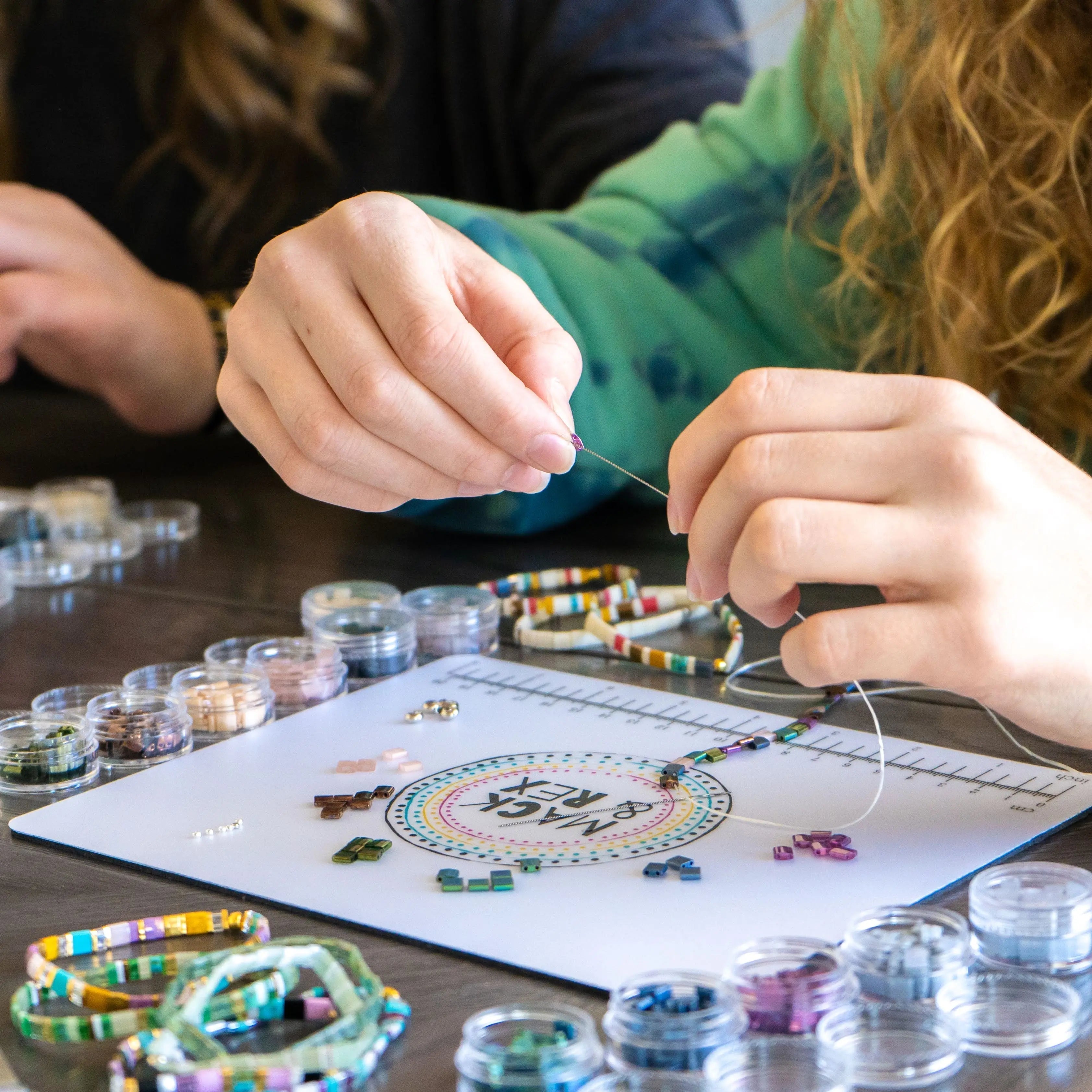
Genuine Miyuki Tila beads earn their price through manufacturing precision: a fixed 5mm x 5mm x 1.9mm flat square shape, two parallel holes spaced exactly the same way bead to bead, and finishes applied to consistent Japanese quality standards. That precision is what makes a strung bracelet lay flat and wear evenly instead of buckling. Cheap unbranded "tile beads" skip that consistency, and you feel it the moment you string them.
Here's the thing about beads: most crafters can't tell quality apart just by looking at a photo online. You find out once the beads are in your hands, on the thread, and either sitting flat or fighting you row by row. This guide breaks down what actually separates real Miyuki Tila from the imitations flooding marketplace listings, so you know what you're paying for before you order.
How are Miyuki Tila beads made, and why does that matter?
Miyuki is a Japanese bead manufacturer based in Hiroshima that has produced glass seed beads since the late 1940s, and the Tila line is one of its signature shapes. The beads are precision cut from drawn glass canes, then finished and sorted to tight size tolerances before packaging. According to Miyuki's own product catalog, the company controls dimensions, hole placement, and finish quality across every batch it ships.
That level of control is not universal in the bead world. A lot of "tile bead" product on general marketplaces comes from unspecified factories with no stated tolerances at all. Hole placement can drift a fraction of a millimeter bead to bead, which does not sound like much until you have strung sixty of them into a bracelet and the rows won't sit straight. Small manufacturing gaps add up fast across a finished piece.
What should you actually look for in a quality Tila bead?
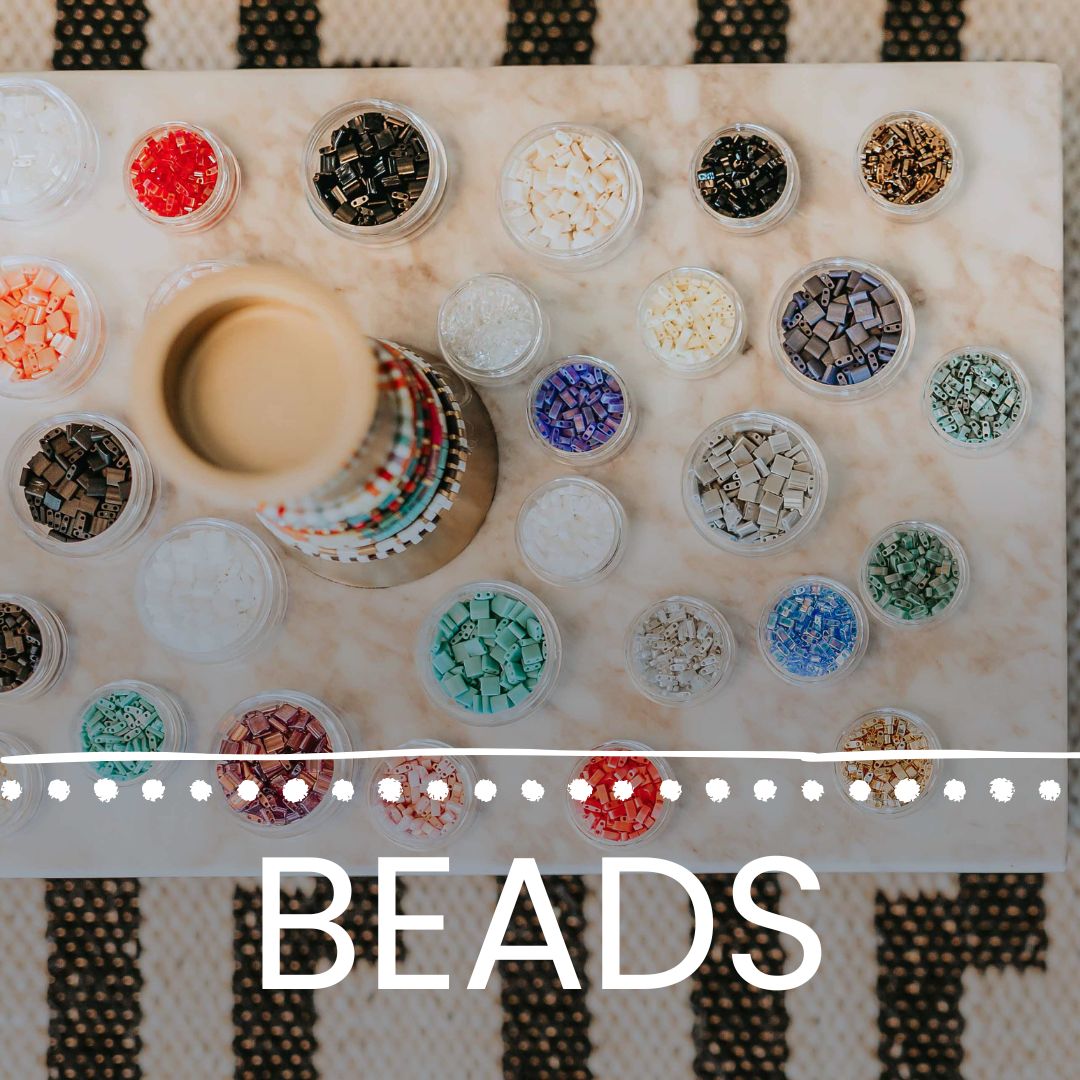
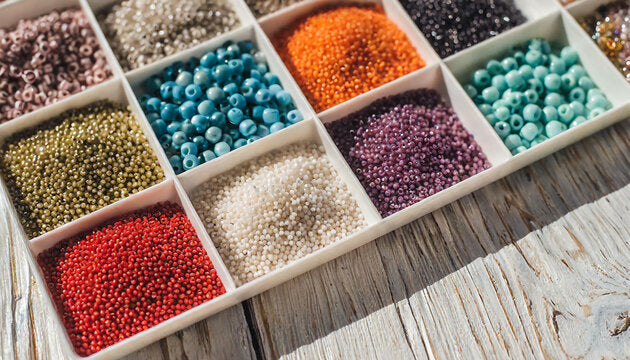
Three things. Size consistency first: every bead in a genuine Miyuki pack should measure the same, so lay a handful side by side and check. Second, hole alignment: the two holes on a real Tila bead sit parallel and centered, letting thread pass through cleanly without catching on glass. Third, finish integrity: Miyuki's opaque, matte, AB (aurora borealis), and metallic-plated finishes are applied evenly, with no patchy color or flaking coating straight out of the pack.
Cheaper substitutes usually fail at least one of those checks. Thickness varies enough that rows ripple rather than lying flat. Finishes wear thin within weeks of regular wear, especially metallic and Picasso-style coatings on off-brand product; Fire Mountain Gems' bead encyclopedia notes that finish durability is one of the biggest quality gaps between name-brand and unbranded glass beads. If a listing sells "tile beads" in bulk at a price well under what genuine Miyuki normally runs, and doesn't name Miyuki or reference a color code, that's the tell. Real Tila listings name the brand plainly because there's no reason to hide it.
How do Miyuki Tila beads compare to generic tile beads once you're wearing them?
Differently, and quickly. A bracelet strung from genuine Miyuki Tila holds its shape through workouts, hand washing, and months of daily wear because the beads themselves stay uniform under tension. Generic tile beads, by contrast, often show uneven wear: one bead scuffs faster than its neighbor, or a slightly oversized bead creates a weak point in the stretch cord that snaps sooner than it should.
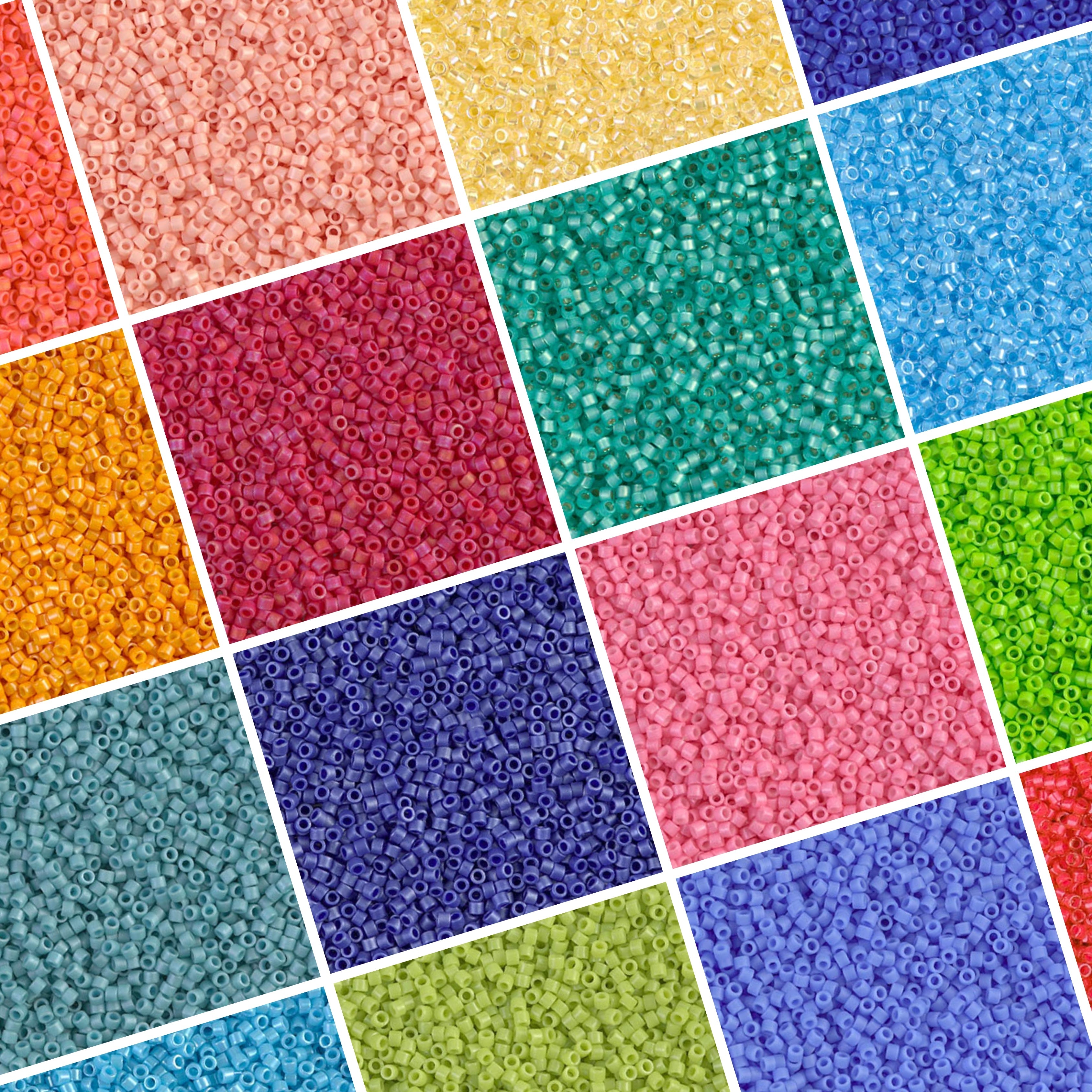
Color is the other giveaway. Glass beadmaking, the process Japanese manufacturers like Miyuki use to draw and finish seed beads, depends on tight control over glass composition and coating temperature to keep color consistent from bead to bead. Off-brand tile beads rarely match that consistency, since the process isn't controlled the same way. A matte black Tila bead from Miyuki still reads matte black a year later. A cheap imitation in the same shade can go dull or patchy well before that.
Where can you buy authentic Miyuki Tila beads for bracelet making?
Mack & Rex carries genuine Miyuki Tila beads, loose and in curated mixes, sourced as an authorized reseller of the Miyuki brand. Mack & Rex does not manufacture Miyuki beads. The shop sells the authentic Japanese product, priced around $5 to $9 per pack, so you know exactly what you're stringing before it ships.
Browse the full range, including seasonal color mixes and individual codes, on the Mack & Rex Tila bead collection. Orders ship internationally, with shipping and any customs or duties calculated at checkout, and US orders over $100 ship free. If you'd rather skip the sourcing question entirely, Mack & Rex also sells finished Tila bracelets and bracelet-making kits built from the same genuine beads covered here.
Frequently Asked Questions About Miyuki Tila Bead Quality
What makes Miyuki Tila beads different from other seed beads?
Miyuki Tila beads are a flat, square two-hole bead made in Japan to a fixed 5mm x 5mm x 1.9mm size, unlike round seed beads that vary more in shape. The two parallel holes let you build flat, even rows in bracelets and off-loom weaving that round beads can't produce on their own.
Are Miyuki Tila beads worth the extra cost?
Yes, for most bracelet makers. Genuine Miyuki Tila beads run tighter size and hole tolerances than unbranded tile beads, so rows sit flat, tension stays even, and colors hold up over months of wear. That consistency saves you restrung bracelets and broken cord down the line, which offsets the higher upfront price.
How can you tell if Tila beads are genuine Miyuki?
Genuine Miyuki beads are sold under the Miyuki brand name with a specific color code, like TL0131 or TL2000, printed on the packaging or listing. If a seller only says "tile beads" or "Tila-style" without naming Miyuki, you're likely looking at an unbranded substitute, not the authentic Japanese product.
What Miyuki Tila finishes last the longest?
Opaque and metallic-plated Tila finishes tend to hold their look best through daily wear, since the color sits in the glass or under a sealed coating. Transparent and crystal finishes look beautiful but show surface scratches sooner, so they suit occasional-wear pieces better than everyday bracelets.
Does Mack & Rex sell authentic Miyuki Tila beads?
Yes. Mack & Rex sells genuine Miyuki Tila beads and bead mixes; the shop resells authentic Miyuki product and does not manufacture the beads itself. Loose beads and curated mixes are priced around $5 to $9 per pack, with the full range on the Tila bead collection page.
Ready to see the difference for yourself? Shop genuine Miyuki Tila beads and color mixes on the Mack & Rex Tila bead collection. US orders over $100 ship free, and international orders ship with shipping and duties calculated at checkout.